Artwork
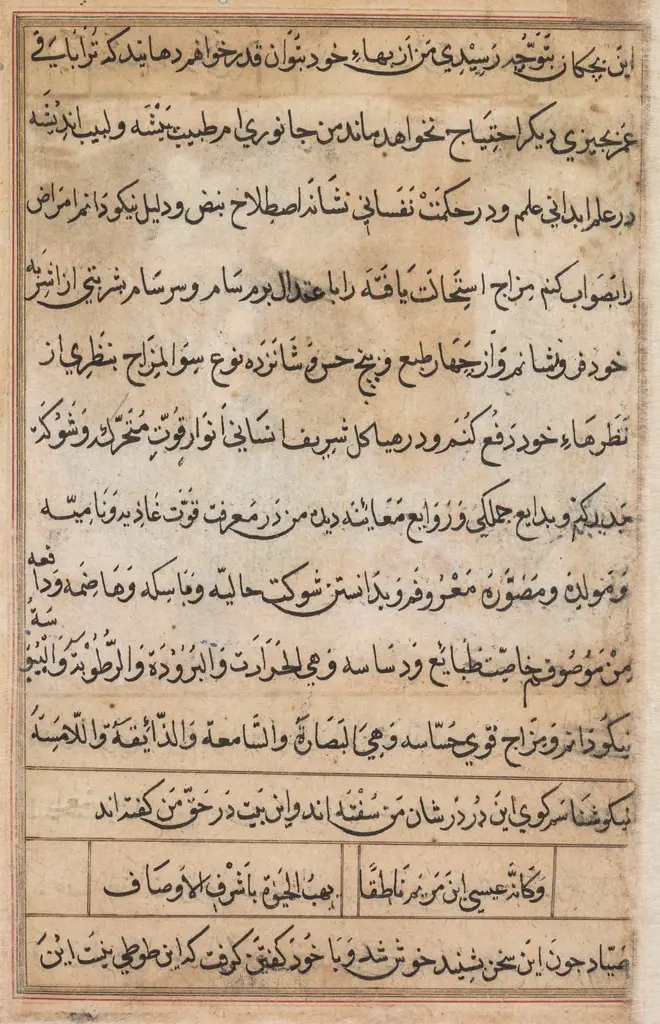
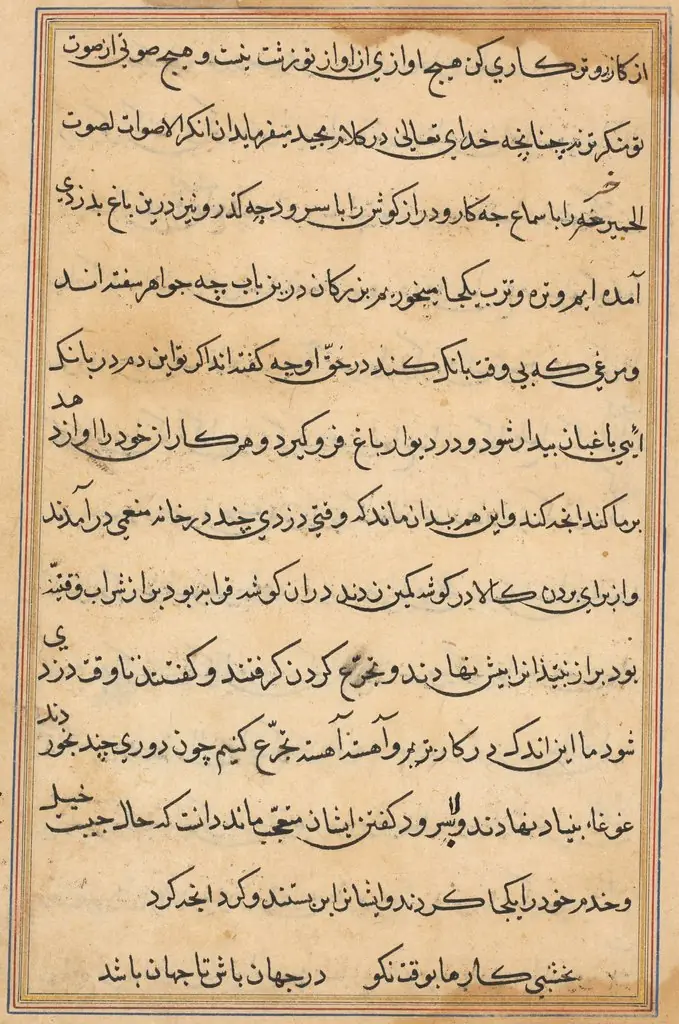
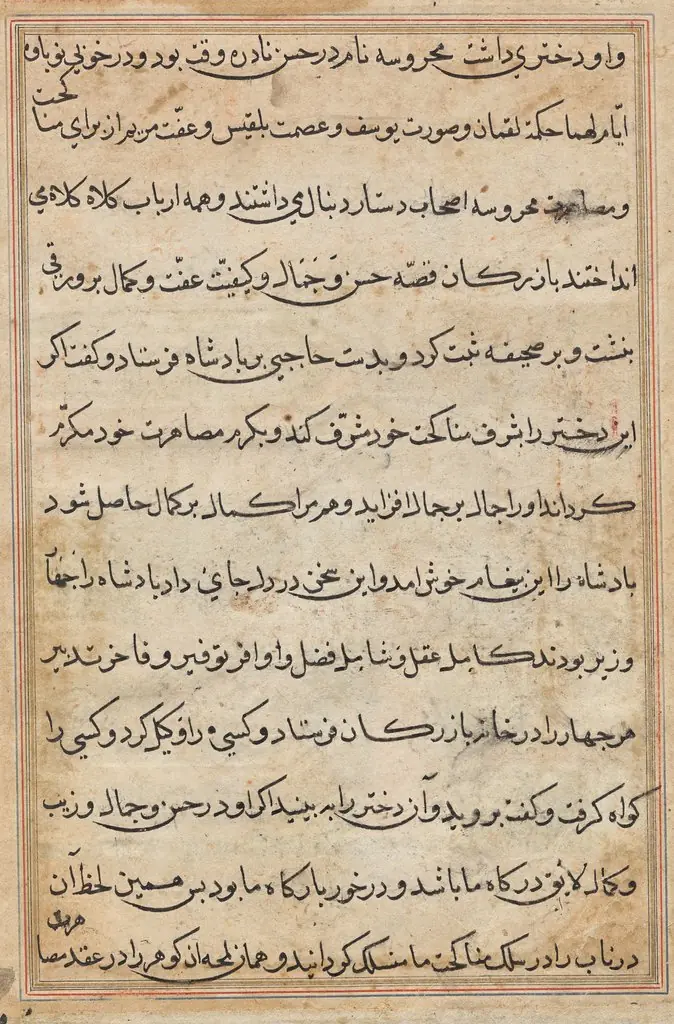
Page from Tales of a Parrot (Tuti-nama): text page
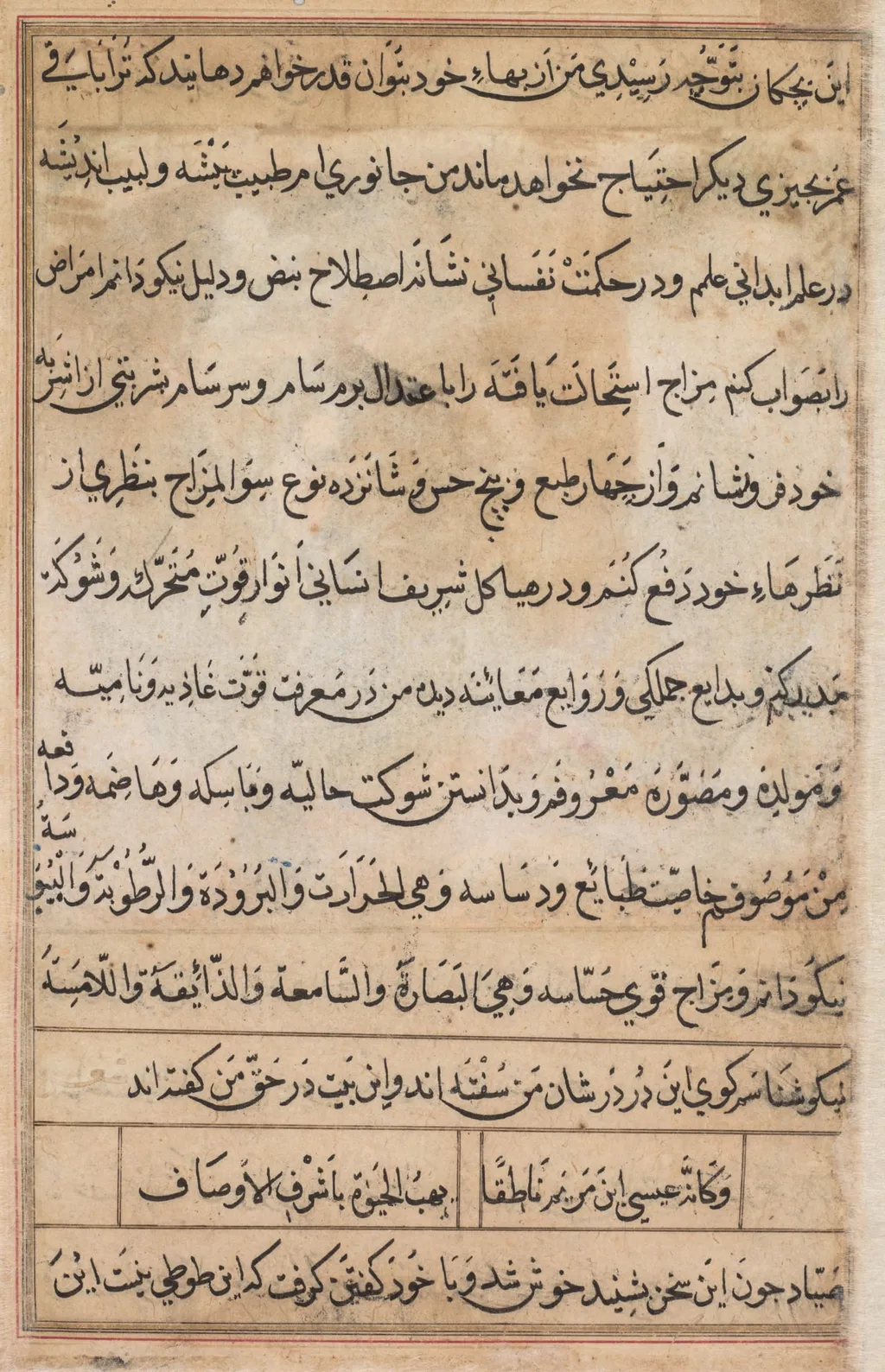
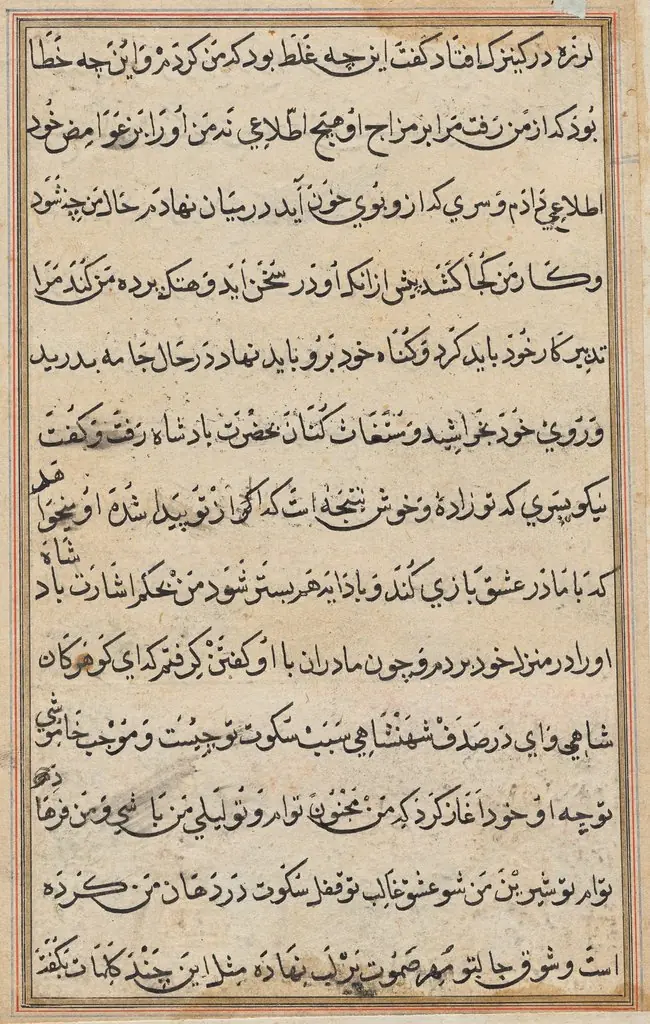
Page from Tales of a Parrot (Tuti-nama): text page is an unspecified painting by the Mughal Painting artist Basawan. It dates from 1560 and is held in the collection of the Cleveland Museum of Art. This text page originates from a 1560s manuscript of the Tuti-nama, a collection of Persian fables commissioned for Emperor Akbar.
About this work
This page is covered in neat black lines of text. Tiny gold flowers dot the edges. The rest is plain white paper.
It’s from a set of 250 pages, each a story. These tales were told to entertain Akbar, a Mughal emperor. The text is Persian. The gold dots are just decoration.
Look up Basavana (Indian, active c. 1560–1600) next.
Overview
This text page originates from a 1560s manuscript of the Tuti-nama, a collection of Persian fables commissioned for Emperor Akbar.
This text page originates from a 1560s manuscript of the Tuti-nama, a collection of Persian fables commissioned for Emperor Akbar. Created as part of a set of 250 pages, it contains no illustration, only calligraphic script. The design is minimal: black ink text on white paper, with small gold floral motifs tracing the margins. It reflects the Mughal court’s emphasis on textual elegance as much as visual artistry.
Subject & Meaning
The Tuti-nama comprises moral tales told by a parrot to deter his mistress from adultery. Though this page holds only the written narrative, the stories themselves served as courtly entertainment and ethical instruction during Akbar’s reign. The choice of Persian text underscores the cultural synthesis of the Mughal court, blending Persian literary traditions with Indian artistic practices.
Technique & Style
The page exemplifies the precision of Mughal manuscript production. The script is rendered in clear, uniform Nasta'liq calligraphy, typical of royal Persian texts. Gold dots, applied sparingly along the borders, are decorative rather than symbolic, indicating luxury without distraction. The absence of imagery highlights the value placed on textual beauty in this phase of manuscript illumination.
History & Provenance
Produced in Akbar’s imperial atelier around 1560, this page was part of an early illustrated manuscript project that preceded the more famous Akbarnama. Though attributed to Basavana, a known painter of the period, his role here may have been supervisory rather than hands-on. The manuscript later entered the Cleveland Museum of Art’s collection, preserving its original format and material integrity.
Context
During Akbar’s early reign, the imperial workshop cultivated a hybrid style that merged Persian literary culture with Indian artistic sensibilities. The Tuti-nama was among the first major projects to systematize manuscript illustration, setting precedents for later works. Even text-only pages like this one were treated with care, reflecting the court’s reverence for the written word as both art and authority.
Legacy
This page stands as evidence of the Mughal court’s evolving approach to books—not merely as vessels of content, but as refined objects of aesthetic discipline. Its restrained design influenced later manuscript traditions, where calligraphy and marginal ornamentation became markers of imperial taste. Though overshadowed by illustrated folios, such text pages remain vital to understanding the full scope of Mughal literary culture.
Artist & collection
Artist
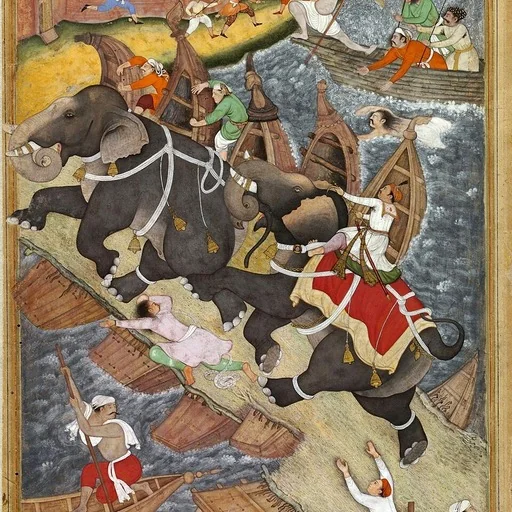
Basāwan, or Basāvan, was an Indian miniature painter in the Mughal style. He was known by his contemporaries as a skilled colorist and keen observer of human nature, and for his use of portraiture in the illustrations…

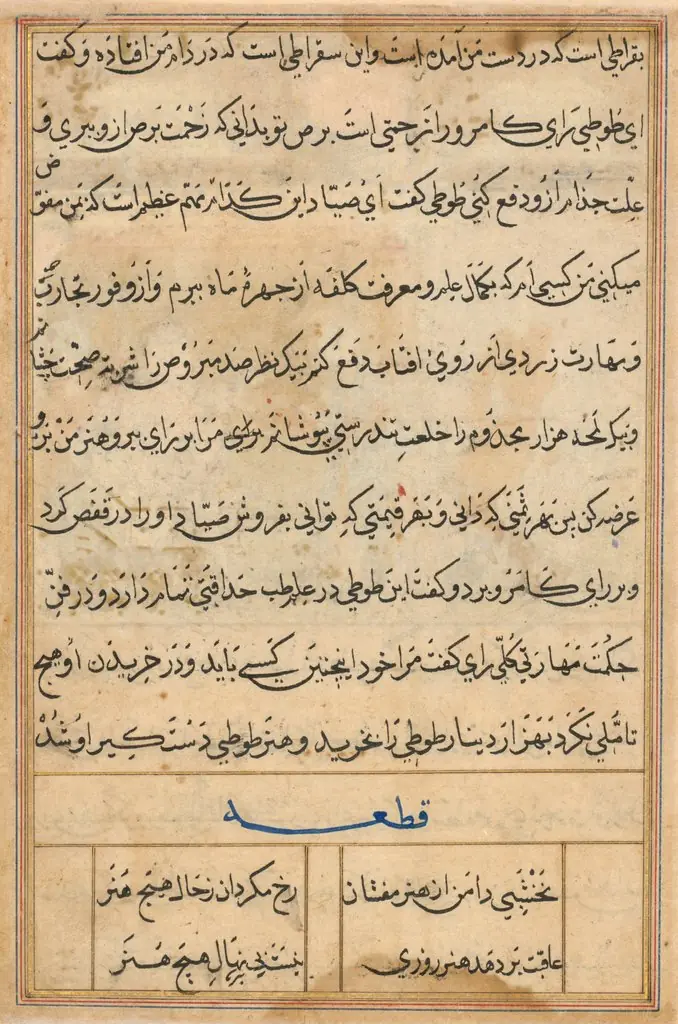 Page from Tales of a Parrot (Tuti-nama): text page
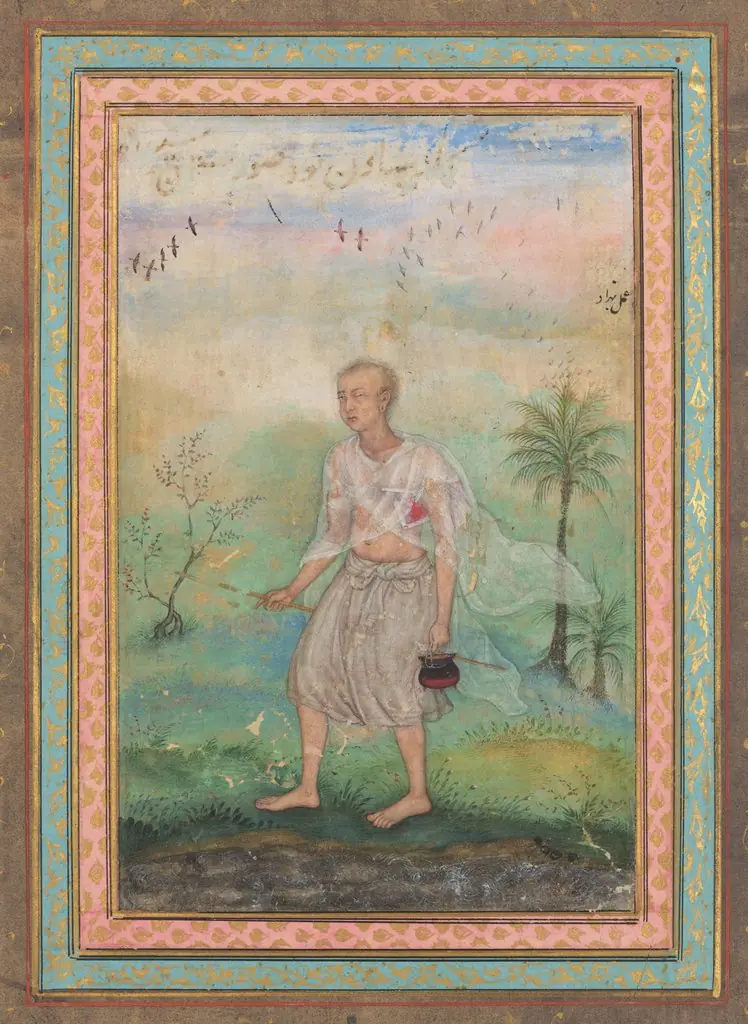 Jain Ascetic Walking Along a Riverbank
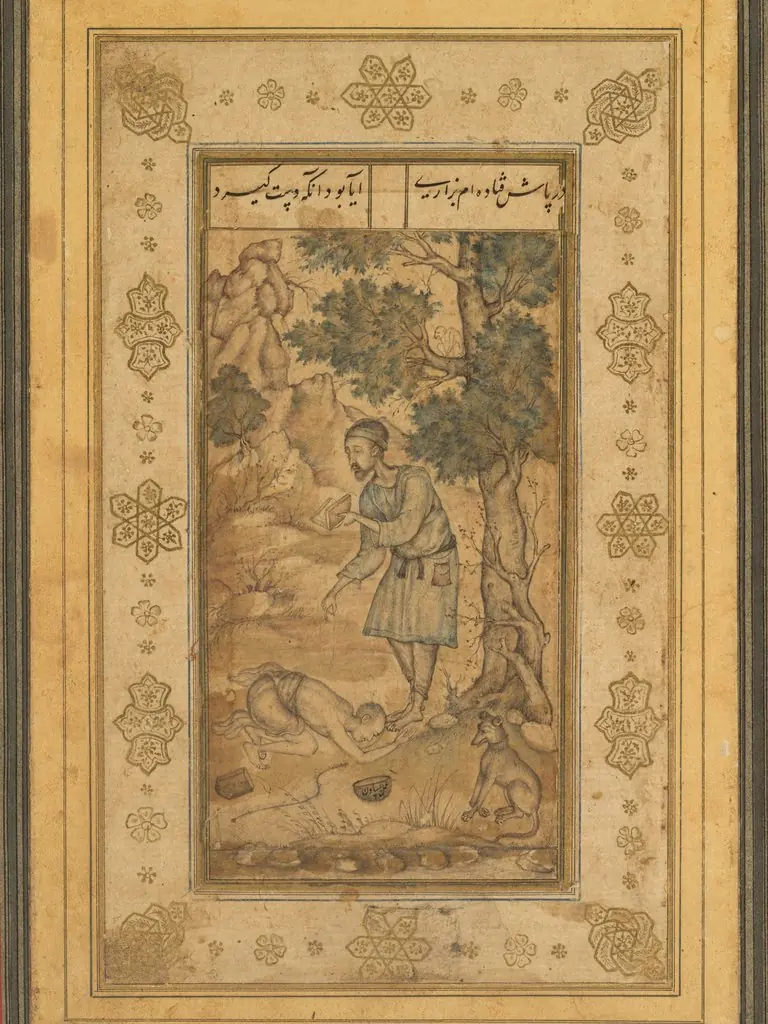 A mendicant bowing before a holy man, from the Prince Salim Album
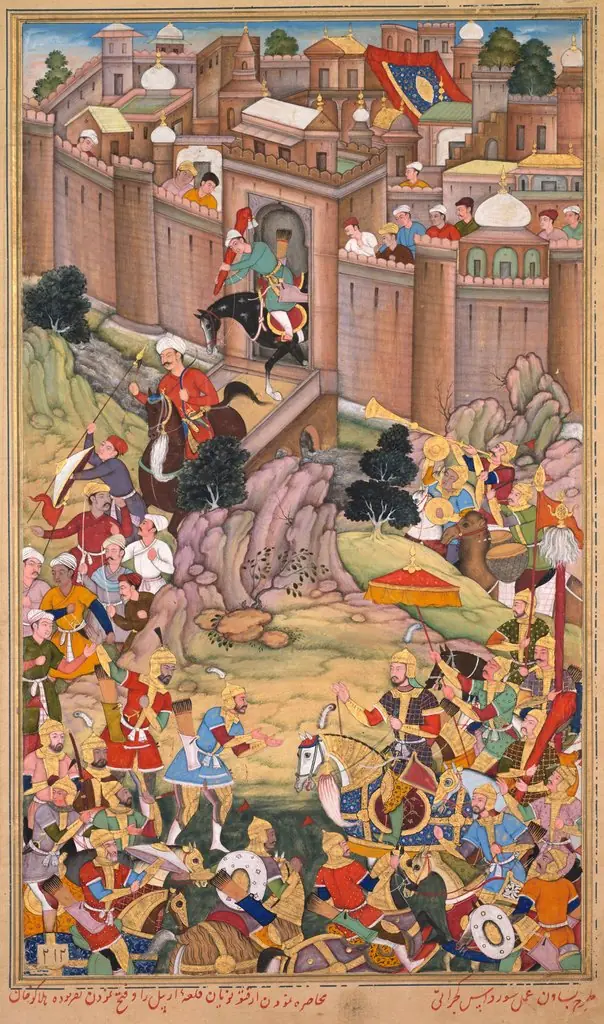 The siege of Arbela in the era of Hulagu Khan, from a Chingiz-nama (Book of Chingiz Khan) of the Jami al-tavarikh (Compendium of Chronicles) of Rashid al-Din (Persian, 1247–1318)
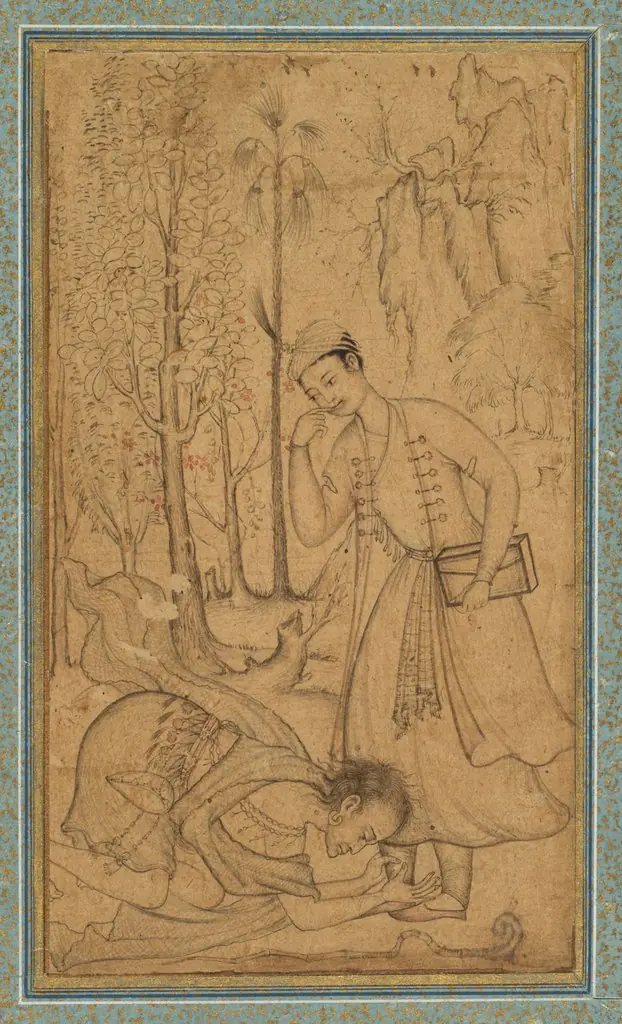 A holy man prostrating himself before a learned prince
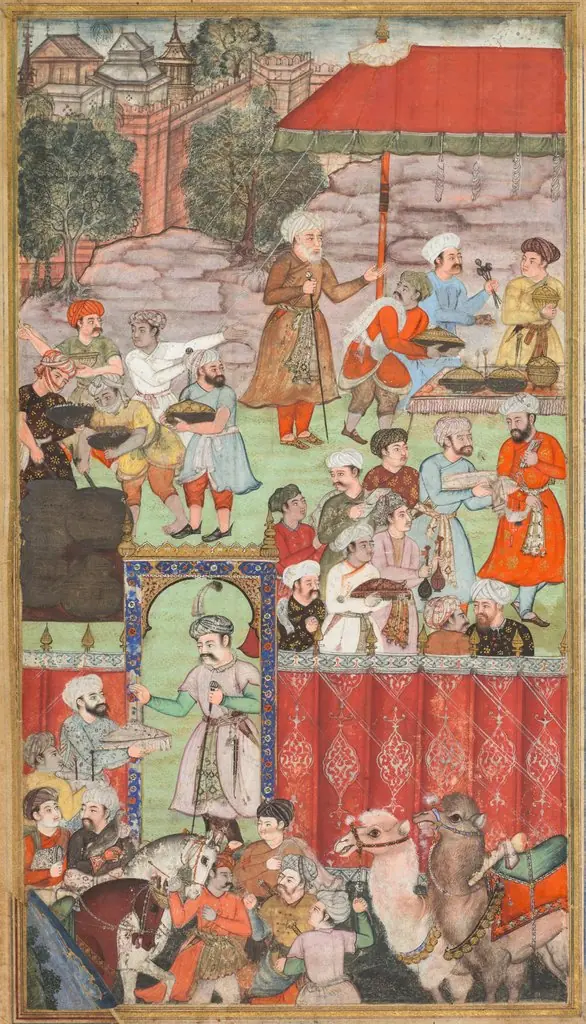 A feast for Babur hosted by his half-brother Jahangir Mirza in Ghazni in May 1505, from a Babur-nama (Memoirs of Babur)
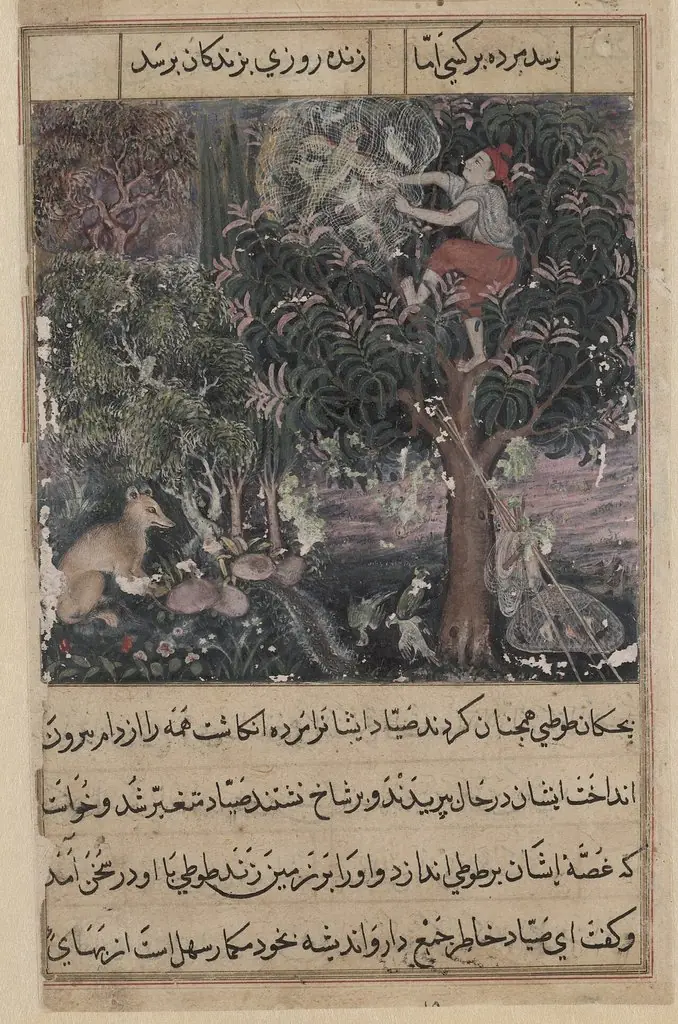 The hunter throws away the baby parrots, who pretend to be dead, and captures the mother, from a Tuti-nama (Tales of a Parrot): Fifth Night
 Page from Tales of a Parrot (Tuti-nama): text page
 Page from Tales of a Parrot (Tuti-nama): text page
 Page from Tales of a Parrot (Tuti-nama): text page
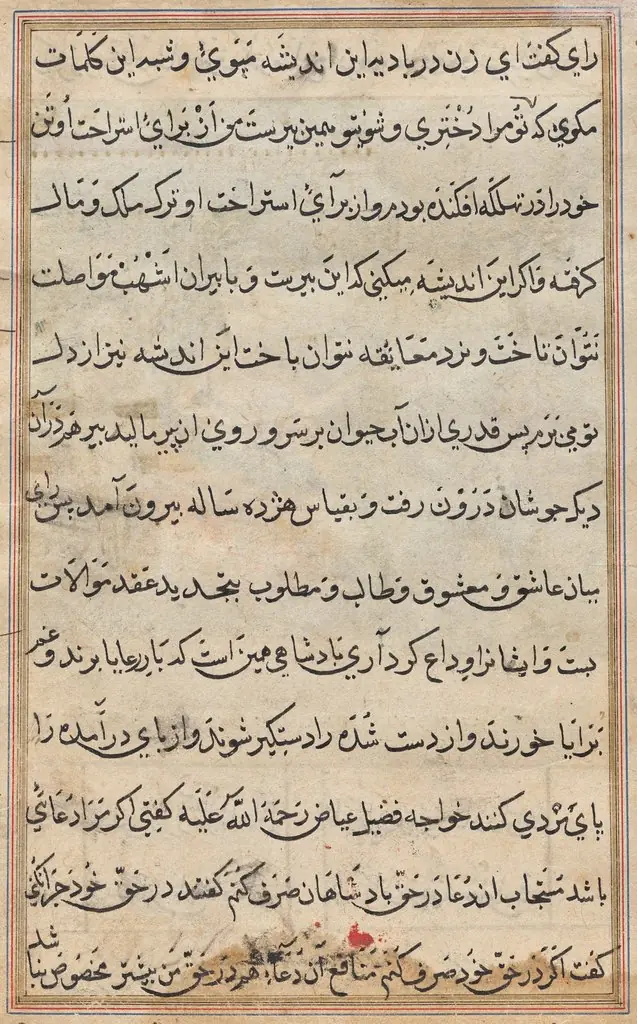 Page from Tales of a Parrot (Tuti-nama): text page
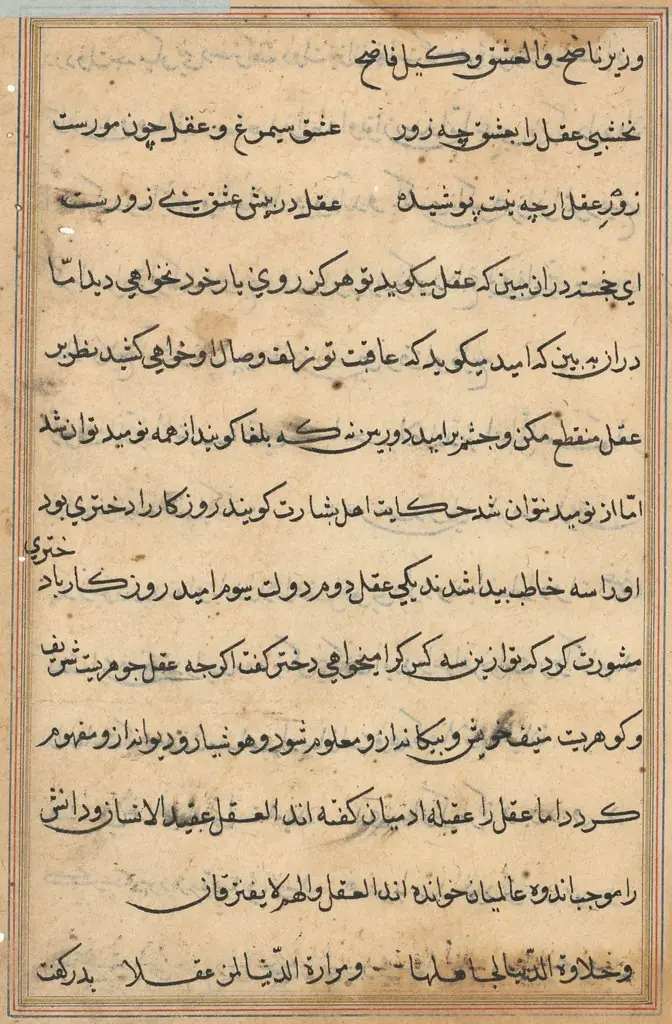 Page from Tales of a Parrot (Tuti-nama): text page
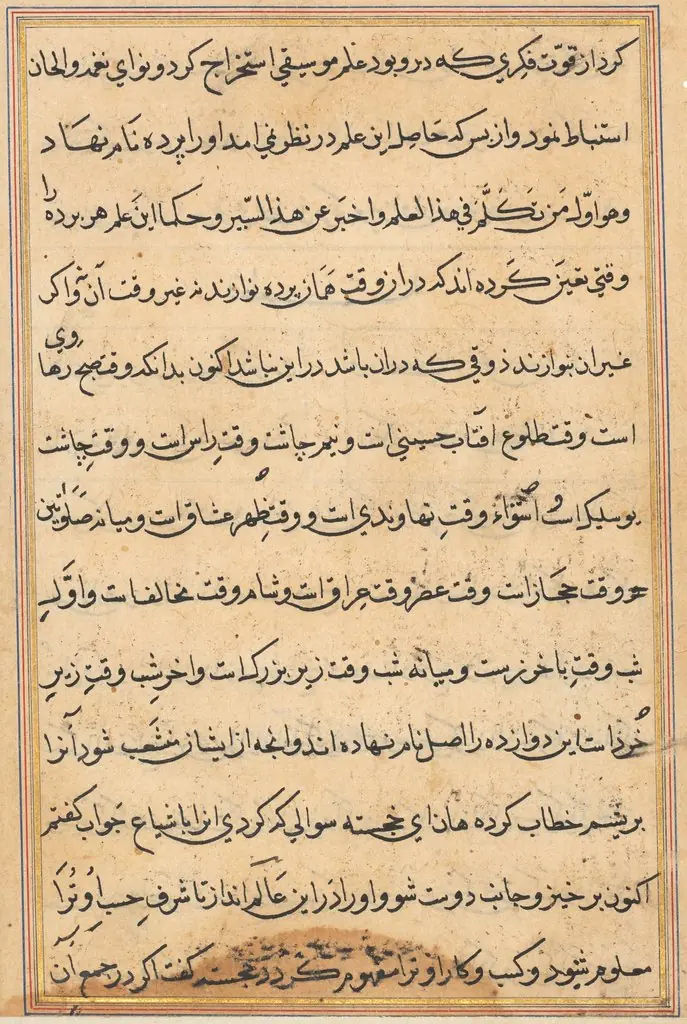 Page from Tales of a Parrot (Tuti-nama): text page
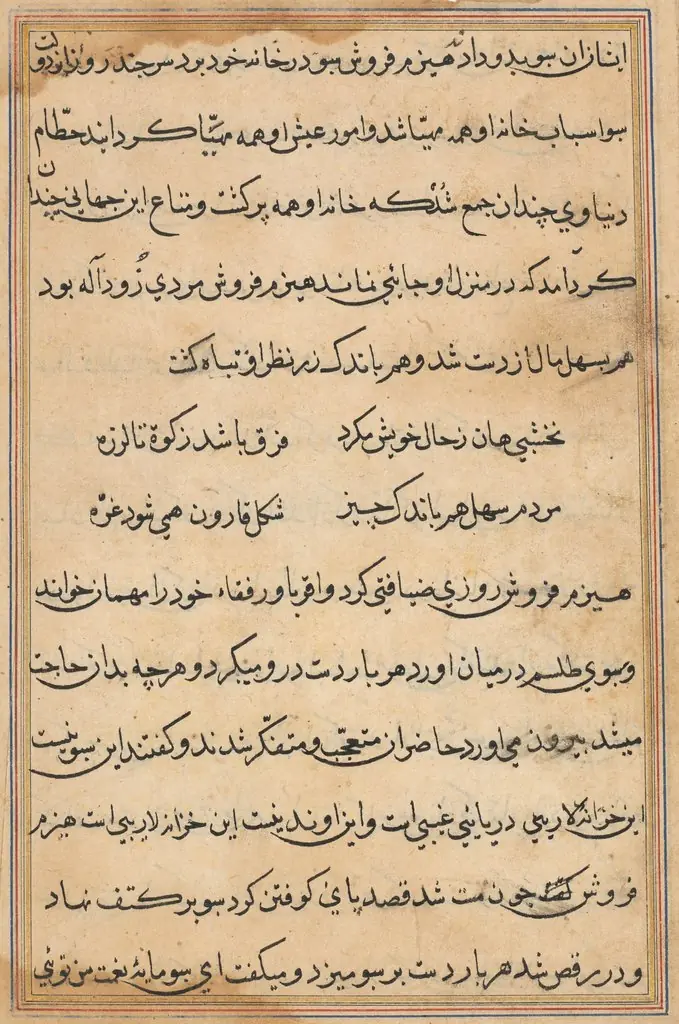 Page from Tales of a Parrot (Tuti-nama): text page
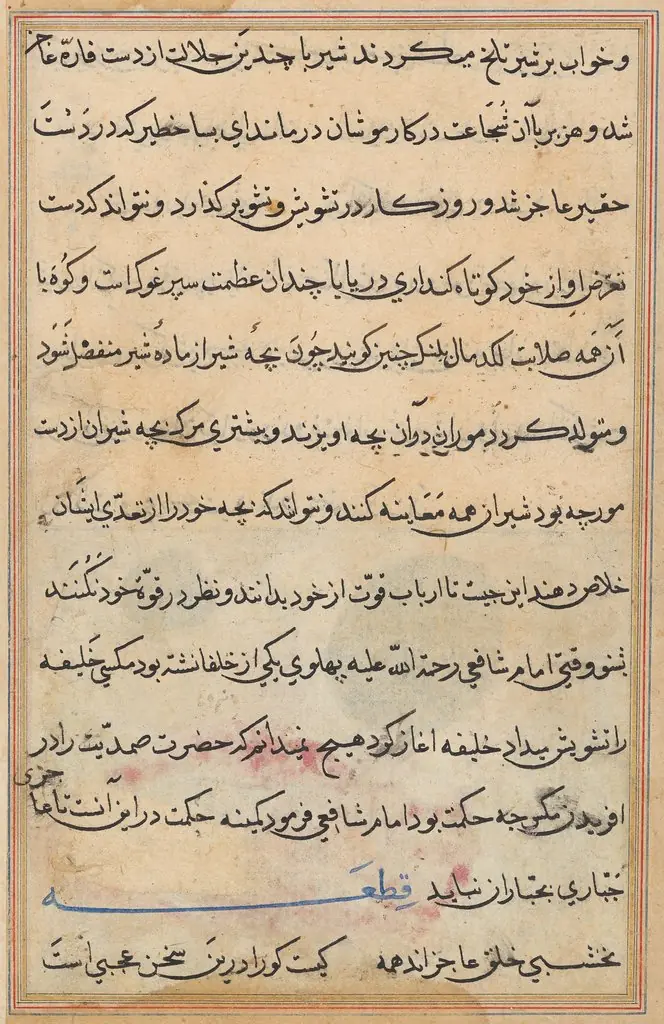 Page from Tales of a Parrot (Tuti-nama): text page
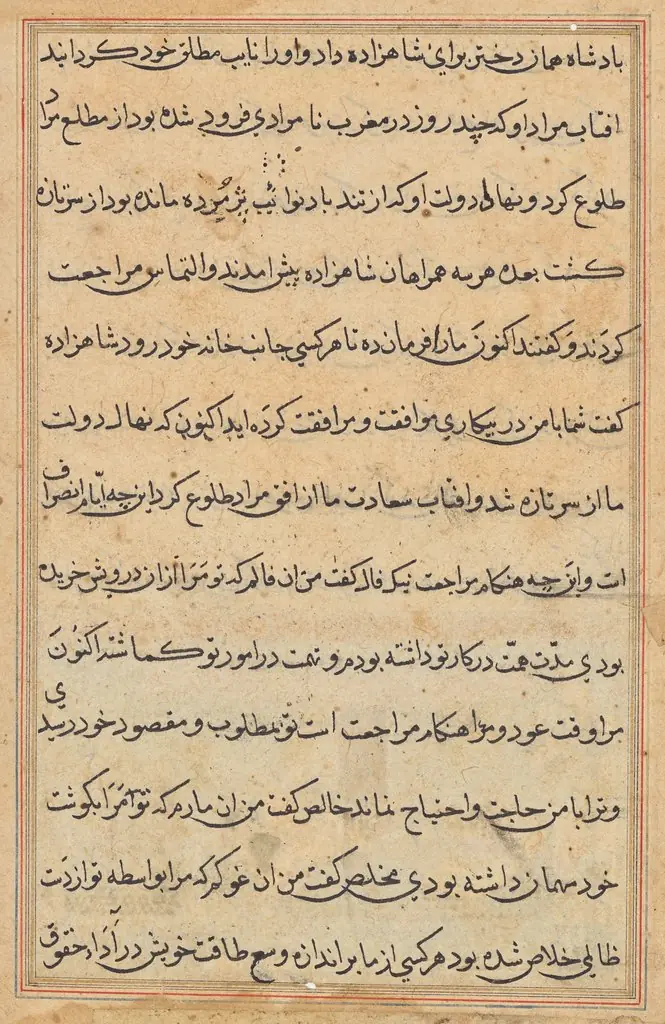 Page from Tales of a Parrot (Tuti-nama): text page
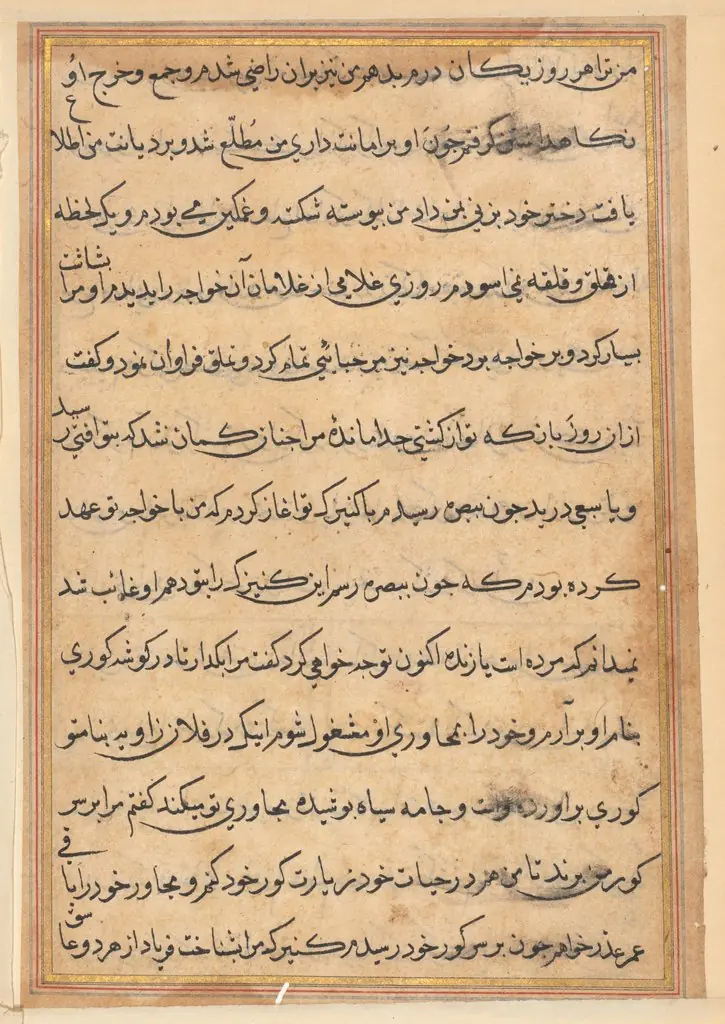 Page from Tales of a Parrot (Tuti-nama): text page
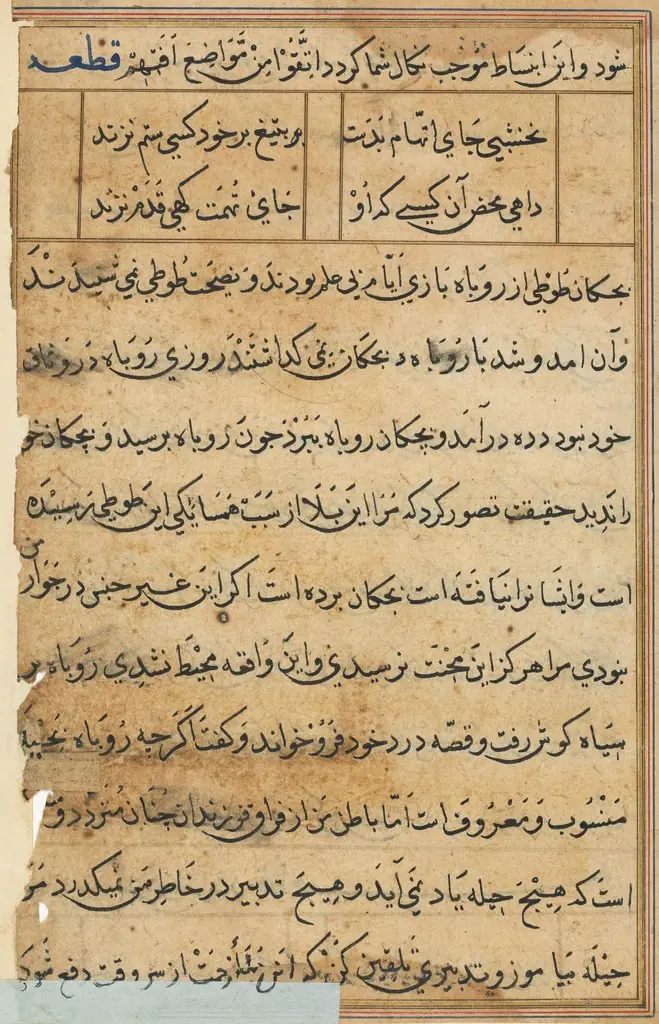 Page from Tales of a Parrot (Tuti-nama): text page
 Page from Tales of a Parrot (Tuti-nama): text page