Artwork
The Parrot Addresses Khujasta at the Beginning of the Nineteenth Night, from a Tuti-nama (Tales of a Parrot)
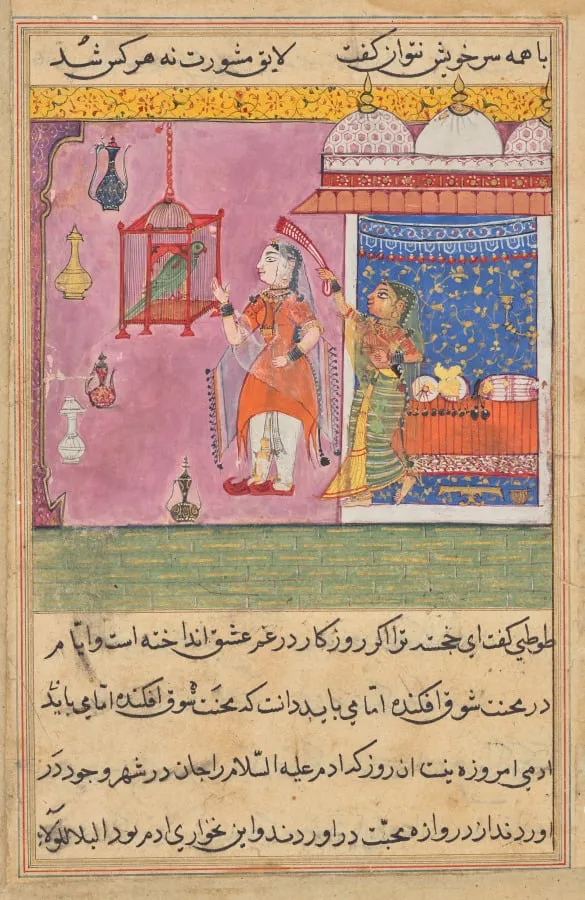
The Parrot Addresses Khujasta at the Beginning of the Nineteenth Night, from a Tuti-nama (Tales of a Parrot) is an unspecified painting by the Mughal Painting artist Unknown. It dates from 1560 and is held in the collection of the Cleveland Museum of Art. This painting illustrates a scene from the Tuti-nama, a collection of tales told by a parrot over 52 nights.
About this work
You see a woman in a blue robe sitting on a tiled floor, listening to a bright green parrot perched on a stand.
You see a woman in a blue robe sitting on a tiled floor, listening to a bright green parrot perched on a stand.
This painting is from a book of parrot tales told over 52 nights. The parrot spins stories to keep the woman from sneaking out at night. The gold and green tiles and swirling patterns show older Persian styles mixing with Indian colors.
To see more like this, look up mughal india, court of akbar (reigned 1556–1605).
Overview
This painting illustrates a scene from the Tuti-nama, a collection of tales told by a parrot over 52 nights. It depicts the parrot beginning to recount a story to a woman named Khujasta on the nineteenth night.
Subject & Meaning
The scene shows a parrot perched on a stand narrating a tale to a woman seated on a tiled floor. The parrot's stories aim to distract the woman from leaving her husband at night, conveying moral lessons.
Technique & Style
The artwork combines elements of Persian and Indian artistic traditions, evident in its gold and green tilework, mauve background, and arabesque patterns. The color palette and motifs reflect the blending of styles characteristic of Mughal Indian art.
Context
The Tuti-nama was produced during the reign of Akbar (1556–1605), a period marked by cultural and artistic exchange. The painting's style is associated with the court of Akbar, where Persian and Indian influences merged.
Artist & collection

 Domestic Scene
 Giacomo and Cardinal Marco, investing Andrea, Abbot of San Zeno, with his Benefice
 The Nymph of Fontainebleau
 Portrait of a Woman
 Madonna and Child with Saints in the Enclosed Garden
 Venus and Minerva
 Family Group of Four on Sofa
 Wall painting from Room H of the Villa of P. Fannius Synistor at Boscoreale
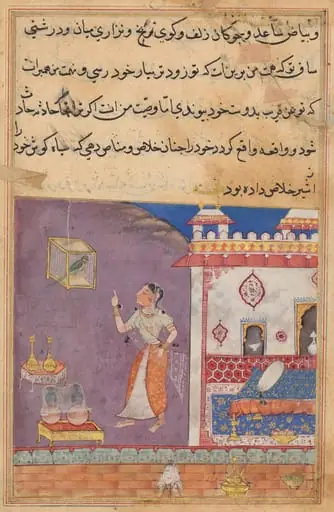 The Parrot Addresses Khujasta at the Beginning of the Twenty-ninth Night, from a Tuti-nama (Tales of a Parrot)
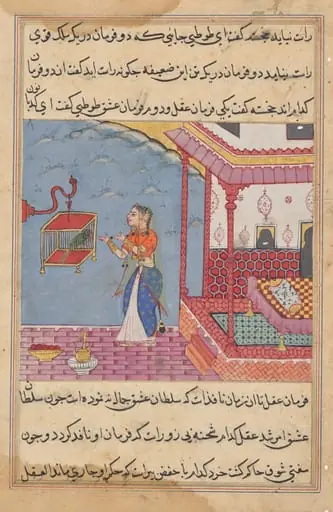 The Parrot Addresses Khujasta at the Beginning of the Twenty-Fourth Night, from a Tuti-nama (Tales of a Parrot)
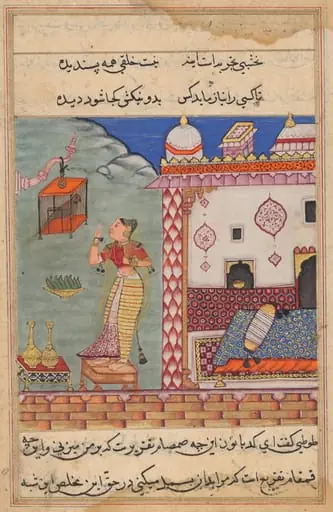 The Parrot Addresses Khujasta at the Beginning of the Twenty-seventh Night, form a Tuti-nama (Tales of a Parrot)
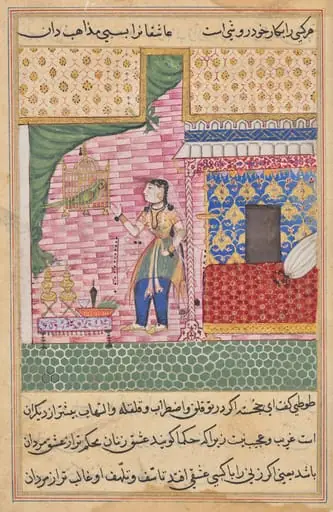 The Parrot Addresses Khujasta at the Beginning of the Seventeenth Night, from a Tuti-nama (Tales of a Parrot)
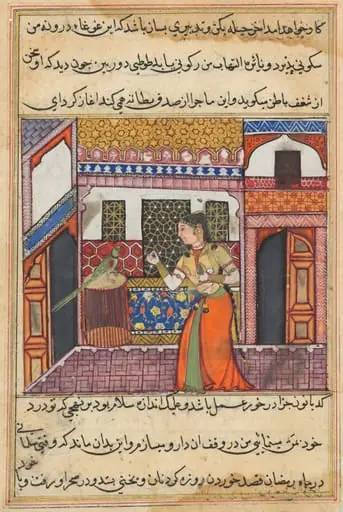 The parrot addresses Khujasta at the beginning of the forty-third night, from a Tuti-nama (Tales of a Parrot)
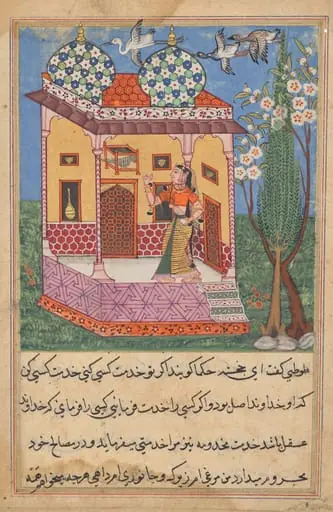 The Parrot Addresses Khujasta at the Beginning of the Twenty-sixth Night, from a Tuti-nama (Tales of a Parrot)
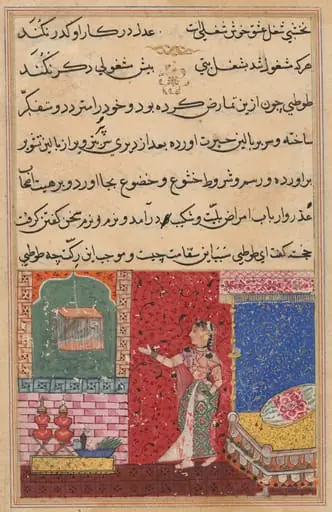 The Parrot Addresses Khujasta at the Beginning of the Fifteenth Night, from a Tuti-nama (Tales of a Parrot)
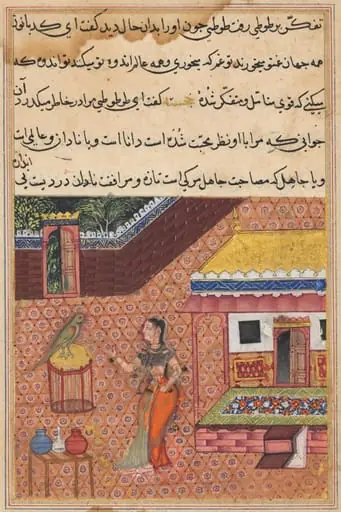 The parrot addresses Khujasta at the beginning of the thirty-fourth night, from a Tuti-nama (Tales of a Parrot)
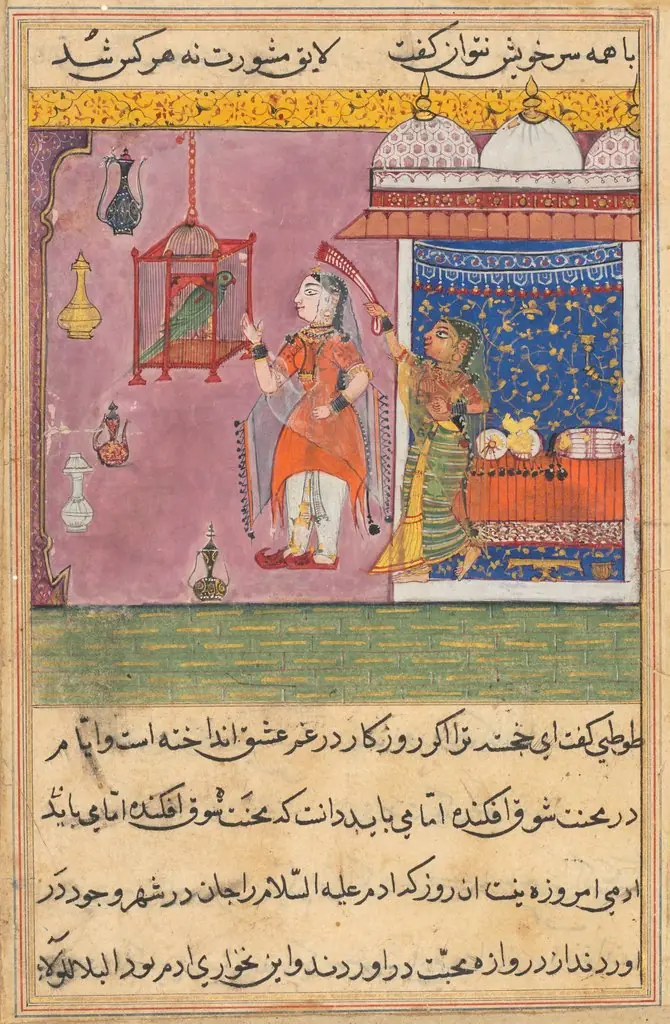 The Parrot Addresses Khujasta at the Beginning of the Nineteenth Night, from a Tuti-nama (Tales of a Parrot)
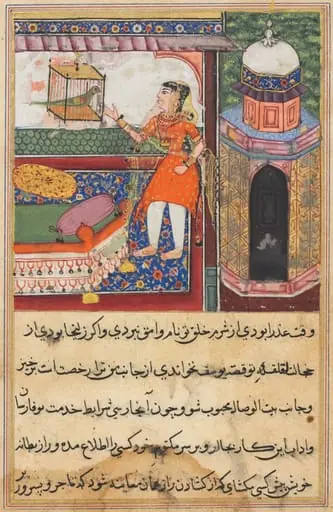 The Parrot Addresses Khujasta at the Beginning of the Tenth Night, from a Tuti-nama (Tales of a Parrot)
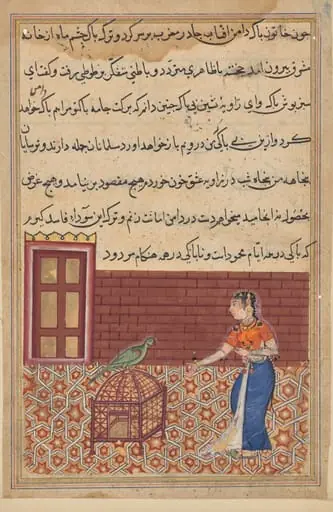 The parrot addresses Khujasta at the beginning of the fifty-first night, from a Tuti-nama (Tales of a Parrot): Fifty-first Night