Artwork
The Parrot Addresses Khujasta at the Beginning of the Seventh Night, from a Tuti-nama (Tales of a Parrot)
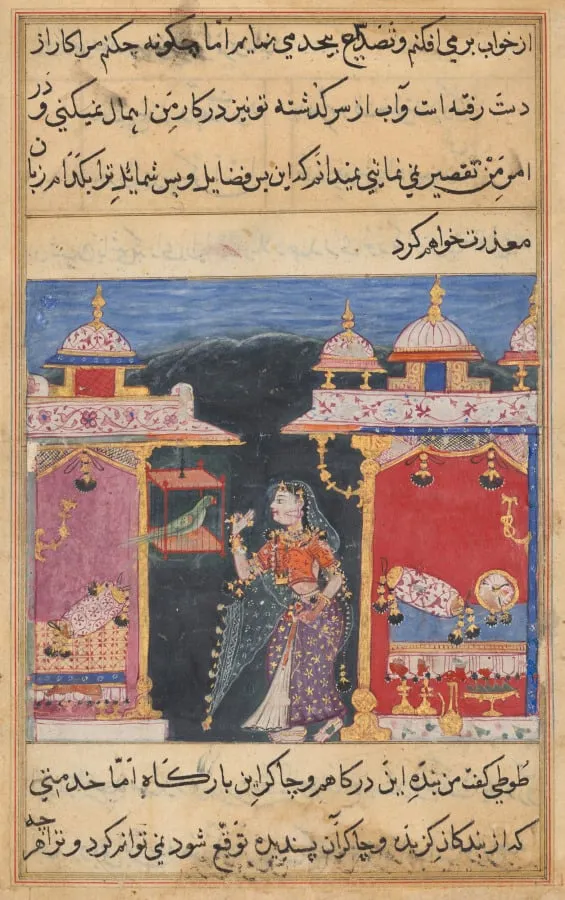
The Parrot Addresses Khujasta at the Beginning of the Seventh Night, from a Tuti-nama (Tales of a Parrot) is an unspecified painting by the Mughal Painting artist Unknown. It dates from 1560 and is held in the collection of the Cleveland Museum of Art. This painting illustrates a scene from the Tuti-nama (Tales of a Parrot), a collection of 52 nightly stories.
About this work
The artist mixed older Indian styles with new Mughal details, like the delicate patterns on her clothes.
A bright green parrot perches on a stand, talking to a woman in a red robe. She leans in, listening closely.
This painting comes from a book of 52 stories—one for each night. The parrot tells tales to keep the woman from sneaking out to meet her lover. The artist mixed older Indian styles with new Mughal details, like the delicate patterns on her clothes.
To see more paintings like this, look up mughal india, court of akbar (reigned 1556–1605).
Overview
This painting illustrates a scene from the Tuti-nama (Tales of a Parrot), a collection of 52 nightly stories. The artwork depicts a pivotal moment in the narrative, showcasing a domestic parrot's strategy to deter Khujasta, its master's wife, from a clandestine meeting.
Subject & Meaning
The scene captures the parrot's persuasive tactic: reciting an intriguing tale to Khujasta (in red), rendering her too engrossed to leave before dawn, thus preventing her nocturnal rendezvous. The parrot's role as both companion and guardian is highlighted.
Technique & Style
The artist blends pre-Mughal painting traditions with emerging Mughal elements, evident in the delicate patterns on Khujasta's attire, contrasting with the more established Indian stylistic idioms dominant in the composition.
History & Provenance
Created during the reign of Akbar (1556–1605), this page is part of a larger illustrated book, reflecting the cultural and artistic shifts of the Mughal court during this period.
Context
Part of a 52-night narrative cycle, this painting's story functions as both entertainment and a moral or cautionary tale, common in Indian and Persian literary traditions of the time.
Artist & collection

 Domestic Scene
 Giacomo and Cardinal Marco, investing Andrea, Abbot of San Zeno, with his Benefice
 The Nymph of Fontainebleau
 Portrait of a Woman
 Madonna and Child with Saints in the Enclosed Garden
 Venus and Minerva
 Family Group of Four on Sofa
 Wall painting from Room H of the Villa of P. Fannius Synistor at Boscoreale
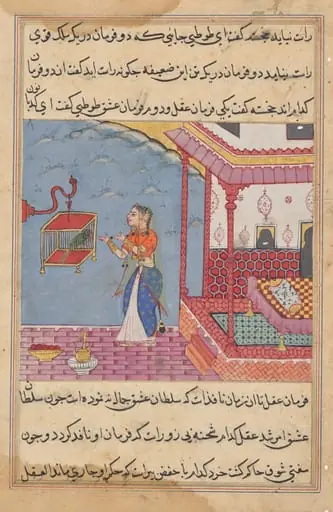 The Parrot Addresses Khujasta at the Beginning of the Twenty-Fourth Night, from a Tuti-nama (Tales of a Parrot)
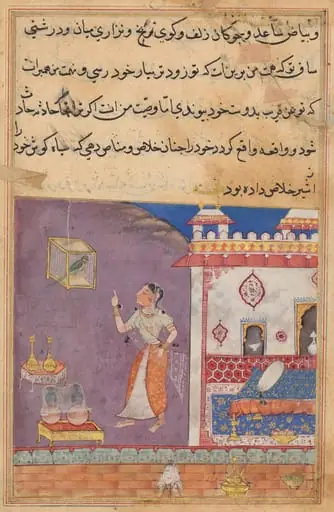 The Parrot Addresses Khujasta at the Beginning of the Twenty-ninth Night, from a Tuti-nama (Tales of a Parrot)
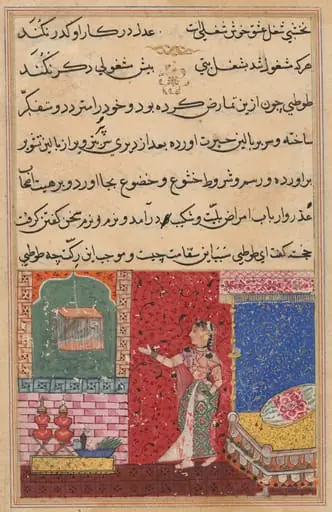 The Parrot Addresses Khujasta at the Beginning of the Fifteenth Night, from a Tuti-nama (Tales of a Parrot)
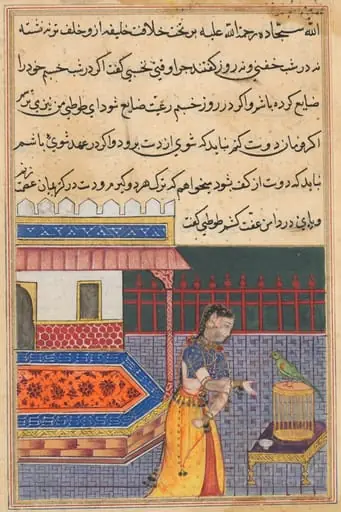 The parrot addresses Khujasta at the beginning of the forty-first night, from a Tuti-nama (Tales of a Parrot): Forty-first Night
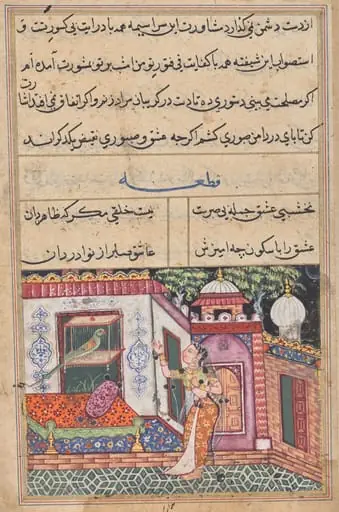 The Parrot Addresses Khujasta at the Beginning of the Eleventh Night, from a Tuti-nama (Tales of a Parrot)
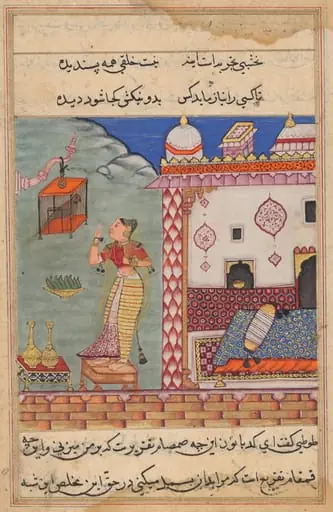 The Parrot Addresses Khujasta at the Beginning of the Twenty-seventh Night, form a Tuti-nama (Tales of a Parrot)
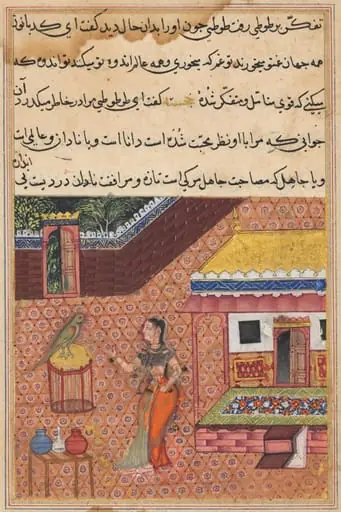 The parrot addresses Khujasta at the beginning of the thirty-fourth night, from a Tuti-nama (Tales of a Parrot)
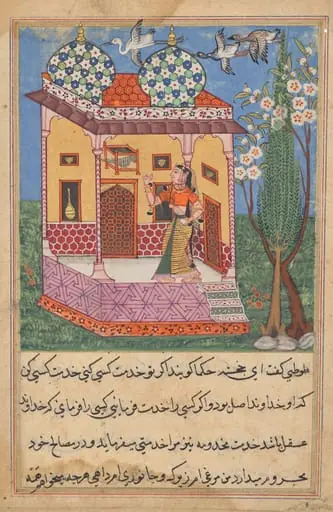 The Parrot Addresses Khujasta at the Beginning of the Twenty-sixth Night, from a Tuti-nama (Tales of a Parrot)
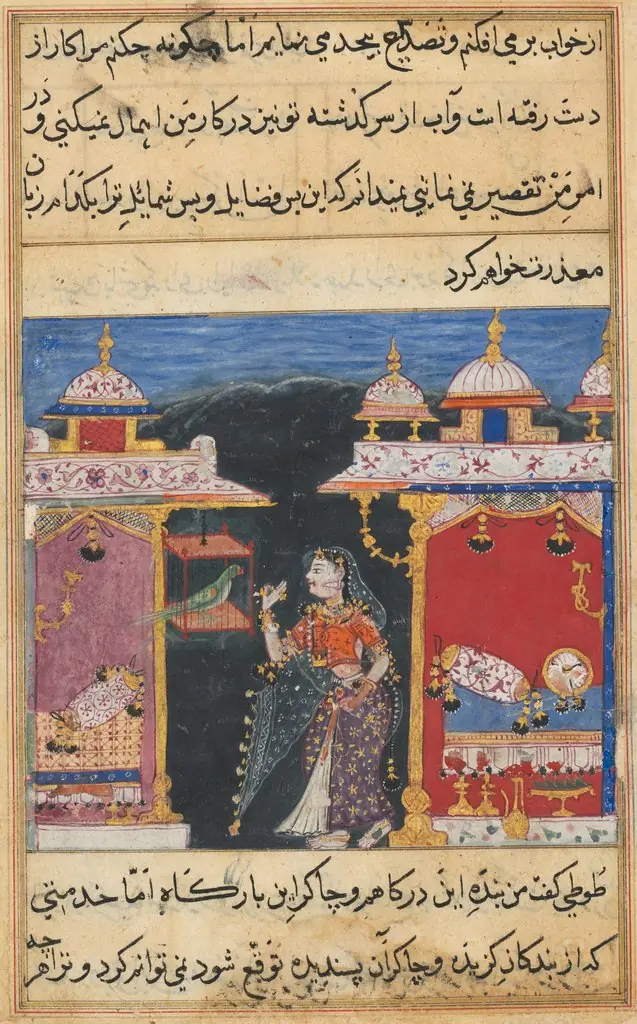 The Parrot Addresses Khujasta at the Beginning of the Seventh Night, from a Tuti-nama (Tales of a Parrot)
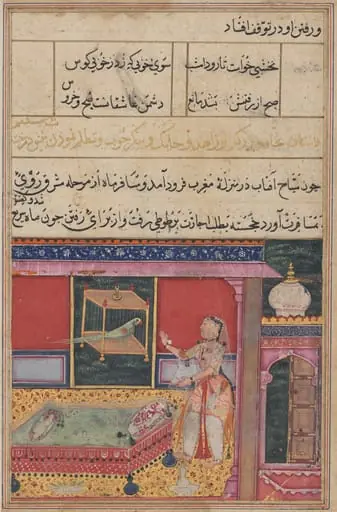 The Parrot Addresses Khujasta at the Beginning of the Sixth Night, from a Tuti-nama (Tales of a Parrot)