Artwork
Battle of the Milvian Bridge (fragment) (verso)
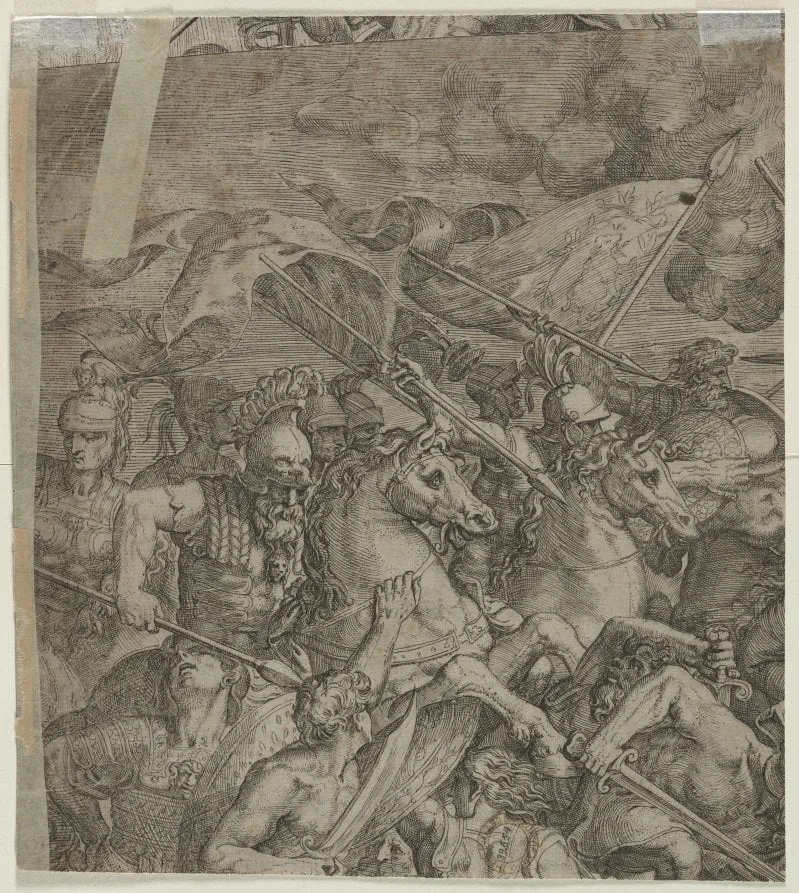
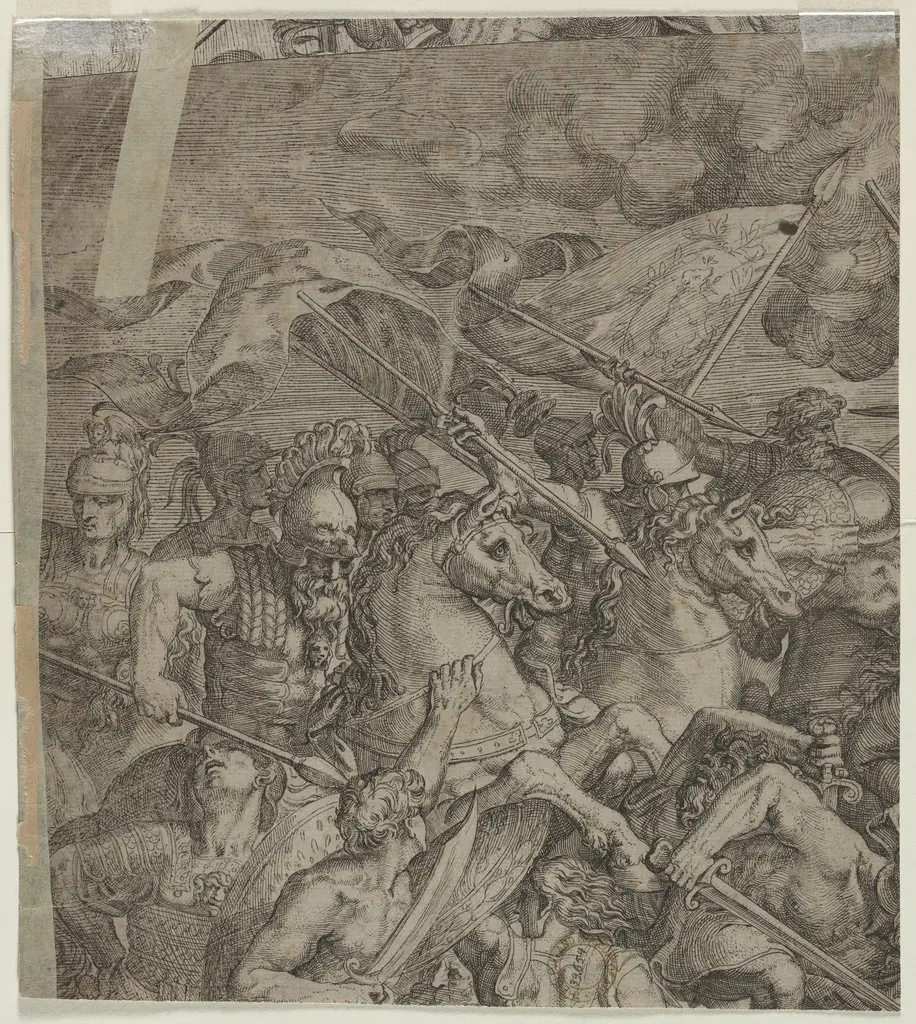
Battle of the Milvian Bridge (fragment) (verso) is a print by the Renaissance artist Unknown. It dates from 1504 and is held in the collection of the Cleveland Museum of Art. The work is a fragment of a larger composition depicting the Battle of the Milvian Bridge, rendered on a small wooden support.
About this work
You see a crowded battle scene on a small wooden panel: soldiers in armor, horses rearing, and a bridge collapsing under their weight.
You see a crowded battle scene on a small wooden panel: soldiers in armor, horses rearing, and a bridge collapsing under their weight.
This fragment was once part of a larger painting, probably made to decorate a palace or church. The artist used thin, quick brushstrokes to show movement—almost like a sketch. No one knows who painted it, but the style fits the 1500s in Italy.
To see more art from this time, look up Italy, 16th century.
Overview
The work is a fragment of a larger composition depicting the Battle of the Milvian Bridge, rendered on a small wooden support. The surviving piece shows a densely populated combat scene with armored figures, rearing horses, and a bridge under strain. Though originally part of a more extensive narrative, only this portion remains, offering a glimpse of the original scale and intent.
Subject & Meaning
The fragment illustrates the historic clash of 312 AD between Constantine I and Maxentius, a pivotal moment in Roman history that later acquired religious significance. The chaotic arrangement of troops and the collapsing bridge convey the violence and turning point of the encounter, reflecting contemporary interest in portraying decisive historical events.
Technique & Style
Executed with swift, thin brushstrokes, the surface resembles a rapid sketch rather than a polished finish. The handling of light and movement suggests a 16th‑century Italian manner, emphasizing dynamism through gestural marks. The medium, a print transferred onto wood, retains a sketch‑like quality that underscores the artist’s focus on immediacy.
History & Provenance
The creator of the fragment remains unidentified, and the work’s original setting—likely a palace or ecclesiastical interior—has not been documented. The piece survived as a detached fragment, eventually entering a collection where it is now catalogued as a verso print, preserving only a portion of the initial composition.
Context
During the Italian Renaissance, artists frequently revisited classical and early‑Christian subjects, and the Battle of the Milvian Bridge was a popular theme for its political and theological resonance. This fragment aligns with that trend, reflecting the period’s fascination with antiquity and the use of historical episodes to convey moral or propagandistic messages.
Artist & collection

 Domestic Scene
 Giacomo and Cardinal Marco, investing Andrea, Abbot of San Zeno, with his Benefice
 The Nymph of Fontainebleau
 Portrait of a Woman
 Madonna and Child with Saints in the Enclosed Garden
 Venus and Minerva
 Family Group of Four on Sofa
 Wall painting from Room H of the Villa of P. Fannius Synistor at Boscoreale
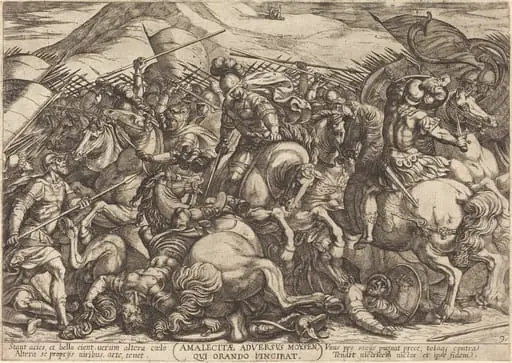 The Defeat of the Amalikits by the Hebrews
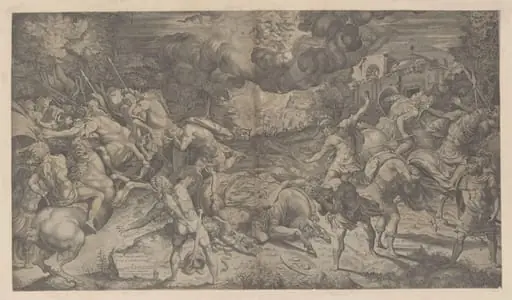 Conversion of Saul
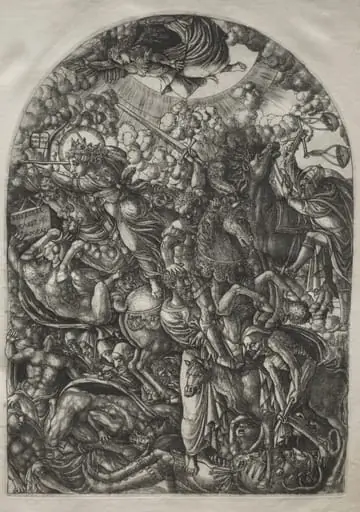 The Apocalypse: St. John Sees the Four Riders
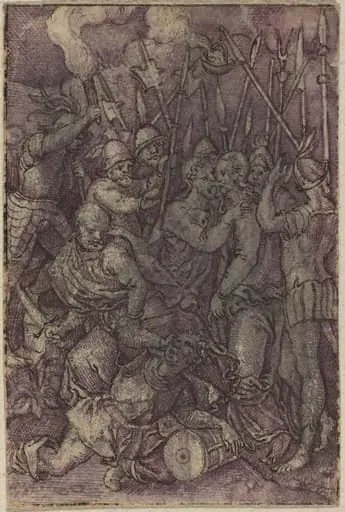 The Betrayal
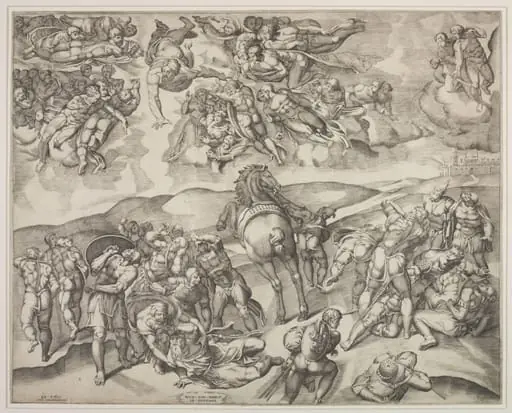 Conversion of St. Paul
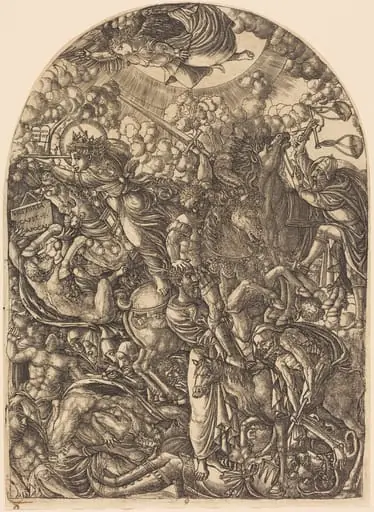 Saint John Sees the Four Horsemen
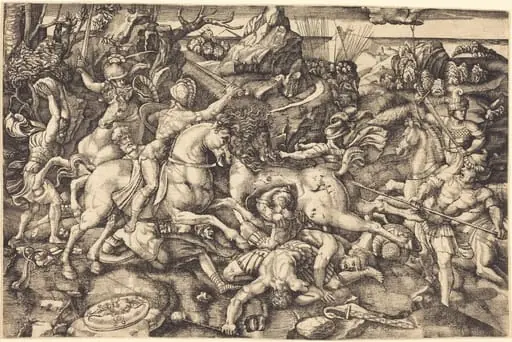 Combat between Horsemen and Foot Soldiers
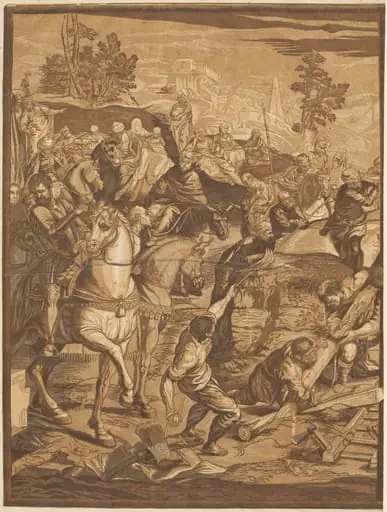 The Crucifixion (left panel)
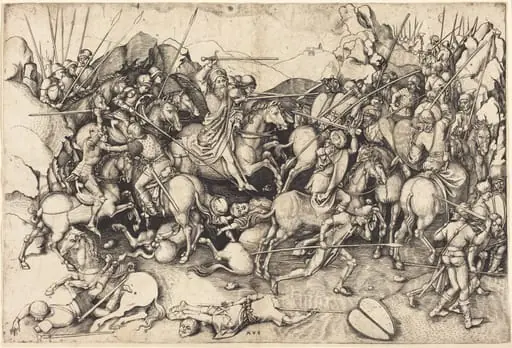 The Battle of Saint James at Clavijo
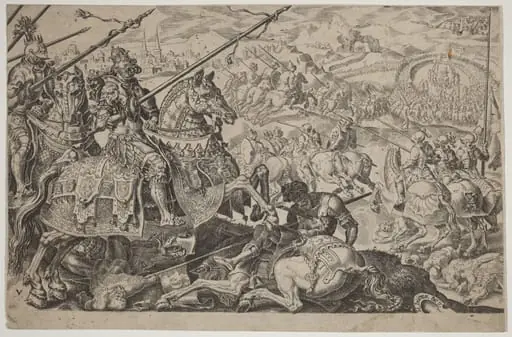 Suleiman the Magnificent Forced to Raise the Siege of Vienna
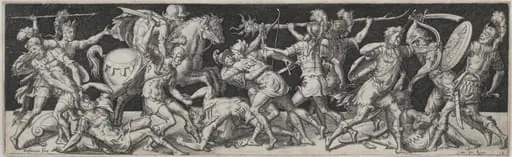 Combats and Triumphs No. 10
 Battle of the Milvian Bridge between the Roman Emperors Constantine I and Maxentius