Artwork
The Crucifixion (left panel)
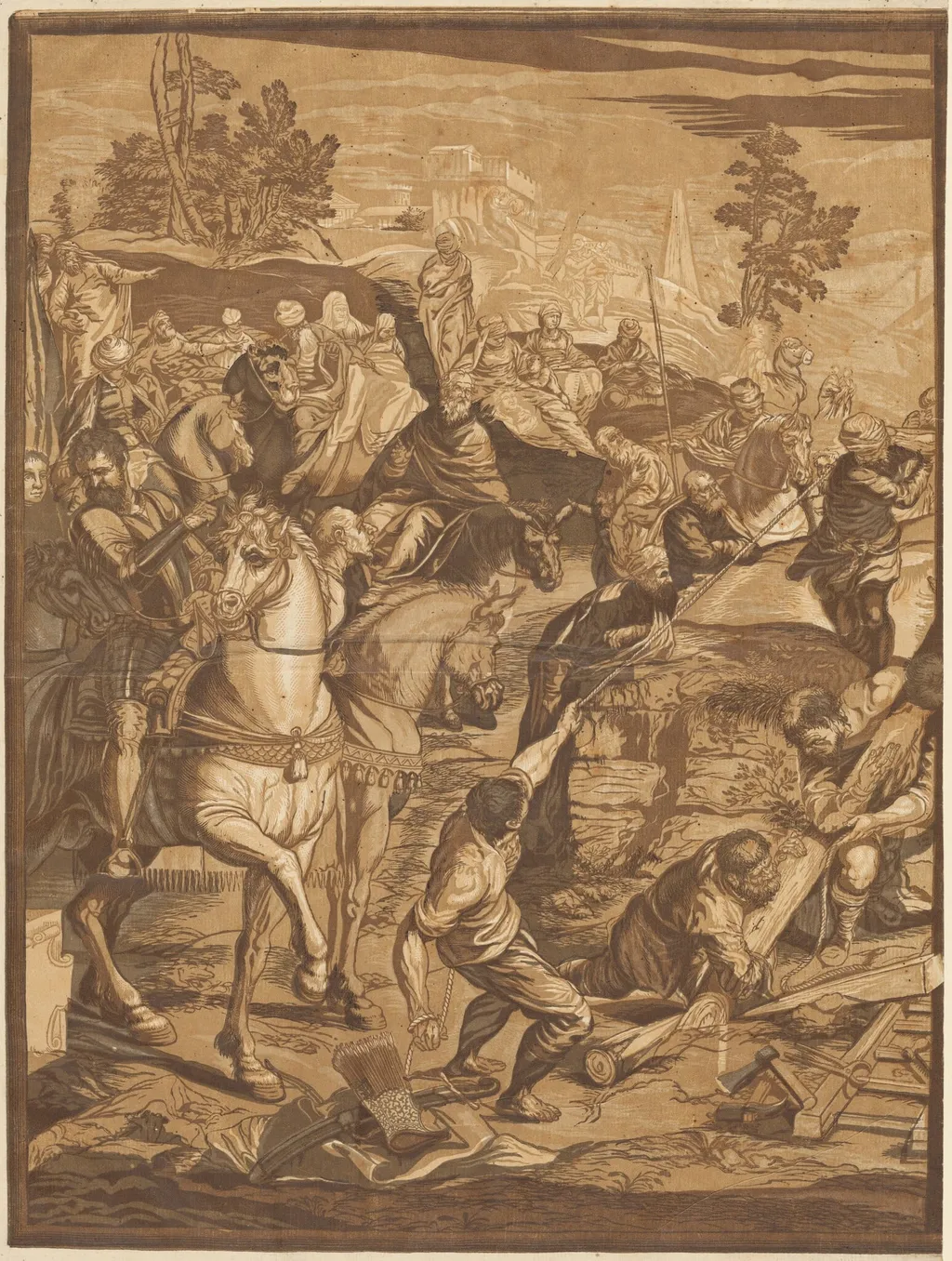
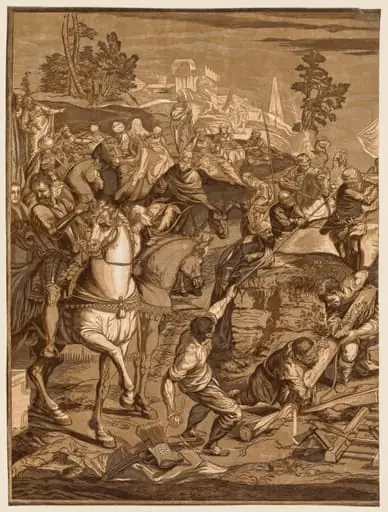
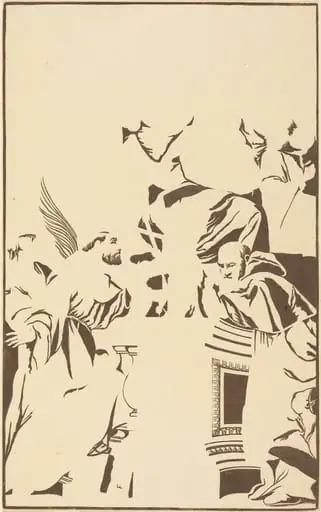
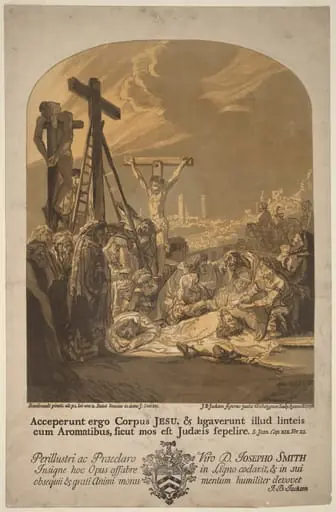
The Crucifixion (left panel) is an ink print by the Baroque artist John Baptist Jackson. It dates from 1741 and is held in the collection of the National Gallery of Art. Created in 1741, this chiaroscuro woodcut presents a tumultuous scene of combat beneath a storm‑laden sky.
About this work
Overview
Created in 1741, this chiaroscuro woodcut presents a tumultuous scene of combat beneath a storm‑laden sky. Rendered in a limited palette of buff, brown, gray and reddish‑brown, the image unfolds on laid paper, its figures locked in fierce movement amid rearing horses, clashing soldiers and distant silhouettes of architecture and ships.
Subject & Meaning
The composition captures a chaotic battle, emphasizing the intensity of conflict through tangled bodies and dramatic gestures. While the precise narrative is not identified, the dense arrangement of combatants and the ominous atmosphere suggest themes of struggle and upheaval, inviting viewers to contemplate the human cost of war.
Technique & Style
The artist employed four separate woodblocks, each inked with oil‑based pigments, to achieve layered tonal variations characteristic of chiaroscuro printing. By overlaying colors, subtle gradations of light and shadow emerge, producing deep contrasts and a warm, glowing effect despite the violent subject matter. The use of laid paper enhances the texture of the printed image.
History & Provenance
The piece forms the left panel of a larger multi‑panel composition, though the companion panels have not survived as a complete set.
British printmaker John Baptist Jackson, active in the eighteenth century, produced the work while working in Paris and Venice. Known for adapting oil‑painting compositions rather than mimicking ink drawings, Jackson’s prints often display a refined color range achieved through careful overprinting. The piece forms the left panel of a larger multi‑panel composition, though the companion panels have not survived as a complete set.
Context
Jackson’s practice reflects a broader eighteenth‑century interest in reproducing painted subjects for a wider audience, using the chiaroscuro woodcut to approximate the depth and richness of oil paintings. This approach positioned his prints between traditional monochrome woodcuts and the emerging color engraving techniques of the period.
Artist & collection

Artist
John Baptist Jackson (1701–1780) was a British artist, a woodcut printmaker of the eighteenth century.

![The Marriage at Cana [left plate], by John Baptist Jackson](https://artifactworldgallery.com/img/john-baptist-jackson--the-marriage-at-cana-left-plate--22bae83d46cc40b5-w320.webp)