Artwork
Chandi
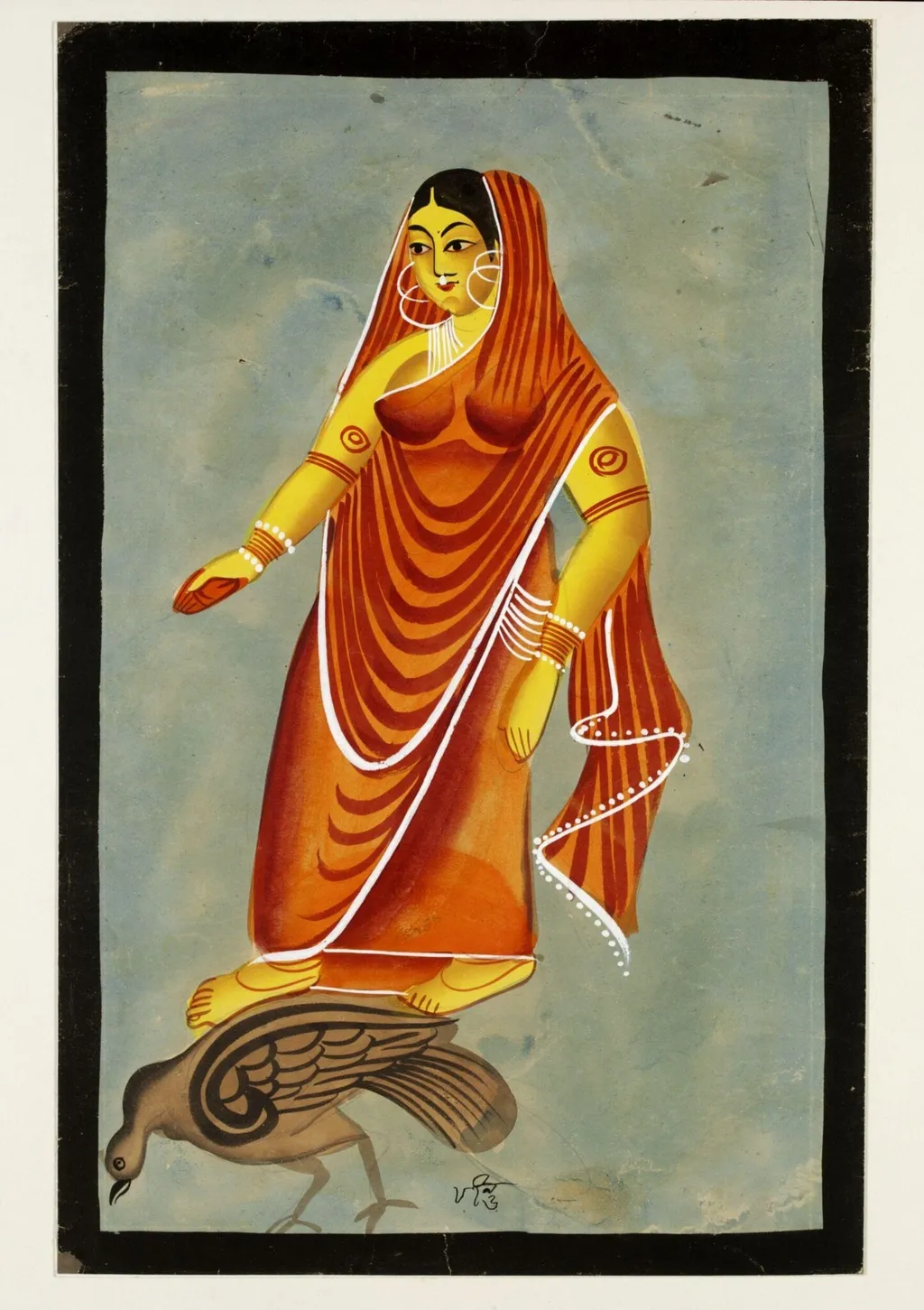
Chandi is a paint painting by the Impressionist artist Unknown. It dates from 1885 and is held in the collection of the Victoria and Albert Museum.
About this work
Overview
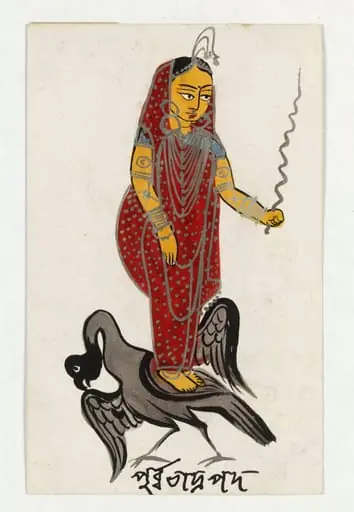
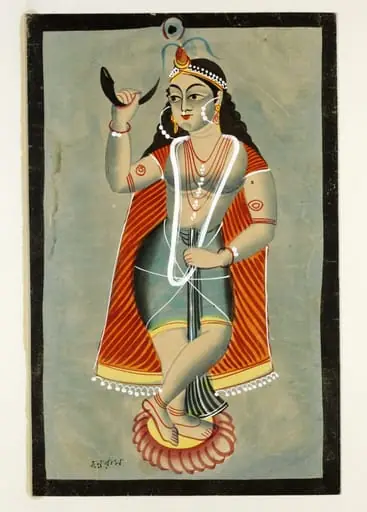
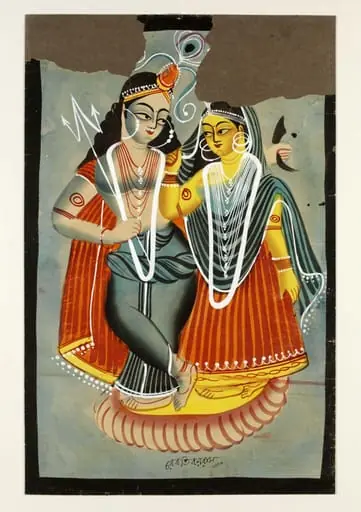
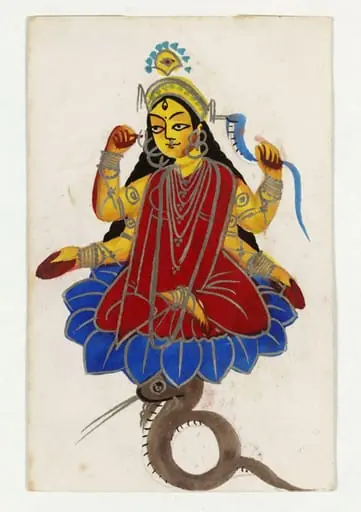
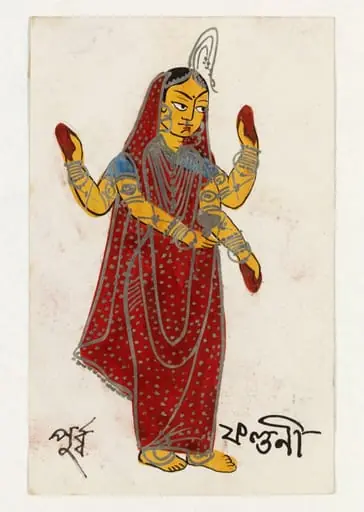
Created in 1885, *Chandi* is an opaque watercolour on paper depicting the Hindu goddess Chandi, a fierce form of Durga. The work originates from the Kalighat tradition of Bengal, where devotional imagery was produced for pilgrims and domestic worship. Its compact scale and bold outlines reflect the rapid, expressive style characteristic of artists working near the Kalighat temple in Kolkata.
Subject & Meaning
Her calm expression and upright posture convey authority without aggression, aligning with devotional portrayals that emphasize grace amid strength.
Chandi, shown standing atop a crane-like bird, embodies divine power and transcendence. The bird may symbolize the goddess’s dominion over earthly forces or her role as a vehicle of spiritual ascent. Her calm expression and upright posture convey authority without aggression, aligning with devotional portrayals that emphasize grace amid strength. The composition centers her as the unshakable focal point of cosmic order.
Technique & Style
The painting uses flat, unmodulated colours and strong black outlines typical of Kalighat art. Opaque watercolour on paper allows for vivid hues—red, yellow, and white on the sari—without shading or perspective. Folds in the fabric are rendered as smooth, rhythmic curves, and the background is a uniform pale blue, eliminating spatial depth. This stylized approach prioritizes symbolic clarity over naturalism.
History & Provenance
The painting was acquired from Miss M. Steele, who inherited it from her mother. Its journey from a devotional context in Bengal to a private Western collection reflects broader patterns of colonial-era art migration. While its exact origin within the Kalighat studio system remains undocumented, its style and materials firmly place it within the mid-to-late 19th-century production of Bengali scroll and panel paintings.
Context
Produced during a period of urban transformation in Kolkata, Kalighat paintings responded to changing religious practices and rising consumer culture. Artists adapted traditional iconography for a broader audience, often simplifying forms for mass appeal. *Chandi* exemplifies this shift—devotional yet commercially viable, blending sacred symbolism with the visual language of urban bazaar art.
Legacy
As part of the Kalighat corpus, *Chandi* contributes to the understanding of how Indian religious imagery evolved under colonial influence. Its stylistic economy and directness influenced later modernist reinterpretations of folk traditions. Though not widely exhibited, it remains a representative example of a once-thriving artistic practice that bridged spirituality and everyday life in 19th-century Bengal.
Artist & collection

 Domestic Scene
 Giacomo and Cardinal Marco, investing Andrea, Abbot of San Zeno, with his Benefice
 The Nymph of Fontainebleau
 Portrait of a Woman
 Madonna and Child with Saints in the Enclosed Garden
 Venus and Minerva
 Family Group of Four on Sofa
 Wall painting from Room H of the Villa of P. Fannius Synistor at Boscoreale