Artwork
Farfurie de formă tronconică; corpul vasului se ridică perpendicular în raport cu fundul acestuia, pe când gâtul și buza vasului sunt larg evazate. Atât pe fundul vasului cât și pe gâtul acestuia sunt ornamente florale, vegetale și geometrice: puncte. Cromatică: fond: crem; motive: albastru; verde; maro. Partea posterioară prezintă o ureche aplicată prin care se trece ața.
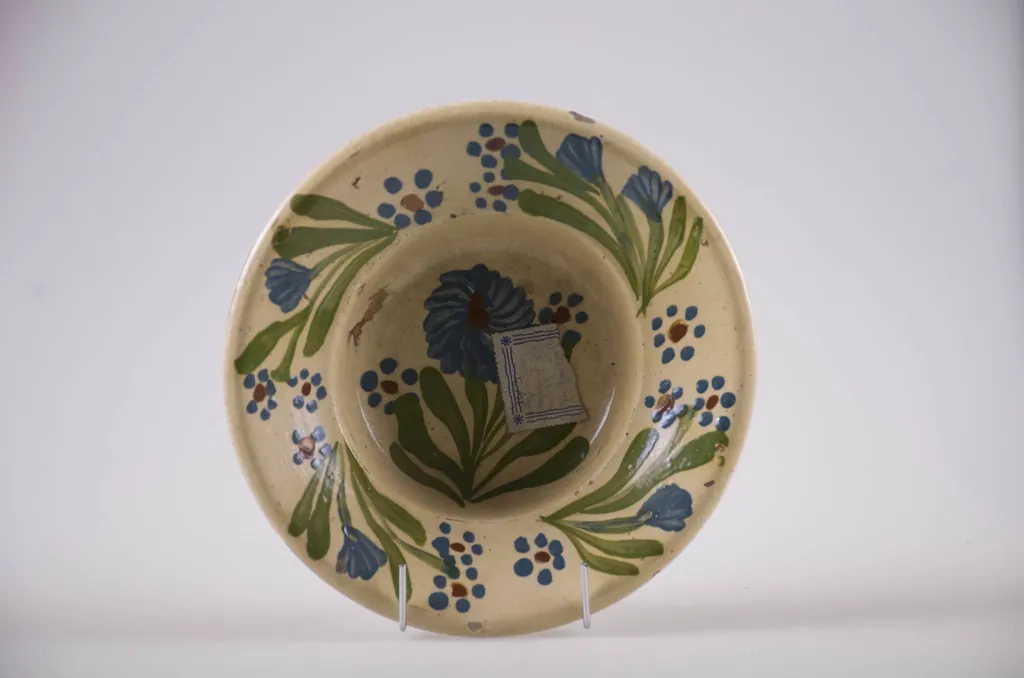
Farfurie de formă tronconică; corpul vasului se ridică perpendicular în raport cu fundul acestuia, pe când gâtul și buza vasului sunt larg evazate. Atât pe fundul vasului cât și pe gâtul acestuia sunt ornamente florale, vegetale și geometrice: puncte. Cromatică: fond: crem; motive: albastru; verde; maro. Partea posterioară prezintă o ureche aplicată prin care se trece ața. is a poster by Unknown. It dates from 1850 and is held in the collection of the ASTRA National Museum Complex. The object is a shallow, conical‑shaped ceramic dish whose body rises vertically from a flat base.
About this work
Overview
The object is a shallow, conical‑shaped ceramic dish whose body rises vertically from a flat base. Its rim flares outward markedly, and both the neck and lip are broadly evazated, giving the piece a wide opening. Small lateral handles are attached, likely intended for suspension.
Subject & Meaning
The exterior surface is adorned with stylised floral motifs, green foliage and geometric dot patterns. These decorative elements are arranged in bands that encircle the base and the neck, suggesting a concern for balanced visual rhythm rather than narrative representation.
Technique & Style
The vessel is made of fired clay and painted with a limited palette: a creamy background supporting blue flowers, green leaves and brown dots and lines. The application is flat, without gradation or shading, reflecting a straightforward, decorative painting technique typical of utilitarian ceramics.
History & Provenance
The piece includes a rear ear‑shaped attachment through which a cord could be threaded, indicating it was meant to be hung or displayed. No specific cultural or chronological attribution is provided, but the combination of form and painted motifs aligns with traditional folk ceramic practices.
Context
Such dishes were commonly used for serving or presenting food items, their wide mouths facilitating easy access. The decorative scheme mirrors broader regional aesthetics where bright floral patterns were applied to everyday wares to enhance visual appeal.
Artist & collection

 Domestic Scene
 Giacomo and Cardinal Marco, investing Andrea, Abbot of San Zeno, with his Benefice
 The Nymph of Fontainebleau
 Portrait of a Woman
 Madonna and Child with Saints in the Enclosed Garden
 Venus and Minerva
 Family Group of Four on Sofa
 Wall painting from Room H of the Villa of P. Fannius Synistor at Boscoreale
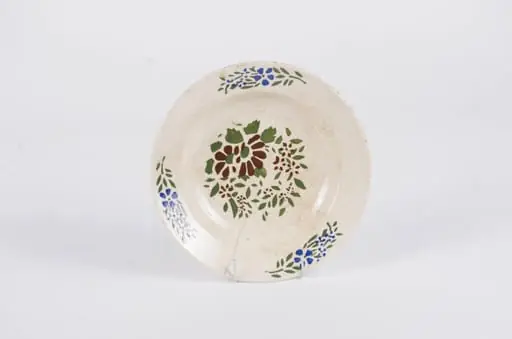 Farfuria este de formă tronconică, fiind smălțuită integral. Prezintă un decor floral-vegetal dispus pe fundul și pe buza vasului. Cromatică: fond alb; motive: verde; maro; albastru.
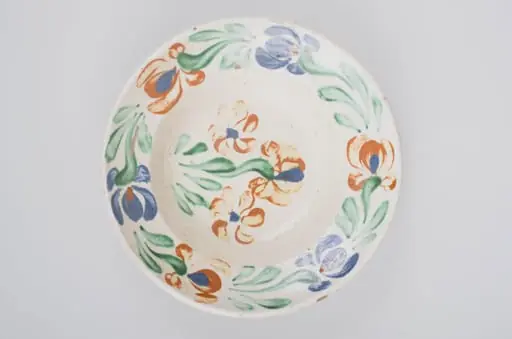 Farfurie cu fundul adâncit și buza evazată. Smălțuită numai în interior și scurgeri de smalț sub buză. Prezintă găuri pentru prinderea aței în vederea agățării. Decorată cu motive florale: central are trei flori iar pe margine un chenar floral. Cromatică: fond: alb; motive: maro; verde; albastru.
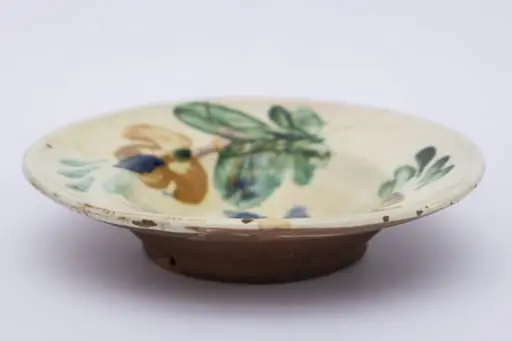 Farfurie de formă tronconică cu fundul adâncit și marginea evazată; smălțuită în interior. Ornament prin pictare ilustrând în plan central, pe fundul vasului, o floare albastră; pe margine chenar floral, reprezentat de două flori cărămizii cu frunze verzi. Pentru atârnare baza este perforată. Cromatică: fond: alb; motive: cărămiziu; verde; albastru; brun.
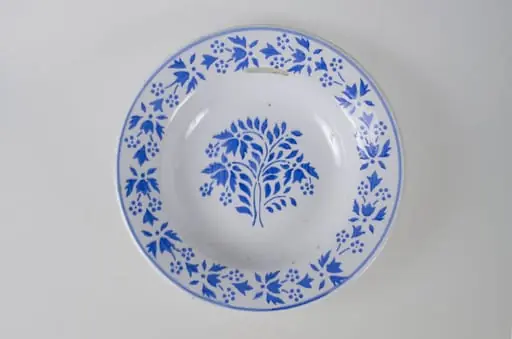 Farfuria are formă tronconică ușor adâncită. Pe buza vasului se identifică un registru decorativ floral, vegetal, continuu mărginit de o linie. Pe fund este o ștanță: o casă cu o pasăre pe acoperiș. Pe fundul vasului sunt două incizii în care este introdus șnurul folosit la agățarea vasului pe perete. Cromatică: fond: alb; motive: albastru.
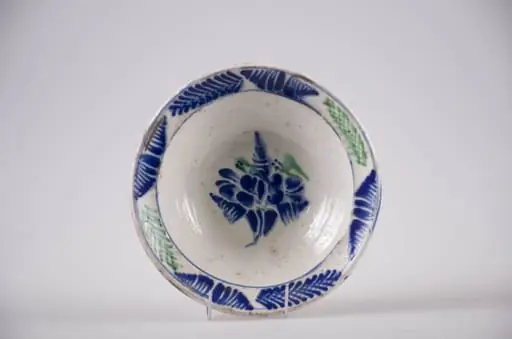 Blid de formă tronconică cu buza evazată, Smălțuit la interior. Decorul este format din ornamente florale dispuse pe motiv central: floare; motive marginale, fitomorfe: brăduț. Cromatică: verde și albastru pe fond alb.
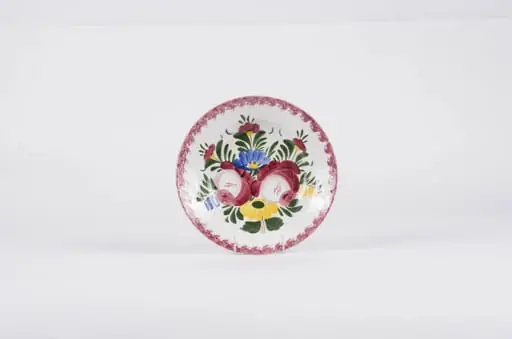 Vasul este de formă tronconică fiind smălțuit interior-exterior. Este confecționat din faianță Decorul este format din motive florale pictate pe fond alb; gura este decorată în stropi de culoare vișinie iar baza farfuriei este decorată cu motive florale. Se identifică șapte flori alcătuind motivul decorativ pe baza farfuriei. Pe spate inscripția este indescifrabilă. Cromatică: galben; albastru; verde; vișiniu; alb;
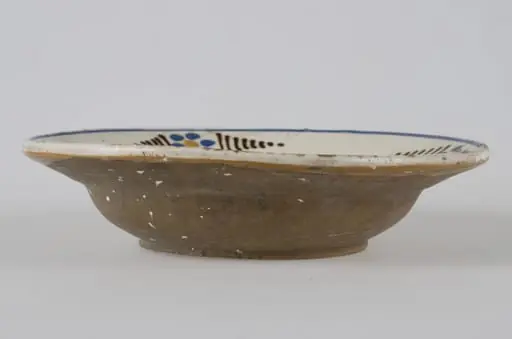 Vas adânc din lut, de formă tronconică, cu marginea evazată. Pe fundalul de culoare albă este decorat cu motive geometrice: linie circulară, linii curbe, puncte pe buza vasului; motive vegetale și florale, pe centrul vasului. Cromatică: fond: alb; motive: albastru; verde; maro; cărămiziu.
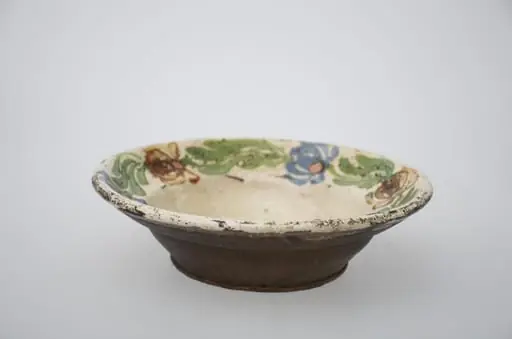 Farfurie de formă tronconică adâncă cu buza largă și decor pe fund, spre margini. Ornamentat cu motive florale. Cromatică: fond: alb; motive: maro; verde; albastru.
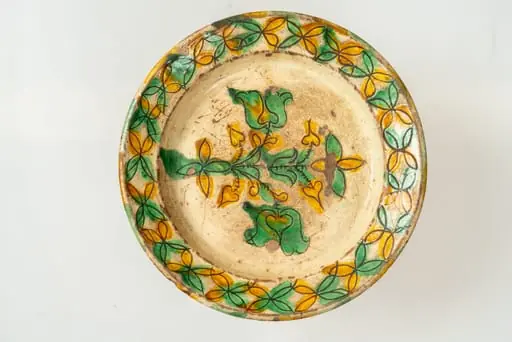 Farfurie de formă aplatizată, cu buză răsfrântă și muchie rotunjită. Piesa este modelată la roata olarului, angobată cu humă albă. Decorul este realizat prin sgrafitare în angoba crudă, peste care se aștern cu pensula culorile de smalț: verde și galben. Motivele decorative sunt florale și vegetale stilizate, dispuse pe fundul și pe buza farfuriei. Cromatica decorului: alb, galben, verde.
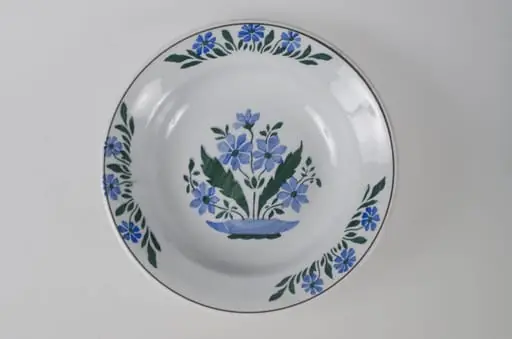 Vasul are formă tronconică, adâncită și este decorat cu motive florale dispuse în trei registre a câte trei flori pe margine, încadrate de o linie; în centru este decorat cu flori și frunze. Pe fund are trei cercuri concentrice care profilează trei registre. Vas evazat în partea superioară. Smălțuit interior-exterior. Cromatică: fond: alb; motive: verde; albastru; negru.