Artwork
The Young Emperor Akbar Arrests the Insolent Shah Abu’l-Maali, Page from a Manuscript of the Akbarnama
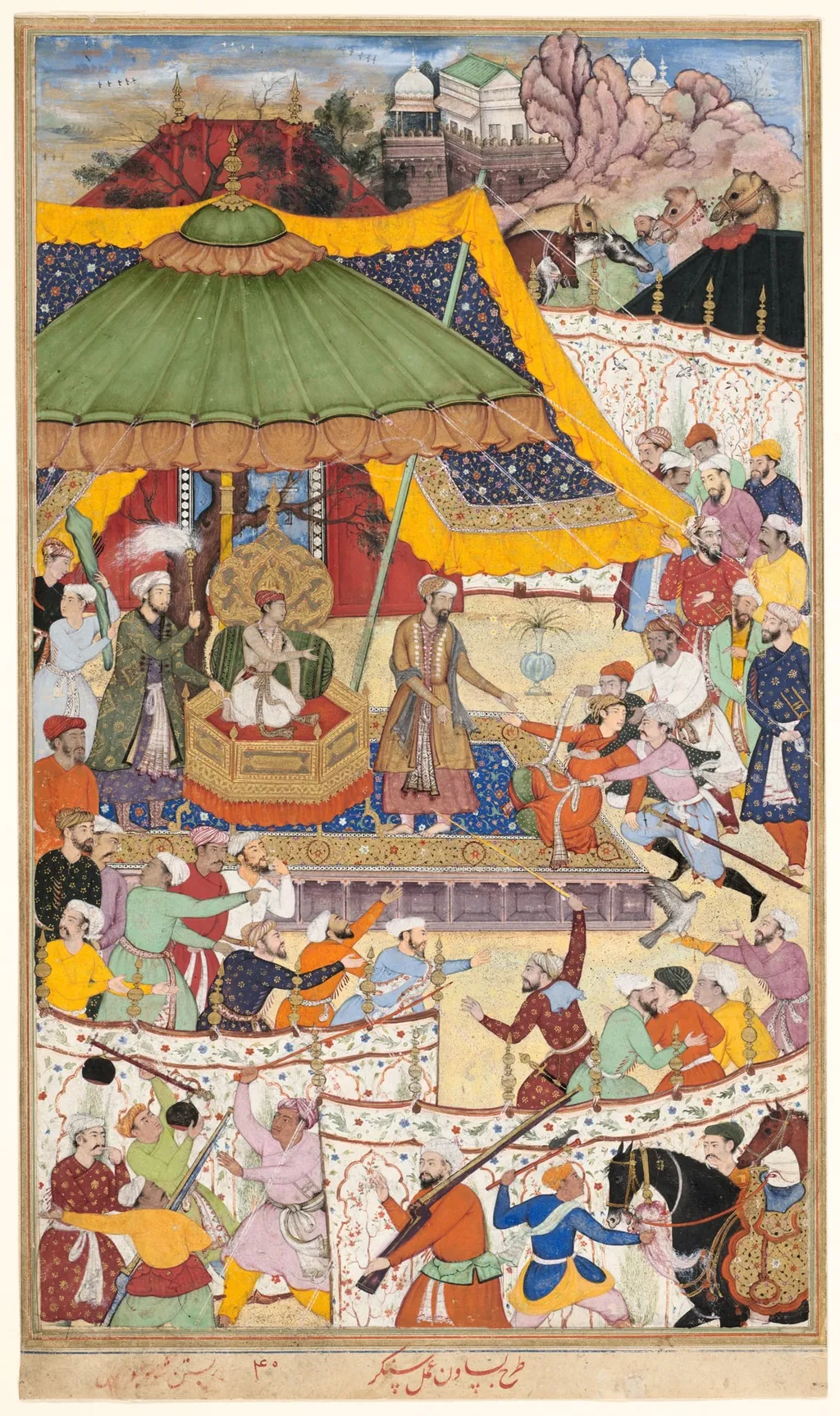
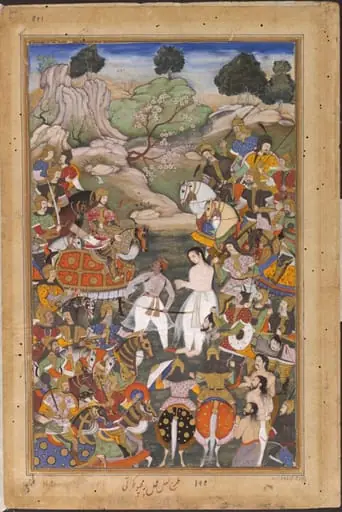
The Young Emperor Akbar Arrests the Insolent Shah Abu’l-Maali, Page from a Manuscript of the Akbarnama is a watercolor painting by the Mughal Painting artist Basawan. It dates from 1590 and is held in the collection of the Art Institute of Chicago. This page originates from the Akbarnama, a multi-volume historical chronicle commissioned by Emperor Akbar to record his reign.
About this work
Overview
Created between 1590 and 1596, the manuscript pairs text by Abu’l Fazl with detailed illustrations produced by a royal atelier of approximately fifty artists.
This page originates from the Akbarnama, a multi-volume historical chronicle commissioned by Emperor Akbar to record his reign. Created between 1590 and 1596, the manuscript pairs text by Abu’l Fazl with detailed illustrations produced by a royal atelier of approximately fifty artists. The specific scene depicted captures a pivotal moment early in Akbar’s rule, rendered in opaque watercolor and gold on paper, reflecting the refined aesthetic of Mughal court painting.
Subject & Meaning
The image portrays thirteen-year-old Akbar, three days after ascending the throne, observing the arrest of Shah Abu’l-Maali, a courtier who had shown disrespect. Seated on an ornate throne within a garden tent, the emperor’s stillness contrasts with the physical confrontation unfolding below. The moment symbolizes the transition from regency to sovereign authority, asserting Akbar’s personal power despite his youth and the lingering influence of his former guardian, Bairam Khan.
Technique & Style
The painting employs fine brushwork and layered glazes to achieve vivid color and delicate detail. Gold accents highlight the throne and textiles, while the garden setting is rendered with precise, miniature trees and patterned carpets. Basawan, credited in red ink at the lower margin, focused on expressive portraiture, capturing the psychological tension between the youthful emperor, the standing regent, and the crouching courtier in their distinct postures and facial expressions.
History & Provenance
Commissioned in 1589, the Akbarnama was produced over several years under imperial supervision. The illustrated manuscript was intended for the emperor’s personal use and as a statement of Mughal legitimacy. Basawan’s signature confirms his role as lead designer of this scene. The work remained in the imperial collection until the 18th century, later dispersed through colonial-era acquisitions and now held in major museum collections.
Context
Akbar’s reign marked a shift toward secular governance and cultural synthesis in the Mughal Empire. He promoted historical documentation as a tool of statecraft, encouraging the fusion of Persian, Indian, and European artistic traditions. The Akbarnama’s illustrations, including this scene, reflect his interest in portraying governance, justice, and personal authority through visual narrative, reinforcing imperial ideology.
Legacy
The Akbarnama set a precedent for illustrated historical texts in South Asia, influencing later Mughal and regional manuscript traditions. Basawan’s naturalistic portraiture and attention to psychological nuance became hallmarks of Mughal painting. This page, among others, demonstrates how imperial power was visually constructed—not through grandeur alone, but through intimate, controlled moments of authority.
Artist & collection
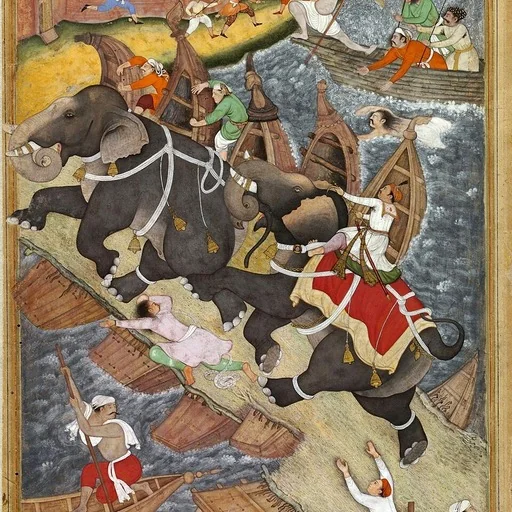
Artist
Basāwan, or Basāvan, was an Indian miniature painter in the Mughal style. He was known by his contemporaries as a skilled colorist and keen observer of human nature, and for his use of portraiture in the illustrations…

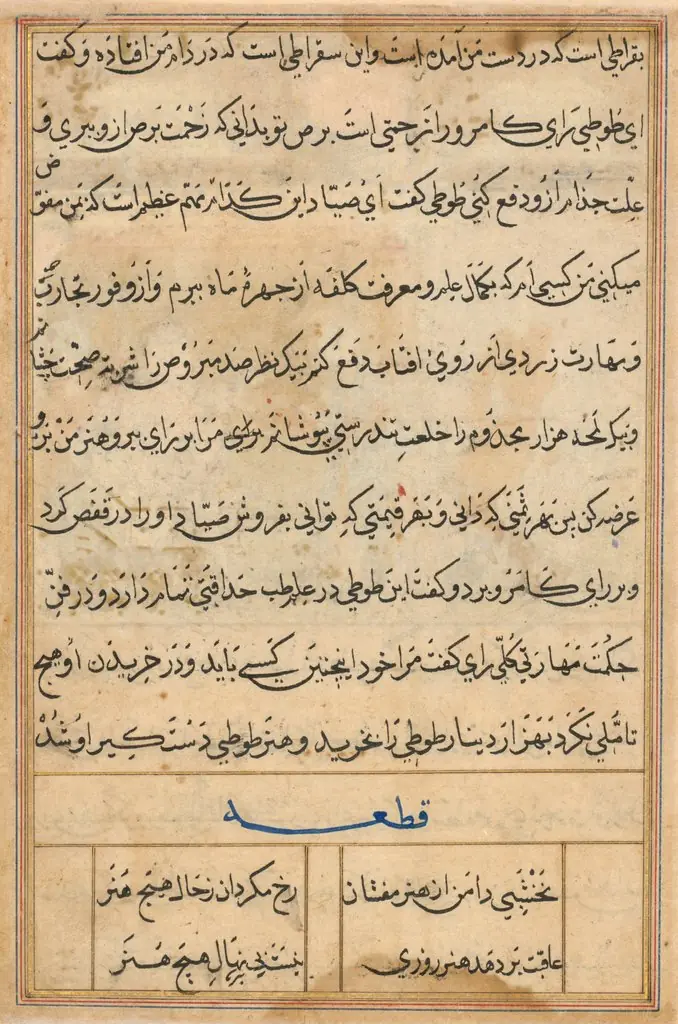 Page from Tales of a Parrot (Tuti-nama): text page
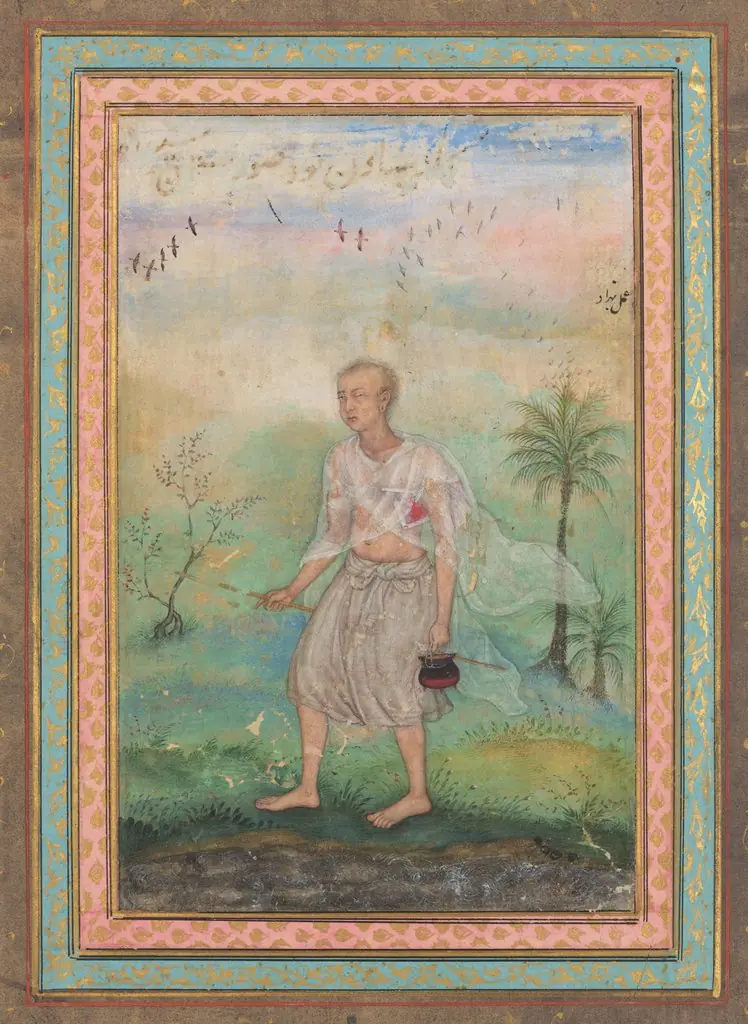 Jain Ascetic Walking Along a Riverbank
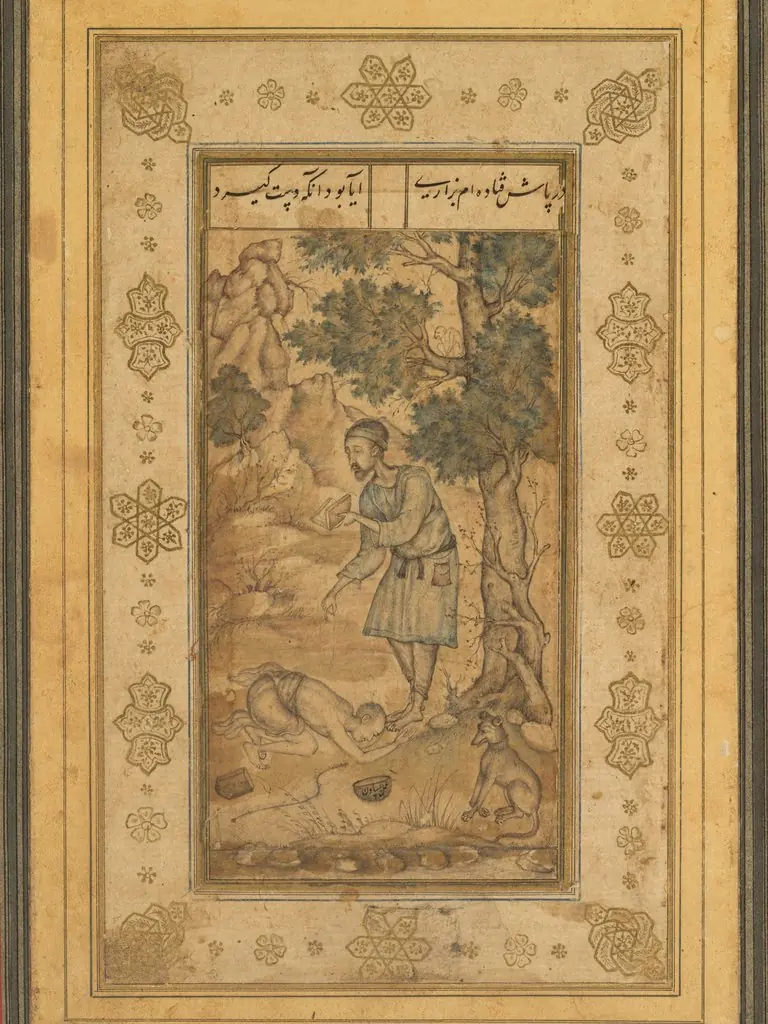 A mendicant bowing before a holy man, from the Prince Salim Album
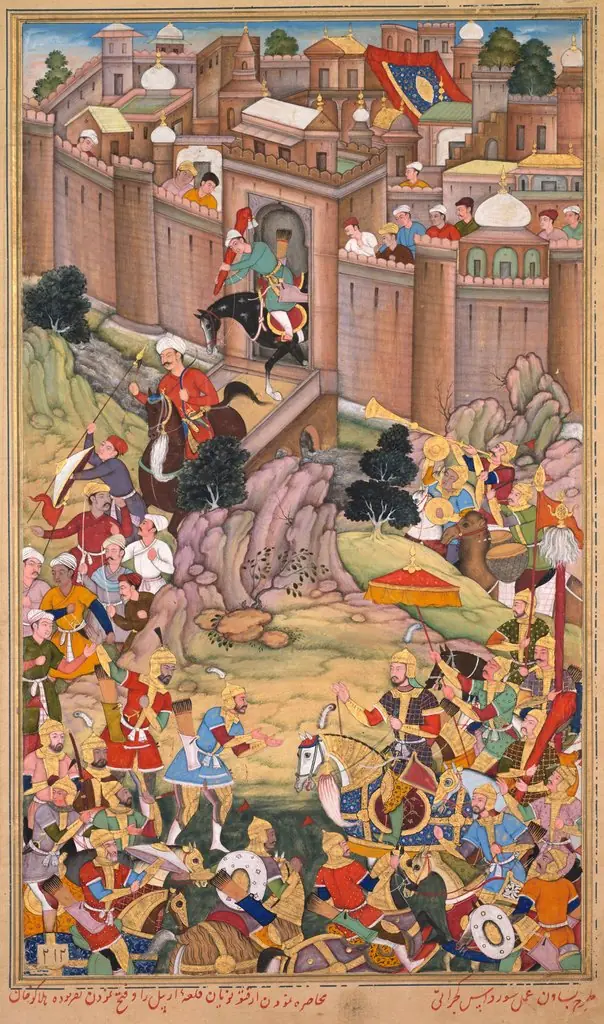 The siege of Arbela in the era of Hulagu Khan, from a Chingiz-nama (Book of Chingiz Khan) of the Jami al-tavarikh (Compendium of Chronicles) of Rashid al-Din (Persian, 1247–1318)
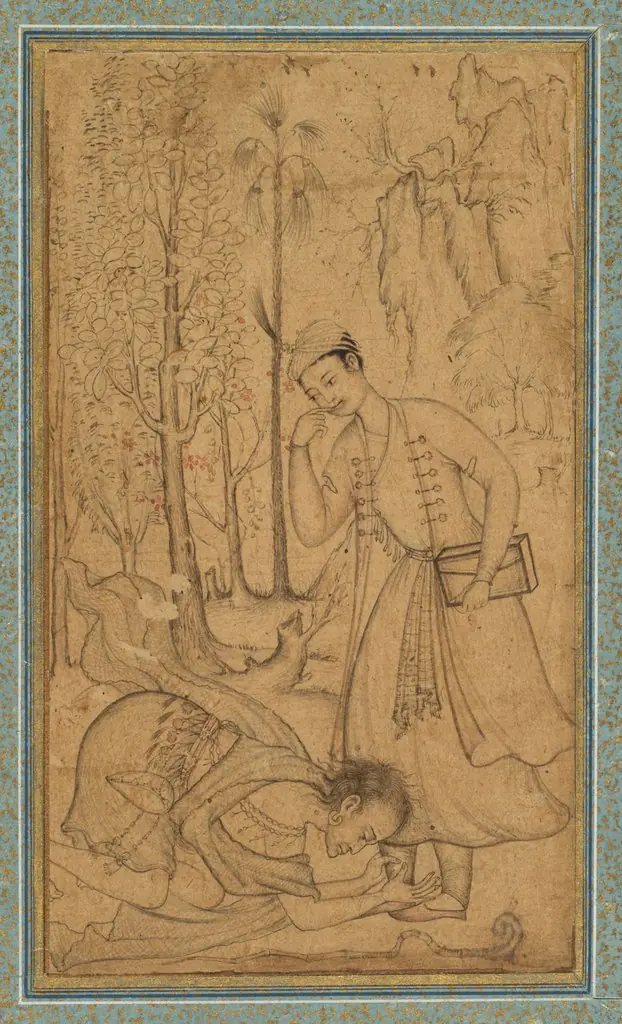 A holy man prostrating himself before a learned prince
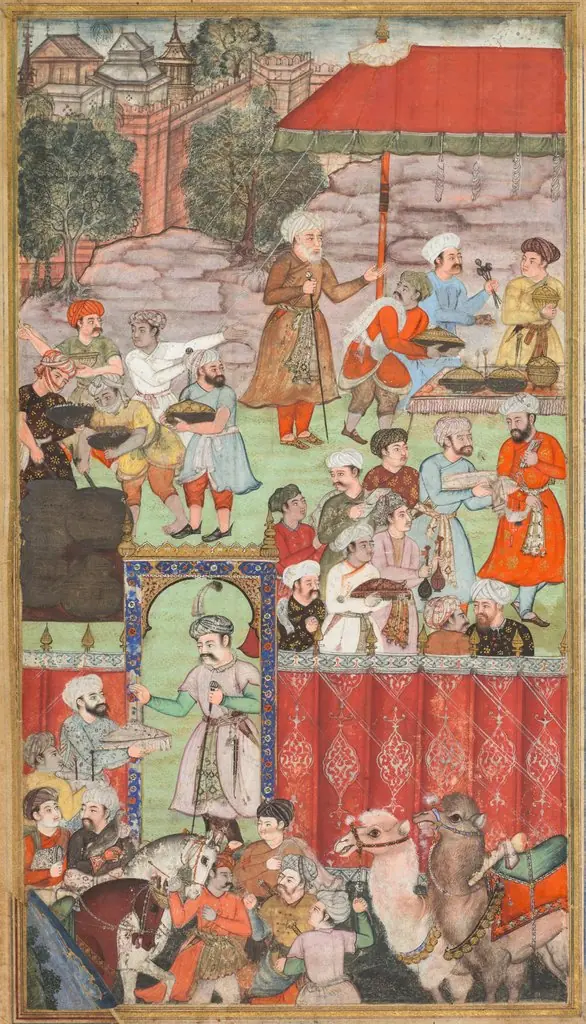 A feast for Babur hosted by his half-brother Jahangir Mirza in Ghazni in May 1505, from a Babur-nama (Memoirs of Babur)
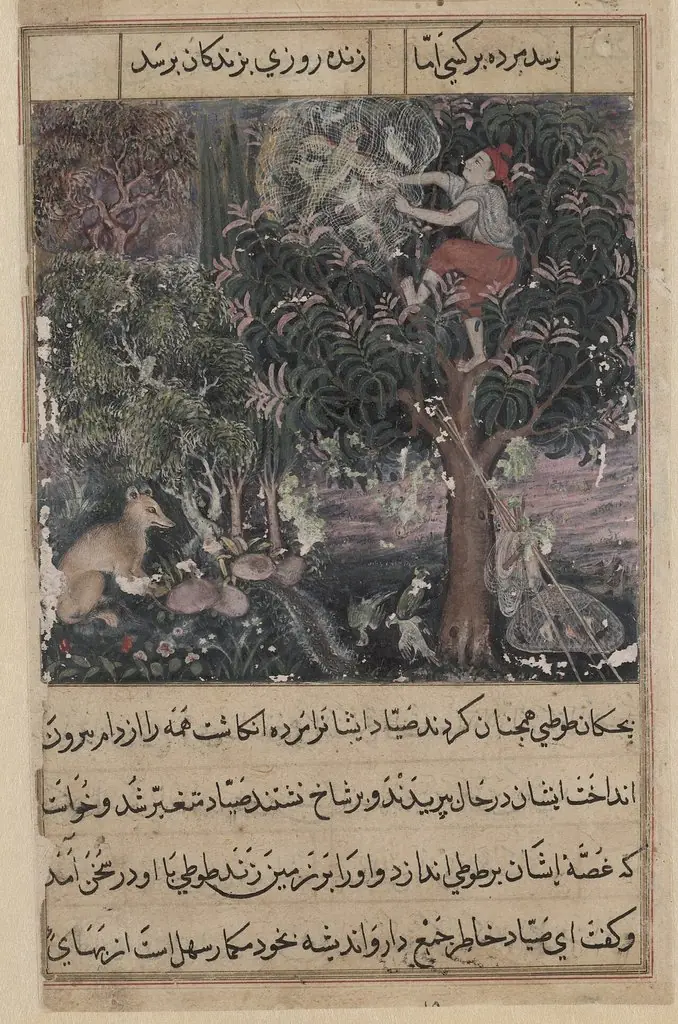 The hunter throws away the baby parrots, who pretend to be dead, and captures the mother, from a Tuti-nama (Tales of a Parrot): Fifth Night
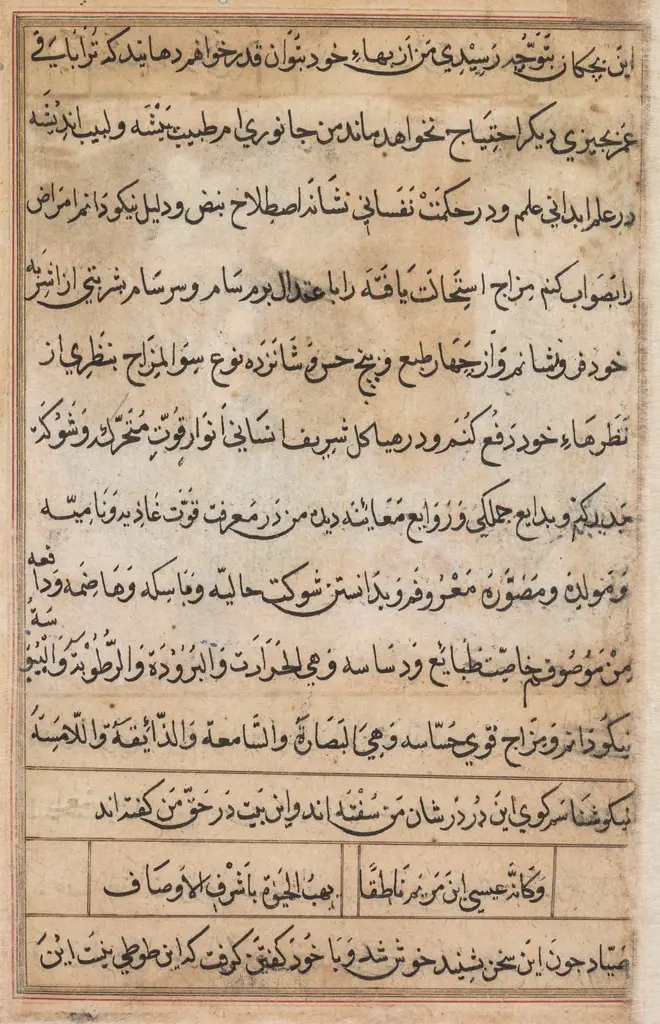 Page from Tales of a Parrot (Tuti-nama): text page
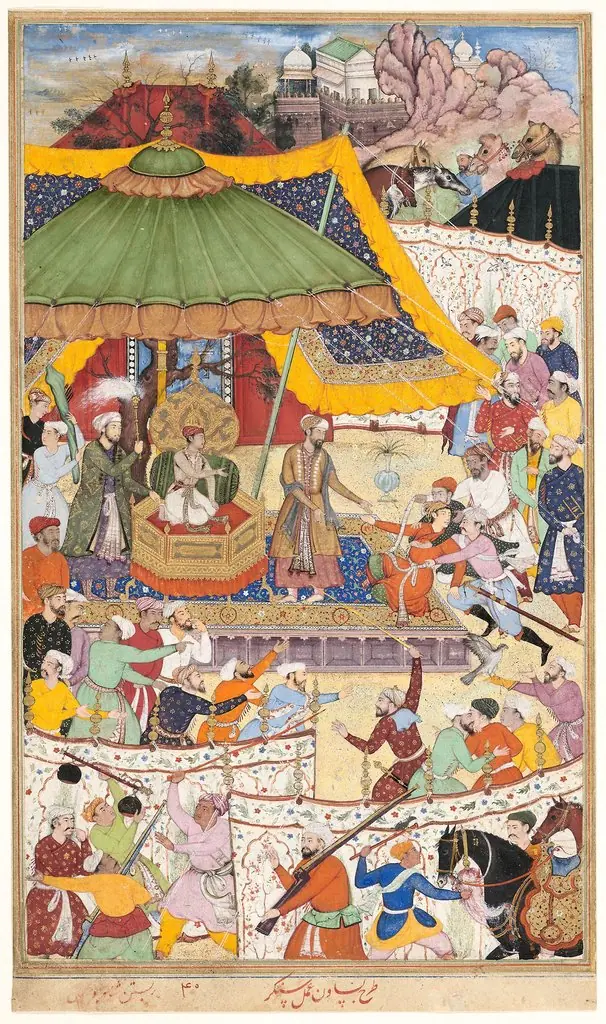 The Young Emperor Akbar Arrests the Insolent Shah Abu’l-Maali, page from a manuscript of the Akbarnama
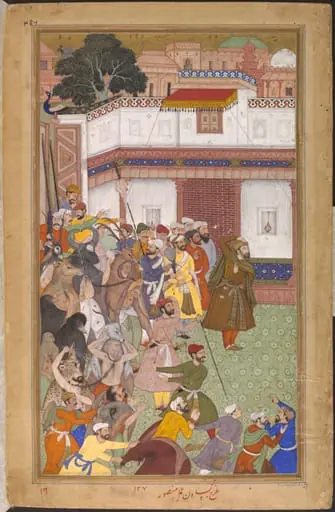 Husain Quli and Akbar
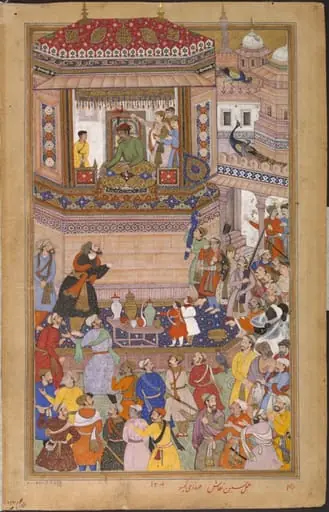 Untitled
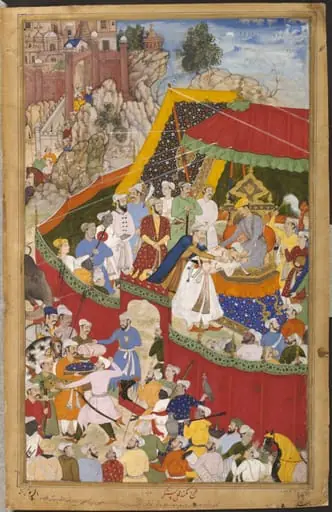 Rai Surjan Hada making Submission to Akbar
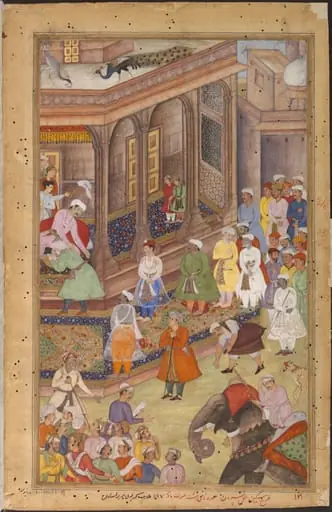 Untitled
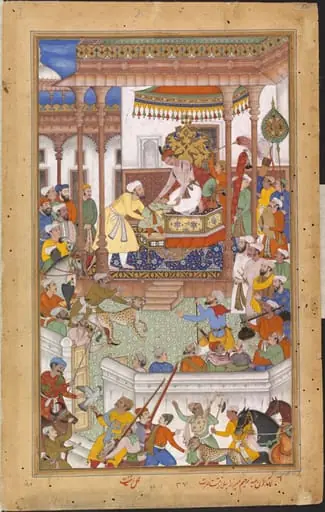 Akbar and Abdu'r Rahim
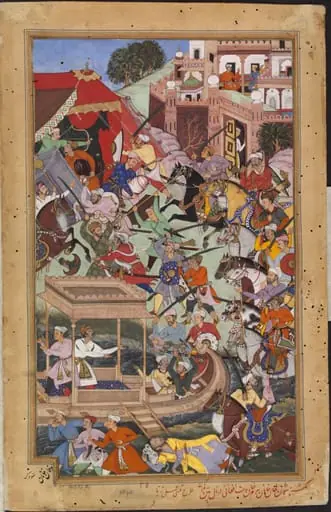 Bairam Khan is Assassinated by an Afghan at Patan
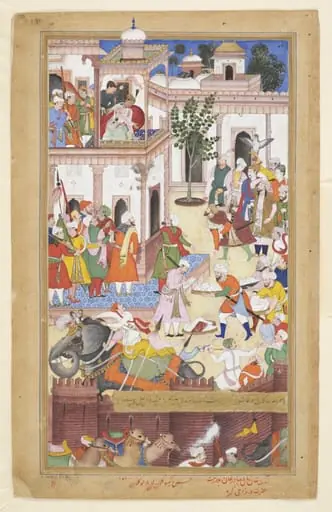 Ali Quli, Bahadur Khan and Akbar
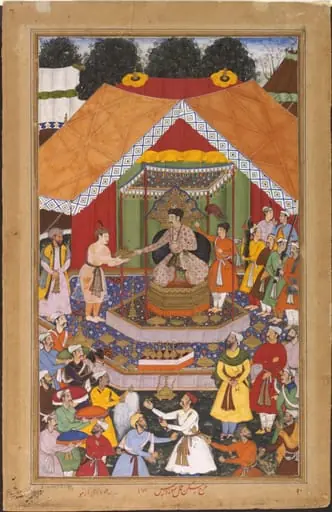 Akbar and Azim Khan at Dipalpur
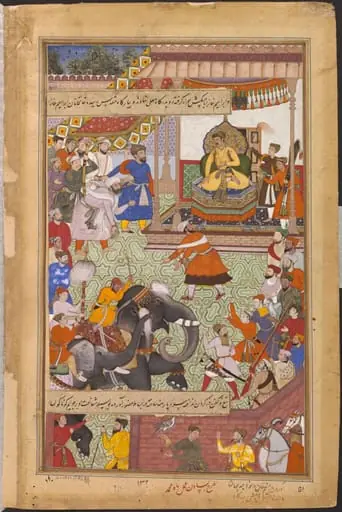 Mu'nim Khan and Khwaja Jahan
 Daud Shah