Artwork
Iisus - Ochiul neadormit
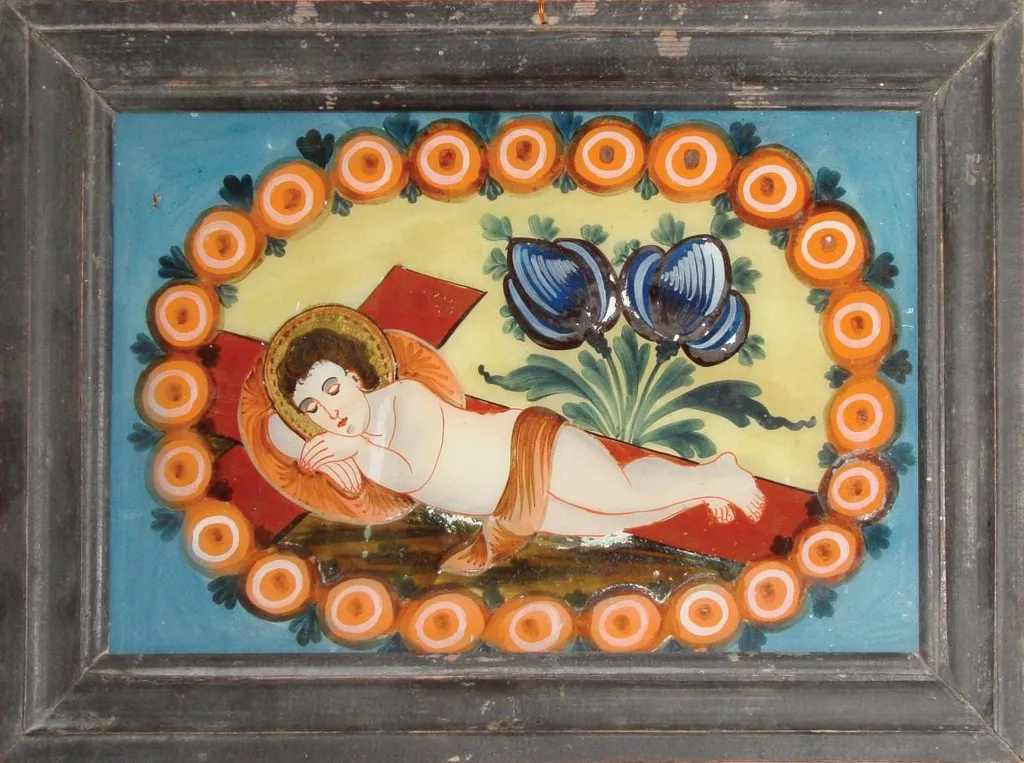
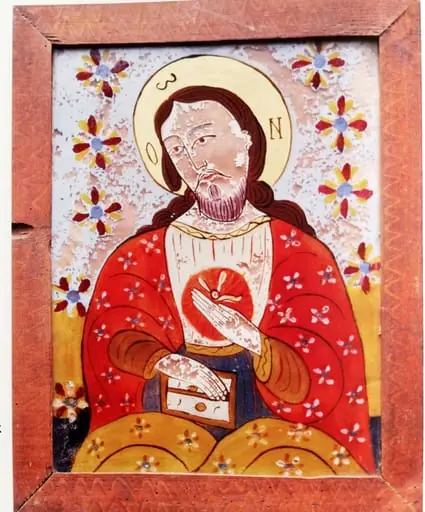
Iisus - Ochiul neadormit is a drawing by Unknown. It dates from 1850 and is held in the collection of the Alba Iulia Orthodox Archdiocese. A small devotional image depicts a reclining figure with a golden halo, resting on a red textile.
About this work
Overview
The background is a flat yellow field adorned with two blue shells and stylized green foliage, all enclosed within a border of alternating orange circles.
A small devotional image depicts a reclining figure with a golden halo, resting on a red textile. The background is a flat yellow field adorned with two blue shells and stylized green foliage, all enclosed within a border of alternating orange circles. The composition is deliberately simplified, with bold colors and minimal detail, evoking a handcrafted, folkloric aesthetic common in regional religious art traditions.
Subject & Meaning
The figure, identified as Jesus, is shown in repose, a rare depiction that emphasizes divine stillness over action. The halo affirms his sacred status, while the closed eyes suggest sleep or contemplation. The shells may reference pilgrimage or baptism, and the plants could symbolize eternal life. Together, these elements frame the image as an object of quiet veneration rather than dramatic narrative.
Technique & Style
The painting employs flat planes of unmodulated color and clear outlines, avoiding shading or perspective. Forms are reduced to essential shapes—circles, arcs, and straight lines—creating a decorative rhythm. The use of bright, non-naturalistic hues and repetitive border motifs aligns with vernacular religious art, where symbolic clarity outweighs realism, prioritizing spiritual resonance over anatomical accuracy.
History & Provenance
The work’s origins are likely tied to local religious communities in Eastern Europe, where such small-scale icons were produced for domestic altars or personal devotion. Its materials and style suggest it was made by an itinerant or amateur artist, possibly in the 18th or 19th century. No documented ownership history exists, but similar pieces survive in regional church collections and ethnographic archives.
Context
This image reflects a tradition of folk iconography that flourished outside formal ecclesiastical workshops. In rural areas, where trained iconographers were scarce, local artisans adapted religious motifs using accessible materials and inherited visual codes. Such works bridged liturgical needs and community aesthetics, offering accessible spiritual imagery rooted in everyday visual language.
Legacy
Though not part of the canonical iconographic tradition, this piece contributes to a broader understanding of how faith was visually expressed beyond institutional art. Its survival in private or regional collections highlights the persistence of vernacular religious expression, offering insight into the devotional lives of ordinary people who shaped belief through handmade imagery.
Artist & collection
 Domestic Scene
 Giacomo and Cardinal Marco, investing Andrea, Abbot of San Zeno, with his Benefice
 The Nymph of Fontainebleau
 Portrait of a Woman
 Madonna and Child with Saints in the Enclosed Garden
 Venus and Minerva
 Family Group of Four on Sofa
 Wall painting from Room H of the Villa of P. Fannius Synistor at Boscoreale
 Iisus și Ioan copii; Punerea în mormânt
 Ioan copil cu mielul
 Iisus cu vița
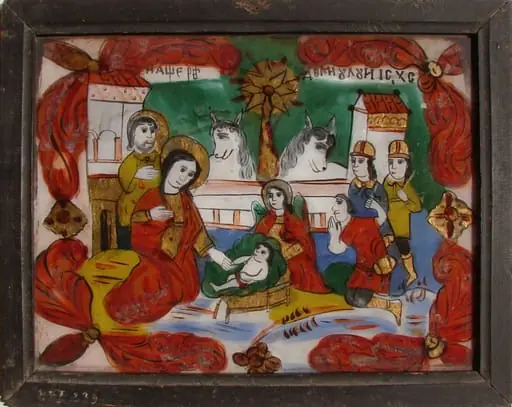 Nașterea lui Iisus
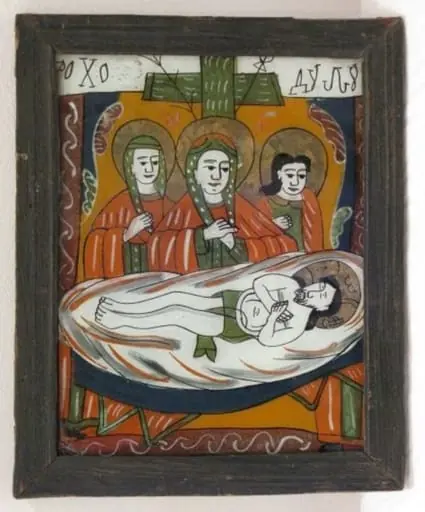 Plângerea lui Iisus
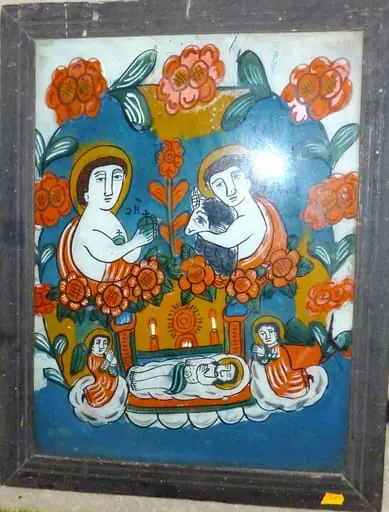
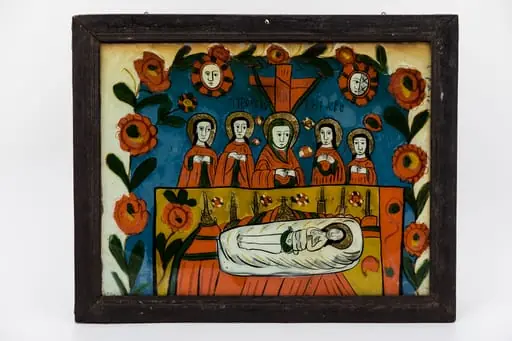 Icoana reprezintă Punerea în mormânt a Mântuitorului Iisus Hristos. Prohodul Domnului. Trupul Mântuitorului Iisus Hristos, fiind coborât de pe cruce, este învelit în țesătura giulgiului alb-gri, cu fire diafane galbene de lumină, amintind de Lumina Învierii. Maica Domnului împreună cu Sfinții Iosif din Arimateea, Nicodim și două femei mironosițe aducătoare de mir țin în brațe trupul Mântuitorului. Compozițional se creează astfel o imagine concentrică de corabie, cu Crucea Răstignirii ca și catarg, corabia prefigurând Biserica. Giulgiul și îmbrățișarea celor apropiați, uniți întru dragoste și suferință, reprezintă axa orizontală perpendiculară pe Cruce. Compoziția este echilibrată, simetrică și circulară. Maica Domnului este îmbrăcată în veșmânt cu maforiom roșu vermillon, cu sacos roșu vermillon și interiorul căptușit cu verde văratic. Fondul icoanei este cerul albastru ceruleum-cobalt, în registrul superior și de mijloc și un spațiu de galben-chihlmbar, în registrul inferior, în jurul mormântului Mântuitorului Iisus Hristos. Întreaga compoziție iconografică este încadrată de un chenar decorativ geometrizant alb, dublat de un chenar fitomorf, format dintr-o ghirlandă de 10-12 ruje roșii vermillon, cu interiorul galben-verde. În ghirlanda de ruje, sunt intercalate cele două elemente astrale martore: Soarele și Luna. Simetric și armonios, sunt 6 sfeșnice cu lumânări arzânde, lângă Trupul Mântuitorului Iisus Hristos, învăluit în giulgiu. Cromatica este armonioasă și luminos-pastelată: roșu vermillon, albastru cobalt, ceruleum, verde văratic-forest, galben chihlimbar, alb și negru. Inscripția din româno-chirilică se traduce Îngroparea Lui IC XC Iisus Hristos. Icoana este din Țara Oltului, Șcheii Brașovului.
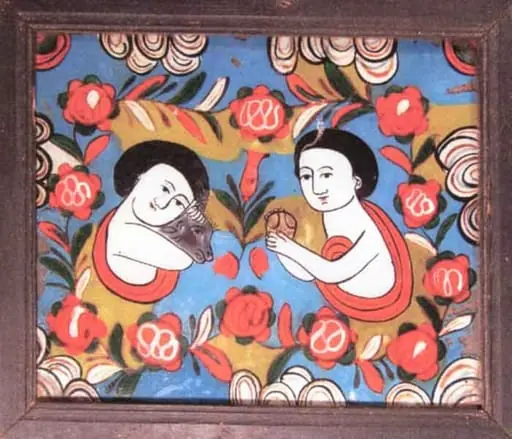 Iisus și Ioan, copii (Ioan cu mielul)
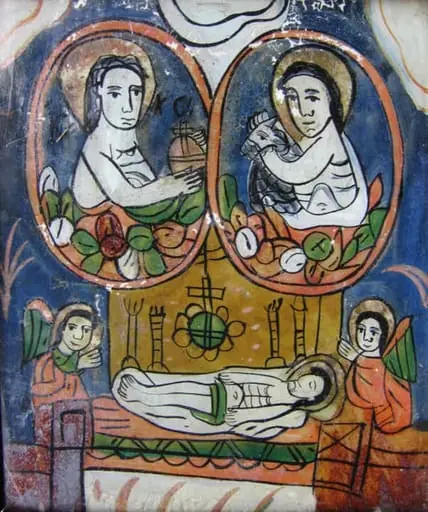 Ioan Botezătorul cu mielul și Iisus; Îngroparea lui Iisus
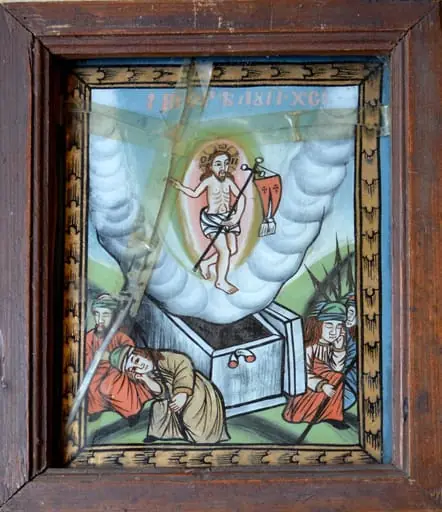 Învierea Domnului
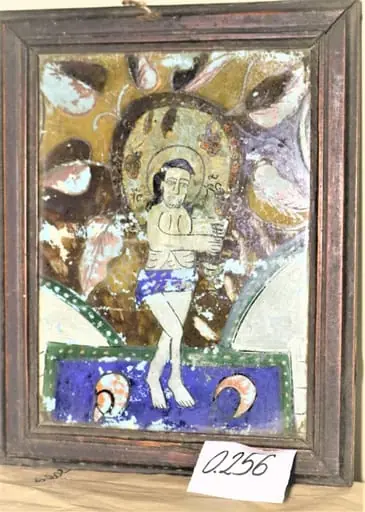
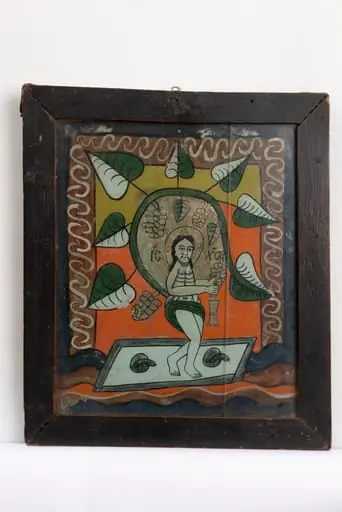 Iisus Hristos este reprezentat în plan central, stând în picioare pe teasc. Din coasta dreaptă pornește vița de vie, care formează o arcadă deasupra lui Hristos și se termină cu un ciorchine în mâinile Mântuitorului, pe care Acesta îl stoarce în potirul Sfintei Euharistii. Fondul e decorat cu frunze simple, esențializate, încadrate pe trei laturi cu motivul torsadei. Cromatica icoanei se compune din tonuri de roșu, verde, albastru, maro, alb și auriu. Rama icoanei e simplă și e formată din îmbinarea a patru baghete de lemn, vopsite maro. Icoana are o protecție pe față alcătuită din două bucăți de sticlă.
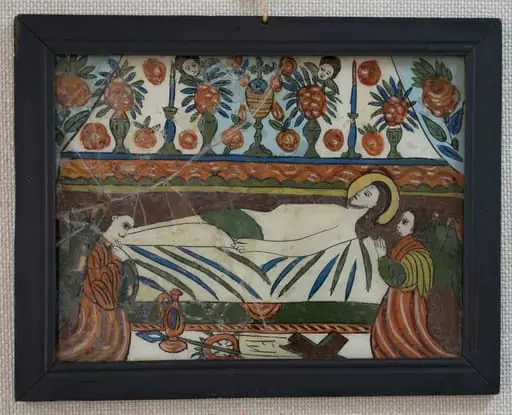 Icoana este pictată după un model central european, influența apuseană fiind evidentă. În prim plan, Isus redat din profil, întins pe un catafalc acoperit cu un giulgiu alb. Părul lung castaniu, ochii închiși, barba scurtă, redarea anatomiei diferită de specificul transilvan. Nimb simplu, umplut cu bronz auriu. Mijlocul este înfășurat cu un veșmânt verde, mâinile întinse pe lângă corp. În prim plan, la capetele catafalcului, câte un înger îngenuncheat, redat din profil. Îngerii au fețele diforme, veșminte roșii, aripi verzi. În spațiul dintre ei, în fața catafalcului se află o amforă, o lance, cununa de spini și o cruce cu inscriția INRI(probabil). În partea superioară a compoziției- planul doi, pe un postament decorat cu unda apei(iconarul a introdus motive familiare în redarea glacială apuseană), un potir cu o cruce, două lumânări în sfeșnice, intercalate cu vase cu flori, decor floral pe fond bleu/ alb; doi heruvimi hilari printre flori. În colțurile superioare- trandafiri roșii pe fond bleu. Compoziția echilibrată, naivă dar atent executată, desenul îngrijit, redarea chipurilor forțată, stângace, paleta cromatică bogată, culorile vii, intense, în dezacord cu tema. Rama, baghetată, profilată, realizată din patru șipci de brad îmbinate oblic la colțuri, de culoare neagră. Stratul pictural prezintă spart, pelicula de culoare în stare bună.
 Iisus cu inima