Artwork
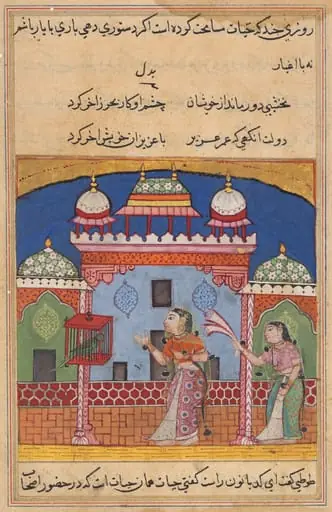
The Parrot Addresses Khujasta at the Beginning of the Eighth Night, from a Tuti-nama (Tales of a Parrot)
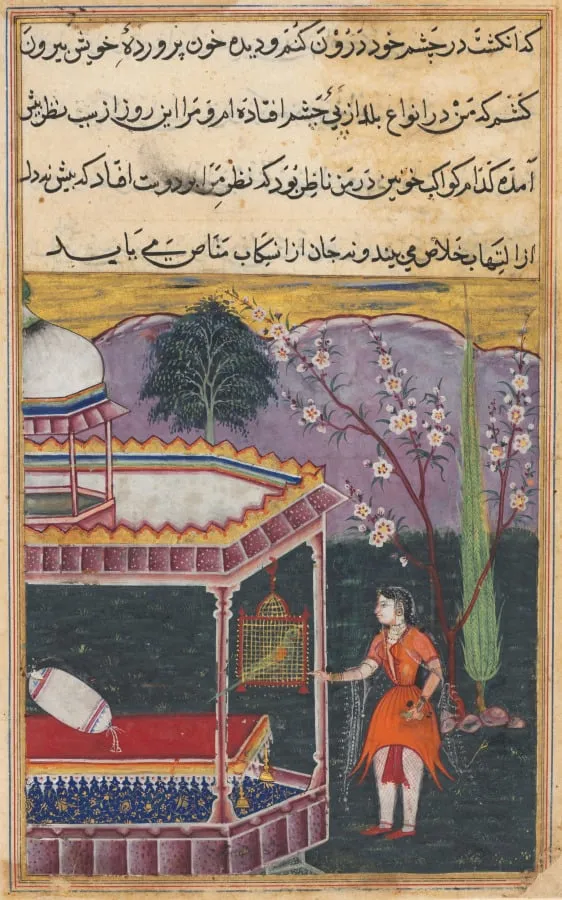
The Parrot Addresses Khujasta at the Beginning of the Eighth Night, from a Tuti-nama (Tales of a Parrot) is an unspecified painting by the Mughal Painting artist Unknown. It dates from 1560 and is held in the collection of the Cleveland Museum of Art. The miniature illustrates a scene from a Tuti‑nama, a collection of parrot stories told over fifty‑two nights.
About this work
The parrot’s stories kept the woman from sneaking out to meet her lover—just like the viziers’ tales saved the prince in the story.
A bright green parrot perches on a stand, talking to a woman in a red robe. Around them, servants and courtiers listen under a canopy of gold and flowers.
This painting comes from a book of parrot tales told over fifty-two nights. The parrot’s stories kept the woman from sneaking out to meet her lover—just like the viziers’ tales saved the prince in the story. The gold leaf and tiny details show how much care went into making it.
Look up Mughal India, court of Akbar (reigned 1556–1605) to see more of these rich, detailed scenes.
Overview
The miniature illustrates a scene from a Tuti‑nama, a collection of parrot stories told over fifty‑two nights. In this particular illustration, a vivid green parrot perches on a stand, addressing a woman dressed in a red robe while courtiers and servants gather beneath a gold‑leafed canopy adorned with flowers.
Subject & Meaning
The narrative depicted shows the parrot recounting a tale to Khujasta on the eighth night, a story that mirrors Emperor Akbar’s own experiences. It tells of a silent prince facing execution for seven days, each day postponed by a story told by one of seven viziers, emphasizing the power of storytelling to intervene in fate.
Technique & Style
The composition combines Persian artistic conventions—such as a golden sky, purple hills, a cypress tree, and flowering branches—with Indian elements, notably a floating bolster rendered in a deep red hue. Gold leaf and fine detailing highlight the miniature’s luxurious execution.
History & Provenance
Created during the Mughal court of Akbar (1556–1605), the painting was part of an illuminated manuscript that blended Persian and Indian visual vocabularies. The work reflects the collaborative artistic environment of Akbar’s atelier, where painters from diverse traditions contributed to courtly books.
Context
The Tuti‑nama’s parrot tales served a didactic function, keeping the female protagonist from clandestine meetings with her lover, just as the viziers’ stories saved the silent prince. This dual narrative underscores the moral and entertainment roles of illustrated manuscripts in Mughal court culture.
Artist & collection

 Domestic Scene
 Giacomo and Cardinal Marco, investing Andrea, Abbot of San Zeno, with his Benefice
 The Nymph of Fontainebleau
 Portrait of a Woman
 Madonna and Child with Saints in the Enclosed Garden
 Venus and Minerva
 Family Group of Four on Sofa
 Wall painting from Room H of the Villa of P. Fannius Synistor at Boscoreale
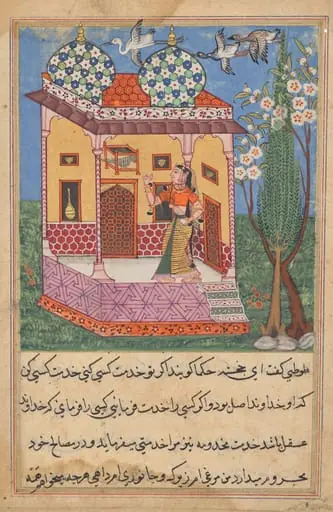 The Parrot Addresses Khujasta at the Beginning of the Twenty-sixth Night, from a Tuti-nama (Tales of a Parrot)
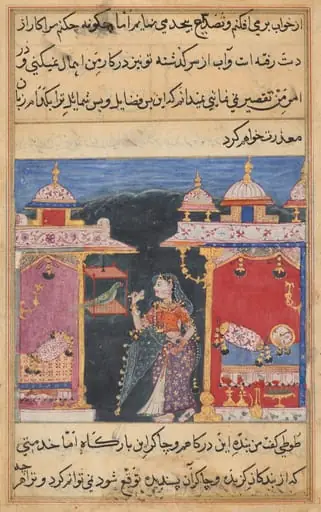 The Parrot Addresses Khujasta at the Beginning of the Seventh Night, from a Tuti-nama (Tales of a Parrot)
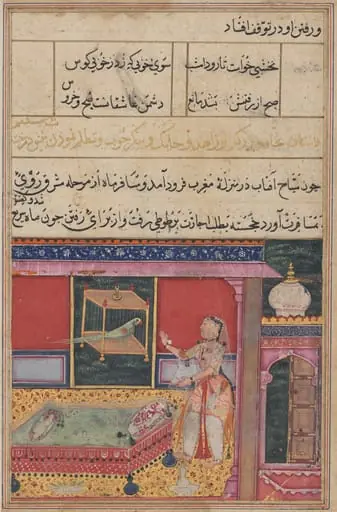 The Parrot Addresses Khujasta at the Beginning of the Sixth Night, from a Tuti-nama (Tales of a Parrot)
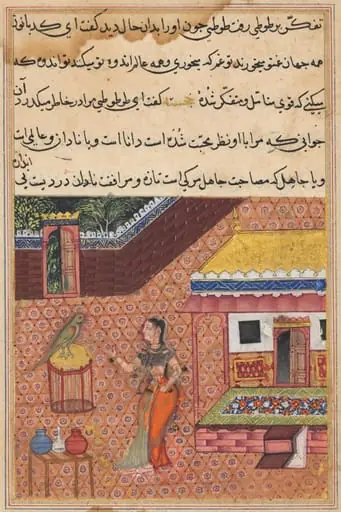 The parrot addresses Khujasta at the beginning of the thirty-fourth night, from a Tuti-nama (Tales of a Parrot)
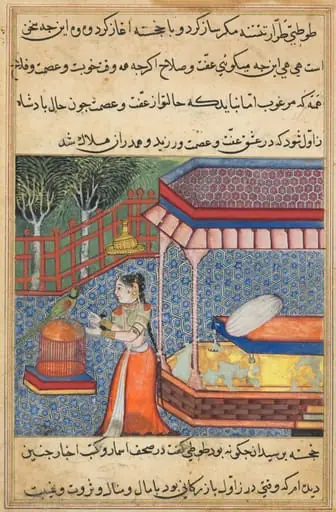 The parrot addresses Khujasta at the beginning of the thirty-sixth night, from a Tuti-nama (Tales of a Parrot)
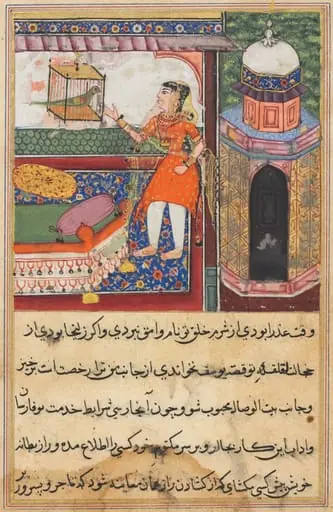 The Parrot Addresses Khujasta at the Beginning of the Tenth Night, from a Tuti-nama (Tales of a Parrot)
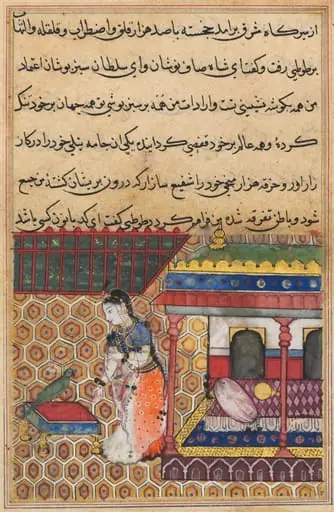 The parrot addresses Khujasta at the beginning of the thirty-eighth night, from a Tuti-nama (Tales of a Parrot)
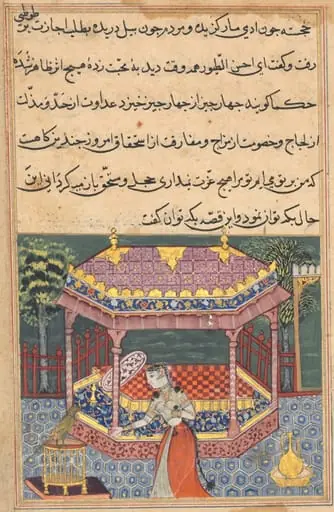 The parrot addresses Khujasta at the beginning of the thirty-seventh night, from a Tuti-nama (Tales of a Parrot)
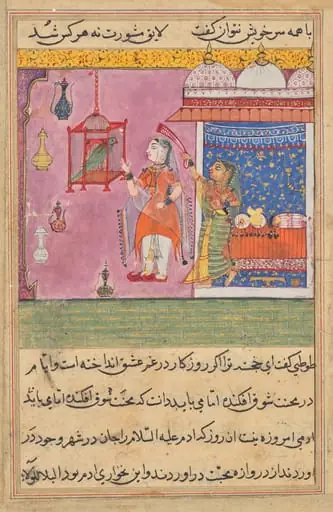 The Parrot Addresses Khujasta at the Beginning of the Nineteenth Night, from a Tuti-nama (Tales of a Parrot)
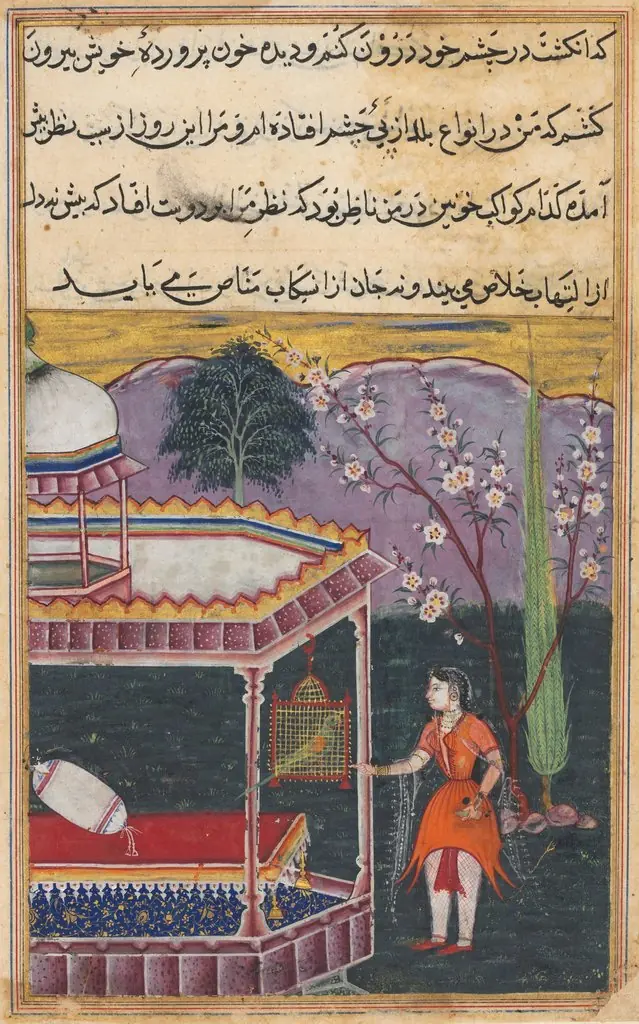 The Parrot Addresses Khujasta at the Beginning of the Eighth Night, from a Tuti-nama (Tales of a Parrot)
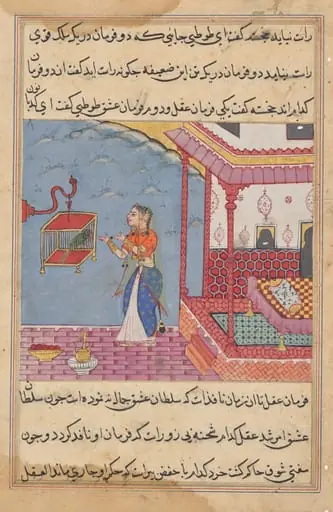 The Parrot Addresses Khujasta at the Beginning of the Twenty-Fourth Night, from a Tuti-nama (Tales of a Parrot)
 The Parrot Addresses Khujasta at the Beginning of the Twenty-second Night, from a Tuti-nama (Tales of a Parrot)