Artwork
The parrot addresses Khujasta at the beginning of the thirty-first night, from a Tuti-nama (Tales of a Parrot)
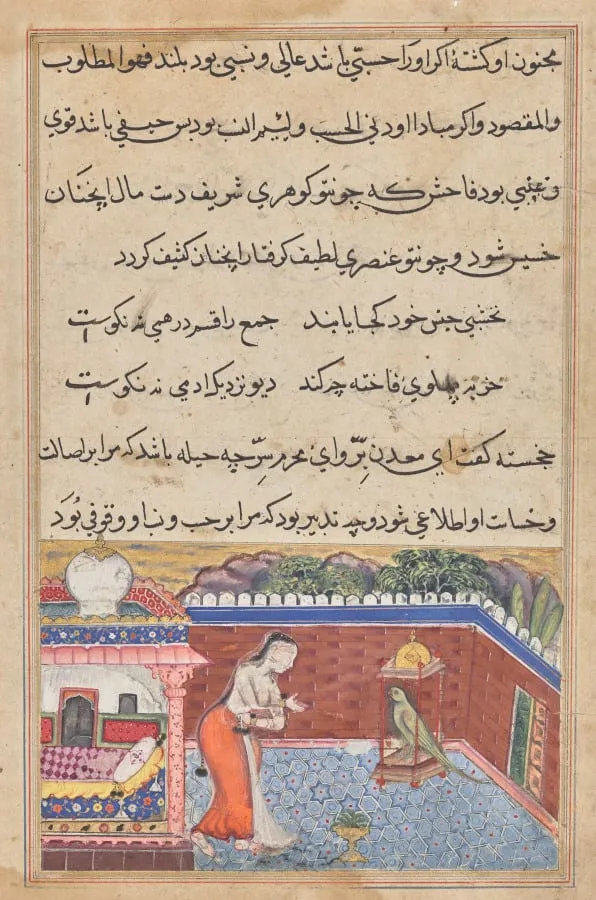
The parrot addresses Khujasta at the beginning of the thirty-first night, from a Tuti-nama (Tales of a Parrot) is an unspecified painting by the Mughal Painting artist Unknown. It dates from 1560 and is held in the collection of the Cleveland Museum of Art. The work illustrates a moment from the Tuti‑nama, a collection of fifty‑two moral tales narrated by a talking parrot.
About this work
The parrot is actually telling her a story—one of fifty-two moral tales meant to keep her from sneaking out at night.
You see a woman in a red robe sitting on the floor, listening to a green parrot perched on a stand.
The parrot is actually telling her a story—one of fifty-two moral tales meant to keep her from sneaking out at night. You can still spot the faint red and black lines the artist first drew, now peeking through worn paint on her face.
To see more paintings like this, look up Mughal India, court of Akbar (reigned 1556–1605).
Overview
The work illustrates a moment from the Tuti‑nama, a collection of fifty‑two moral tales narrated by a talking parrot. In the depicted scene, the parrot addresses Khujasta on the thirty‑first night, recounting the story of a blue jackal who briefly assumes the title of emir among the wild beasts. The composition centers on a seated woman in a red robe listening attentively to the bird perched on a small stand.
Subject & Meaning
Khujasta, a courtly figure, is being instructed through the parrot’s tale, which serves as a didactic device intended to deter her nocturnal wanderings. The blue jackal’s brief rise to power, achieved by deceit, functions as a cautionary example about the fleeting nature of ill‑gained authority and the moral consequences of trickery.
Technique & Style
The painting reveals the artist’s initial underdrawing in black and red pigments, still discernible beneath areas where the upper layers have flaked, particularly on Khujasta’s face and upper torso. The visible preparatory lines indicate a careful planning process typical of Mughal court workshops, where precise draftsmanship preceded the application of opaque color.
Context
Created within the artistic milieu of Akbar’s court (reigned 1556–1605), the piece reflects the Mughal penchant for illustrated manuscripts that combined Persian narrative traditions with Indian courtly themes. The Tuti‑nama itself was employed as a moral guide for royal women, embedding ethical instruction within engaging storytelling.
History & Provenance
The work originates from a Mughal manuscript collection associated with the imperial atelier of the late sixteenth century. It has remained within scholarly and museum holdings that specialize in South Asian art, where it is studied as an example of narrative painting and courtly pedagogy during Akbar’s reign.
Artist & collection

 Domestic Scene
 Giacomo and Cardinal Marco, investing Andrea, Abbot of San Zeno, with his Benefice
 The Nymph of Fontainebleau
 Portrait of a Woman
 Madonna and Child with Saints in the Enclosed Garden
 Venus and Minerva
 Family Group of Four on Sofa
 Wall painting from Room H of the Villa of P. Fannius Synistor at Boscoreale
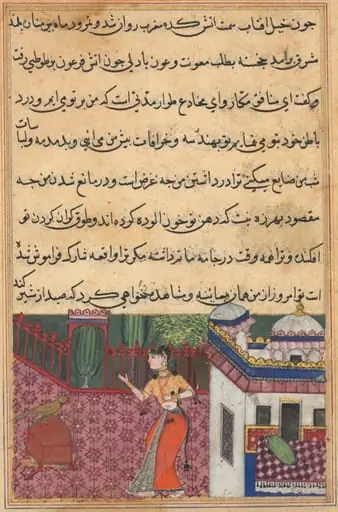 The parrot addresses Khujasta at the beginning of the thirty-third night, from a Tuti-nama (Tales of a Parrot)
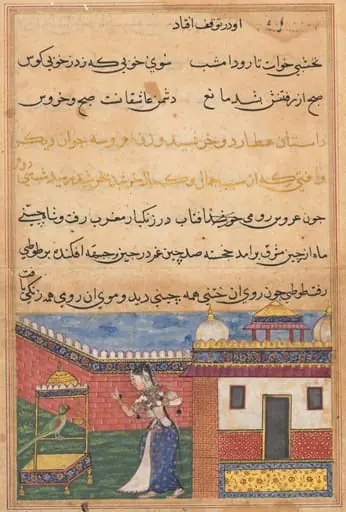 The parrot addresses Khujasta at the beginning of the thirty-second night, from a Tuti-nama (Tales of a Parrot)
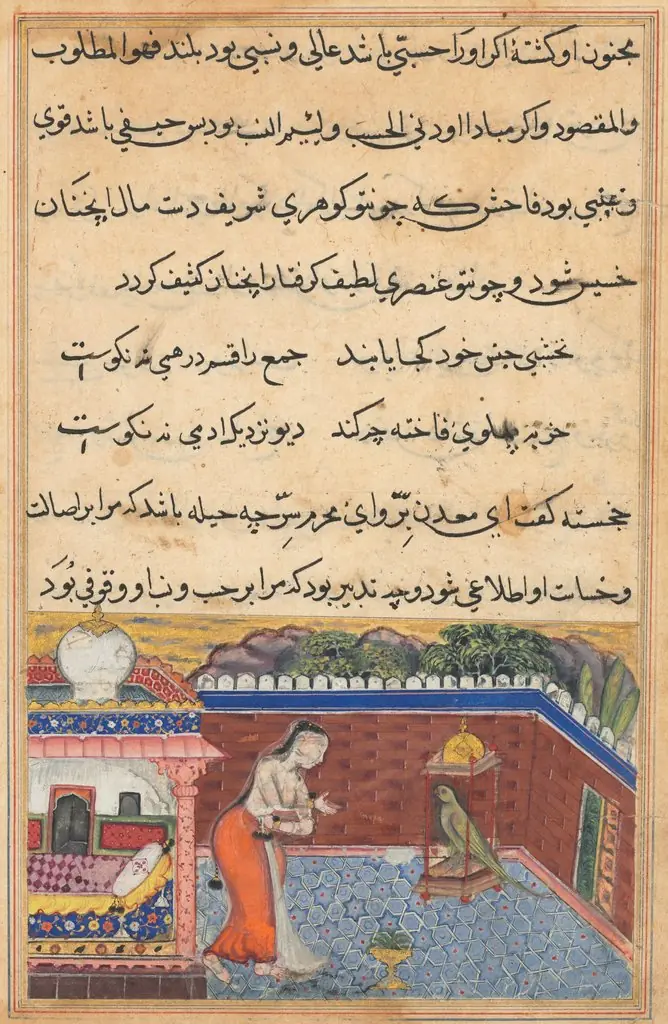 The parrot addresses Khujasta at the beginning of the thirty-first night, from a Tuti-nama (Tales of a Parrot)
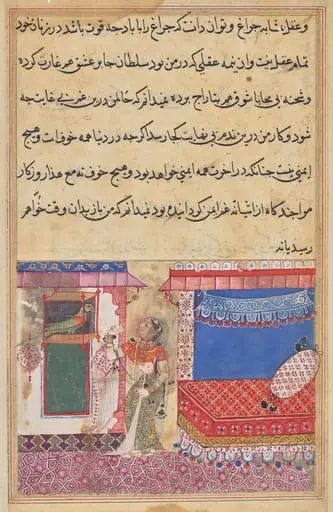 The Parrot Addresses Khujasta at the Beginning of the Eighteenth Night, from a Tuti-nama (Tales of a Parrot)
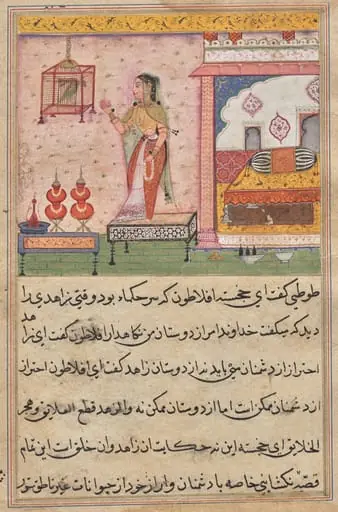 The Parrot Addresses Khujasta at the Beginning of the Twenty-third Night, from a Tuti-nama (Tales of a Parrot)
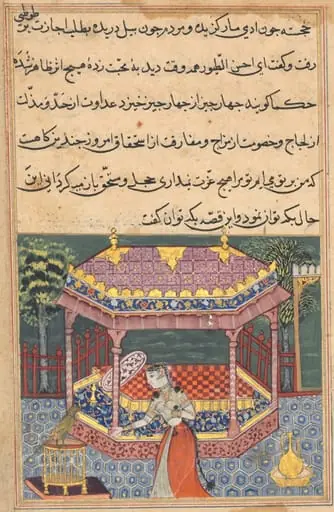 The parrot addresses Khujasta at the beginning of the thirty-seventh night, from a Tuti-nama (Tales of a Parrot)
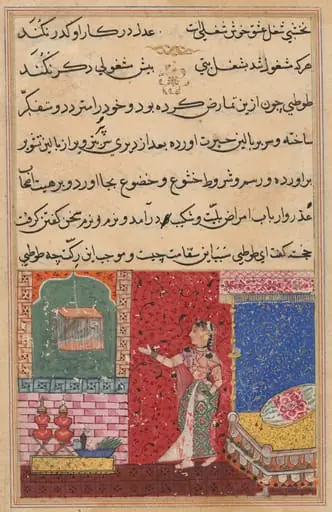 The Parrot Addresses Khujasta at the Beginning of the Fifteenth Night, from a Tuti-nama (Tales of a Parrot)
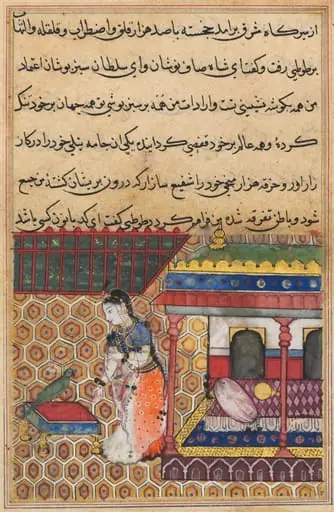 The parrot addresses Khujasta at the beginning of the thirty-eighth night, from a Tuti-nama (Tales of a Parrot)
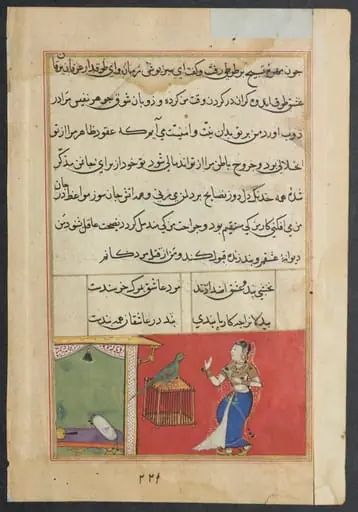 The parrot addresses Khujasta at the beginning of the forty-seventh night, from a Tuti-nama (Tales of a Parrot): Forty-seventh Night
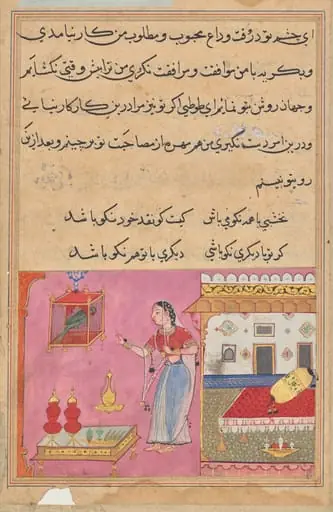 The Parrot Addresses Khujasta at the Beginning of the Twentieth Night, from a Tuti-nama (Tales of a Parrot)
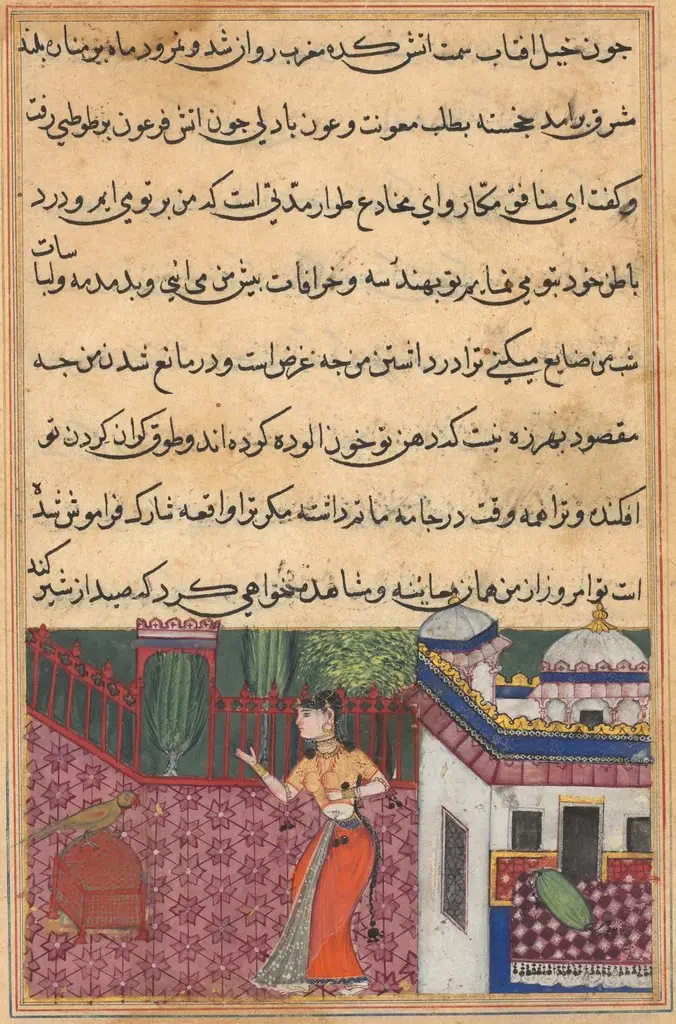 The parrot addresses Khujasta at the beginning of the thirty-third night, from a Tuti-nama (Tales of a Parrot)