Artwork
Khurshid reunited with her husband Utarid, from a Tuti-nama (Tales of a Parrot): Thirty-second Night
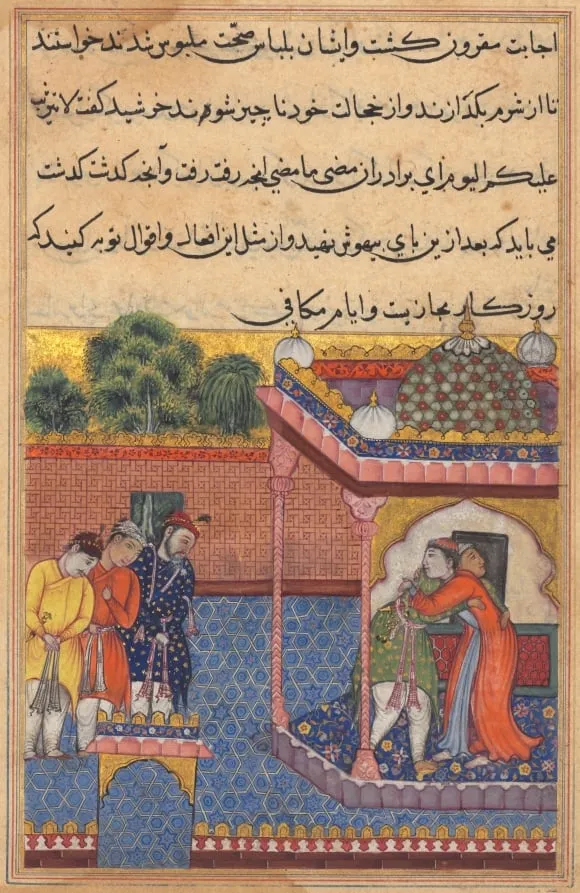
Khurshid reunited with her husband Utarid, from a Tuti-nama (Tales of a Parrot): Thirty-second Night is an unspecified painting by the Mughal Painting artist Unknown. It dates from 1560 and is held in the collection of the Cleveland Museum of Art. The painting illustrates a reunion between Khurshid, dressed in orange, and her husband Utarid, who embrace after a prolonged separation.
About this work
To see more art from this time, look up *Mughal India, court of Akbar (reigned 1556–1605)*.
A woman in orange hugs a man while three guilty men stand nearby, heads bowed. Their sickness vanishes the moment they confess their wrongs.
This scene comes from a book of parrot tales told to Emperor Akbar’s court. The stories were meant to entertain and teach lessons—here, honesty heals. The bright colors and flat figures feel like a storybook, not real life.
To see more art from this time, look up *Mughal India, court of Akbar (reigned 1556–1605)*.
Overview
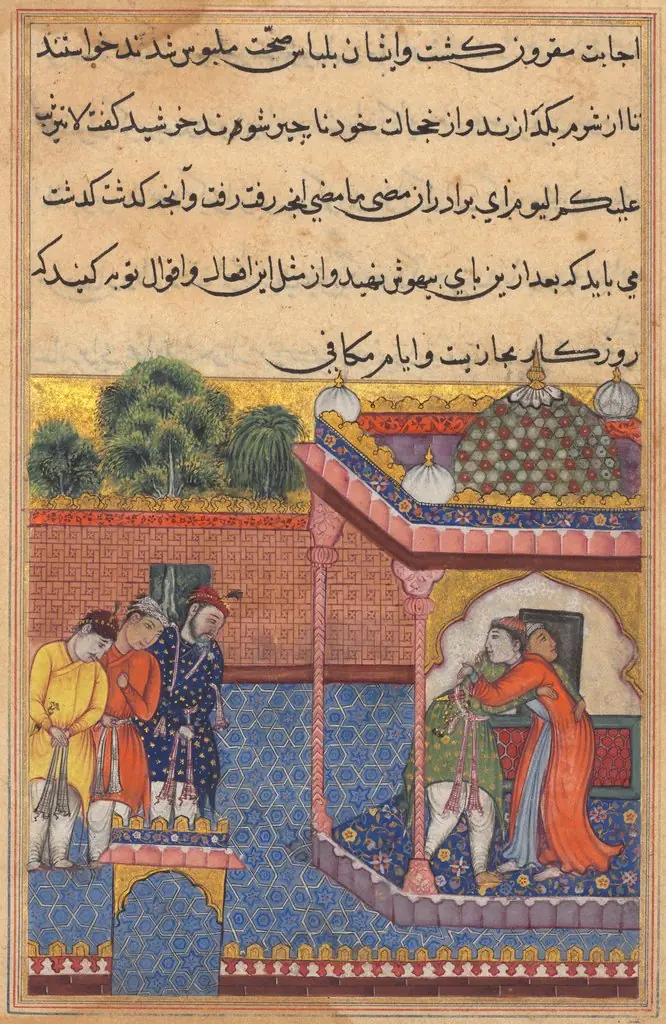
The painting illustrates a reunion between Khurshid, dressed in orange, and her husband Utarid, who embrace after a prolonged separation. To the left, three men stand with lowered heads, having just confessed their offenses against Khurshid. Their admission triggers an immediate cure of the ailments that had afflicted them.
Subject & Meaning
The narrative derives from a Tuti‑nama, a collection of parrot tales presented at Emperor Akbar’s court. The episode conveys a moral lesson: confession and honesty have the power to restore health and harmony, emphasizing the restorative value of truthfulness within the story’s didactic framework.
Technique & Style
Executed in vivid pigments, the composition employs flat, stylized figures and bold coloration reminiscent of illustrated manuscript pages. The visual language prioritizes narrative clarity over naturalistic depth, creating a storybook quality that aligns with the text’s instructional purpose.
Context
The work belongs to the Mughal artistic tradition flourishing under Akbar (1556–1605), a period marked by the synthesis of Persian miniature techniques and indigenous Indian motifs. Such illustrations were commonly produced for courtly books that combined entertainment with moral instruction.
Artist & collection

 Domestic Scene
 Giacomo and Cardinal Marco, investing Andrea, Abbot of San Zeno, with his Benefice
 The Nymph of Fontainebleau
 Portrait of a Woman
 Madonna and Child with Saints in the Enclosed Garden
 Venus and Minerva
 Family Group of Four on Sofa
 Wall painting from Room H of the Villa of P. Fannius Synistor at Boscoreale
 Khurshid reunited with her husband Utarid, from a Tuti-nama (Tales of a Parrot): Thirty-second Night
 Kaiwan sends a message of love to Khurshid, wife of his brother Utarid who is away on a journey, from a Tuti-nama (Tales of a Parrot): Thirty-second Night
 The marriage of ‘Ubaid, son of a merchant of Tirmiz, from a Tuti-nama (Tales of a Parrot): Forty-second Night
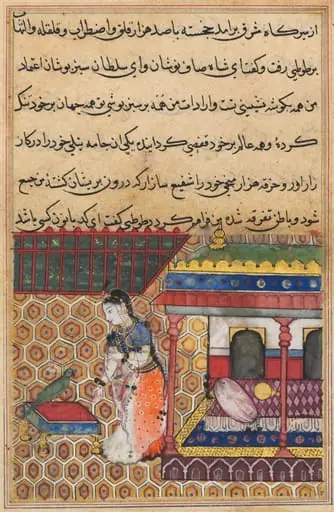 The parrot addresses Khujasta at the beginning of the thirty-eighth night, from a Tuti-nama (Tales of a Parrot)
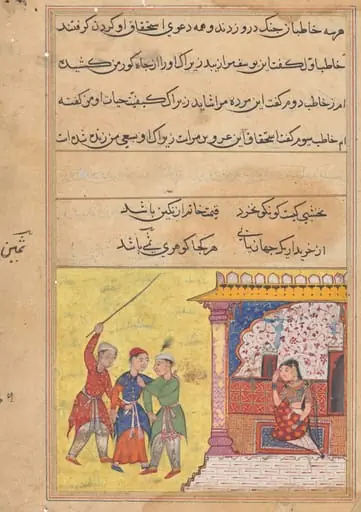 The three suitors again begin to quarrel among themselves for the hand of the devotee’s daughter, from a Tuti-nama (Tales of a Parrot): Twentieth Night
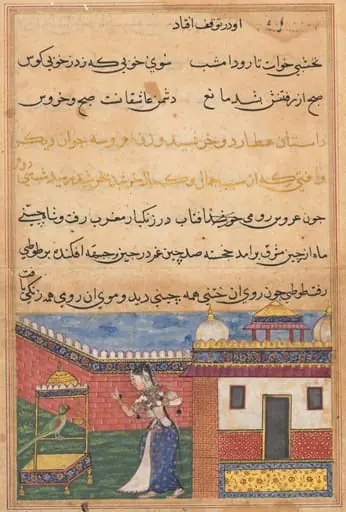 The parrot addresses Khujasta at the beginning of the thirty-second night, from a Tuti-nama (Tales of a Parrot)
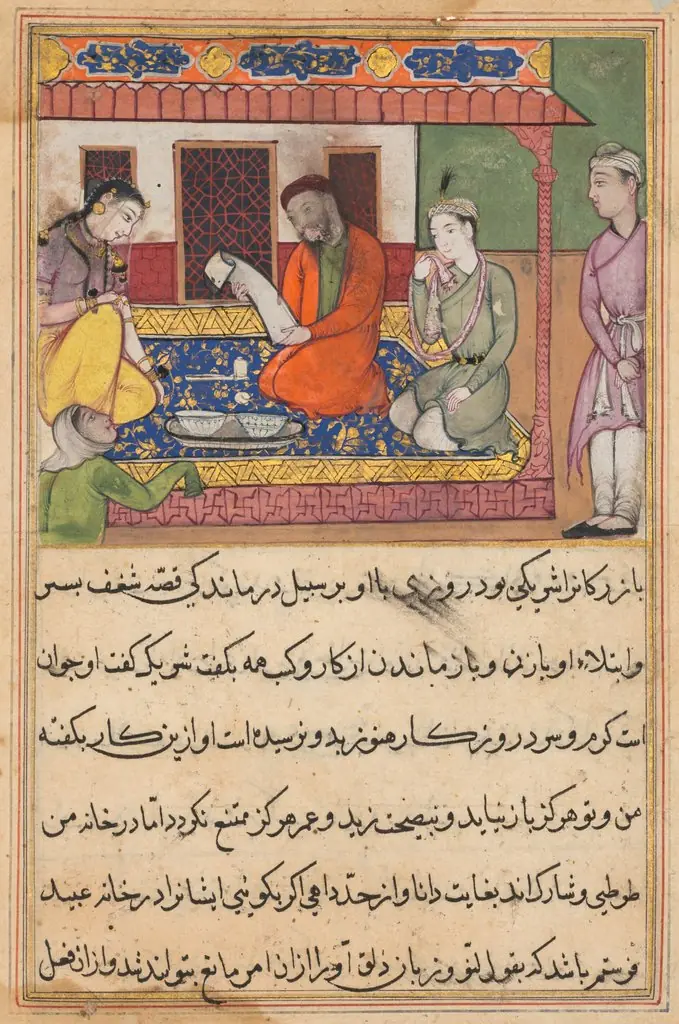 The marriage of ‘Ubaid, son of a merchant of Tirmiz, from a Tuti-nama (Tales of a Parrot): Forty-second Night
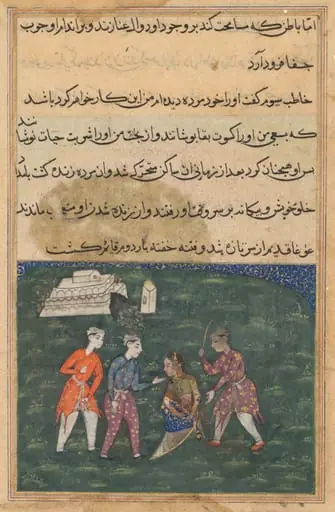 The third suitor strikes the devotee’s daughter and thus restores her to life, from a Tuti-nama (Tales of a Parrot): Twentieth Night
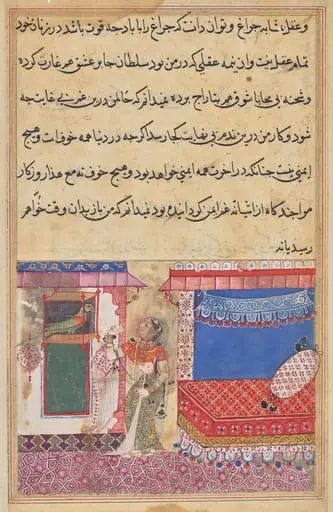 The Parrot Addresses Khujasta at the Beginning of the Eighteenth Night, from a Tuti-nama (Tales of a Parrot)