Artwork
King Bhojaraja tries in vain to ascertain the whereabouts of the pearl from the four travelling companions, from a Tuti-nama (Tales of a Parrot): Twelfth Night
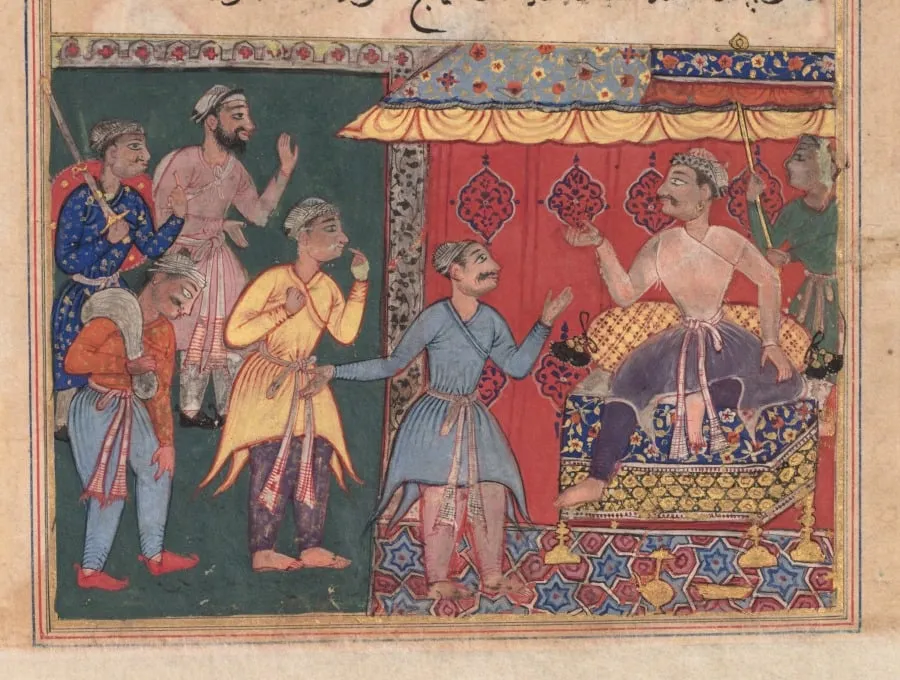
King Bhojaraja tries in vain to ascertain the whereabouts of the pearl from the four travelling companions, from a Tuti-nama (Tales of a Parrot): Twelfth Night is an unspecified painting by the Mughal Painting artist Unknown. It dates from 1560 and is held in the collection of the Cleveland Museum of Art. This painting illustrates a scene from the Tuti-nama, a collection of tales told by a parrot.
About this work
The story is about a stolen pearl, but the real magic is in the tiny details—every face, fabric, and jewel is painted with sharp, careful lines.
You see a king on a golden throne under a royal parasol, four travelers standing before him, and a streetcleaner pointing at them in anger.
This painting comes from a book of parrot tales made for Emperor Akbar’s court. The story is about a stolen pearl, but the real magic is in the tiny details—every face, fabric, and jewel is painted with sharp, careful lines. It’s like a snapshot of royal life in 16th-century India.
If you like this, look up Mughal India, court of Akbar (reigned 1556–1605) for more art from the same time.
Overview
This painting illustrates a scene from the Tuti-nama, a collection of tales told by a parrot. It depicts a king interrogating four travelers suspected of stealing a pearl, as a streetcleaner accuses them.
Subject & Meaning
The scene shows King Bhojaraja questioning the travelers, unable to determine who stole the pearl. The story continues with the king's clever daughter solving the mystery through a narrative that reveals the thief's identity.
Technique & Style
The painting features intricate details, with sharp lines defining faces, fabrics, and jewels. It exemplifies the artistic style of 16th-century Mughal India, characterized by precise and careful rendering.
History & Provenance
This artwork was created for Emperor Akbar's court, a hub of cultural and artistic production during his reign from 1556 to 1605. It is part of a manuscript of the Tuti-nama tales.
Artist & collection

 Domestic Scene
 Giacomo and Cardinal Marco, investing Andrea, Abbot of San Zeno, with his Benefice
 The Nymph of Fontainebleau
 Portrait of a Woman
 Madonna and Child with Saints in the Enclosed Garden
 Venus and Minerva
 Family Group of Four on Sofa
 Wall painting from Room H of the Villa of P. Fannius Synistor at Boscoreale
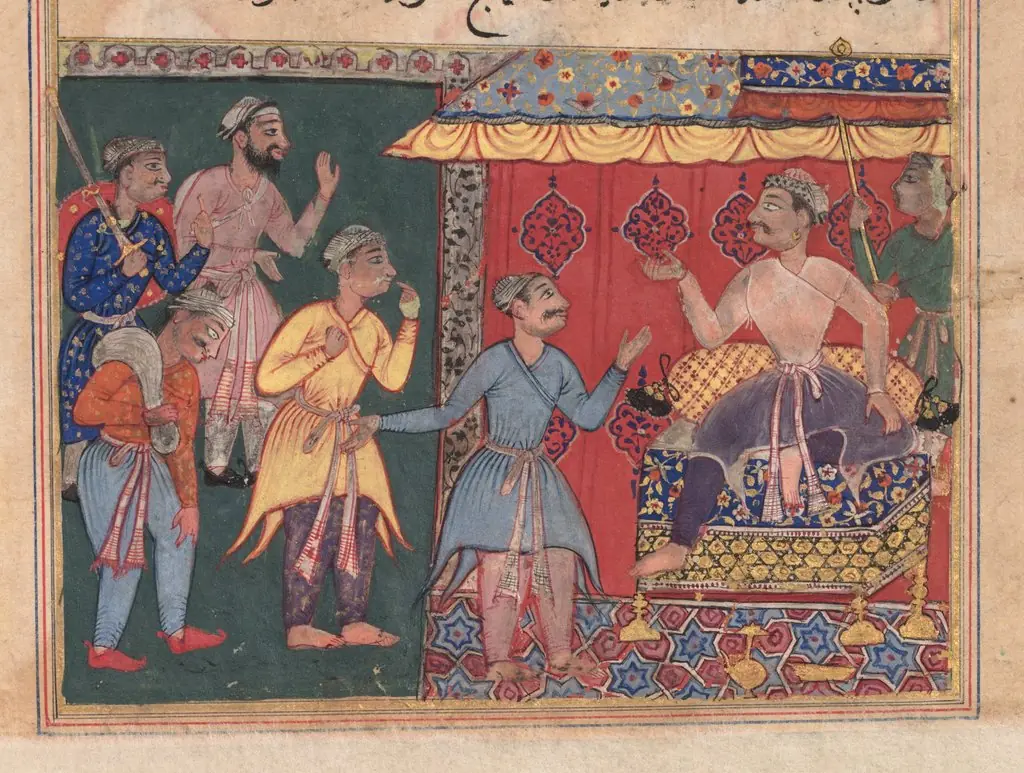 King Bhojaraja tries in vain to ascertain the whereabouts of the pearl from the four travelling companions, from a Tuti-nama (Tales of a Parrot): Twelfth Night
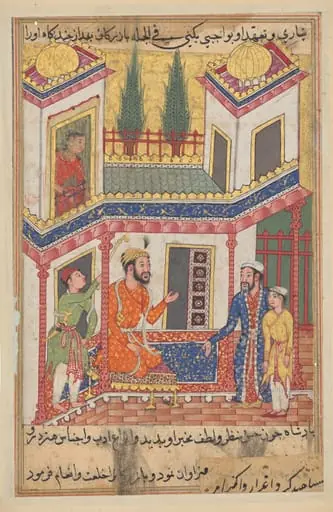 The merchant returns bringing a young slave who is really the son of the princess of Rum, now married to the king, from a Tuti-nama (Tales of a Parrot): Fiftieth Night
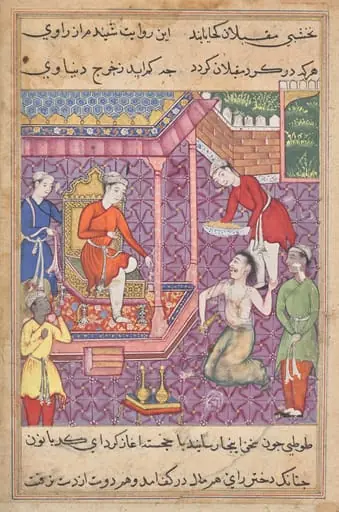 The magician disguised as a Brahman returns to claim his “daughter-in-law,” from a Tuti-nama (Tales of a Parrot): Thirty-fifth Night
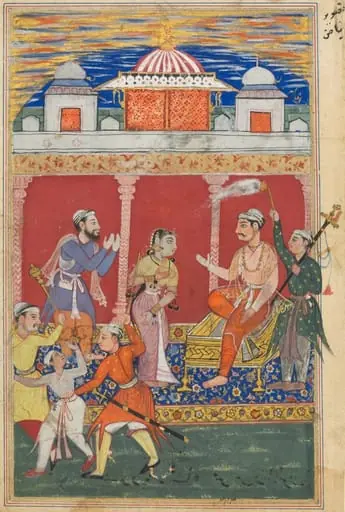 The prince’s ordeal continues, he is ordered away to be executed for the fifth time, from a Tuti-nama (Tales of a Parrot): Eighth Night
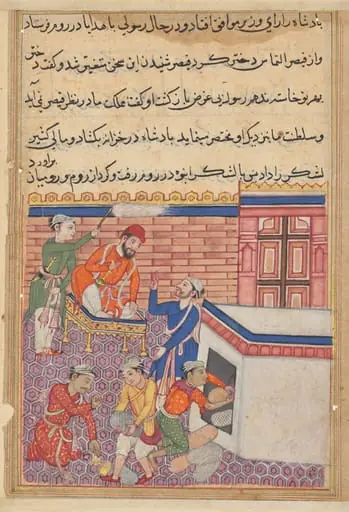 The king’s emissary being provided with gifts for his mission to Rum in order to seek the hand of the emperor’s daughter in marriage, from a Tuti-nama (Tales of a Parrot): Fiftieth Night
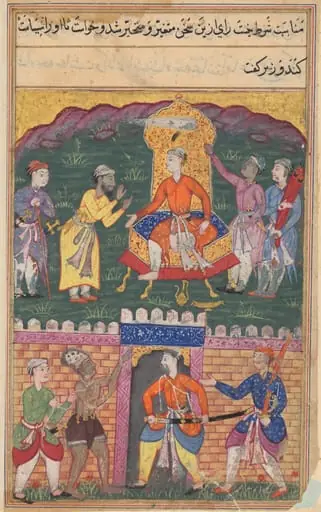 The vizier dissuades the king of Bahilistan from executing the dervish who asks for his daughter’s hand in marriage, from a Tuti-nama (Tales of a Parrot): Seventh Night
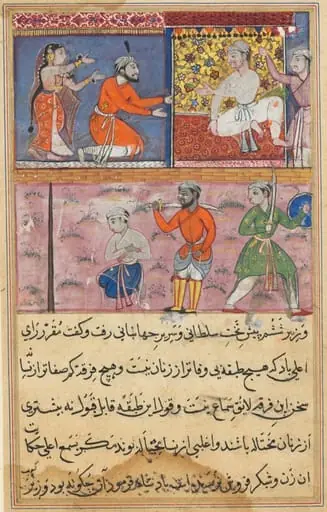 The prince sent back to the place of execution for the sixth time, from a Tuti-nama (Tales of a Parrot): Eighth Night