Artwork
Mukhtar throws his wife Maimuna into the pit, but she saves herself, from a Tuti-nama (Tales of a Parrot): Twenty-fifth Night
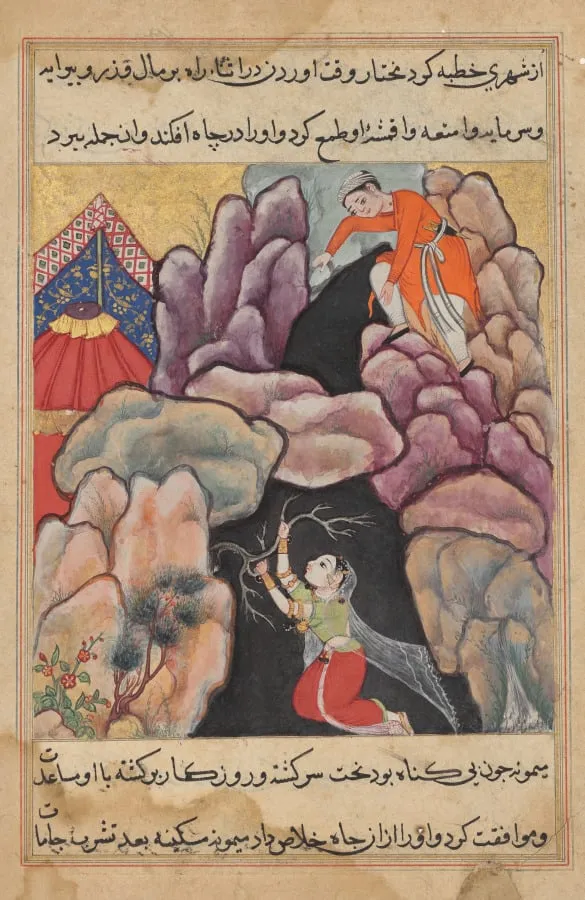
Mukhtar throws his wife Maimuna into the pit, but she saves herself, from a Tuti-nama (Tales of a Parrot): Twenty-fifth Night is an unspecified painting by the Mughal Painting artist Unknown. It dates from 1560 and is held in the collection of the Cleveland Museum of Art. The work illustrates a dramatic episode from the *Tuti‑nama*, a Mughal collection of parrot‑told stories presented to Emperor Akbar.
About this work
This painting comes from a *Tuti-nama*, a book of parrot tales told to Emperor Akbar.
A woman dangles from a tree branch inside a dark pit. Her husband stands above, arms crossed, watching as she escapes his trap. The scene glows with rich reds and deep shadows.
This painting comes from a *Tuti-nama*, a book of parrot tales told to Emperor Akbar. The stories were meant to teach lessons—here, luck saves the innocent. The artist used bright colors and sharp lines to make the drama clear.
To see more art like this, look up Mughal India, court of Akbar (reigned 1556–1605).
Overview
The work illustrates a dramatic episode from the *Tuti‑nama*, a Mughal collection of parrot‑told stories presented to Emperor Akbar. In the scene, a woman clings to a tree branch within a shadowy pit while her husband, standing above, watches her struggle. The composition is dominated by intense reds and deep chiaroscuro, emphasizing the tension between peril and escape.
Subject & Meaning
The narrative depicts Mukhtar casting his wife Maimuna into a pit in an effort to seize her belongings. Maimuna’s survival, attributed to her innocence, conveys a moral lesson that virtue is protected by fortune. The story functions as a didactic parable, reinforcing the belief that the righteous are ultimately shielded from unjust harm.
Technique & Style
Executed in the Mughal court’s painting tradition, the piece employs vivid pigments and precise, linear drawing to delineate figures and architecture. Strong contrasts of scarlet and black create a theatrical atmosphere, while the crisp outlines highlight the characters’ gestures, reinforcing the moment’s emotional intensity without reliance on elaborate background detail.
Context
Created for the *Tuti‑nama*, a manuscript compiled during the reign of Akbar (1556–1605), the painting reflects the emperor’s patronage of illustrated literature intended to educate and entertain. The work exemplifies the synthesis of Persian artistic conventions with Indian motifs that characterized Mughal visual culture in the late 16th century.
History & Provenance
The painting remains part of the surviving *Tuti‑nama* manuscript, which was produced in the imperial workshops of Akbar’s court. It has been preserved in collections of South Asian art and is occasionally exhibited to illustrate the narrative illustration practices of Mughal India.
Artist & collection

 Domestic Scene
 Giacomo and Cardinal Marco, investing Andrea, Abbot of San Zeno, with his Benefice
 The Nymph of Fontainebleau
 Portrait of a Woman
 Madonna and Child with Saints in the Enclosed Garden
 Venus and Minerva
 Family Group of Four on Sofa
 Wall painting from Room H of the Villa of P. Fannius Synistor at Boscoreale
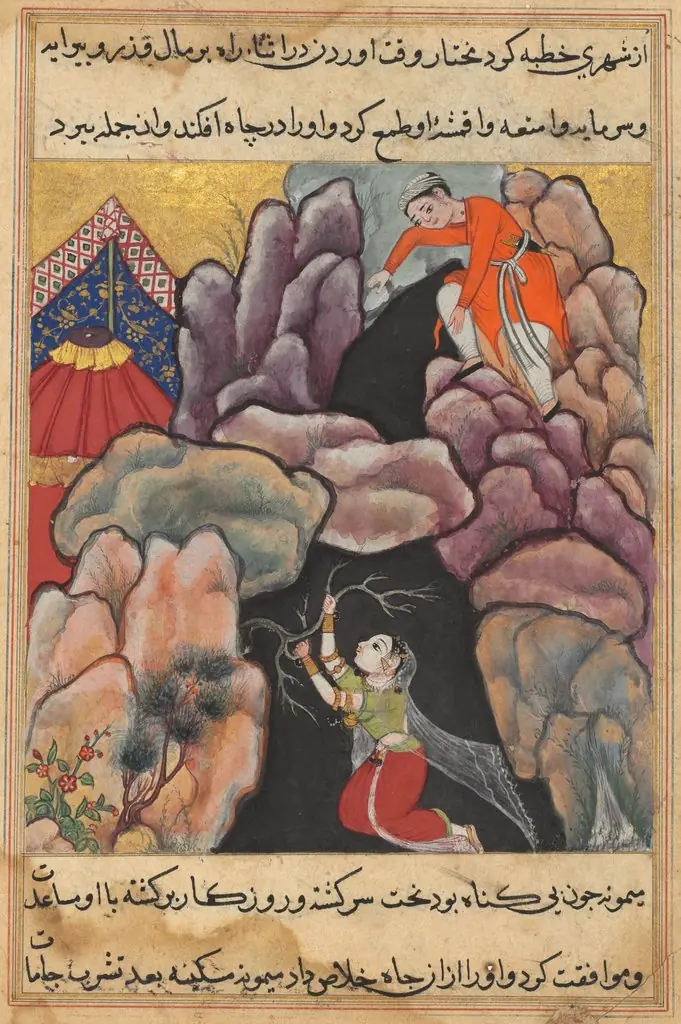 Mukhtar throws his wife Maimuna into the pit, but she saves herself, from a Tuti-nama (Tales of a Parrot): Twenty-fifth Night
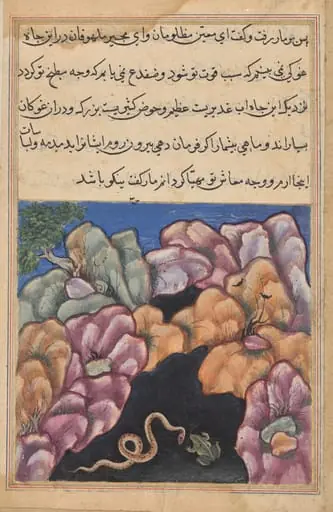 The snake enters into an argument with the frog, from a Tuti-nama (Tales of a Parrot): Twenty-sixth Night
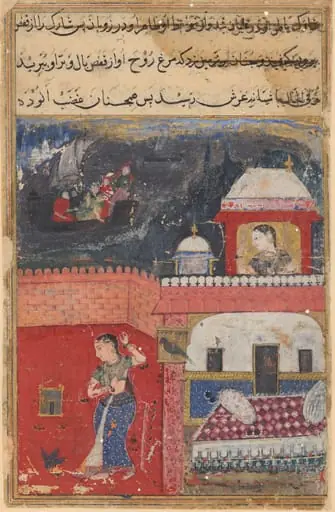 Khujasta kills the pet mynah who advises her not to be unfaithful to Maymun, her husband, from a Tuti-nama (Tales of the Parrot): First Night
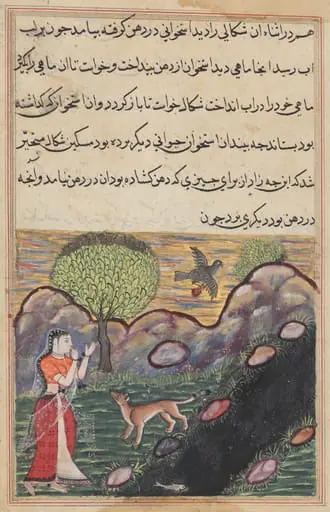 The daughter-in-law of the king of Banaras sees the jackal deprived of its food by a bird, as it unsuccessfully attempts to catch a fish, from a Tuti-nama (Tales of a Parrot): Sixteenth Night
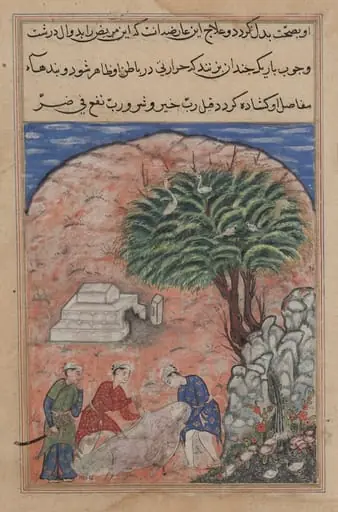 The suitors take the devotee’s daughter out of her tomb after breaking it open, when the physician discovers she is still alive, from a Tuti-nama (Tales of a Parrot): Twentieth Night
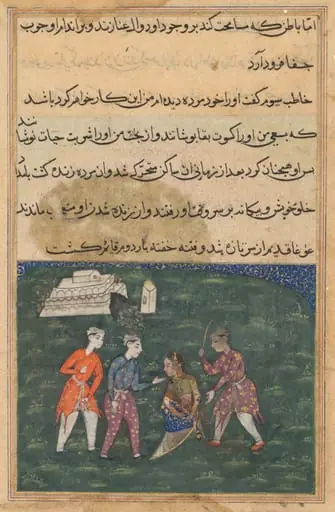 The third suitor strikes the devotee’s daughter and thus restores her to life, from a Tuti-nama (Tales of a Parrot): Twentieth Night
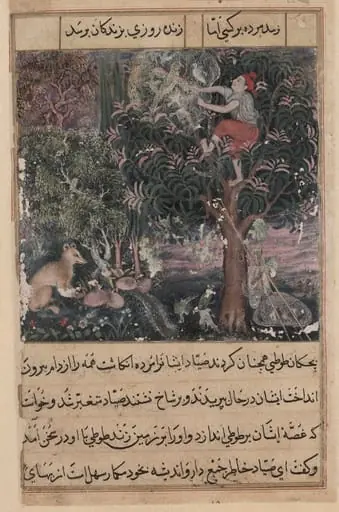 The hunter throws away the baby parrots, who pretend to be dead, and captures the mother, from a Tuti-nama (Tales of a Parrot): Fifth Night