Artwork
The snake enters into an argument with the frog, from a Tuti-nama (Tales of a Parrot): Twenty-sixth Night
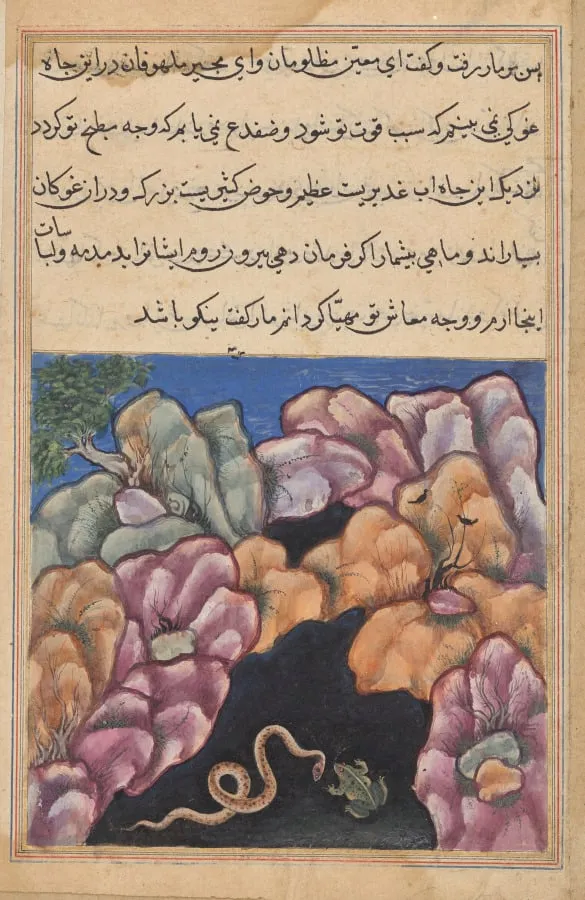
The snake enters into an argument with the frog, from a Tuti-nama (Tales of a Parrot): Twenty-sixth Night is an unspecified painting by the Mughal Painting artist Unknown. It dates from 1560 and is held in the collection of the Cleveland Museum of Art.
About this work
The black background isn’t just empty space—it’s meant to feel like a cave mouth, pulling you into the underground fight.
You see a snake coiled around a frog in a dark cave, rocks looming above them.
This painting comes from a book of parrot tales made for Emperor Akbar’s court. The black background isn’t just empty space—it’s meant to feel like a cave mouth, pulling you into the underground fight. The story goes that the frog king asked the snake for help, but the snake got hungry and turned on him.
Look up *Mughal India, court of Akbar (reigned 1556–1605)* to see more of these tiny, lively scenes.
Overview
This painting is one of twenty-six illustrated nights from the Tuti-nama, a collection of frame tales translated into Persian and commissioned by the Mughal emperor Akbar. Executed in the late 16th century, it belongs to a series of miniature paintings produced at the imperial atelier, blending Persian narrative traditions with Indian visual sensibilities. The dark, recessive background suggests an underground chamber, anchoring the scene in a liminal, enclosed space.
Subject & Meaning
The scene depicts Shapur, a deposed frog ruler, entangled with a snake he enlisted to eliminate his rivals. Once his enemies are gone, the snake turns on Shapur’s remaining allies, leaving him isolated and powerless. The tale functions as a cautionary fable about misplaced trust and the unintended consequences of seeking violent solutions. The frog’s eventual solitude underscores the futility of his ambition.
Technique & Style
The artist employs fine brushwork and opaque watercolor to render the figures with precise detail against a void-like black background, a convention adapted from Persian manuscript traditions. The snake’s sinuous form and the frog’s tense posture are rendered with rhythmic linearity, while the rocky overhang above frames the scene as if viewed through a cave entrance. This spatial device draws the viewer into the intimate, claustrophobic drama.
History & Provenance
Created between 1559 and 1565 at Akbar’s imperial workshop in Fatehpur Sikri, the Tuti-nama manuscript was among the earliest major illustrated projects undertaken under his patronage. The painting was likely produced by a team of artists, possibly including those trained in Persian styles. The manuscript remained in imperial collections before entering Western institutions in the 20th century.
Context
The Tuti-nama was part of Akbar’s broader effort to synthesize diverse cultural traditions within his court. Drawing from Sanskrit and Persian sources, the tales were reimagined as moral allegories suited to a pluralistic empire. The use of dark backgrounds and intimate compositions reflects a shift toward psychological depth in Mughal illustration, distinguishing it from earlier, more decorative styles.
Legacy
The Tuti-nama set a precedent for narrative illustration in Mughal painting, influencing later imperial manuscripts such as the Akbarnama. Its blend of folkloric storytelling and refined technique helped define the aesthetic of early Mughal art. Though lesser known than later works, these illustrations remain vital for understanding the evolution of courtly visual culture in 16th-century India.
Artist & collection

 Domestic Scene
 Giacomo and Cardinal Marco, investing Andrea, Abbot of San Zeno, with his Benefice
 The Nymph of Fontainebleau
 Portrait of a Woman
 Madonna and Child with Saints in the Enclosed Garden
 Venus and Minerva
 Family Group of Four on Sofa
 Wall painting from Room H of the Villa of P. Fannius Synistor at Boscoreale
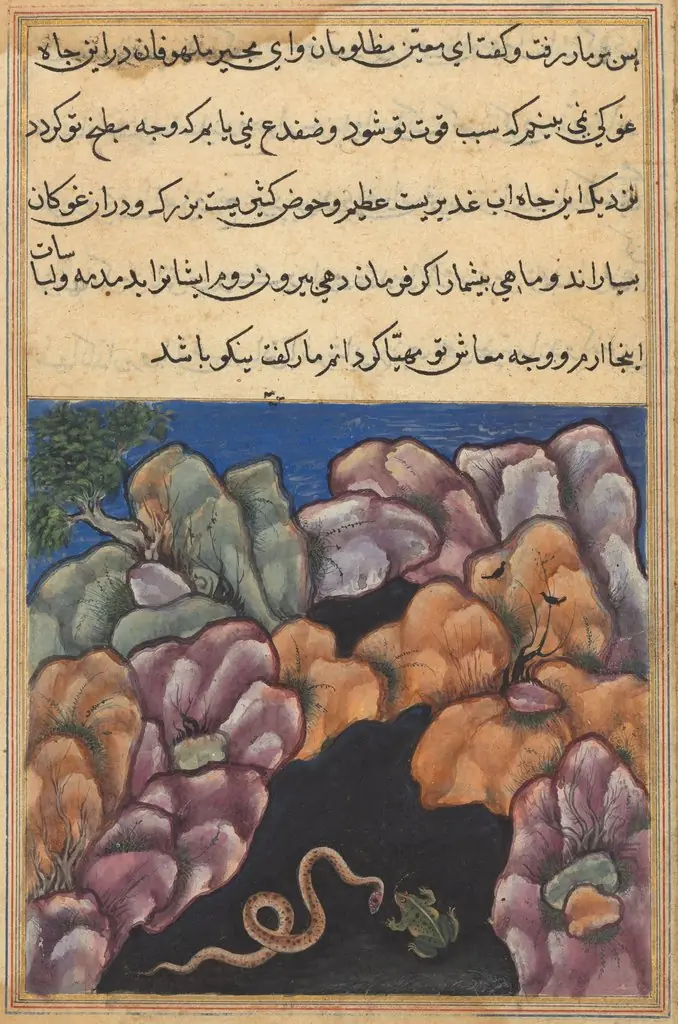 The snake enters into an argument with the frog, from a Tuti-nama (Tales of a Parrot): Twenty-sixth Night
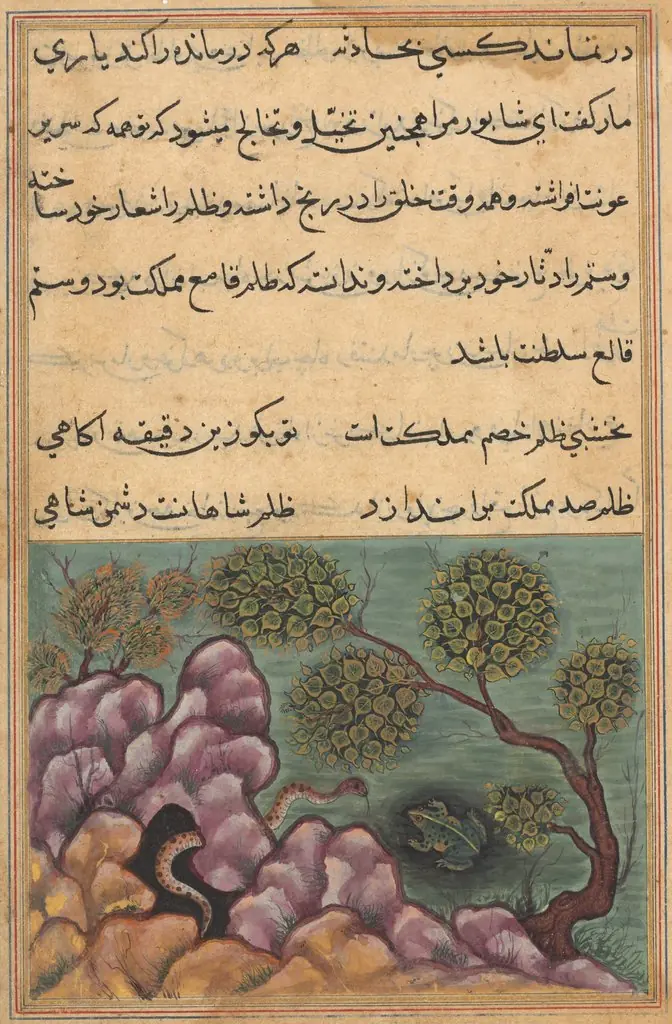 The dethroned frog Shapur seeks the help of the serpent, from a Tuti-nama (Tales of a Parrot): Twenth-sixth Night
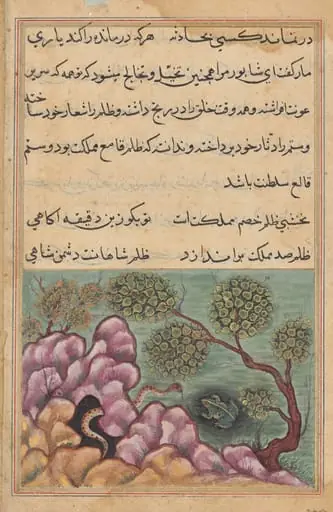 The dethroned frog Shapur seeks the help of the serpent, from a Tuti-nama (Tales of a Parrot): Twenth-sixth Night
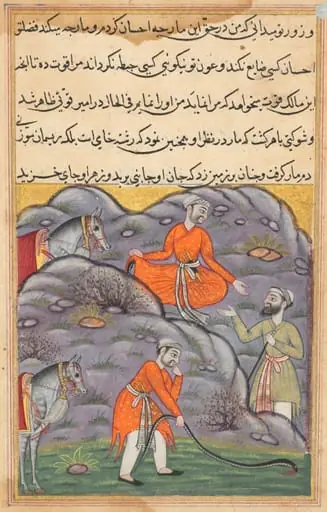 The emir slays the snake after giving it shelter, from a Tuti-nama (Tales of a Parrot): Forty-fifth Night
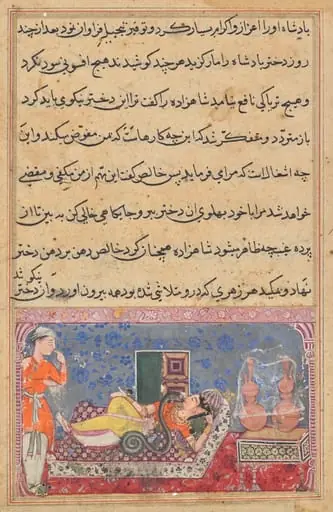 Khalis repays the prince for his kindness by changing into a snake and sucking the poison from the king’s daughter, from a Tuti-nama (Tales of a Parrot): Eighteenth Night
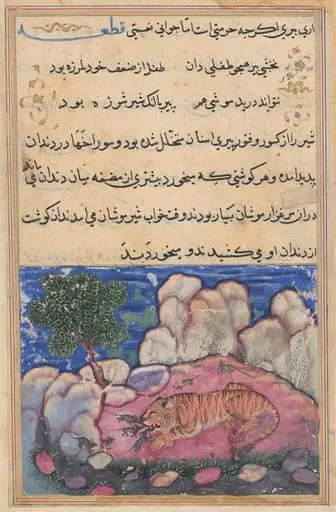 The lion disturbed by mice who eat the food trapped in his aging teeth, from a Tuti-nama (Tales of a Parrot): Fifteenth Night
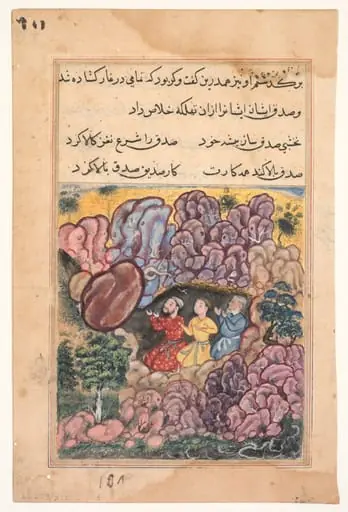 The tale of the three men trapped in a cave by a rolling boulder, from a Tuti-nama (Tales of a Parrot): Thirty-second Night
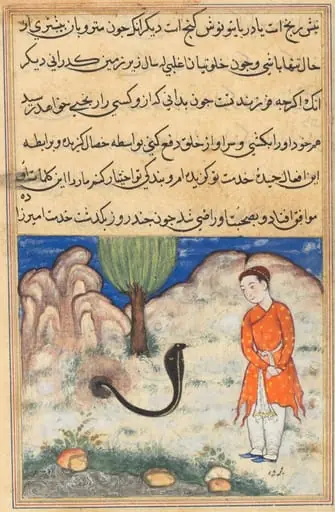 The prince, a son of the ruler of Sistan, enters the service of a snake, from a Tuti-nama (Tales of a Parrot): Thirty-seventh Night
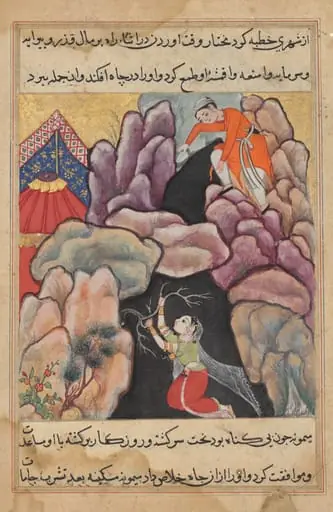 Mukhtar throws his wife Maimuna into the pit, but she saves herself, from a Tuti-nama (Tales of a Parrot): Twenty-fifth Night
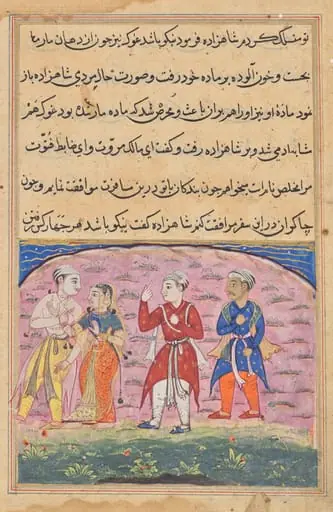 The prince and Nikfal are joined by Khalis and the Mukhlis who are the grateful snake and frog in human form, from a Tuti-nama (Tales of a Parrot): Eighteenth Night
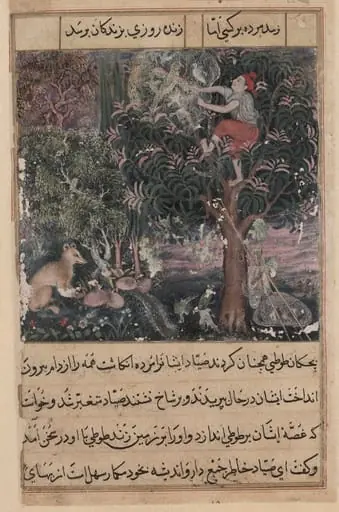 The hunter throws away the baby parrots, who pretend to be dead, and captures the mother, from a Tuti-nama (Tales of a Parrot): Fifth Night