Artwork
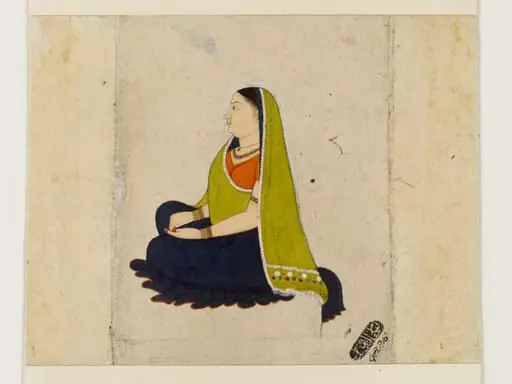
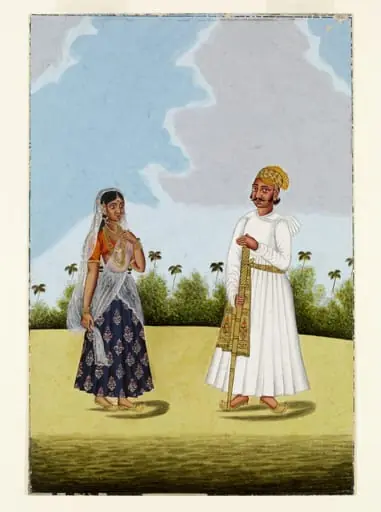
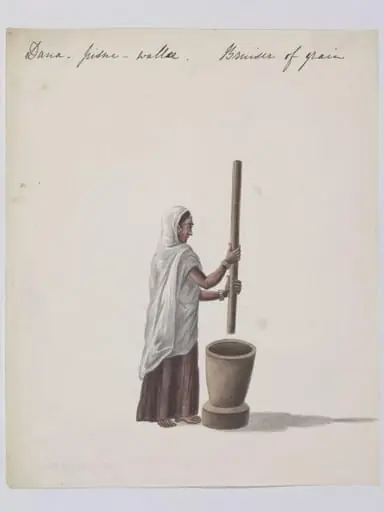
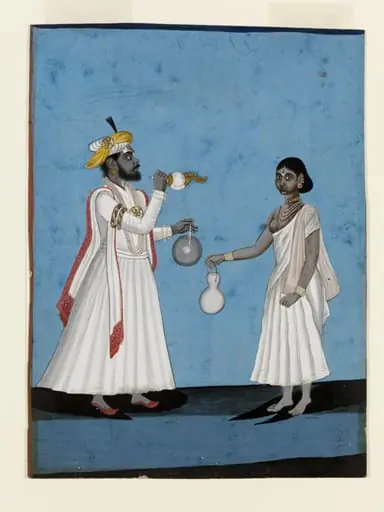
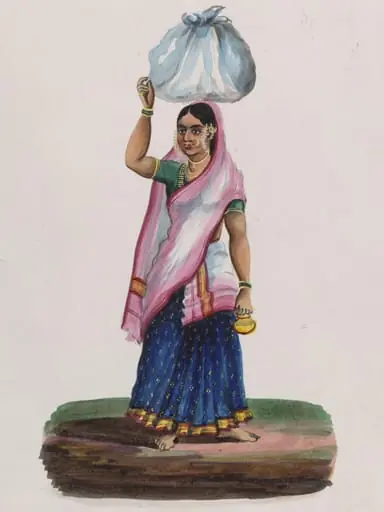
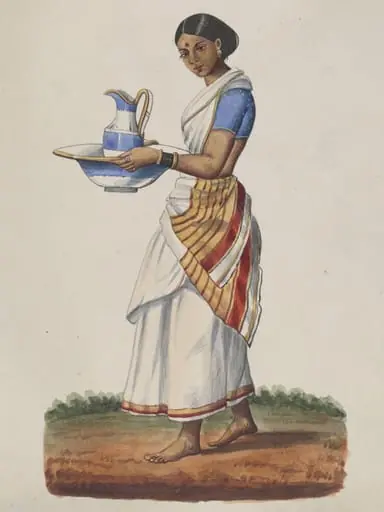
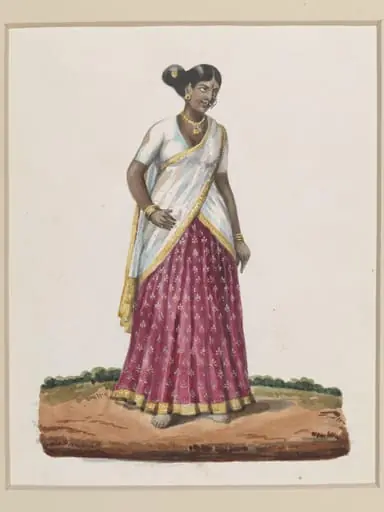
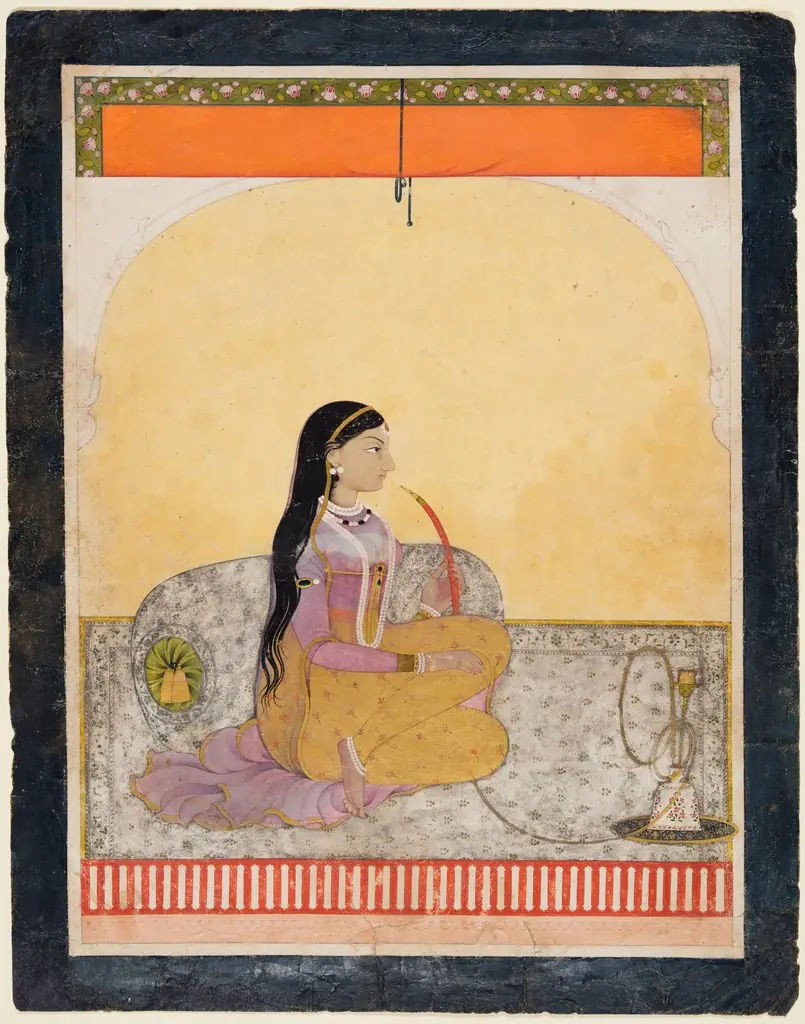
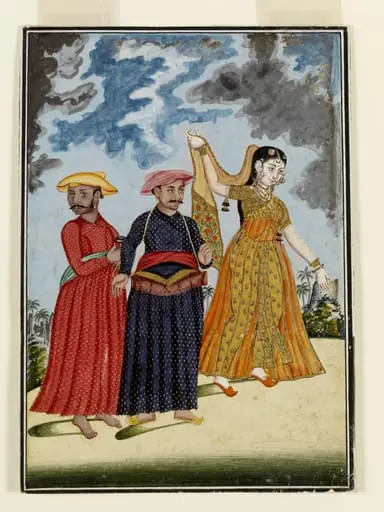
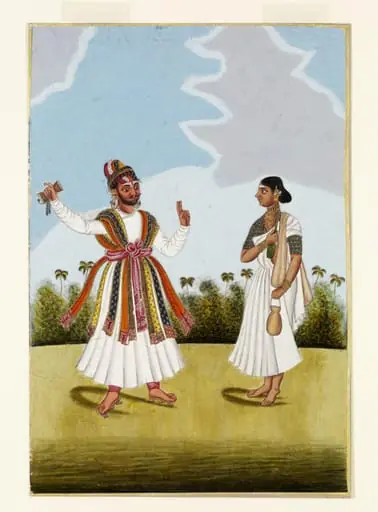
One of five drawings of occupations and types.
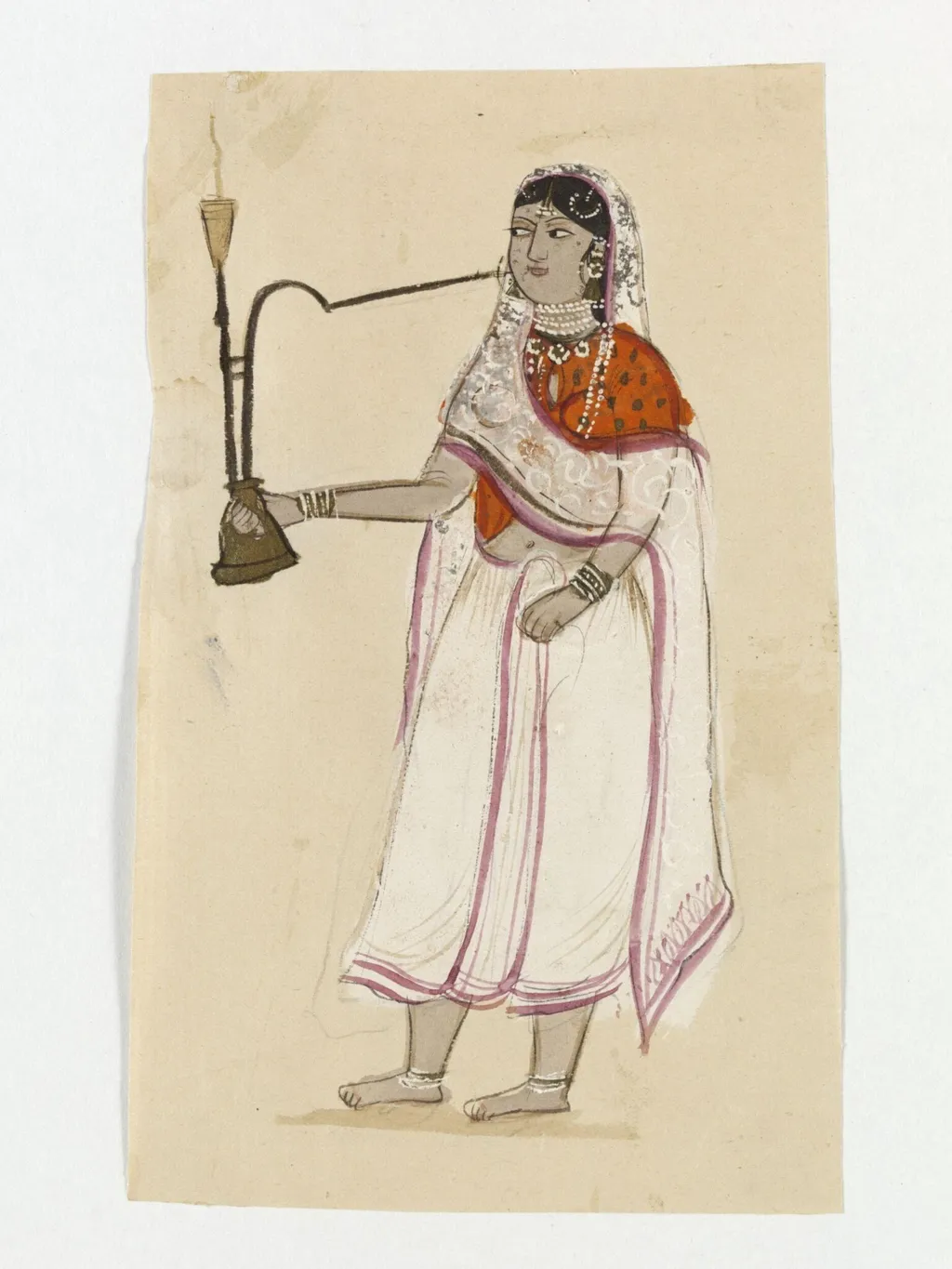
One of five drawings of occupations and types. is a paint painting by the Patna School of Painting artist Unknown. It dates from 1870 and is held in the collection of the Victoria and Albert Museum.
About this work
Overview
This drawing is one of five in a series depicting occupational types in colonial India, created for British patrons through a hybrid artistic tradition known as Company painting. Executed around 1870–1875, it reflects the visual documentation interests of British residents in Punjab, where the East India Company’s administrative presence was relatively recent. The work entered the Victoria and Albert Museum’s collection in 1917, having been collected by John Lockwood Kipling during his tenure at the Mayo School of Art in Lahore.
Subject & Meaning
The scene portrays a scribe at work, seated at a wooden table, holding a pen and a sheet of paper, with an inkwell and loose documents nearby.
The scene portrays a scribe at work, seated at a wooden table, holding a pen and a sheet of paper, with an inkwell and loose documents nearby. As part of a series on professions, it captures a literate occupational role common in colonial bureaucracy. The depiction emphasizes precision and routine, aligning with British desires for ethnographic records of local society, while subtly affirming the value of indigenous clerical labor within the colonial administrative framework.
Technique & Style
The drawing blends Indian miniature traditions—fine brushwork, flat perspective, and delicate line—with Western naturalism in lighting and spatial arrangement. Details like the inkwell and paper are rendered with observational clarity, reflecting European expectations of realism. The composition avoids ornamental excess, favoring clarity and typological representation, characteristic of Company painting’s functional aim: to catalog and classify the visual world of British India.
History & Provenance
Acquired by John Lockwood Kipling during his directorship at the Mayo School of Art in Lahore (1875–1893), the drawing was part of his broader effort to preserve and study regional artistic practices. In 1917, it was donated to the Victoria and Albert Museum by his son, Rudyard Kipling. Its journey from Lahore to London reflects the movement of colonial-era artifacts into British institutional collections, often through familial and academic networks.
Context
Company painting emerged as a commercial genre in response to British demand for images of Indian life, from tradespeople to religious rituals. In Punjab, where British control began only in 1849, such works developed later than in Bengal or Madras. This drawing belongs to a wave of documentation that sought to systematize cultural difference, serving both ethnographic curiosity and administrative control, while sustaining local artists through patronage.
Legacy
The drawing remains a key example of how Indian artists adapted their techniques to meet colonial tastes, preserving indigenous visual languages within a foreign framework. Its presence in the V&A underscores the complex legacy of colonial collecting, where cultural documentation became entangled with imperial power. Today, such works are studied for their hybrid aesthetics and as records of everyday life under British rule.
Artist & collection

 Domestic Scene
 Giacomo and Cardinal Marco, investing Andrea, Abbot of San Zeno, with his Benefice
 The Nymph of Fontainebleau
 Portrait of a Woman
 Madonna and Child with Saints in the Enclosed Garden
 Venus and Minerva
 Family Group of Four on Sofa
 Wall painting from Room H of the Villa of P. Fannius Synistor at Boscoreale