Artwork
Portret de femeie
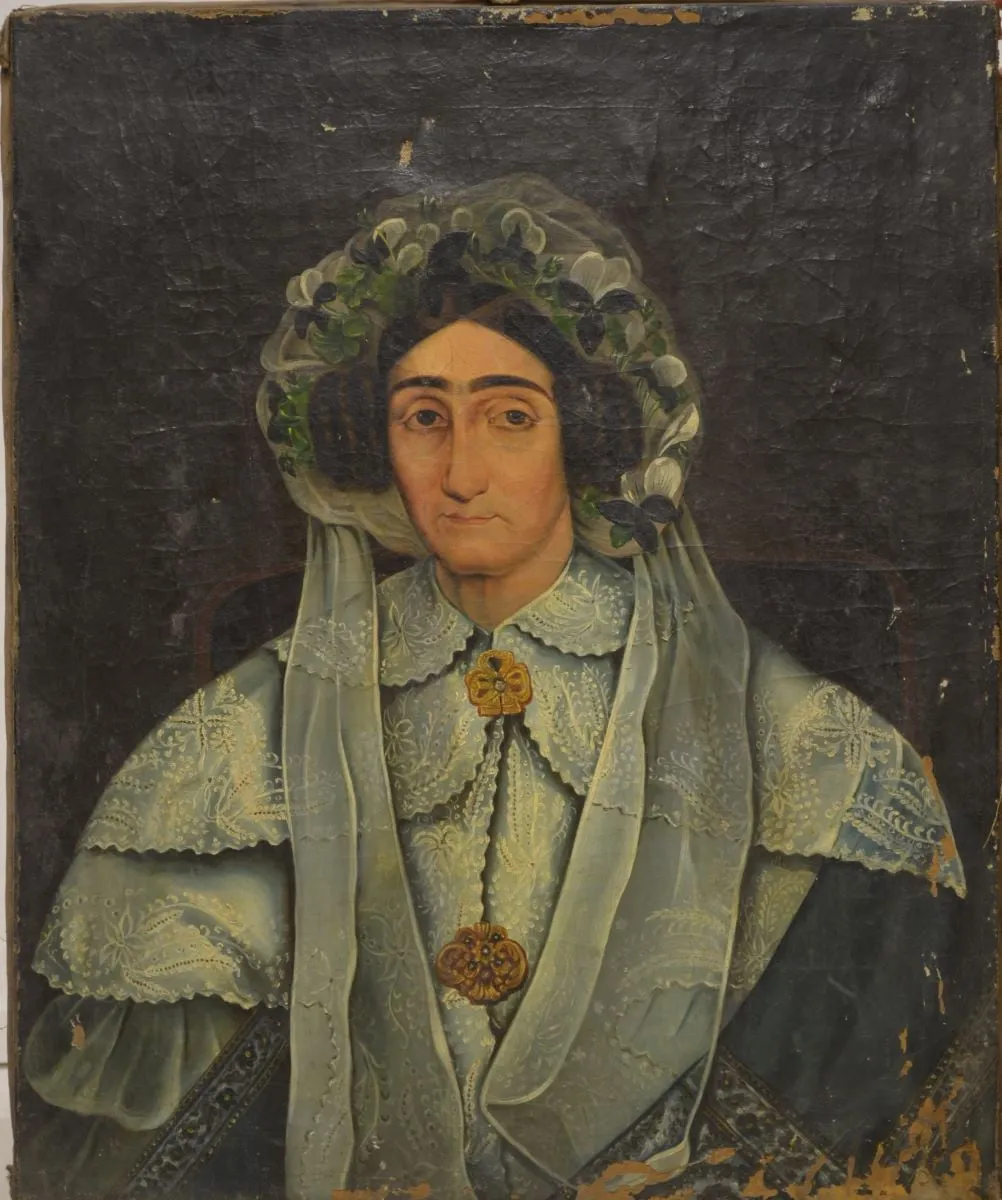
Portret de femeie is an unspecified painting by Unknown. It dates from 1850 and is held in the collection of the Brukenthal National Museum. This portrait depicts a woman dressed in a white lace gown and veil, rendered with meticulous attention to fabric texture and light.
About this work
Overview
This portrait depicts a woman dressed in a white lace gown and veil, rendered with meticulous attention to fabric texture and light. Set against a deep, unbroken background, her figure emerges with quiet presence. Her gaze is direct and composed, avoiding emotional flourish, while the intricate details of her attire suggest social refinement and careful presentation.
Subject & Meaning
The subject’s stillness and formal attire imply a portrait commissioned for personal or familial commemoration. The lace veil and ornate brooch—featuring a floral motif—signal modesty and status, common in 19th-century female portraiture. Her neutral expression avoids theatricality, emphasizing dignity over sentiment, aligning with contemporary ideals of feminine restraint.
Technique & Style
The artist employs fine brushwork to capture the translucency of lace and the sheen of silk, contrasting with the matte darkness behind. The brooch is rendered with subtle highlights, suggesting metalwork. Lighting is even and directional, modeling the face and dress without dramatic contrast, reinforcing a restrained, intimate realism.
History & Provenance
The painting’s origin and prior ownership are undocumented in available records. Its style and materials suggest a European origin, likely from the mid- to late-1800s. No known exhibition history or collector lineage has been established, leaving its creation context largely speculative.
Context
In the 19th century, portraits of women often emphasized domestic virtue and social standing through clothing and posture. This work reflects conventions of bourgeois portraiture, where lace and jewelry served as markers of taste and economic stability. Similar compositions appear in regional studios across Western Europe, particularly in regions with strong textile traditions.
Legacy
The painting remains an example of quiet, unadorned portraiture from a period when such works were common but rarely preserved outside family collections. Its survival offers insight into everyday visual culture, though it has not entered broader art-historical discourse or public institutional collections.
Artist & collection

 Domestic Scene
 Giacomo and Cardinal Marco, investing Andrea, Abbot of San Zeno, with his Benefice
 The Nymph of Fontainebleau
 Portrait of a Woman
 Madonna and Child with Saints in the Enclosed Garden
 Venus and Minerva
 Family Group of Four on Sofa
 Wall painting from Room H of the Villa of P. Fannius Synistor at Boscoreale
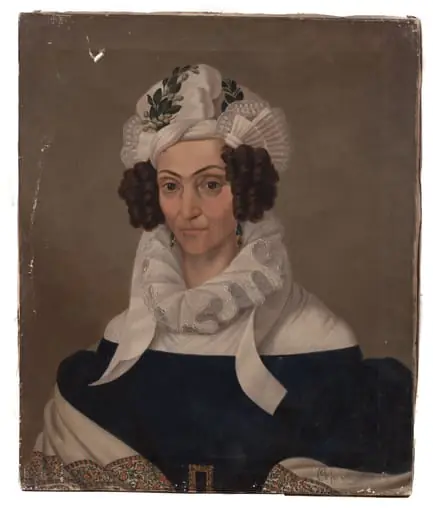 Logofeteasa Safta Cantacuzino (copie după Stawski)
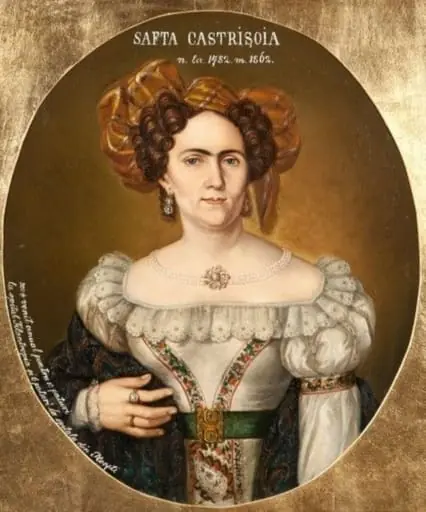 Safta Castrișoaia
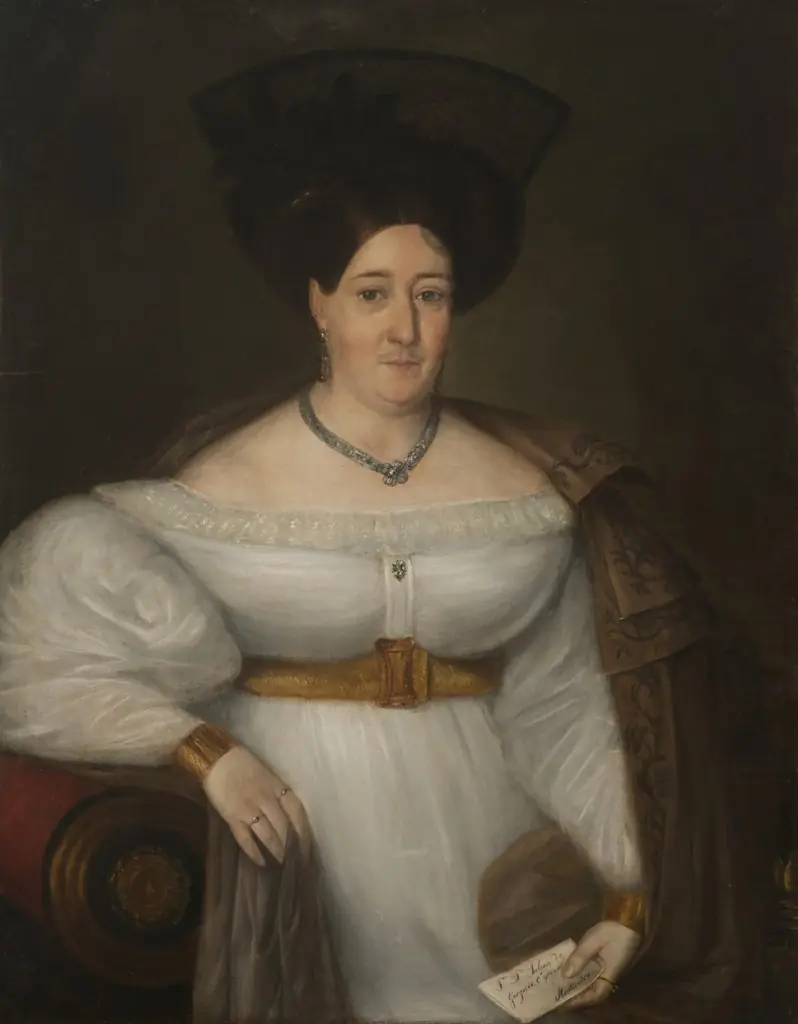 Candelaria Somellera de Espinosa
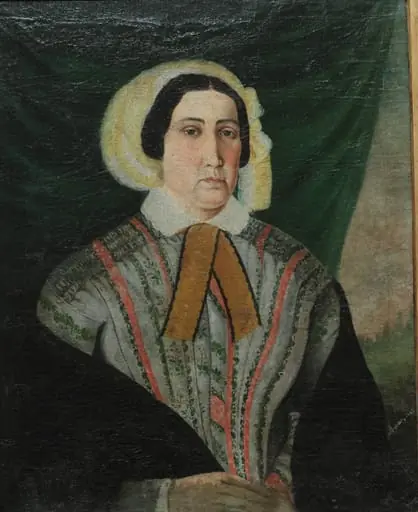 Portret de femeie
 Susanna Klausenburger, născută Adammi
 Susanna von Klausenburger născută Adami (În Registrul inventar: Susanna Klausenburger, născută Adamm).
 Marea clucereasă Maria Oteteleșanu
 Sarah (Thomas), Mrs Bowen of Llwyngwair
 Portrait of Józefa Machan née Layer
 Alexandrina G. Manu
 Anastasia Bozianu
 Anna von Österreich (1601-1666)