Artwork
明代帝后半身像册(二)-孝元贞皇后
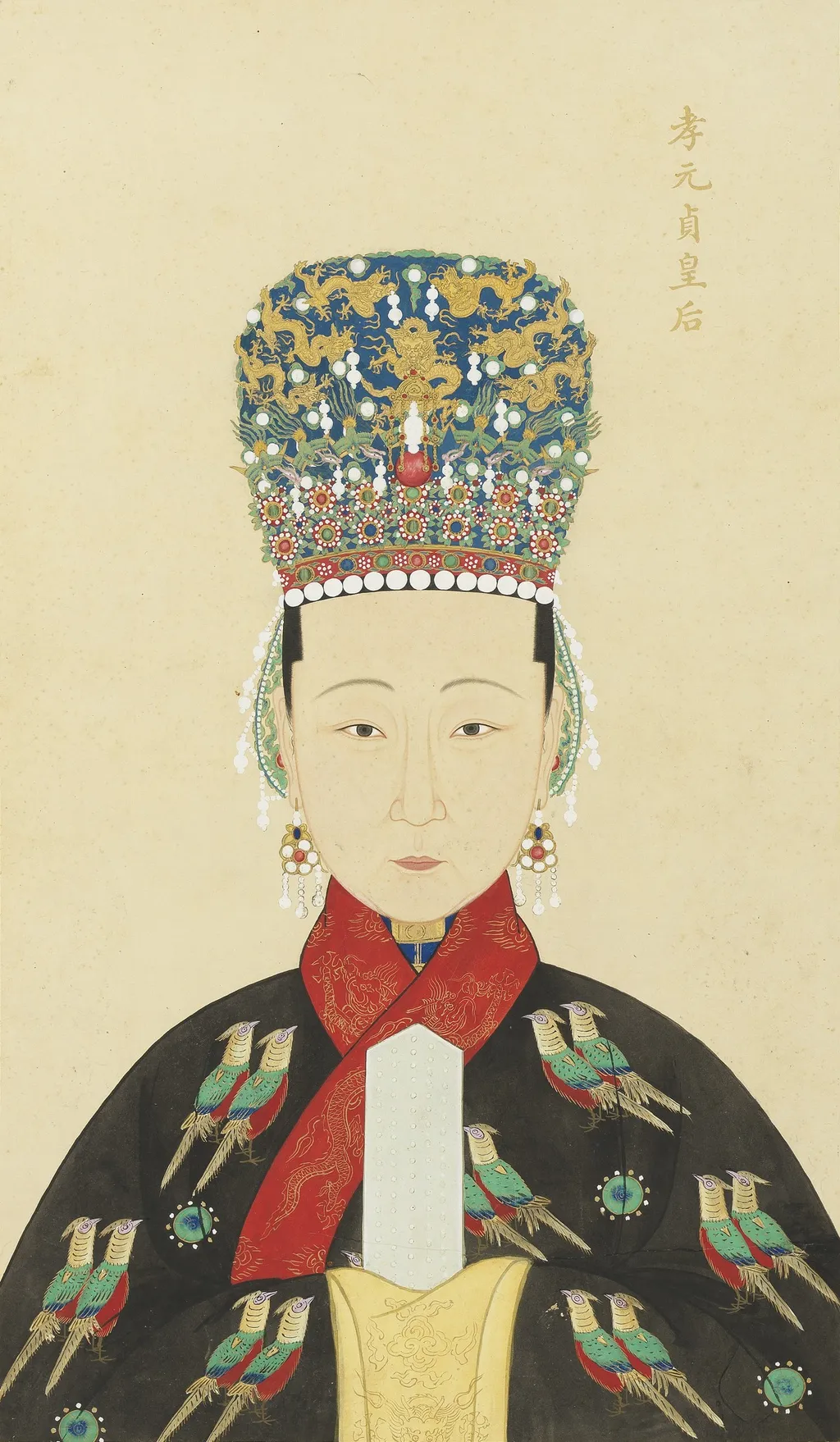
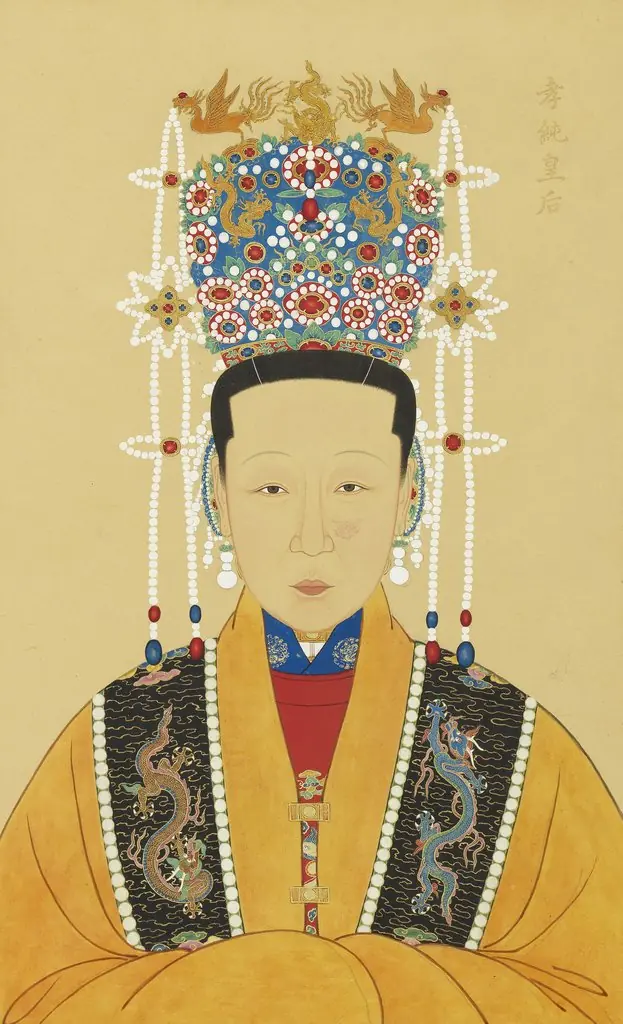
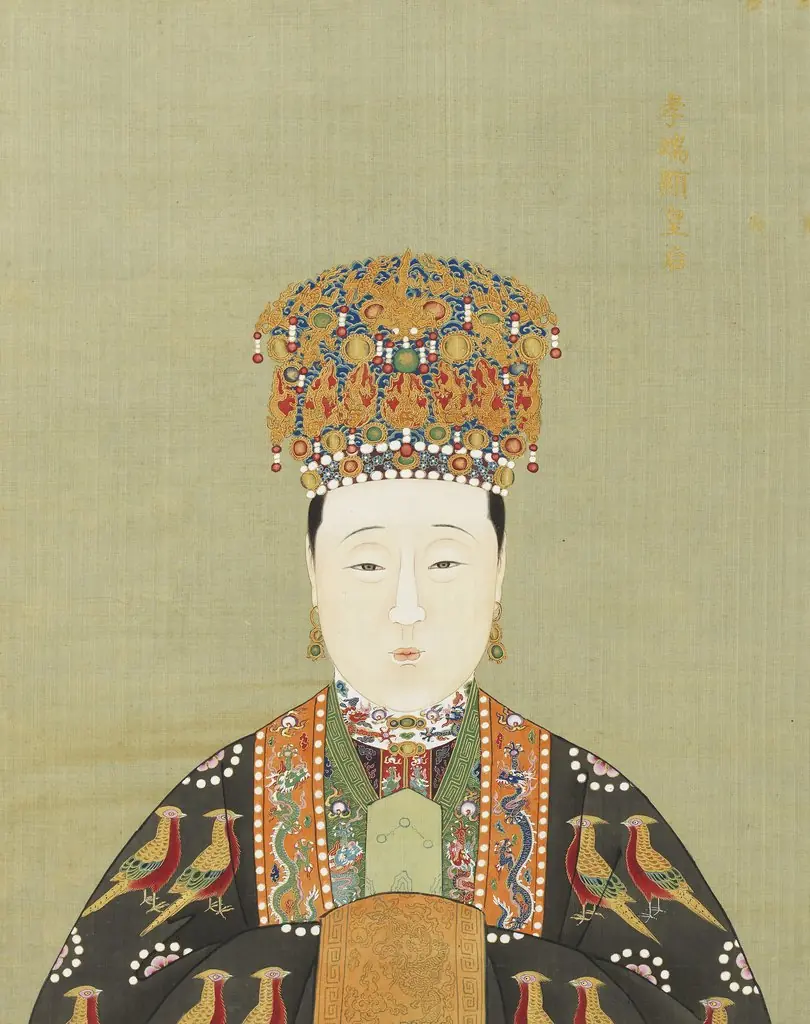
明代帝后半身像册(二)-孝元贞皇后 is an unspecified painting by Unknown. It dates from 1850 and is held in the collection of the National Palace Museum. This work is one of a pair of half-length portraits from a Ming dynasty album depicting imperial consorts.
About this work
Overview
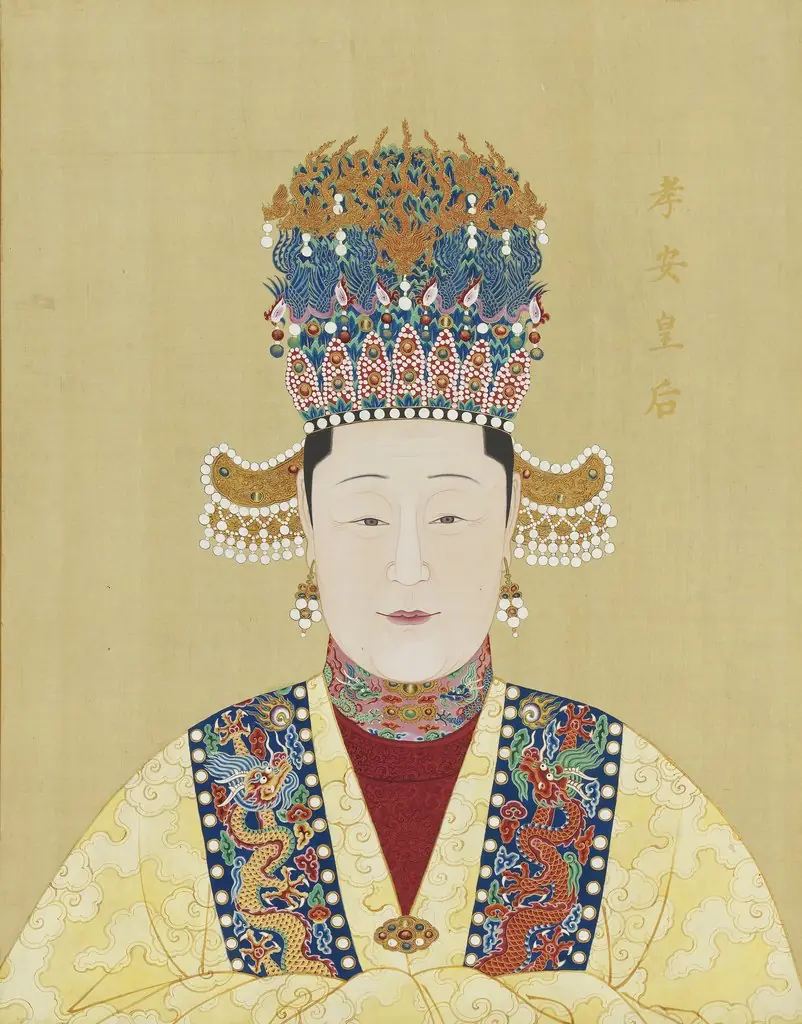
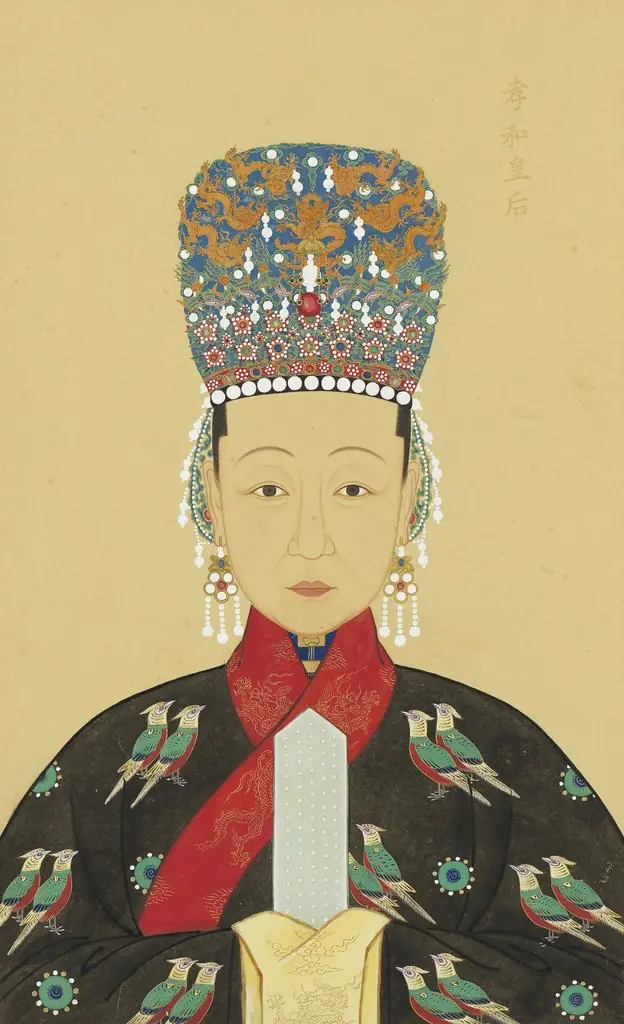
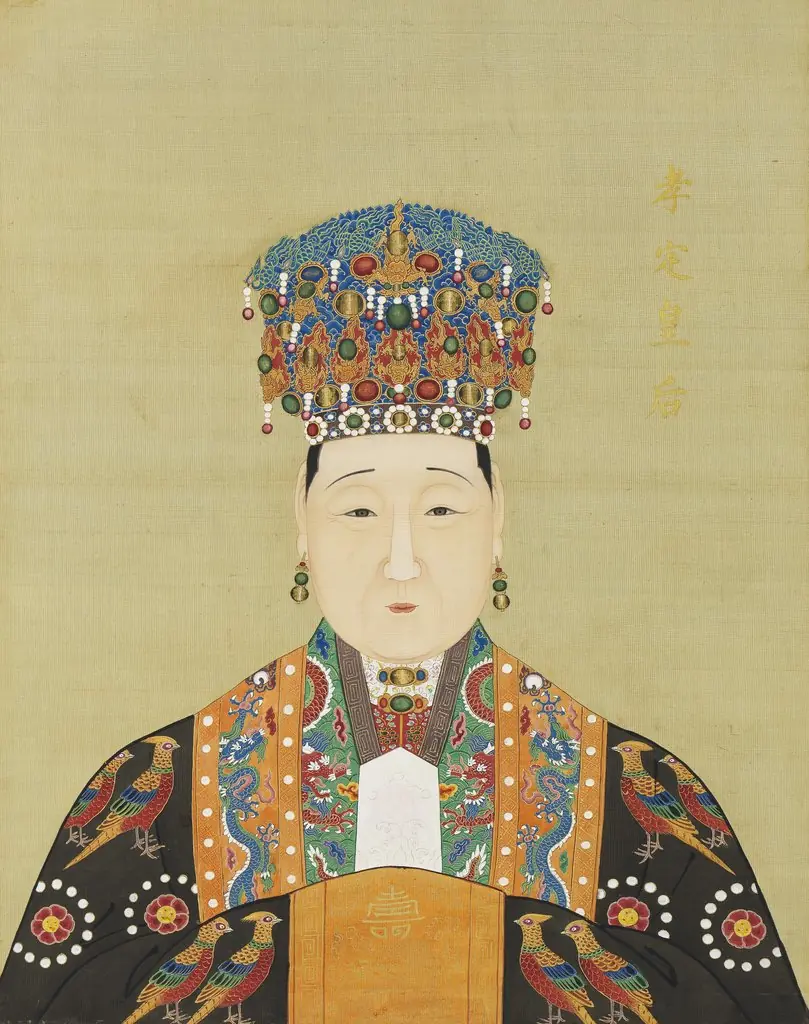
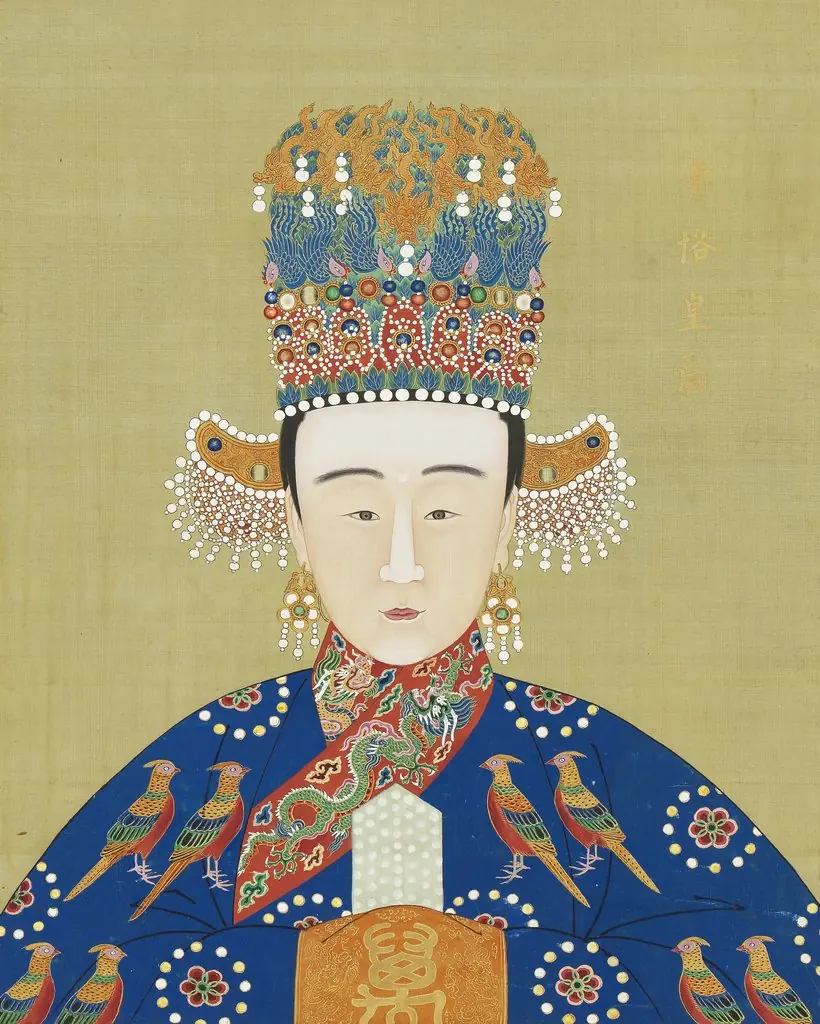
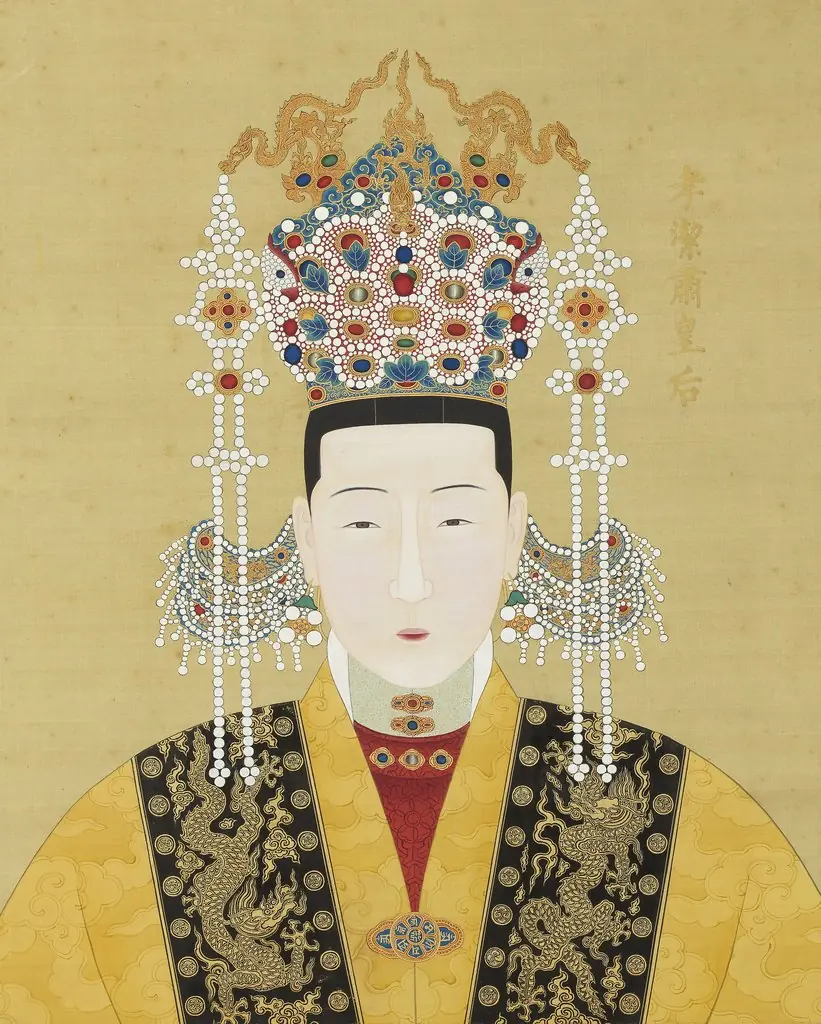
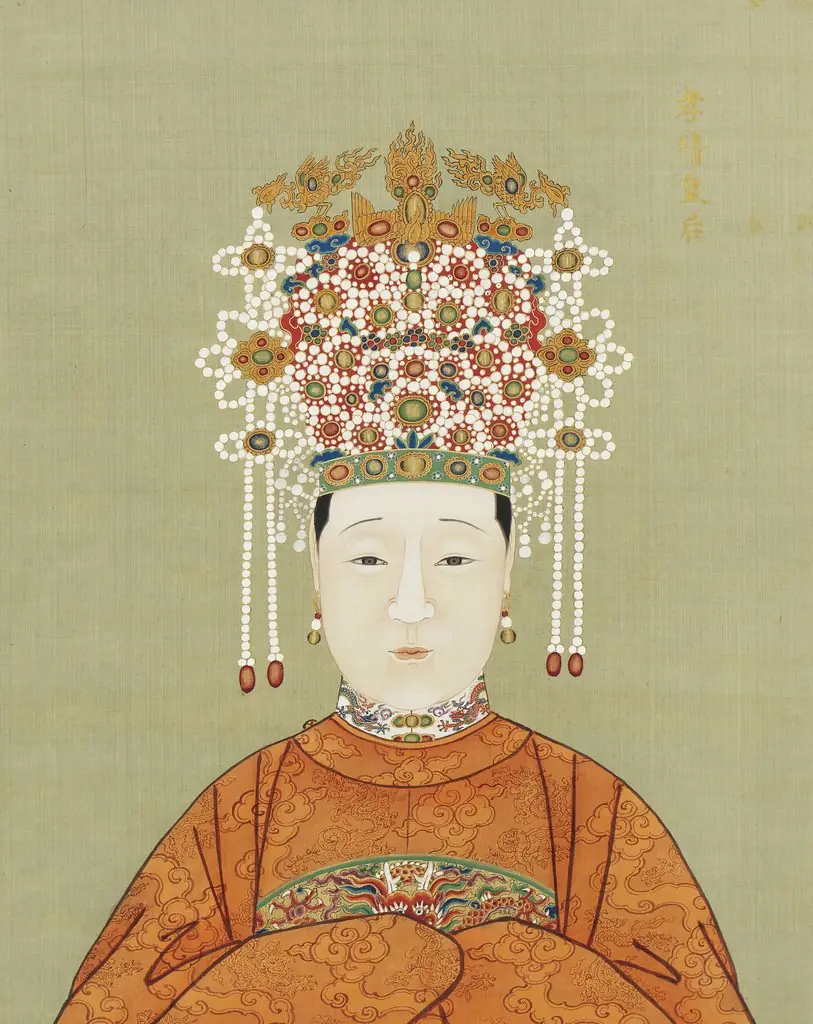
This work is one of a pair of half-length portraits from a Ming dynasty album depicting imperial consorts. Executed in ink and color on silk, it portrays Xiao Yuanzhen Empress, consort of the Wanli Emperor. The portrait follows formal court conventions, emphasizing dignity and ritual status over individual expression, consistent with imperial portrait traditions of the late 16th century.
Subject & Meaning
The portrait presents Xiao Yuanzhen in full ceremonial regalia, including the phoenix-adorned crown and layered robes symbolizing her rank as empress. Her composed posture and direct gaze reinforce her role as a moral and symbolic figurehead within the imperial household. The image was not intended as a personal likeness but as a representation of dynastic authority and feminine virtue.
Technique & Style
The painting employs fine, controlled brushwork to render intricate textile patterns and metallic embellishments. Color is applied with restraint, favoring muted tones of red, gold, and black to convey solemnity. Facial features are rendered with subtle modeling, avoiding overt realism in favor of idealized form, reflecting the standardized aesthetic of Ming court portraiture.
History & Provenance
The portrait was likely produced in the imperial painting academy during the Wanli reign (1573–1620) and stored in the palace collection. It remained within imperial custody until the fall of the Ming dynasty, after which it entered private or institutional hands, eventually becoming part of a documented album of imperial portraits preserved in modern collections.
Context
During the late Ming period, imperial portraits served as tools of political legitimacy and ancestral veneration. Consorts like Xiao Yuanzhen were depicted to affirm the continuity of the imperial lineage, particularly when their sons were heirs. These images were displayed in ancestral halls and used in rituals, reinforcing Confucian ideals of hierarchy and filial duty.
Legacy
The portrait contributes to a small corpus of surviving Ming court portraits of consorts, offering insight into the visual language of female imperial authority. While less studied than male emperor portraits, such works remain vital for understanding gender roles and ceremonial culture in late imperial China.
Artist & collection

 Domestic Scene
 Giacomo and Cardinal Marco, investing Andrea, Abbot of San Zeno, with his Benefice
 The Nymph of Fontainebleau
 Portrait of a Woman
 Madonna and Child with Saints in the Enclosed Garden
 Venus and Minerva
 Family Group of Four on Sofa
 Wall painting from Room H of the Villa of P. Fannius Synistor at Boscoreale