Artwork
Sf. Treime (Încoronarea Maicii Domnului); Icoană de tâmplă
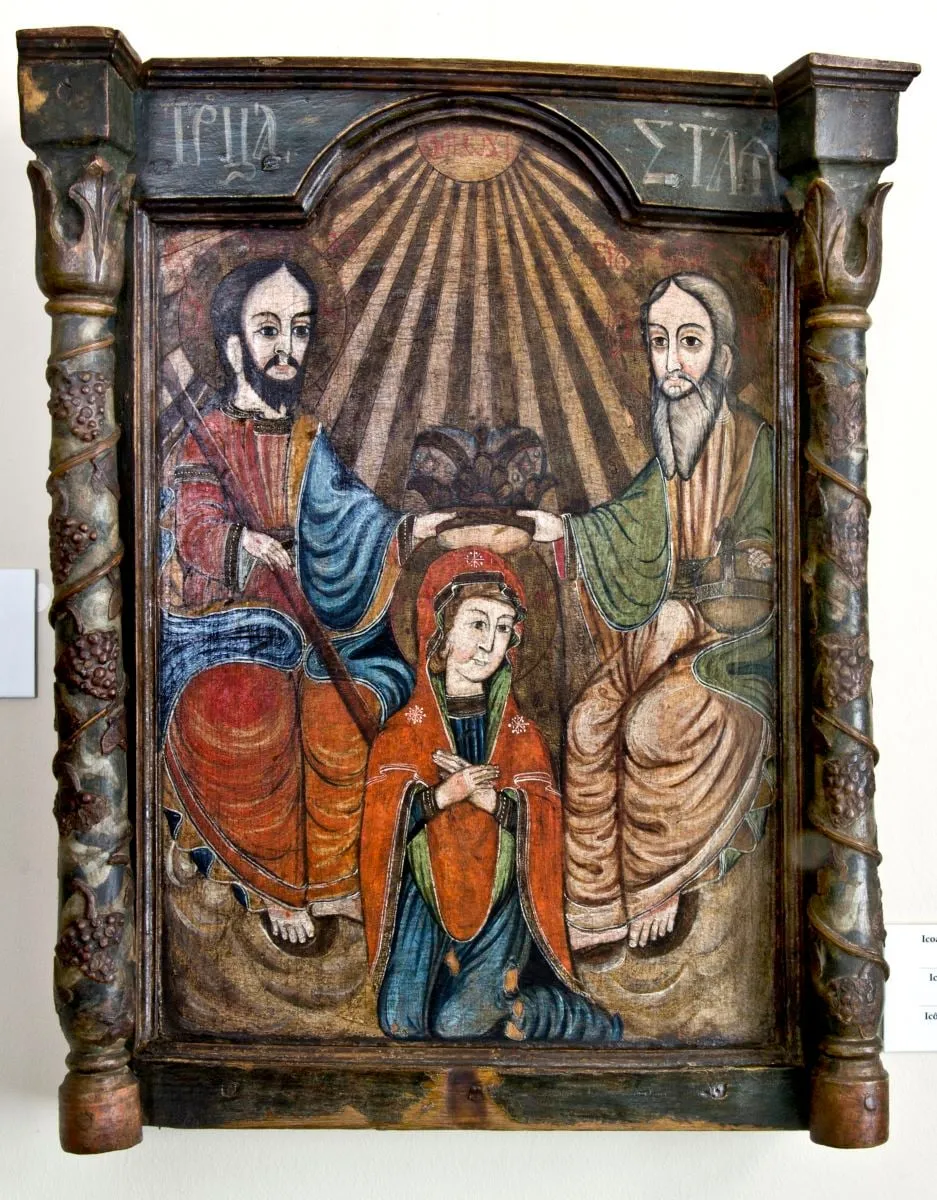
Sf. Treime (Încoronarea Maicii Domnului); Icoană de tâmplă is a drawing by Unknown. It dates from 1850 and is held in the collection of the National Museum of Art of Romania. This icon, titled Sf.
About this work
Overview
The composition centers on the Virgin, flanked by two male figures crowning her, set against a radiant sunburst background that suggests divine light.
This icon, titled Sf. Treime (Încoronarea Maicii Domnului), depicts the Coronation of the Virgin Mary as part of a Trinitarian scene. Executed on wood panel, it follows Eastern Orthodox iconographic traditions with stylized figures and symbolic color use. The composition centers on the Virgin, flanked by two male figures crowning her, set against a radiant sunburst background that suggests divine light.
Subject & Meaning
The scene illustrates the Virgin Mary being crowned by Christ and God the Father, representing her exaltation in heaven. The three figures together signify the Holy Trinity, with the crown symbolizing her role as Queen of Heaven. The kneeling posture of the Virgin conveys humility before divine authority, while the act of coronation affirms her intercessory status in Orthodox devotion.
Technique & Style
Painted with tempera on wood, the icon employs bold outlines and flat, saturated hues to emphasize spiritual presence over naturalism. The orange robe with green lining and red head covering contrasts against the golden sunburst, directing focus to the central figure. The lack of perspective and stylized proportions align with traditional Byzantine iconography, prioritizing theological clarity over spatial realism.
History & Provenance
The icon originates from a Romanian ecclesiastical context, likely created in the 18th or early 19th century by a local artisan. It was likely used in domestic or parish worship before entering the collection of the Museum of Ethnography. Its preservation reflects regional devotional practices and the continuity of icon-painting traditions in rural Moldavia or Transylvania.
Context
In Orthodox Christian communities of Romania, icons like this served as focal points for prayer and liturgical memory. The Coronation of the Virgin was a common theme in church interiors and private chapels, reinforcing doctrinal beliefs through visual narrative. Such works were often commissioned for feast days or as votive offerings, linking personal piety with communal faith.
Legacy
This icon remains a testament to the endurance of traditional iconography in Romanian religious culture. Though produced by anonymous hands, it embodies a visual language passed through generations of artisans. Today, its presence in the Museum of Ethnography preserves not only artistic form but also the spiritual practices of a community that once lived through its imagery.
Artist & collection

 Domestic Scene
 Giacomo and Cardinal Marco, investing Andrea, Abbot of San Zeno, with his Benefice
 The Nymph of Fontainebleau
 Portrait of a Woman
 Madonna and Child with Saints in the Enclosed Garden
 Venus and Minerva
 Family Group of Four on Sofa
 Wall painting from Room H of the Villa of P. Fannius Synistor at Boscoreale
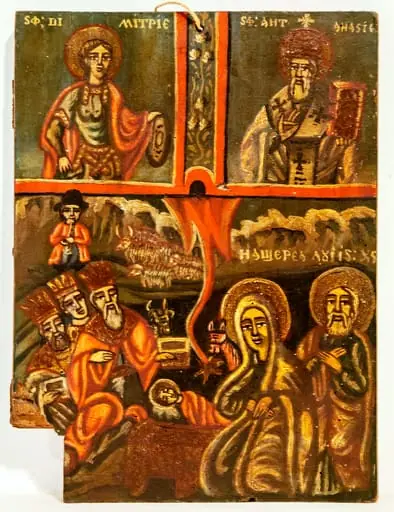 Câmpul icoanei împărțit în 2 registre orizontale inegale(cel de se 1/3 din suprafața icoanei, la rândul lui împărțit în 2 casete separate de o bandă verticală pe care este pictat un lujer cu flori albe. În registru inferior: Nașterea Domnului. În prim plan, Maria si Iosif îngenuncheați, central Pruncul Isus înfășat, așezat în iesle, în stânga lui cei trei magi, cu coroane împărătești pe cap, aducându-i daruri, în plan îndepărtat un cioban(în veșminte orășenești, cu pălărie neagră pe cap, cântând din fluier turmei de oi. În spatele Pruncului se văd capetele animalelor din grajd și o iesle. Steaua își revarsă razele asupra Pruncului(zonă incandescentă, terminată cu o stea deasupra acestuia). Pe fundalul întunecat, nori cu marginile albe. Sfinții din registrul superior sunt redați 3/4, sfântul Dimitrie tânăr, în veșminte militare, lorică, mantie roșie, scut în stânga, suliță în dreapta, Sfântul Atanasie, în veșminte arhierești, binecuvintează cu dreapta, în stânga ține cartea Evangheliilor ridicată. Părul și barba albe, mustățile lungi, veșmintele deschise la culoare, mitra înaltă, surmontată de o cruce albă. Cromatica: roșu, brun, alb, albastru, galben. Colț stânga jos lipsă. Stil naiv, popular.
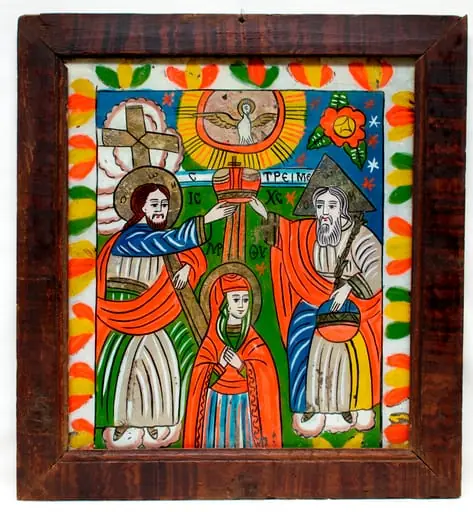 Sfânbrad
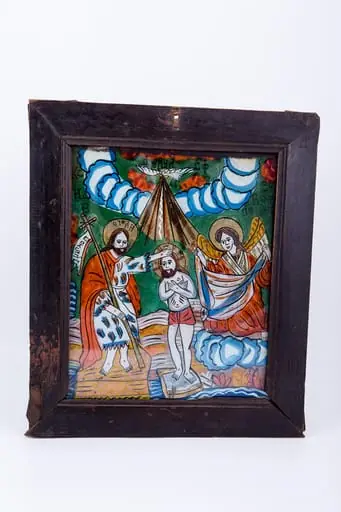 Domnul Iisus Hristos primește Botezul, în râul Iordanului, din partea Sfântului Mare Prooroc și Înaintemergător Ioan Botezătorul, care se află în dreapta Mântuitorului. Mântuitorul este înfășurat cu o pânză de culoare roșie împrejurul șoldurilor și a coapselor. În stânga Lui, este un înger evlavios, care Îl așteaptă cu un ștergar alb-roșu-albastru gata să înveșmânteze Trupul Domnului. Sfântul Ioan Botezătorul este îmbrăcat cu o mantie roșie și un himation alb-brun sau o haină din păr de cămilă. Cerurile de culoare verde, asemenea Duhului Sfânt, sunt deschise și izvorăște o rază de lumină, pe care se pogoară porumbelul, simbolul Sfântului Duh, pe creștetul Mântuitorului. Mandorla de nouri rotunzi, care permite deschiderea Cerurilor au o alternanță cromatică de alb și albastru bleu-ciel. Cromatica este specifică Țării Oltului: auriu, roșu vermillon, verde spanac-avocado, albastru bleu-ciel, bej, gri, ocru, brun-nisipiu, alb, negru. Inscripția din româno-chirilică se traduce Botezul Lui IC XC Iisus Hristos Sfântul Duh Ioan.
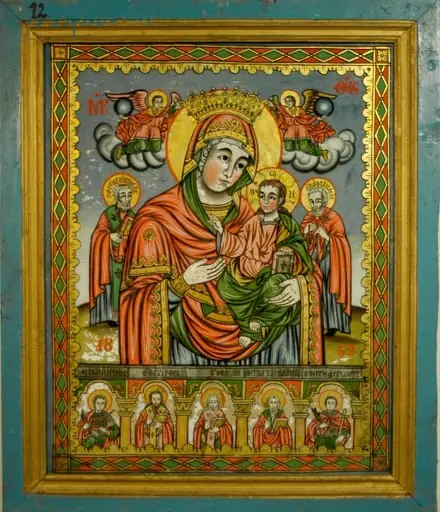 Maica Domnului cu Pruncul
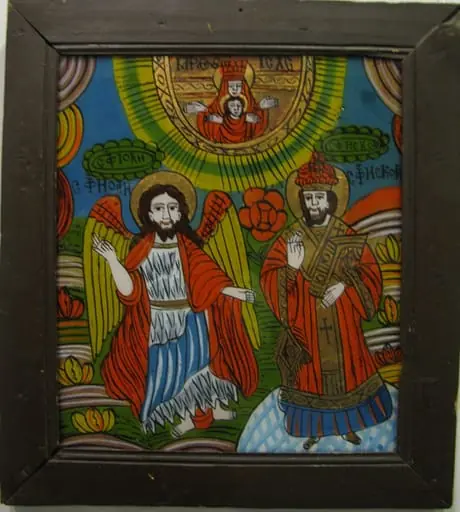 Sf. Ioan Botezătorul și Sf.Nicolae
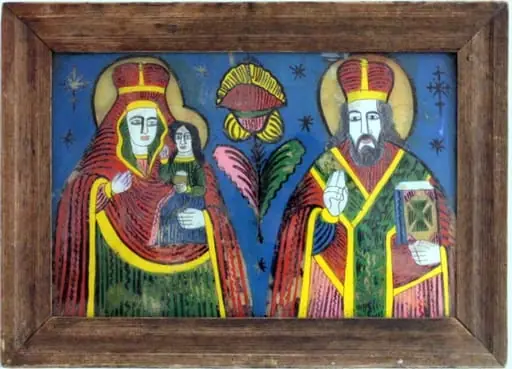 Maica Domnului cu Pruncul și Sf. Nicolae
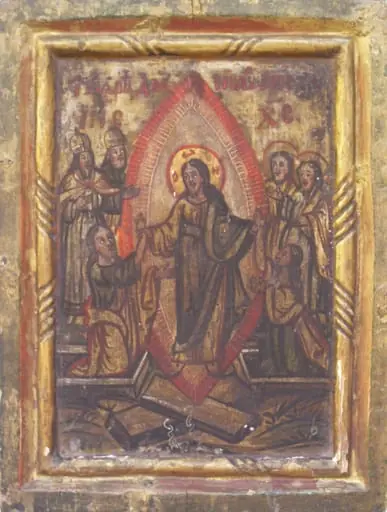 Coborârea la iad
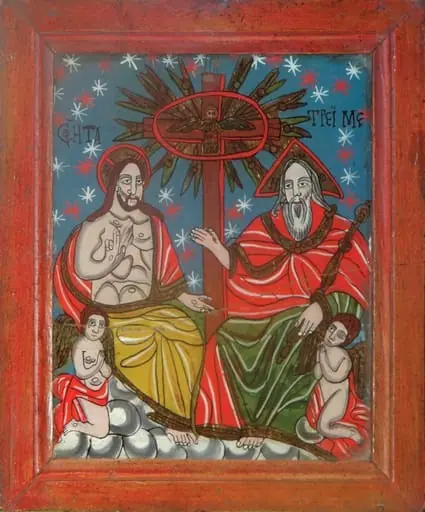 Sfânta Treime nou-testamentară
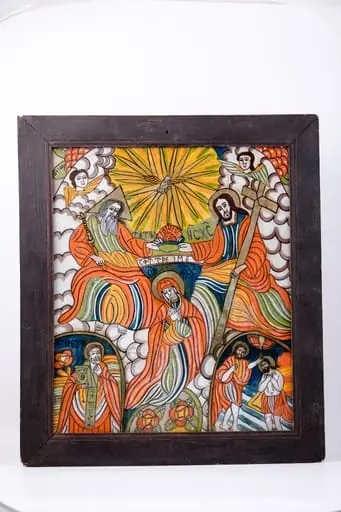 Icoana reprezintă Sfânta Treime și Încoronarea Maicii Domnului central și secundar Botezul Domnului și Sfântul Apostol Petru. Dumnezeu-Tatăl are sceptrul Împărăției Cerurilor, asemenea unui crin de bronz și Dumnezeu-Fiul are Crucea pe umăr. Maica Domnului este ridicată în timpul de rugăciune și ascultare, smerenie și primire de bunăvoie. Dumnezeu-Tatăl, Dumnezeu-Fiul și Maica Domnului sunt înveșmântați în roșu vermillon-orange, alb și albastru bleu-ciel și verde. În registrul îndepărtat superior este cerul albastru, Dumnezeu-Fiul ține pe brațul stâng Crucea, iar Maica Domnului are mâinile împreunate în cruce pe piept. Dumnezeu-Tatăl și Dumnezeu-Fiul așează împreună coroana de împărăteasă a Cerurilor pe capul Fecioarei Maria. În registrul superior, printr-o mandorlă de nouri și un disc de raze solare, deschizându-se cerurile, se coboară Sfântul Duh, sub forma unui porumbel, pe un mănunchi de raze de lumină. Maica Domnului este încoronată ca Împărăteasa Cerurilor de către Dumnezeu-Tatăl și Dumneteu-Fiul. În colțurile superioare stânga-dreapta sunt 2 îngeri serafimi. În registrul inferior, în câte două medalioane ovoidale sunt Botezul Domnului Iisus Hristos și Sfântul Apostol Petru, având Cheile Împărăției Cerurilor. Sunt două tematici iconografice secundare, dar care completează armonios și simetric tematica centrală. Inscripția din româno-chirilică se traduce IC XC Iisus Hristos Tatăl MP Maica Domnului Sfânta Treime Botezul Sf Petru. Cromatica este luminoasă și armonioasă: roșu vermillon, albastru bleu-ciel, galben, alb, auriu, negru. Trăsăturile chipurilor sunt rafinat desenate. Fondul icoanei este cerul albastru ultramarin decorat de mandorle de nouri rotunzi albi-bej-crem, văzduhul fiind bogat în Duhul Sfânt. Este o icoană de Țara Oltului.
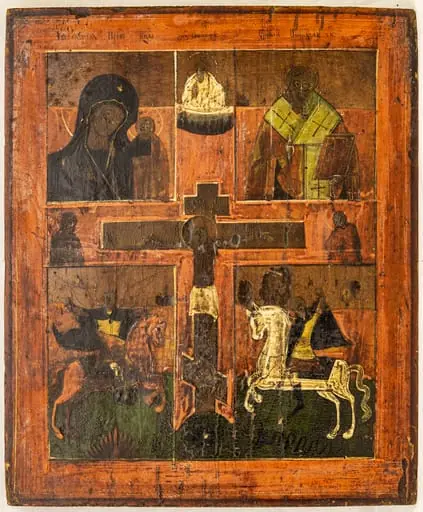 Icoană în patru registre, în centru Iisus Crucificat
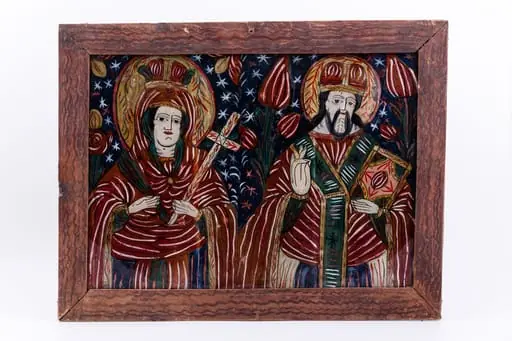 Icoana îi reprezintă pe Sfânta Mare Cuvioasă Parascheva de la Iași și pe Sfântul Ierarh Vasile cel Mare. Preacuvioasa este îmbrăcată în veșmânt roșu stacojiu-bordo-acajou, cu interiorul căptușit cu albastru și verde închis, ornat cu dungi albe subțiri. Peste maforionul roșu, sfânta cuvioasă are coroniță și aureolă. Mantia este prinsă la gât cu o fibulă aurie. În mâna dreaptă are un mănunchi de finic și în mâna stângă ține crucea. Alături de Sfânta Parascheva este Sfântul Ierarh Vasile cel Mare, îmbrăcat în veșminte liturgice arhierești cu felon-omofor roșu stacojiu, cu interiorul indigo închis, ornat cu striații albe fine, și cu epitrahil verde cu trei cruci negre. Cu mâna dreaptă Binecuvântează, iar în mâna stângă ține Sfânta Evanghelie închisă. Fondul icoanei este albastru ultramarin bleumarin închis înspre violet-indigo, cu elemente decorative fitomorfe și astrale albe și roșii. Cromatica este armonioasă, deși întunecată și rece: roșu stacojiu, bordo, acajou, albastru ultramarin bleumarin închis, violet-indigo, galben chihlimbar, brun, bej, verde de China, alb. Icoana este de Făgăraș și aparține Anei Deji.
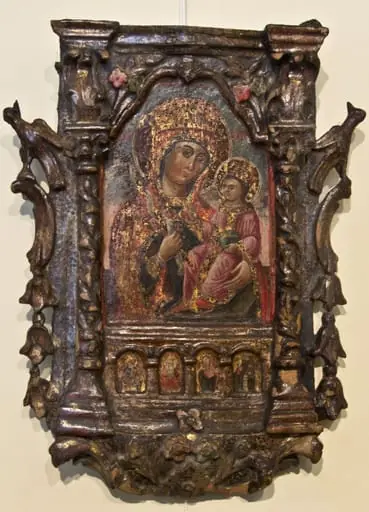 Maica Domnului cu pruncul Rodon to amaranton; Trandafirul neveștejit