Artwork
Surabhi or Kamadhenu, the magic wish granting cow
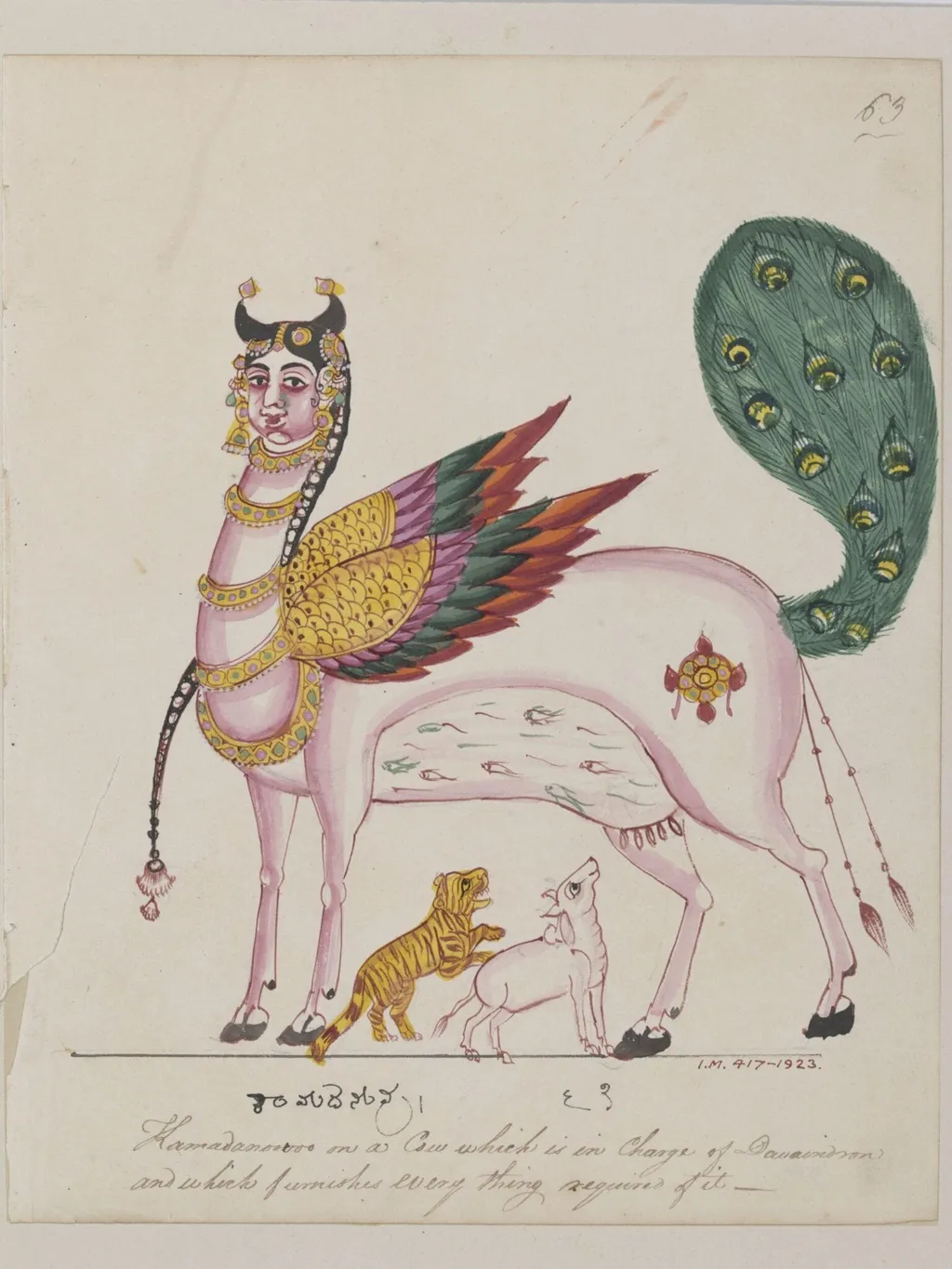
Surabhi or Kamadhenu, the magic wish granting cow is a paint painting by the Romanticist artist Unknown. It dates from 1820 and is held in the collection of the Victoria and Albert Museum.
About this work
Overview
This painting is one of a hundred devotional illustrations produced in South India circa 1820, depicting Hindu deities in a detailed, stylized manner.
This painting is one of a hundred devotional illustrations produced in South India circa 1820, depicting Hindu deities in a detailed, stylized manner. It centers on Surabhi, also known as Kamadhenu, the divine bovine associated with abundance and fulfillment of wishes. The composition integrates symbolic animals and ornamental elements characteristic of regional devotional art traditions, emphasizing spiritual potency through visual symbolism rather than naturalism.
Subject & Meaning
Surabhi, the celestial cow, embodies fertility, nourishment, and divine grace in Hindu cosmology. Here, she is depicted with a human face, signifying consciousness and sentience beyond the animal form. The presence of the tiger and goat—animals linked to Durga and other deities—reinforces her role as a unifying source of power. The imagery suggests her supremacy over forces of nature and protection, serving as a visual invocation of cosmic order.
Technique & Style
The artist employs fine brushwork to render intricate patterns on the cow’s forehead and elaborate jewelry, reflecting regional manuscript painting conventions. The body is rendered in white with contrasting black-and-white markings, while the tail mimics a peacock’s plumage in vivid green, blending natural and mythological forms. Small animals are rendered in simplified yellow forms, creating visual hierarchy and directing focus toward the central figure.
History & Provenance
The work belongs to a series of hundred devotional drawings likely commissioned for private worship or temple use in early 19th-century South India. These illustrations were produced in a fluid, portable format, distinct from large-scale murals or temple sculptures. Their survival suggests they were carefully preserved, possibly within scholarly or priestly households, as objects of contemplation rather than public display.
Context
Created during a period of British colonial influence, such devotional art persisted as a means of cultural continuity. Artists drew from established iconographic manuals, blending local aesthetics with enduring theological themes. Unlike Western Romanticism, this tradition prioritized symbolic accuracy and spiritual resonance over emotional expression or individual interpretation, anchoring the divine in recognizable, codified forms.
Legacy
These drawings represent a quiet but enduring lineage of South Indian devotional illustration, preserved in private collections and institutional archives. They offer insight into how mythological narratives were visually sustained outside monumental architecture. While largely overlooked in broader art histories, they remain vital to understanding regional religious practice and the transmission of iconographic knowledge through the 19th century.
Artist & collection

 Domestic Scene
 Giacomo and Cardinal Marco, investing Andrea, Abbot of San Zeno, with his Benefice
 The Nymph of Fontainebleau
 Portrait of a Woman
 Madonna and Child with Saints in the Enclosed Garden
 Venus and Minerva
 Family Group of Four on Sofa
 Wall painting from Room H of the Villa of P. Fannius Synistor at Boscoreale
 Untitled
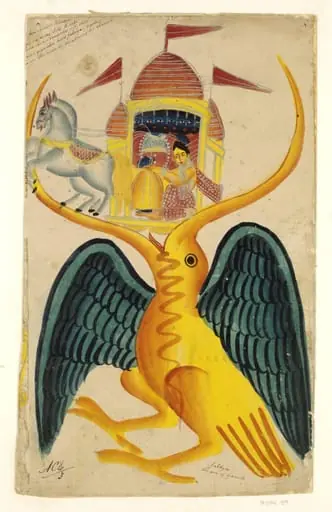 Ravana, Sita and Jatayu
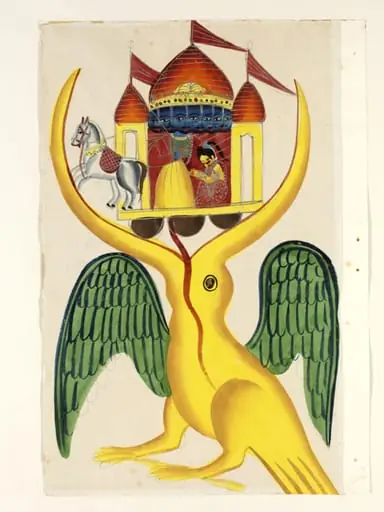 Jatayu, Sita and Ravana
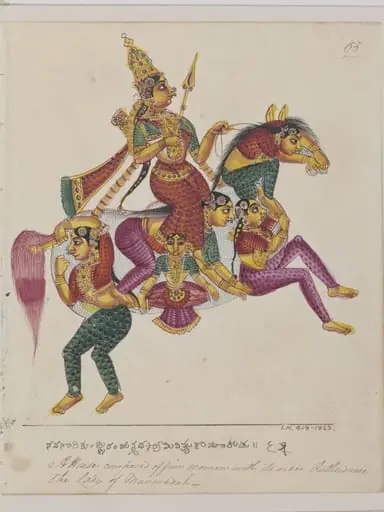 Rati
Rati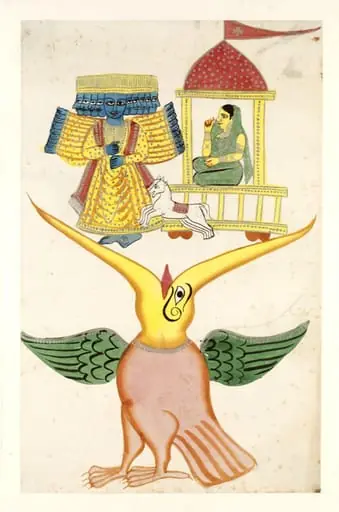 Jatayu, Ravana and Sita
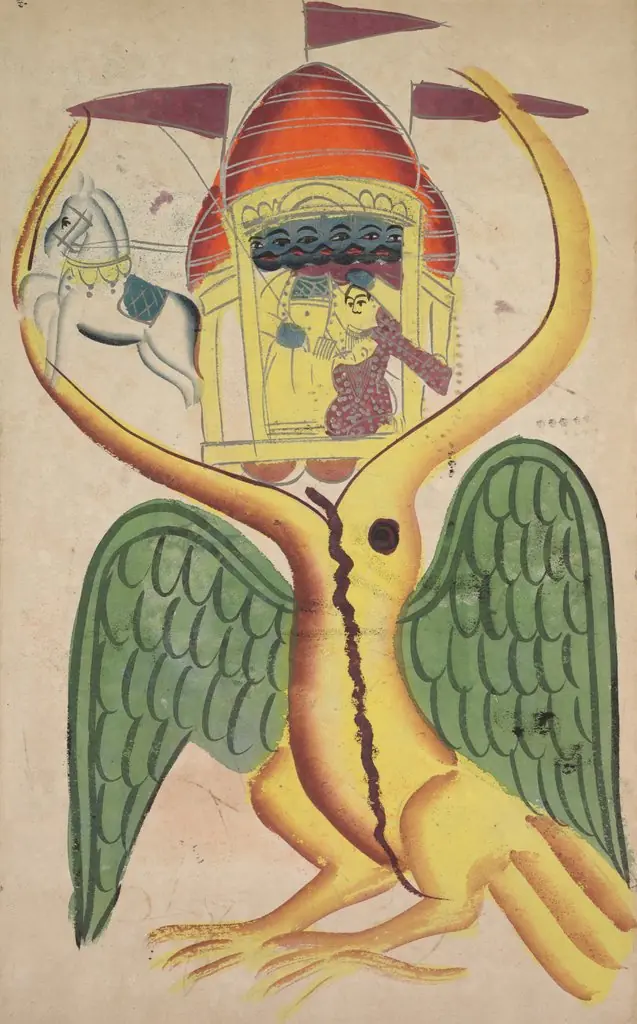 Jatayu hinders Ravana’s chariot, trying to prevent the abduction of Sita (recto), from a Kalighat album
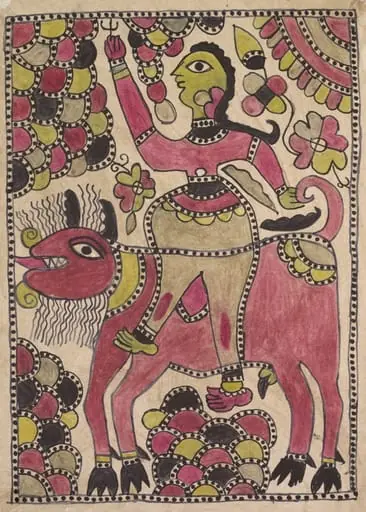 Rider and four-legged bovine creature in mauve, chartreuse and black palette
 Narasimha
 Shiva riding on Nandi
 Shiva, Parvati and Nandi