Artwork
The Brahman gives an account of his falling in love with the king of Babylon’s daughter to his friend, the magician, from a Tuti-nama (Tales of a Parrot): Thirty-fifth Night
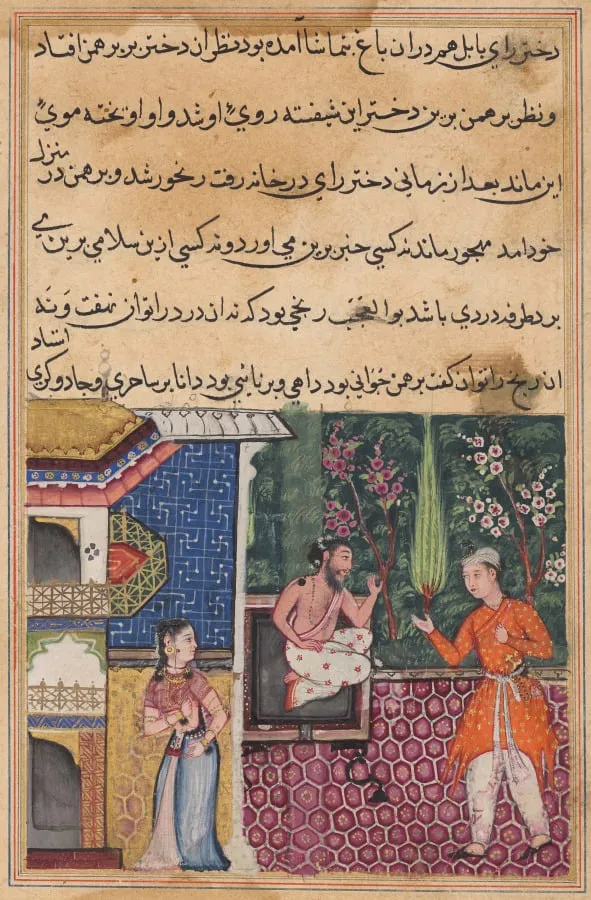
The Brahman gives an account of his falling in love with the king of Babylon’s daughter to his friend, the magician, from a Tuti-nama (Tales of a Parrot): Thirty-fifth Night is an unspecified painting by the Renaissance artist Unknown. It dates from 1560 and is held in the collection of the Cleveland Museum of Art.
About this work
If you like this, look up Mughal India, court of Akbar (reigned 1556–1605) for more paintings from the same time.
A Brahman priest sits on the ground, telling his story to a magician in orange robes. To the left, the same priest walks toward a palace, now magically turned into a woman.
This painting shows two moments at once—a trick called continuous narration. The artist squeezed a whole love story into one small space. The garden in the back feels alive with tiny flowers and birds, even though the scene is about a secret romance.
If you like this, look up Mughal India, court of Akbar (reigned 1556–1605) for more paintings from the same time.
Overview
This 16th-century Indian painting from the Tuti-nama (Tales of a Parrot) series depicts two concurrent scenes of a Brahman's love affair with the King of Babylon's daughter, facilitated by a magician.
Subject & Meaning
The painting narrates the Brahman's tale of falling in love with a princess, their separation due to her palace confinement, and the magician's intervention to reunite them by transforming the Brahman into a woman.
Technique & Style
Employing continuous narration, the artist simultaneously illustrates the Brahman recounting his story and his transformed self approaching the palace, set against a vibrant garden backdrop symbolizing the lovers' meeting place.
History & Provenance
Created during the reign of Akbar (1556–1605), this work is characteristic of the Mughal India art style prevalent in Akbar's court.
Context
The piece reflects the cultural and artistic influences of Mughal India during Akbar's rule, known for its rich illustrative traditions and storytelling in art.
Legacy
This painting exemplifies the narrative techniques and aesthetic values of its time, contributing to the understanding and appreciation of Mughal art's storytelling capacity.
Artist & collection

 Domestic Scene
 Giacomo and Cardinal Marco, investing Andrea, Abbot of San Zeno, with his Benefice
 The Nymph of Fontainebleau
 Portrait of a Woman
 Madonna and Child with Saints in the Enclosed Garden
 Venus and Minerva
 Family Group of Four on Sofa
 Wall painting from Room H of the Villa of P. Fannius Synistor at Boscoreale
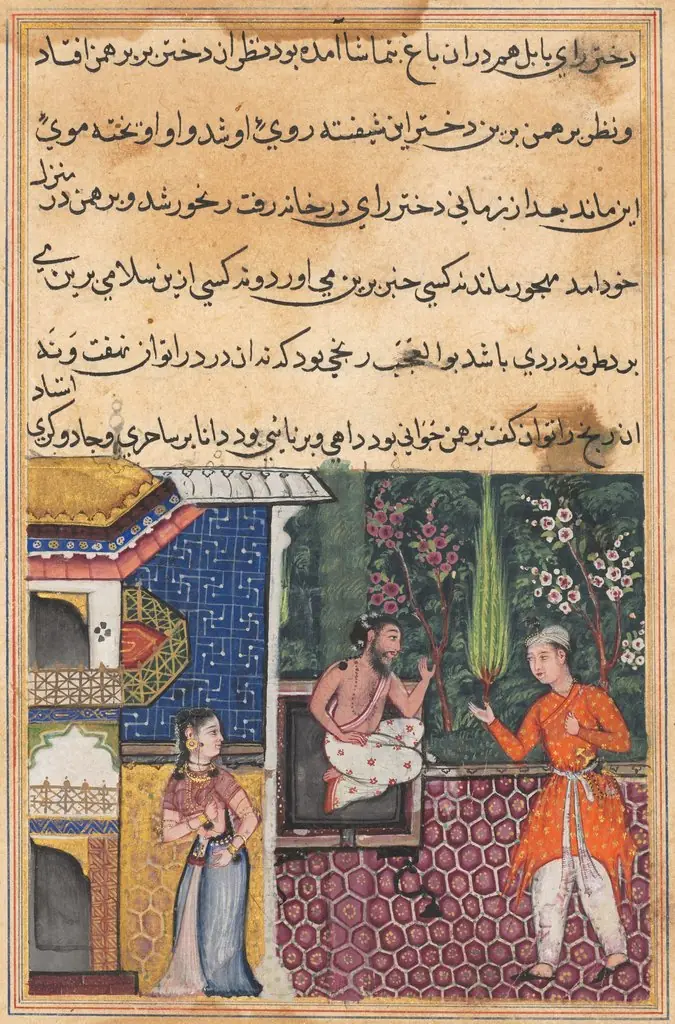 The Brahman gives an account of his falling in love with the king of Babylon’s daughter to his friend, the magician, from a Tuti-nama (Tales of a Parrot): Thirty-fifth Night
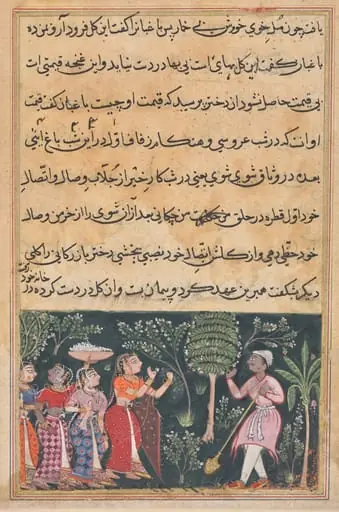 The daughter of the merchant of Mazanderan asks the gardener for the rose, from a Tuti-nama (Tales of a Parrot): Twelfth Night
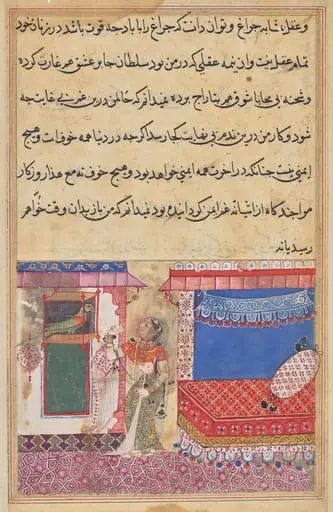 The Parrot Addresses Khujasta at the Beginning of the Eighteenth Night, from a Tuti-nama (Tales of a Parrot)
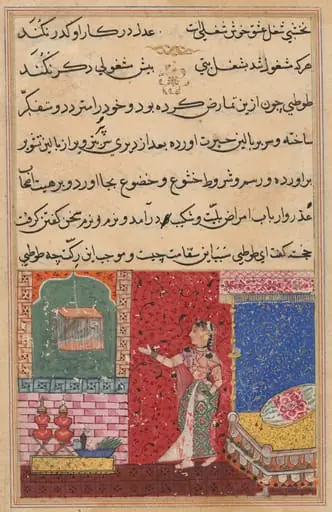 The Parrot Addresses Khujasta at the Beginning of the Fifteenth Night, from a Tuti-nama (Tales of a Parrot)
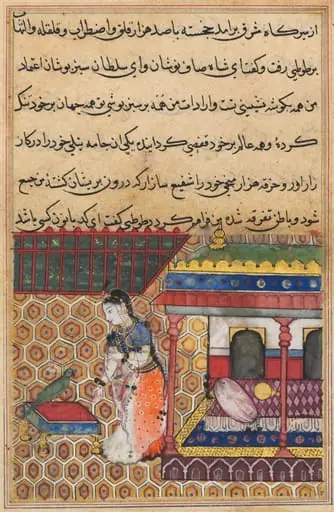 The parrot addresses Khujasta at the beginning of the thirty-eighth night, from a Tuti-nama (Tales of a Parrot)
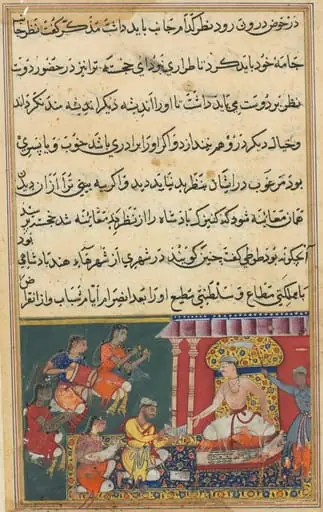 The astrologer predicts a calamity for the newly born prince in his thirteenth year, but one which he would be able to overcome, from a Tuti-nama (Tales of a Parrot): Eighth Night
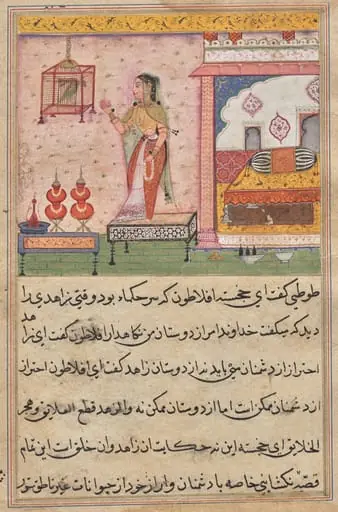 The Parrot Addresses Khujasta at the Beginning of the Twenty-third Night, from a Tuti-nama (Tales of a Parrot)
 The handmaiden again pleads for the death of the prince, from a Tuti-nama (Tales of a Parrot): Eighth Night
 The Brahman’s wife who killed a peacock and ate its gallbladder on the physician’s advice, from a Tuti-nama (Tales of a Parrot): Nineteenth Night