Artwork
Shahr-Arai’s husband bends to kiss his wife who feigns sleep, from a Tuti-nama (Tales of a Parrot): Fortieth Night
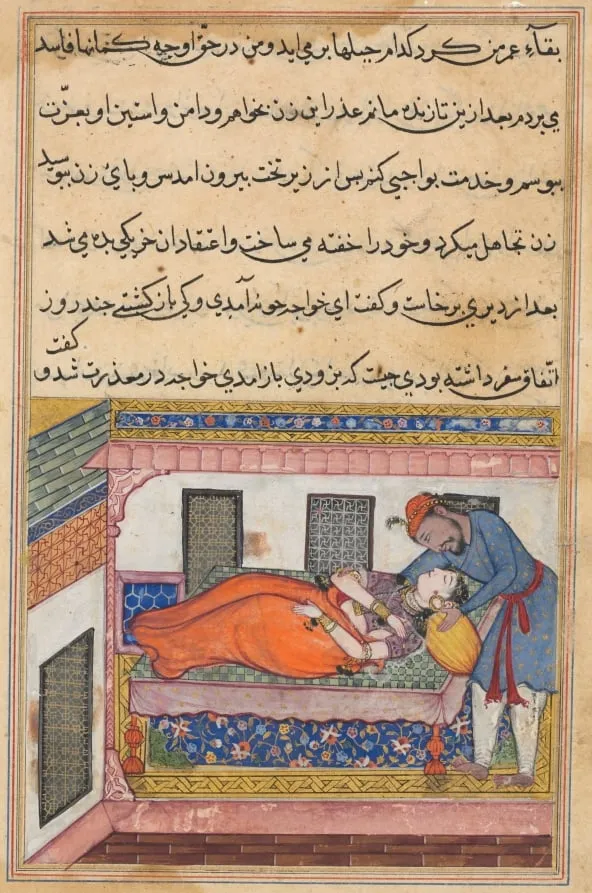
Shahr-Arai’s husband bends to kiss his wife who feigns sleep, from a Tuti-nama (Tales of a Parrot): Fortieth Night is an unspecified painting by the Mughal Painting artist Unknown. It dates from 1560 and is held in the collection of the Cleveland Museum of Art.
About this work
A man leans over a woman lying in bed, kissing her cheek while she keeps her eyes closed.
A man leans over a woman lying in bed, kissing her cheek while she keeps her eyes closed. The room is small, filled with patterned fabrics and soft light.
This scene comes from a story where the wife has just tricked her husband. She told him her lover was her long-lost brother, and now he believes her. The painting shows the moment he thanks her for being "loyal." The quiet tension makes it feel real, not just a tale.
To see more work like this, look up *Mughal India, court of Akbar (reigned 1556–1605)*.
Overview
This painting illustrates a moment from the Fortieth Night of the Tuti-nama, a Persian-inspired collection of tales translated and illustrated under Mughal patronage. It depicts Shahr-Arai’s husband, deceived by her ruse, bending to kiss her as she pretends to sleep. The scene captures quiet deception, rendered with intimate detail within a modest interior, reflecting the narrative’s focus on cunning and domestic illusion.
Subject & Meaning
Shahr-Arai has convinced her husband that her nighttime visitor is her long-lost brother, not a lover. The husband, believing her to be faithful, expresses gratitude through a tender kiss. Her closed eyes suggest feigned innocence, heightening the irony. The moment is not one of passion but of calculated manipulation, revealing themes of gendered wit and the fragility of trust in marital relationships.
Technique & Style
Rendered in fine brushwork typical of Akbar’s atelier, the scene uses soft, diffused light to enhance the intimacy of the moment. Patterned textiles and architectural details ground the space in a lived-in reality. Figures are delicately modeled, with subtle expressions and restrained gestures. The composition focuses tightly on the couple, eliminating distraction and amplifying psychological tension through stillness and proximity.
History & Provenance
Created around 1560 in the imperial Mughal workshop under Emperor Akbar, this folio belonged to a deluxe manuscript of the Tuti-nama, commissioned to translate and illustrate a collection of Indian frame tales. Likely produced by Persian and Indian artists collaborating in the imperial atelier, the manuscript was later dispersed; this folio survives in a private collection, its journey reflecting the movement of Mughal art across centuries.
Context
The Tuti-nama was adapted from a 12th-century Arabic text and reimagined for Akbar’s court as both entertainment and moral instruction. Its tales of trickery and wit appealed to Mughal elites familiar with Persian literary traditions. This scene reflects a broader cultural interest in psychological nuance and domestic drama, blending indigenous Indian storytelling with Persianate visual conventions to create a uniquely Mughal aesthetic.
Legacy
This painting exemplifies the Mughal court’s early experimentation with narrative realism, influencing later illustrated manuscripts in its attention to emotional subtlety and domestic detail. While the Tuti-nama itself was not widely copied, its approach to character-driven storytelling became a model for subsequent royal commissions, embedding psychological depth into the tradition of Indian miniature painting.
Artist & collection

 Domestic Scene
 Giacomo and Cardinal Marco, investing Andrea, Abbot of San Zeno, with his Benefice
 The Nymph of Fontainebleau
 Portrait of a Woman
 Madonna and Child with Saints in the Enclosed Garden
 Venus and Minerva
 Family Group of Four on Sofa
 Wall painting from Room H of the Villa of P. Fannius Synistor at Boscoreale
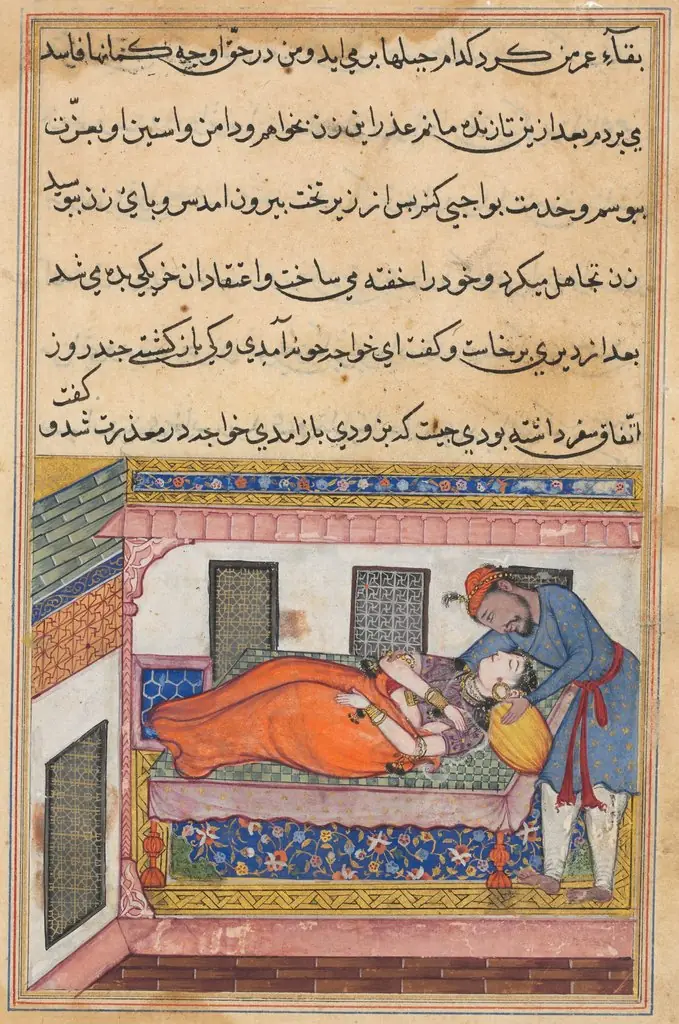 Shahr-Arai’s husband bends to kiss his wife who feigns sleep, from a Tuti-nama (Tales of a Parrot): Fortieth Night
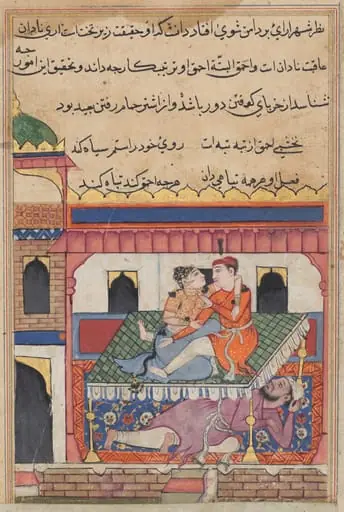 Shahr-Arai and her lover dallying on a bed beneath which is concealed her husband, from a Tuti-nama (Tales of a Parrot): Fortieth Night
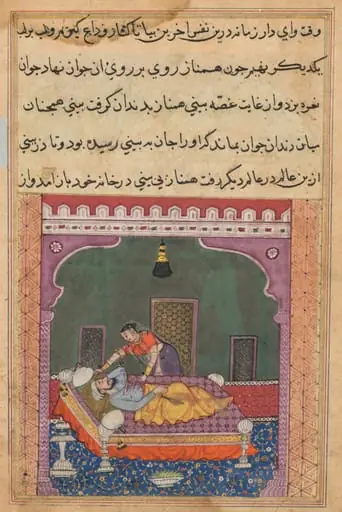 In order to falsely implicate her husband, Hamnaz places a knife by his side and lets the blood dripping from her nose stain his clothes, from a Tuti-nama (Tales of a Parrot): Twenty-fifth Night
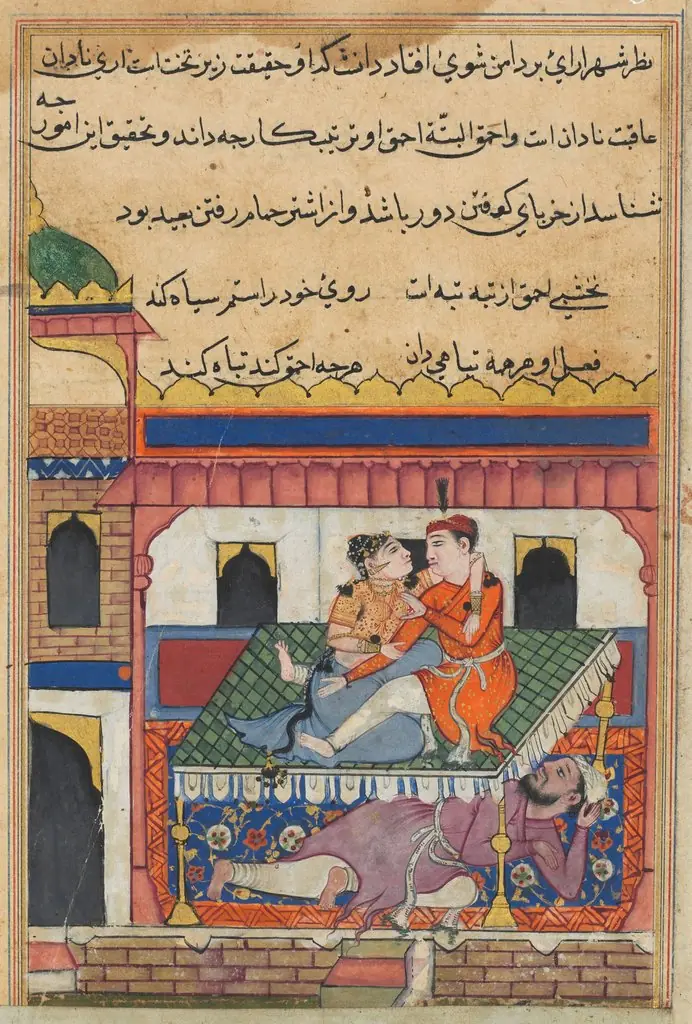 Shahr-Arai and her lover dallying on a bed beneath which is concealed her husband, from a Tuti-nama (Tales of a Parrot): Fortieth Night
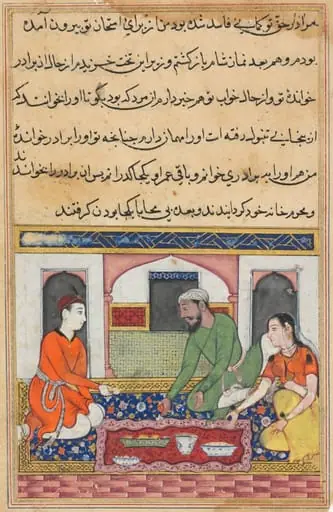 Shahr-Arai and her husband adopt her lover as a brother in the family, from a Tuti-nama (Tales of a Parrot): Fortieth Night
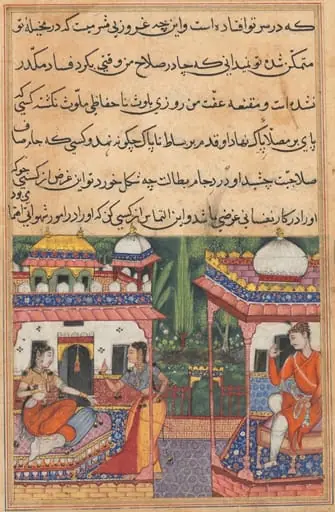 Kaiwan sends a message of love to Khurshid, wife of his brother Utarid who is away on a journey, from a Tuti-nama (Tales of a Parrot): Thirty-second Night
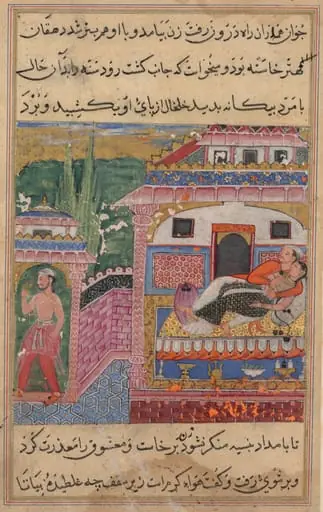 The farmer, father of the son with the deceitful wife, steals away with her anklet while she is in bed with her lover, from a Tuti-nama (Tales of a Parrot): Eighth Night
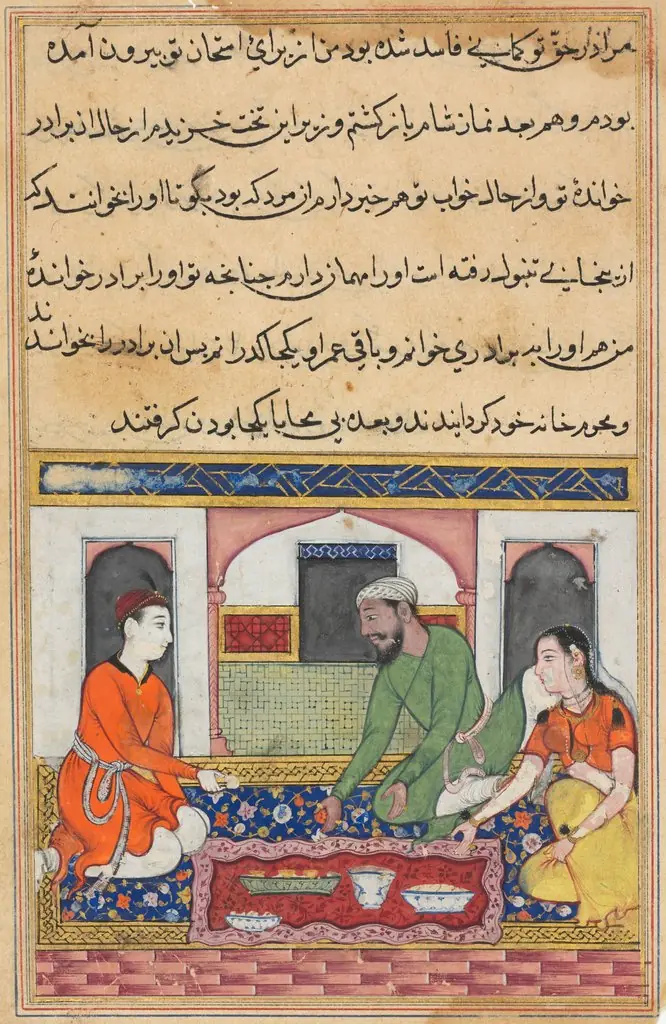 Shahr-Arai and her husband adopt her lover as a brother in the family, from a Tuti-nama (Tales of a Parrot): Fortieth Night
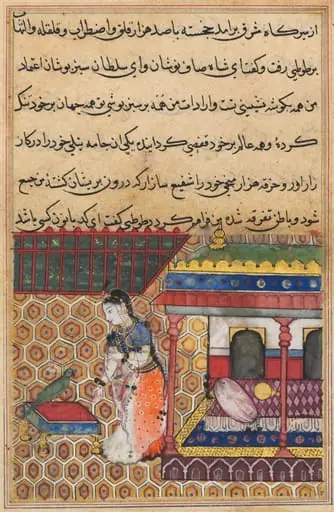 The parrot addresses Khujasta at the beginning of the thirty-eighth night, from a Tuti-nama (Tales of a Parrot)
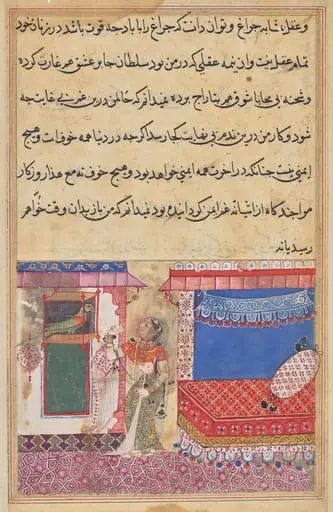 The Parrot Addresses Khujasta at the Beginning of the Eighteenth Night, from a Tuti-nama (Tales of a Parrot)