Artwork
The king places the talisman on his sleeping wife, from a Tuti-nama (Tales of a Parrot): Fiftieth Night
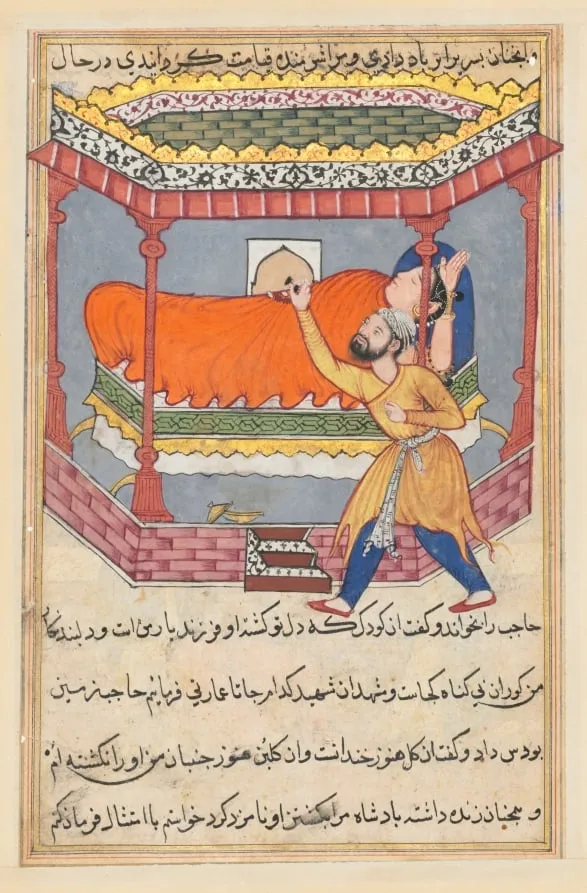
The king places the talisman on his sleeping wife, from a Tuti-nama (Tales of a Parrot): Fiftieth Night is an unspecified painting by the Mughal Painting artist Unknown. It dates from 1560 and is held in the collection of the Cleveland Museum of Art. This miniature depicts a scene from a fiftieth night of the *Tuti‑nama*, a collection of tales narrated by a parrot.
About this work
You see a king in a richly decorated room, pressing a small object to his wife’s forehead while she sleeps.
You see a king in a richly decorated room, pressing a small object to his wife’s forehead while she sleeps.
This painting comes from a book of stories told by a parrot to delay its owner’s meeting with her lover. The talisman isn’t magic—it’s a trick to prove the wife’s innocence. The king thinks she’s been unfaithful, but the truth is kinder than he expects.
Look up *Mughal India, court of Akbar (reigned 1556–1605)* to see more of these vivid, detailed miniatures.
Overview
This miniature depicts a scene from a fiftieth night of the *Tuti‑nama*, a collection of tales narrated by a parrot. In a lavishly appointed chamber, a king presses a small talisman to the forehead of his sleeping queen, an act intended to compel her to speak truthfully about an alleged affair.
Subject & Meaning
The narrative behind the image reveals that the monarch suspects his wife of infidelity with a slave. The talisman, however, is not magical; it serves as a ruse designed to elicit a confession that ultimately clears the queen, who discloses that the young man is her son from a previous marriage rather than a lover.
Technique & Style
Executed in the Mughal miniature tradition of the late sixteenth century, the painting combines fine brushwork with intricate detailing of textiles, architecture, and jewelry. The rich palette and delicate line work reflect the courtly aesthetic cultivated under Emperor Akbar, emphasizing realism within a decorative framework.
History & Provenance
The work originates from a manuscript produced in the Mughal court during the reign of Akbar (1556–1605). Such illustrated books were commissioned for elite patrons and circulated among the aristocracy, serving both literary and visual functions within the imperial cultural milieu.
Context
Mughal court art frequently illustrated moral and didactic stories, often drawn from Persian and Indian sources. The *Tuti‑nama* belongs to this genre, using the parrot’s storytelling device to explore themes of trust, deception, and the complexities of royal marriage.
Legacy
Miniatures like this one exemplify the synthesis of Persian artistic conventions with Indian motifs that defined Mughal visual culture. They continue to inform scholars about the narrative strategies and aesthetic preferences of the period, as well as the role of illustrated manuscripts in courtly education and entertainment.
Artist & collection

 Domestic Scene
 Giacomo and Cardinal Marco, investing Andrea, Abbot of San Zeno, with his Benefice
 The Nymph of Fontainebleau
 Portrait of a Woman
 Madonna and Child with Saints in the Enclosed Garden
 Venus and Minerva
 Family Group of Four on Sofa
 Wall painting from Room H of the Villa of P. Fannius Synistor at Boscoreale
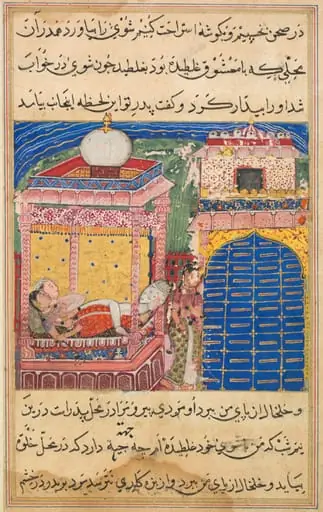 The deceitful wife persuades her husband to sleep in the same place where she had previously slept with her lover, from a Tuti-nama (Tales of a Parrot): Eighth Night
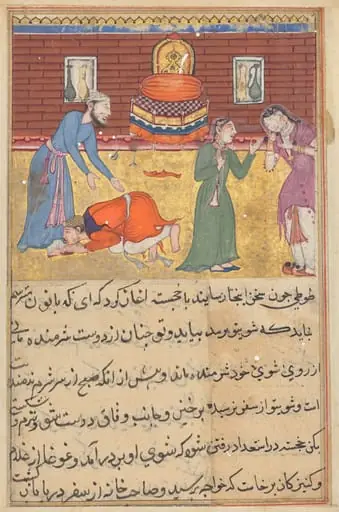 The pious man’s son, now a king, reveals himself to his father; his nurse upbraids his unfaithful mother, from a Tuti-nama (Tales of a Parrot): Fifty-second Night
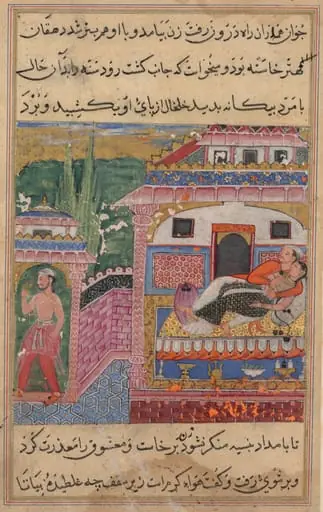 The farmer, father of the son with the deceitful wife, steals away with her anklet while she is in bed with her lover, from a Tuti-nama (Tales of a Parrot): Eighth Night
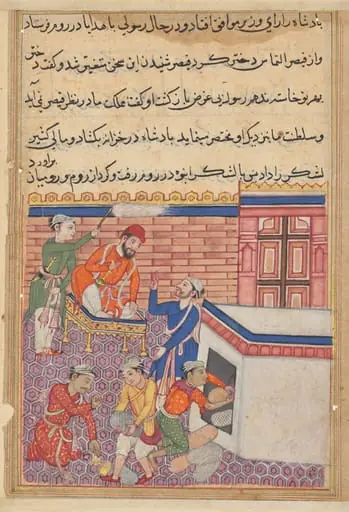 The king’s emissary being provided with gifts for his mission to Rum in order to seek the hand of the emperor’s daughter in marriage, from a Tuti-nama (Tales of a Parrot): Fiftieth Night
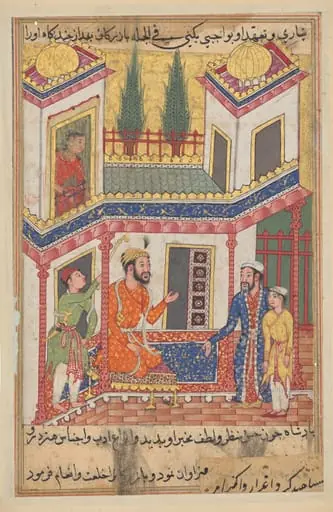 The merchant returns bringing a young slave who is really the son of the princess of Rum, now married to the king, from a Tuti-nama (Tales of a Parrot): Fiftieth Night
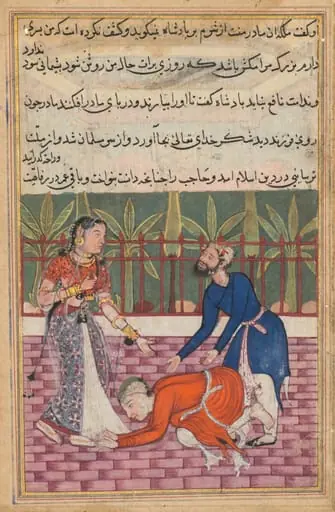 The guard restores the son who falls at his mother’s feet, from a Tuti-nama (Tales of a Parrot): Fiftieth Night
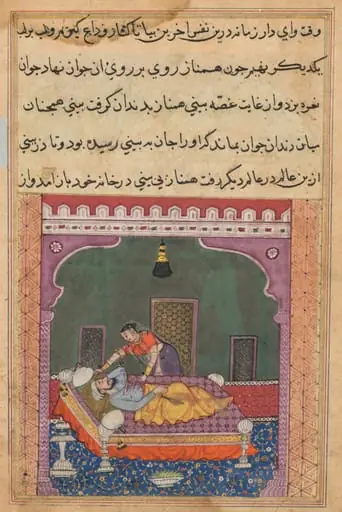 In order to falsely implicate her husband, Hamnaz places a knife by his side and lets the blood dripping from her nose stain his clothes, from a Tuti-nama (Tales of a Parrot): Twenty-fifth Night
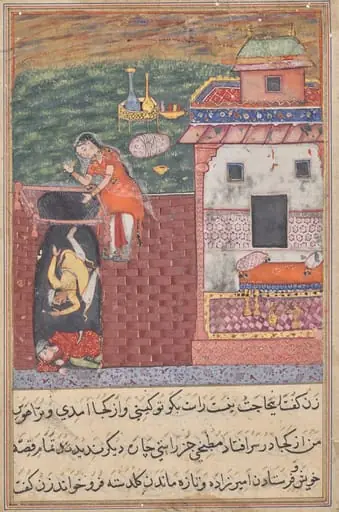 The two cooks, who attempt to seduce the warrior’s loyal wife, are trapped by her in a cellar, from a Tuti-nama (Tales of a Parrot): Fourth Night
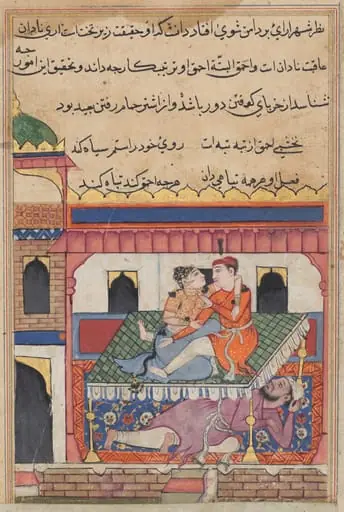 Shahr-Arai and her lover dallying on a bed beneath which is concealed her husband, from a Tuti-nama (Tales of a Parrot): Fortieth Night
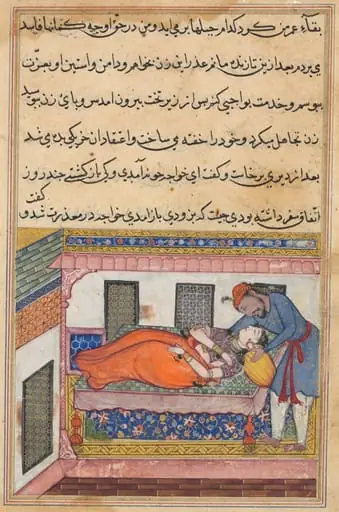 Shahr-Arai’s husband bends to kiss his wife who feigns sleep, from a Tuti-nama (Tales of a Parrot): Fortieth Night
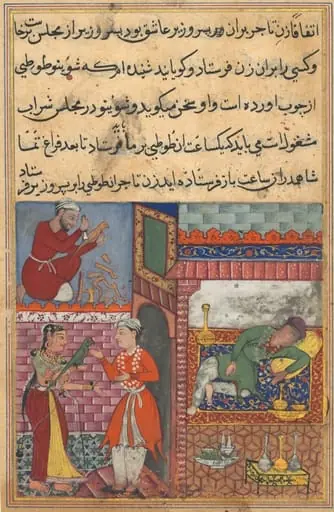 The vizier’s son receives the magic wooden parrot from the wife of the merchant, who is drunk, and has a replica made by a carpenter, from a Tuti-nama (Tales of a Parrot): Tenth Night