Artwork
The Goddess Parvarti
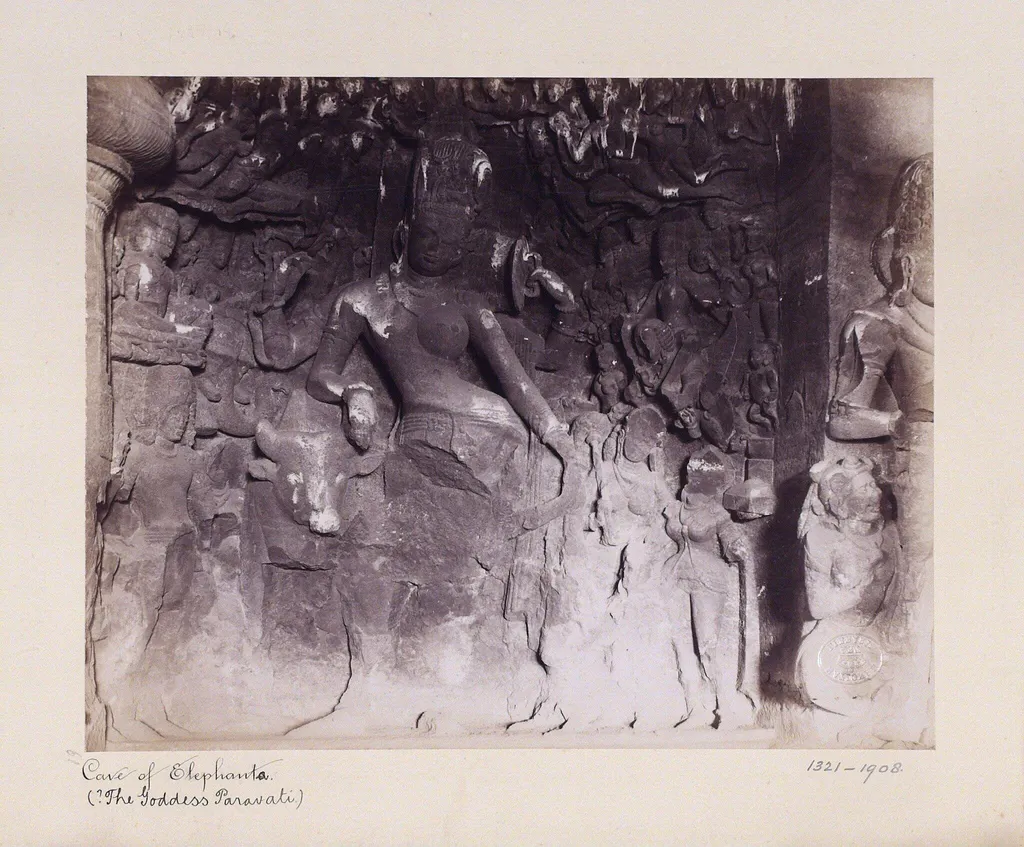
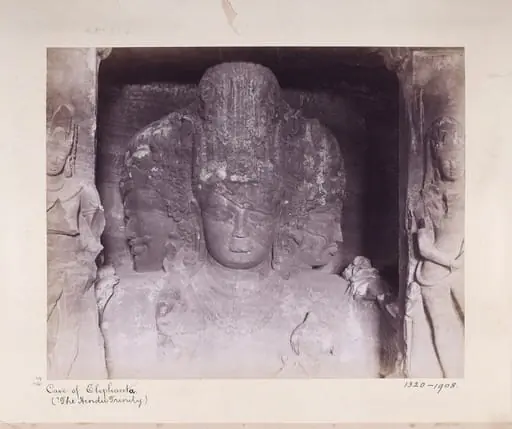
The Goddess Parvarti is a photographic photography by the Impressionist artist Unknown. It dates from 1891 and is held in the collection of the Victoria and Albert Museum.
About this work
The figure is labeled as *The Goddess Parvati*, though it’s unclear if that’s the original name.
This photo shows a carved stone figure sitting in a rocky cave. The figure has four arms, a calm face, and is draped in flowing cloth. Around it, smaller carvings and rough cave walls create a shadowy background.
The photo was taken in 1891, showing the cave’s natural setting. The figure is labeled as *The Goddess Parvati*, though it’s unclear if that’s the original name.
Look up the Victoria and Albert Museum to see more carvings like this.
Overview
A photograph taken in 1891 captures a stone relief of the Hindu goddess Parvati within the Elephanta Caves, a complex of rock-cut temples on an island near Mumbai. The image documents the figure as it appears in its original architectural context, framed by the cave’s natural stone walls and shadowed by ambient light. The photograph preserves the condition of the carving at the close of the 19th century, before modern conservation efforts.
Subject & Meaning
The figure represents Parvati, consort of Shiva, depicted with four arms and serene expression, seated beside a three-faced form of Shiva known as Trimurti. Though labeled as Parvati in the photograph, the original identity of the figure may not have been explicitly designated in antiquity. Her presence alongside Shiva underscores the theological balance of feminine and masculine cosmic principles in Shaivite tradition.
Technique & Style
The relief is carved from basalt, with fluid drapery and subtle modeling characteristic of Gupta-era sculptural conventions. The figure’s calm demeanor and symmetrical posture reflect ideals of divine stillness, while the surrounding carvings—smaller deities and ornamental motifs—enhance the sense of sacred space without overwhelming the central form. The stone’s texture and the cave’s uneven surface contribute to the work’s organic integration with its environment.
History & Provenance
The Elephanta Caves were carved between the 5th and 8th centuries CE, likely under the patronage of the Kalachuris or Rashtrakutas. The photograph, taken in 1891, is part of a colonial-era documentation project. The image was later acquired by the Victoria and Albert Museum, where it remains among other 19th-century records of South Asian religious art, preserving the site’s appearance prior to 20th-century interventions.
Context
The Elephanta Caves functioned as a center of Shaivite worship during their active period, with the central chamber housing the Trimurti as its focal point. Parvati’s placement beside Shiva reflects her role as an essential counterpart in cosmic balance. The caves were abandoned by the late medieval period and later rediscovered by European travelers, who began photographing and cataloging them in the 19th century.
Legacy
The 1891 photograph serves as a historical record of the cave’s condition before modern tourism and environmental degradation. It contributes to scholarly understanding of how early Western observers interpreted Hindu iconography. Today, the image aids in conservation planning and remains a reference for studying the transmission of South Asian art into global museum collections.
Artist & collection

 Domestic Scene
 Giacomo and Cardinal Marco, investing Andrea, Abbot of San Zeno, with his Benefice
 The Nymph of Fontainebleau
 Portrait of a Woman
 Madonna and Child with Saints in the Enclosed Garden
 Venus and Minerva
 Family Group of Four on Sofa
 Wall painting from Room H of the Villa of P. Fannius Synistor at Boscoreale
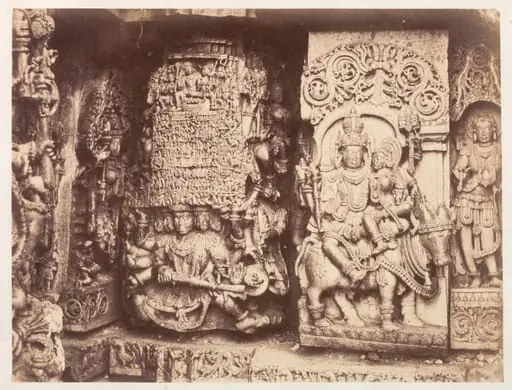 Hoyshaleshvara Temple Sculpture, Halebidu (Halebeedu)
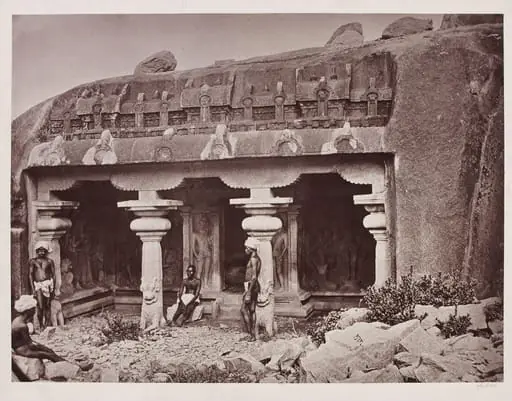 Cave sanctuary at Mahabalipuram
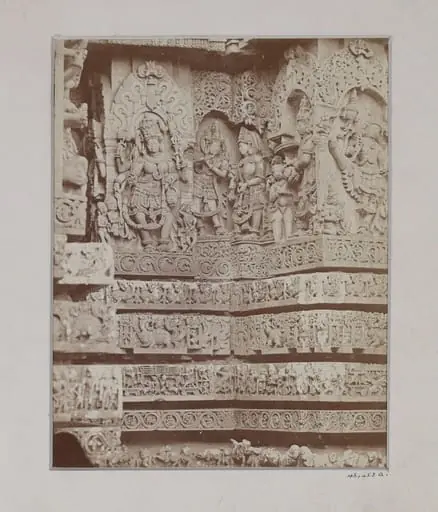 Western front of the great temple at Halebid
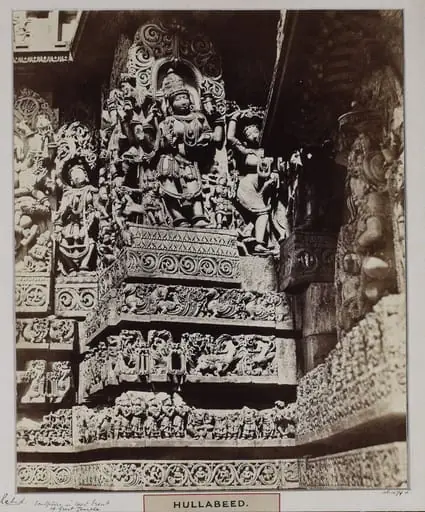 Western terraced front of the great temple at Halebid
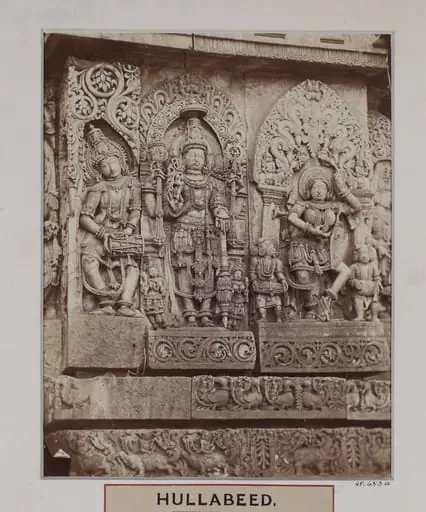 Relief sculpture of the great temple at Halebid
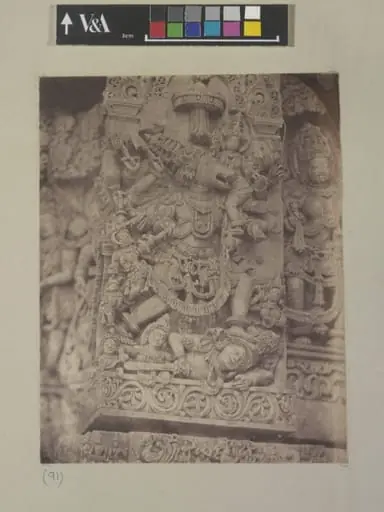 Hindoo Temple Sculptures, Southern India, Hullabeed
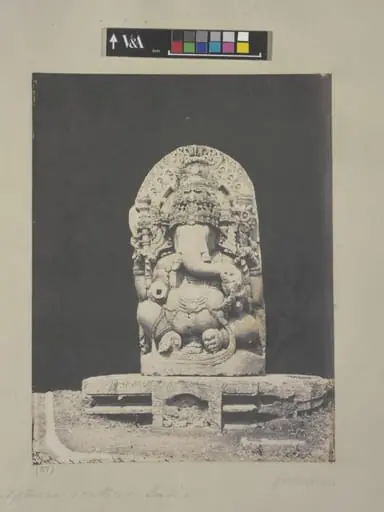 Hindoo Temple Sculptures, Southern India, Hullabeed
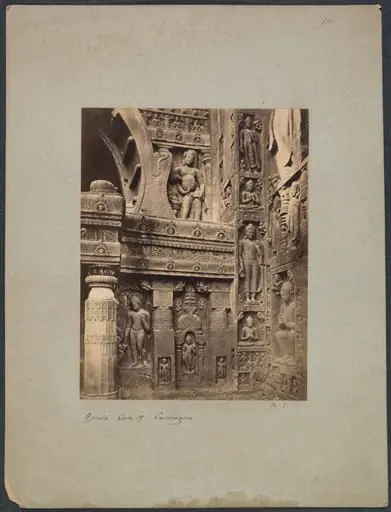 Ajinta Cave No. 19
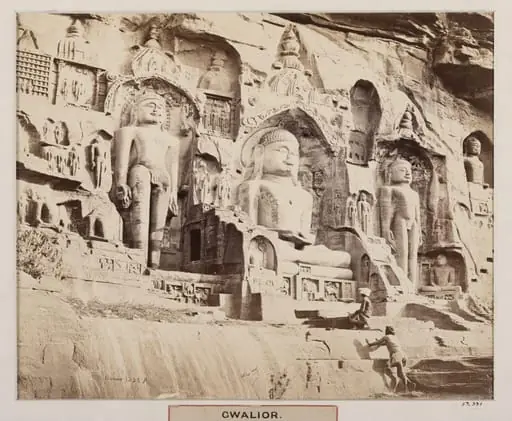 Gwalior, Madhya Pradesh
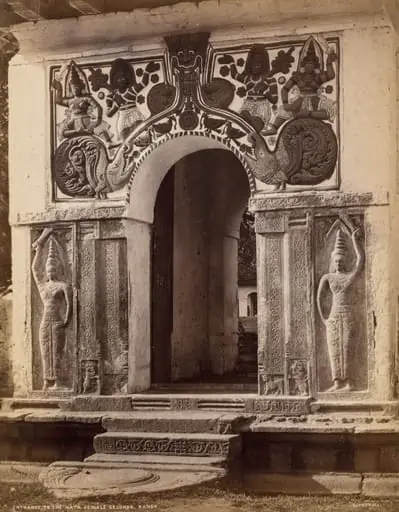 Entrance to the Nata Dewale Grounds, Kandy
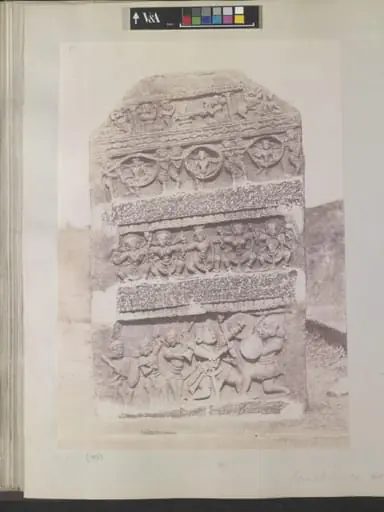 Sculpture at Hungul
 The Trimurti