Artwork
The Trimurti
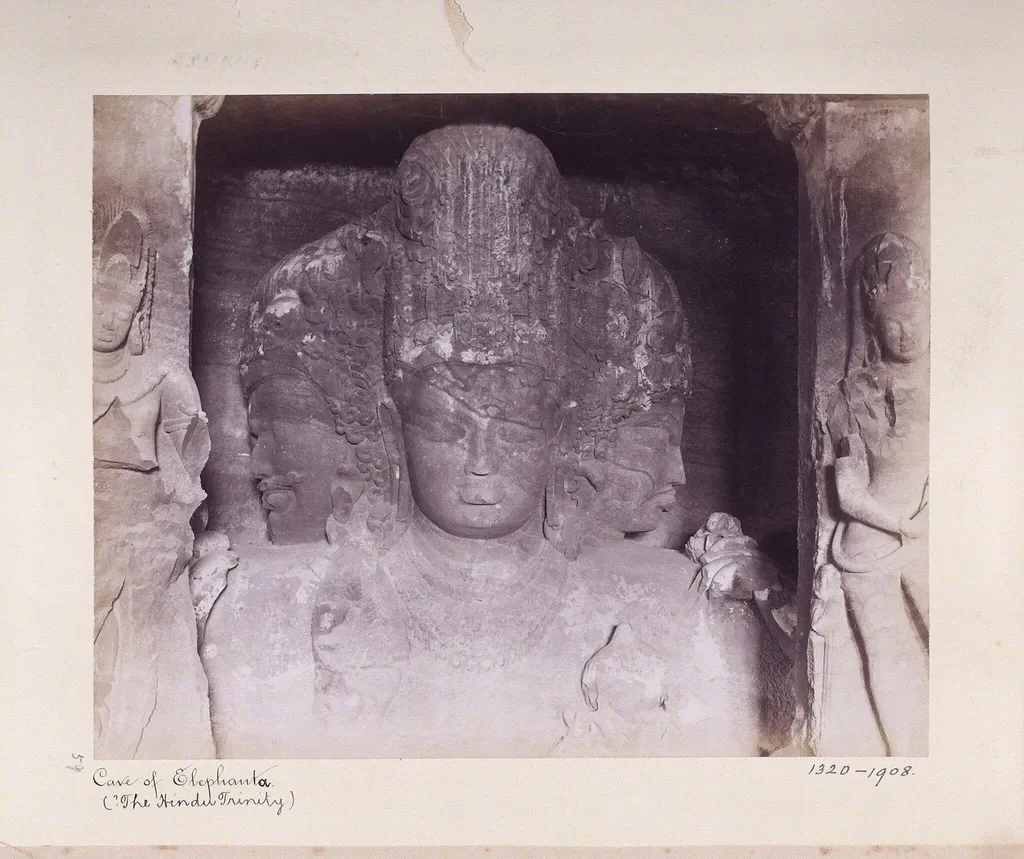
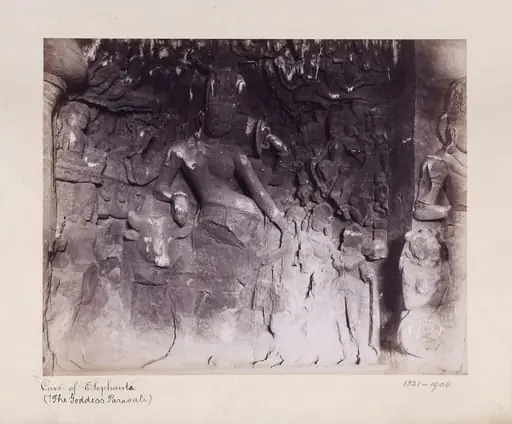
The Trimurti is a photographic photography by the Impressionist artist Unknown. It dates from 1891 and is held in the collection of the Victoria and Albert Museum. This 1891 photograph captures a monumental rock-cut sculpture within the central cave of the Elephanta Island temple complex.
About this work
This image was taken in 1891, showing a style called *gandhara*—a mix of Greek and Indian art from long ago.
This photo shows a carved stone figure inside a dark cave. The figure has a smooth, rounded head with a calm face, and its body is wrapped in draped cloth. The rock around it looks rough and uneven, with other carvings peeking into view on the sides.
This image was taken in 1891, showing a style called *gandhara*—a mix of Greek and Indian art from long ago.
Look up gandhara to see more about this blending of styles.
Overview
This 1891 photograph captures a monumental rock-cut sculpture within the central cave of the Elephanta Island temple complex. The image documents the Trimurti, a three-faced representation of Shiva, carved directly into the living rock. The cave’s dim interior and uneven stone surfaces frame the figure, emphasizing its integration with the natural geology. The photograph preserves the condition of the sculpture as it appeared in the late 19th century, before modern conservation efforts.
Subject & Meaning
The Trimurti embodies the three fundamental cosmic functions of the Hindu divine: creation, preservation, and destruction. Each face of the central figure represents one aspect—facing right as creator, center as preserver, and left as destroyer. The unified form suggests the indivisibility of these forces within a single divine principle. The calm expression and symmetrical composition convey stability amid cosmic change, reflecting philosophical concepts central to Shaivite tradition.
Technique & Style
The sculpture was carved in situ from a single block of basalt, with smooth, polished surfaces contrasting against the rough-hewn cave walls. The draped robes and rounded facial features reflect a synthesis of indigenous Indian forms and Hellenistic influences, often associated with the Gandhara tradition. Though the Gandhara label is commonly applied, the Elephanta style is more accurately a regional evolution of Gupta-era aesthetics, blending classical proportion with local iconographic conventions.
History & Provenance
The cave complex was likely constructed between the 5th and 8th centuries CE by patrons of the Kalachuri or Rashtrakuta dynasties. The photograph from 1891 was taken during early British colonial documentation of Indian monuments. The sculpture remained largely untouched until the 19th century, when it was recorded by archaeologists and photographers seeking to catalog India’s ancient heritage. Its location on Elephanta Island, accessible only by boat, contributed to its relative isolation and preservation.
Context
The Trimurti occupies the central chamber of a larger temple complex dedicated to Shiva, surrounded by narrative panels depicting episodes from Hindu mythology. The cave functioned as a sacred space for ritual and meditation, with light entering only through carefully positioned openings. Nearby carvings of Parvati, Ganesha, and Nandi reinforce the Shaivite theological framework. The site reflects the synthesis of devotional practice, architectural planning, and sculptural artistry characteristic of early medieval Deccan India.
Legacy
The 1891 photograph helped introduce the Trimurti to Western audiences and influenced early scholarship on Indian art. It remains a key visual record of the sculpture’s condition prior to 20th-century interventions. Today, the site is a UNESCO World Heritage location, and the image serves as a historical benchmark for conservation studies. The Trimurti continues to be studied for its theological depth and technical execution, standing as a testament to the sophistication of early Indian stone carving.
Artist & collection

 Domestic Scene
 Giacomo and Cardinal Marco, investing Andrea, Abbot of San Zeno, with his Benefice
 The Nymph of Fontainebleau
 Portrait of a Woman
 Madonna and Child with Saints in the Enclosed Garden
 Venus and Minerva
 Family Group of Four on Sofa
 Wall painting from Room H of the Villa of P. Fannius Synistor at Boscoreale
 Cave sanctuary at Mahabalipuram
 Hindoo Temple Sculptures, Southern India, Hullabeed
 Hoyshaleshvara Temple Sculpture, Halebidu (Halebeedu)
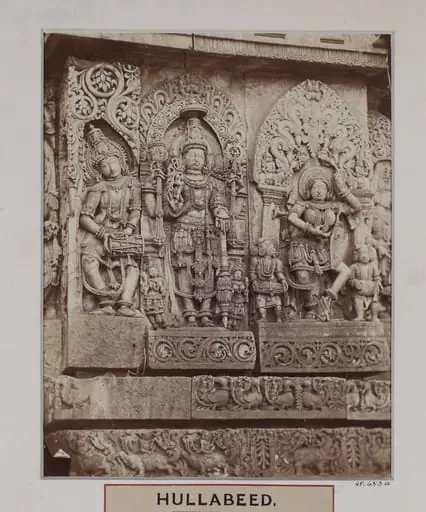 Relief sculpture of the great temple at Halebid
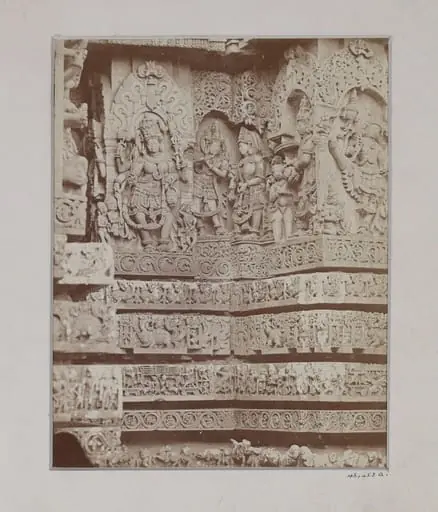 Western front of the great temple at Halebid
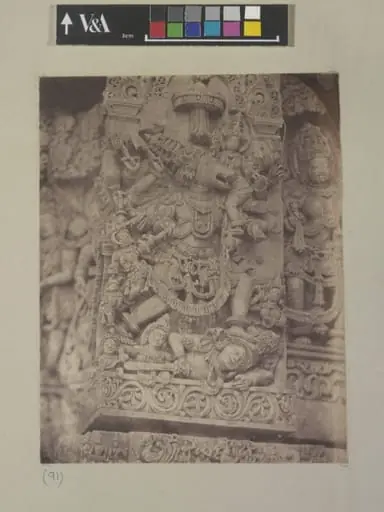 Hindoo Temple Sculptures, Southern India, Hullabeed
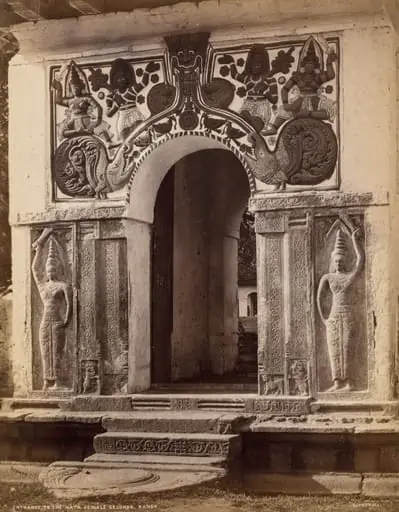 Entrance to the Nata Dewale Grounds, Kandy
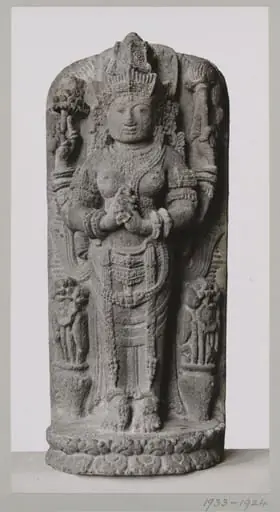 East Javanese volcanic rock sculpture, relief figure of Umā, early 15th century, V&A Museum, London
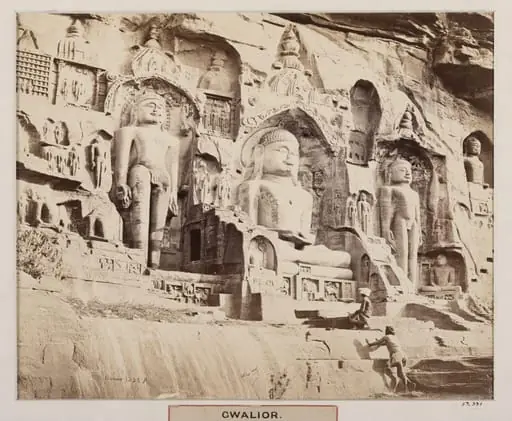 Gwalior, Madhya Pradesh
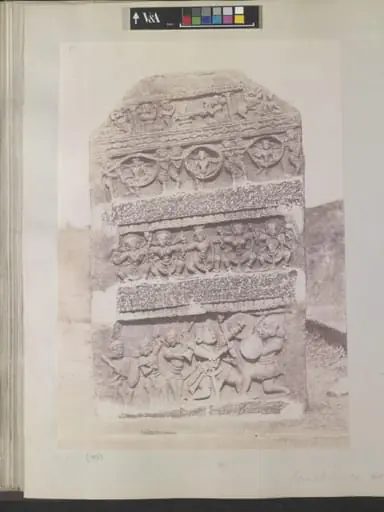 Sculpture at Hungul
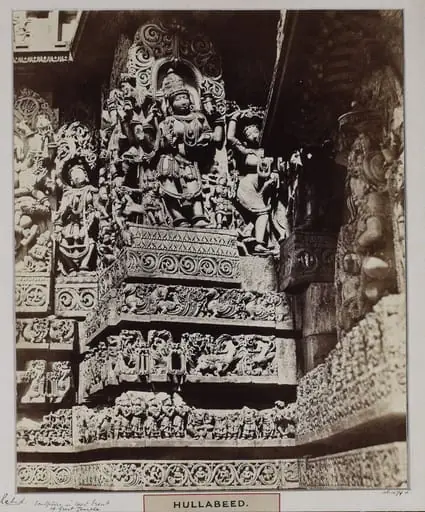 Western terraced front of the great temple at Halebid
 The Goddess Parvarti