Artwork
The goldsmith judged; the bear cubs trained by the carpenter as though they were his sons, from a Tuti-nama (Tales of a Parrot): Third Night
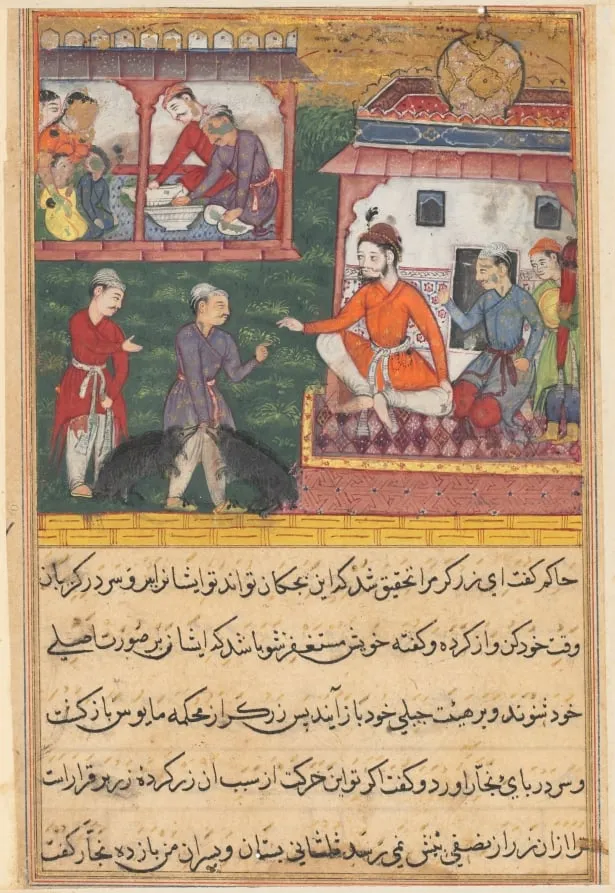
The goldsmith judged; the bear cubs trained by the carpenter as though they were his sons, from a Tuti-nama (Tales of a Parrot): Third Night is an unspecified painting by the Mughal Painting artist Unknown. It dates from 1560 and is held in the collection of the Cleveland Museum of Art. This painting illustrates a narrative from the *Tuti-nama* (Tales of a Parrot) across two stacked scenes.
About this work
The bears act like children, rubbing their faces on the goldsmith’s sleeves—proof they’re his sons, just changed.
You see two scenes stacked like comic panels. At the top, a goldsmith and a carpenter eat dinner with their families. Below, the carpenter trains two bear cubs while a judge watches.
This painting tells a story from a book called the *Tuti-nama*, or *Tales of a Parrot*. The goldsmith stole from the carpenter, so the carpenter swapped the goldsmith’s sons with bear cubs as revenge. The bears act like children, rubbing their faces on the goldsmith’s sleeves—proof they’re his sons, just changed.
Look up *mughal india, court of akbar (reigned 1556–1605)* to see more paintings like this.
Overview
This painting illustrates a narrative from the *Tuti-nama* (Tales of a Parrot) across two stacked scenes. The upper panel depicts a dinner gathering of two families, while the lower panel shows a subsequent event involving a judge, a carpenter, and two bear cubs, culminating in a test of paternity.
Subject & Meaning
The artwork narrates a tale of revenge and deception. A greedy goldsmith, who had robbed a carpenter, suffers a unique revenge: the carpenter abducts the goldsmith’s sons and substitutes them with bear cubs. The lower scene resolves the conflict through a peculiar proof of the cubs’ supposed transformation into the goldsmith’s children.
Technique & Style
Executed in the style of the Mughal court during Akbar’s reign (1556–1605), this painting features characteristic Mughal miniaturist techniques, including detailed, layered compositions and the use of vivid colors to distinguish between the two sequential scenes.
History & Provenance
Originating from Mughal India, specifically the court of Emperor Akbar, this painting is part of a *Tuti-nama* manuscript. The exact provenance details are not provided, but its style links it to the flourishing artistic patronage of Akbar’s period.
Context
Created within the flourishing cultural and artistic environment of Akbar’s court, this work reflects the Mughal interest in illustrated manuscripts and the adaptation of diverse literary sources, including the *Tuti-nama*, a collection of stories.
Artist & collection

 Domestic Scene
 Giacomo and Cardinal Marco, investing Andrea, Abbot of San Zeno, with his Benefice
 The Nymph of Fontainebleau
 Portrait of a Woman
 Madonna and Child with Saints in the Enclosed Garden
 Venus and Minerva
 Family Group of Four on Sofa
 Wall painting from Room H of the Villa of P. Fannius Synistor at Boscoreale
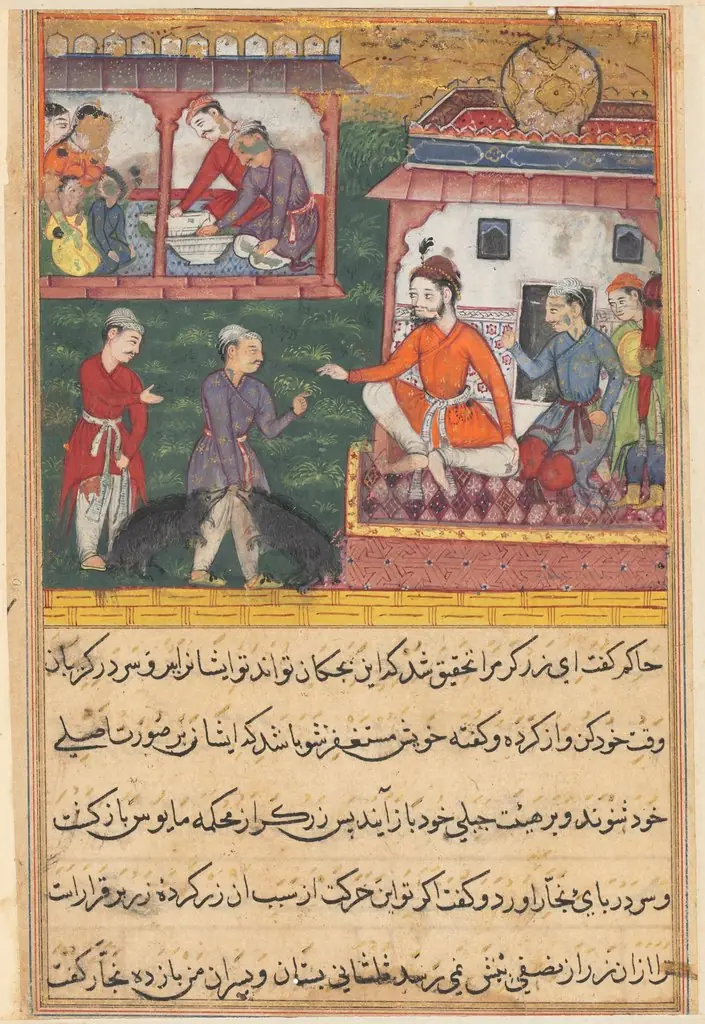 The goldsmith judged; the bear cubs trained by the carpenter as though they were his sons, from a Tuti-nama (Tales of a Parrot): Third Night
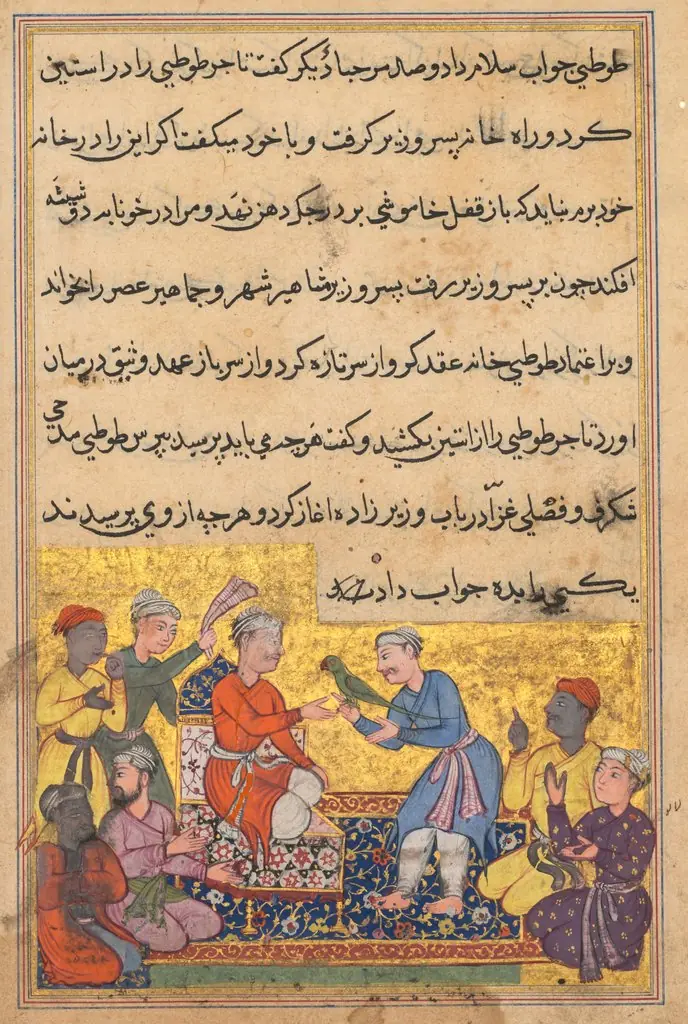 The magic parrot of the merchant talks to the vizier’s son, from a Tuti-nama (Tales of a Parrot): Tenth Night
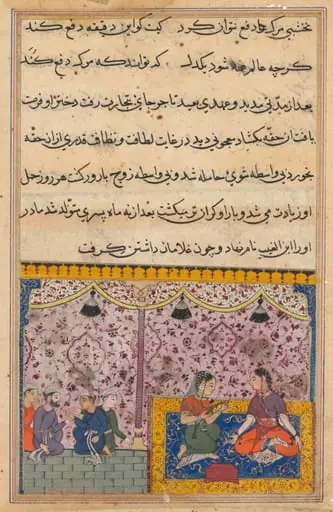 The merchant’s daughter gives birth to a son as a result of eating out of the box. The clever child recognizes the false gems from true, from a Tuti-nama (Tales of a Parrot): Twenty-third Night
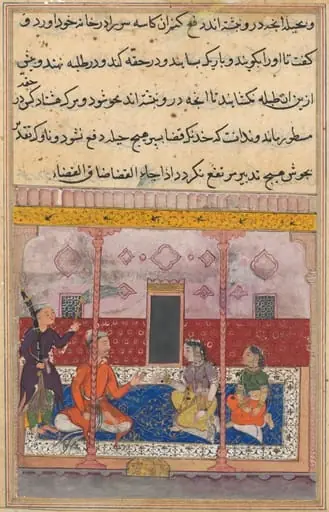 The merchant has the hateful skull ground and put into a box, from a Tuti-nama (Tales of a Parrot): Twenty-third Night
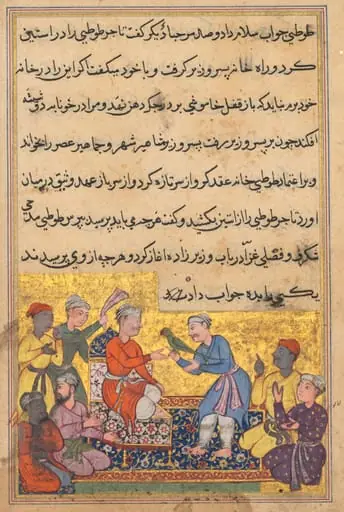 The magic parrot of the merchant talks to the vizier’s son, from a Tuti-nama (Tales of a Parrot): Tenth Night
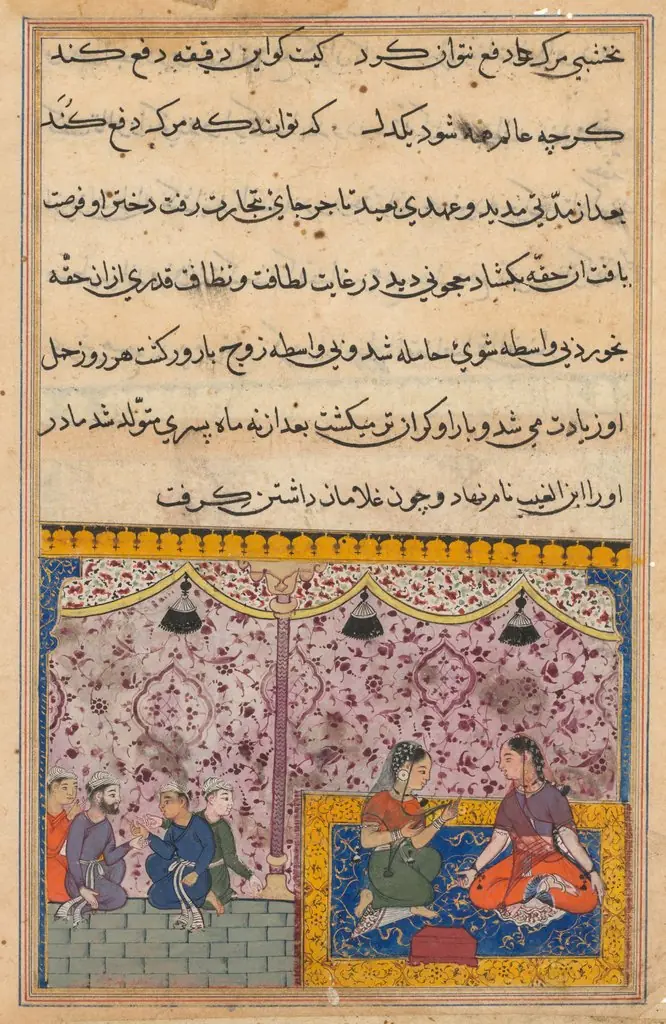 The merchant’s daughter gives birth to a son as a result of eating out of the box. The clever child recognizes the false gems from true, from a Tuti-nama (Tales of a Parrot): Twenty-third Night
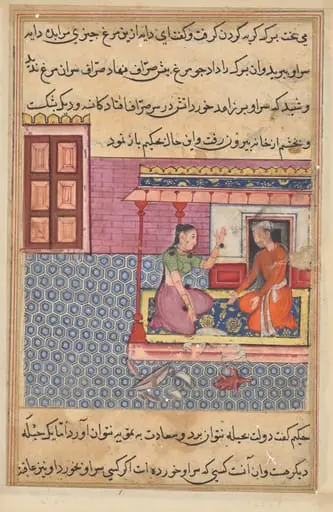 The pious man’s wife offers the seven-colored bird as food to her lover, but not finding its head, he breaks the pot and bowl in anger, from a Tuti-nama (Tales of a Parrot): Fifty-second Night
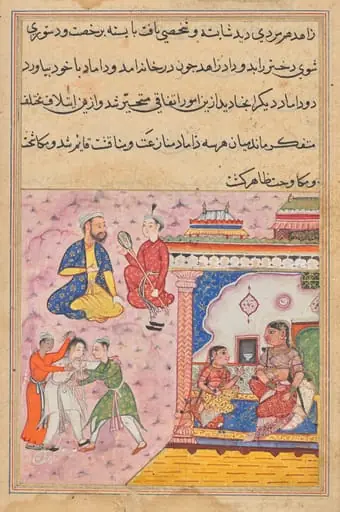 Three suitors fight amongst themselves for the hand of the devotee’s daughter, from a Tuti-nama (Tales of a Parrot): Twentieth Night
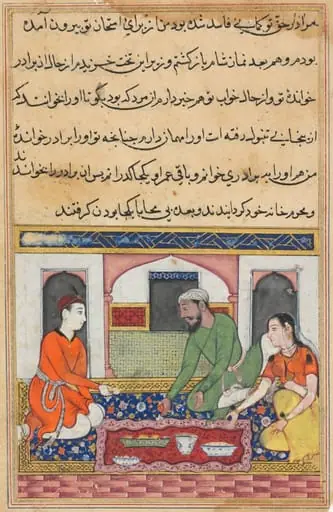 Shahr-Arai and her husband adopt her lover as a brother in the family, from a Tuti-nama (Tales of a Parrot): Fortieth Night