Artwork
The magic parrot of the merchant talks to the vizier’s son, from a Tuti-nama (Tales of a Parrot): Tenth Night
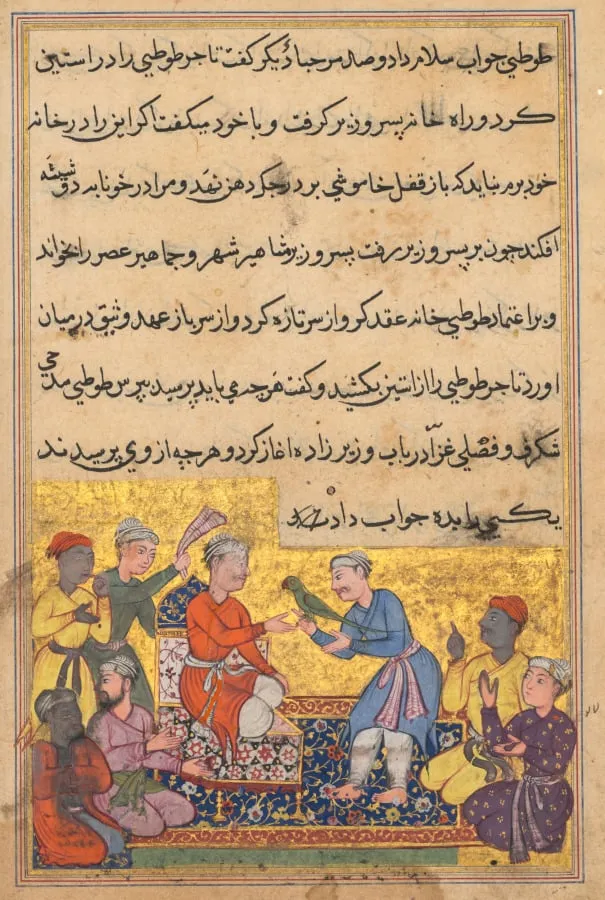
The magic parrot of the merchant talks to the vizier’s son, from a Tuti-nama (Tales of a Parrot): Tenth Night is an unspecified painting by the Mughal Painting artist Lalu. It dates from 1560 and is held in the collection of the Cleveland Museum of Art.
About this work
The bright colors and tiny details show how stories were shared in Mughal India—no TV, just art and words.
A parrot sits on a man’s finger, squawking secrets to a young prince and his court. Around them, servants and nobles lean in, eyes wide—some shocked, some suspicious.
This painting comes from a book of parrot tales told over fifty-two nights. The bird isn’t just chattering; it’s exposing a scam that ruined a bet between two men. The bright colors and tiny details show how stories were shared in Mughal India—no TV, just art and words.
To see more art from this time, look up *Mughal India, court of Akbar (reigned 1556–1605)*.
Overview
The miniature depicts a vividly coloured parrot perched on a merchant’s fingertip, whispering revelations to a young vizier’s son surrounded by members of the court. The assembled figures lean forward, their expressions ranging from astonishment to suspicion, as the bird’s tale of repeated exchanges for counterfeit copies unravels a dispute that has jeopardised a wager between the two men.
Subject & Meaning
At the centre of the narrative, the parrot serves as a truth‑teller, exposing a fraudulent scheme that has compromised a bet between the merchant and the vizier’s heir. The scene captures the moment when the court learns of the deception, prompting the two protagonists to confront both a duplicitous monk and the unfaithful spouses implicated in the plot.
Technique & Style
Rendered in the delicate brushwork typical of Mughal manuscript illumination, the painting employs a rich palette of lapis, vermilion and gold to highlight the bird’s plumage and the opulent attire of the courtiers. Fine linear detailing delineates the intricate textiles and architectural elements, while the compact composition creates an intimate tableau that guides the viewer’s eye toward the central dialogue.
Context
The work originates from a Tuti‑nama, a collection of fifty‑two parrot stories compiled for the Mughal court during the reign of Akbar (1556–1605). In an era without printed media, such illustrated manuscripts functioned as vehicles for moral instruction and entertainment, using animal protagonists to comment on human vices and courtly intrigue.
Artist & collection

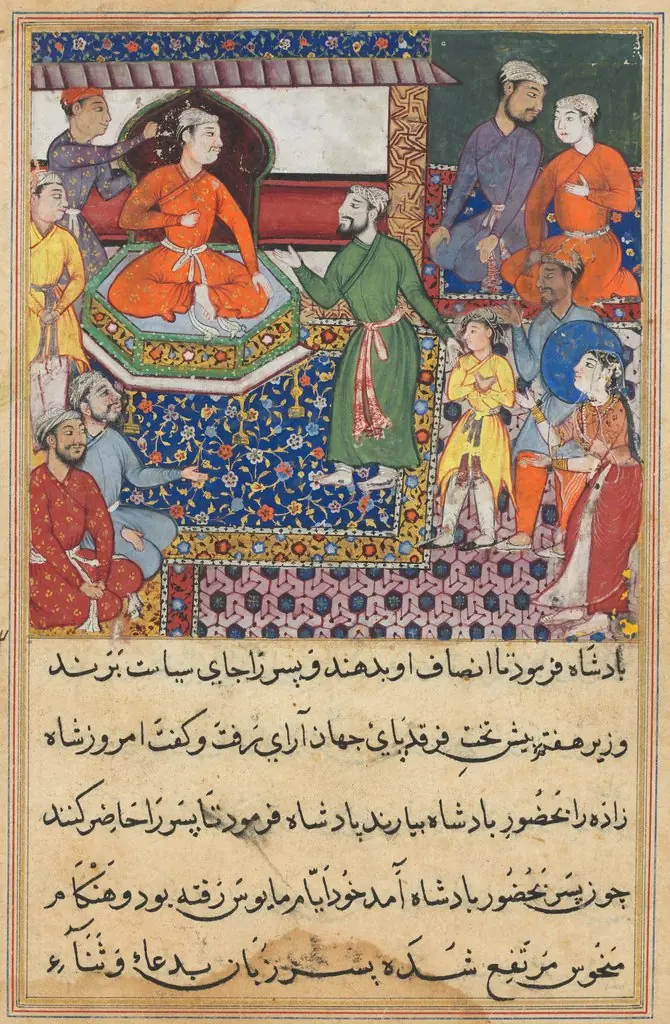 The handmaiden again pleads for the death of the prince, from a Tuti-nama (Tales of a Parrot): Eighth Night
 The handmaiden again pleads for the death of the prince, from a Tuti-nama (Tales of a Parrot): Eighth Night
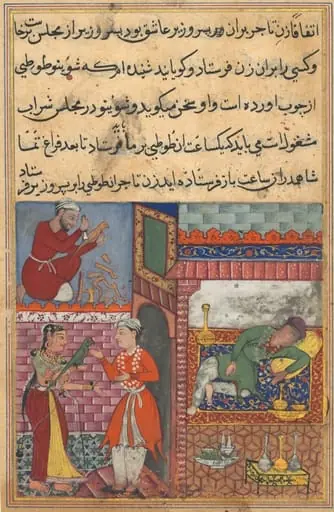 The vizier’s son receives the magic wooden parrot from the wife of the merchant, who is drunk, and has a replica made by a carpenter, from a Tuti-nama (Tales of a Parrot): Tenth Night
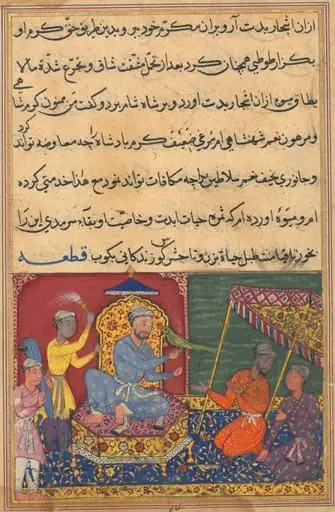 The parrot brings a fruit from the Tree of Life to the king of Syria, from a Tuti-nama (Tales of a Parrot): Ninth Night
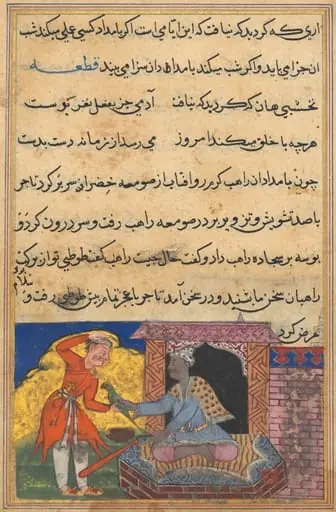 The monk returns the magic parrot to its rightful owner, the merchant, from a Tuti-nama (Tales of a Parrot): Tenth Night
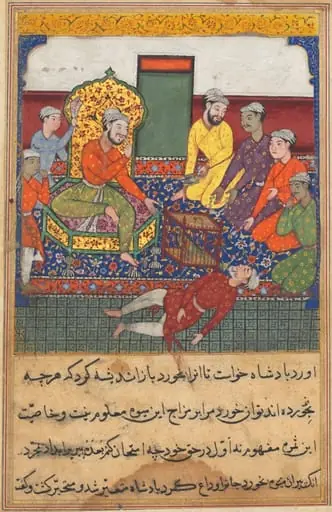 The old man eats of the fruit of the Tree of Life, but drops dead, from a Tuti-nama (Tales of a Parrot): Ninth Night
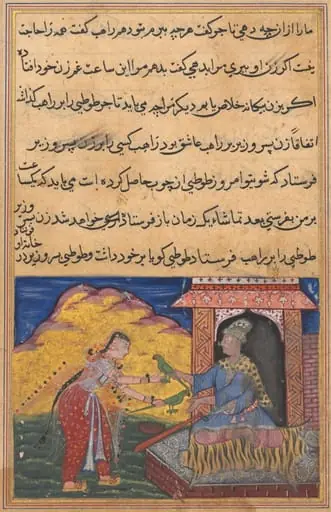 The wife of the son of the vizier brings the magic wooden parrot to her lover, the monk, who exchanges it for the replica, from a Tuti-nama (Tales of a Parrot): Tenth Night
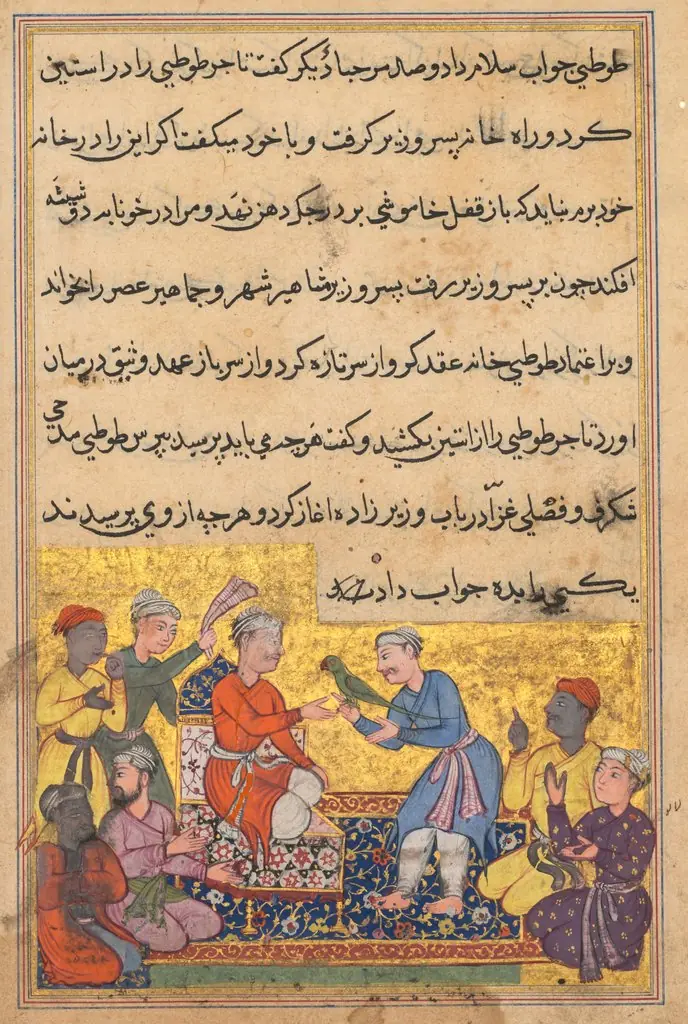 The magic parrot of the merchant talks to the vizier’s son, from a Tuti-nama (Tales of a Parrot): Tenth Night
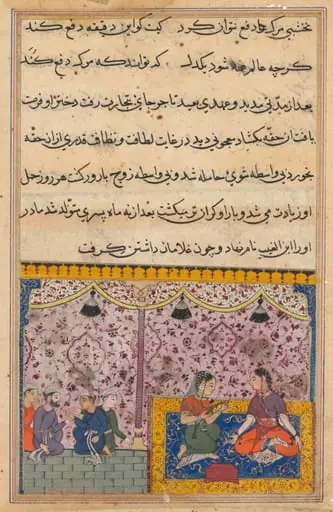 The merchant’s daughter gives birth to a son as a result of eating out of the box. The clever child recognizes the false gems from true, from a Tuti-nama (Tales of a Parrot): Twenty-third Night
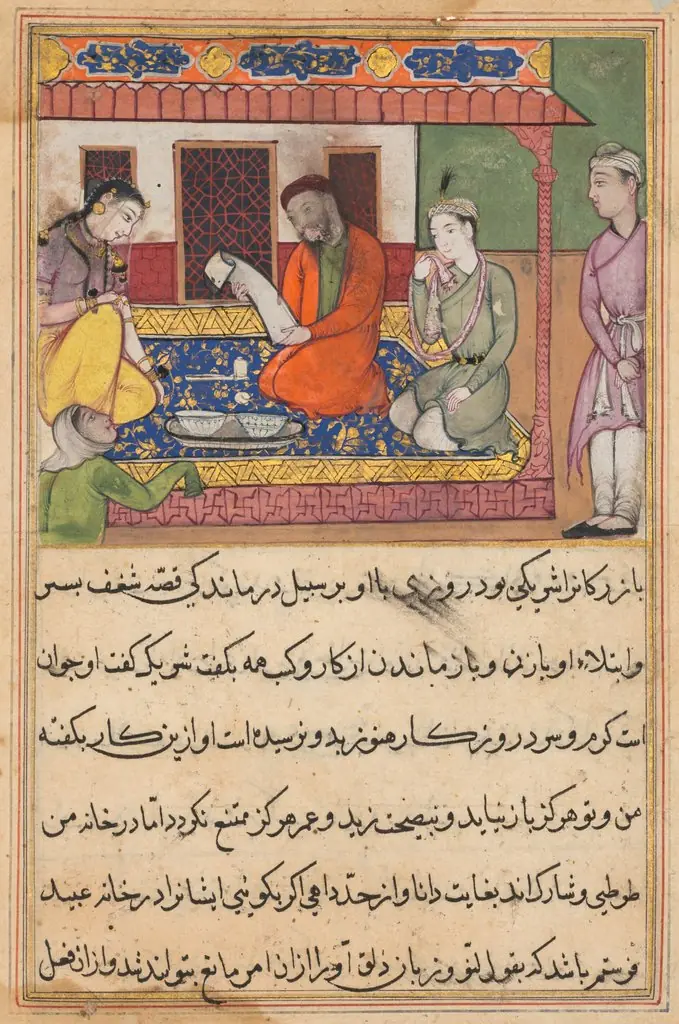 The marriage of ‘Ubaid, son of a merchant of Tirmiz, from a Tuti-nama (Tales of a Parrot): Forty-second Night
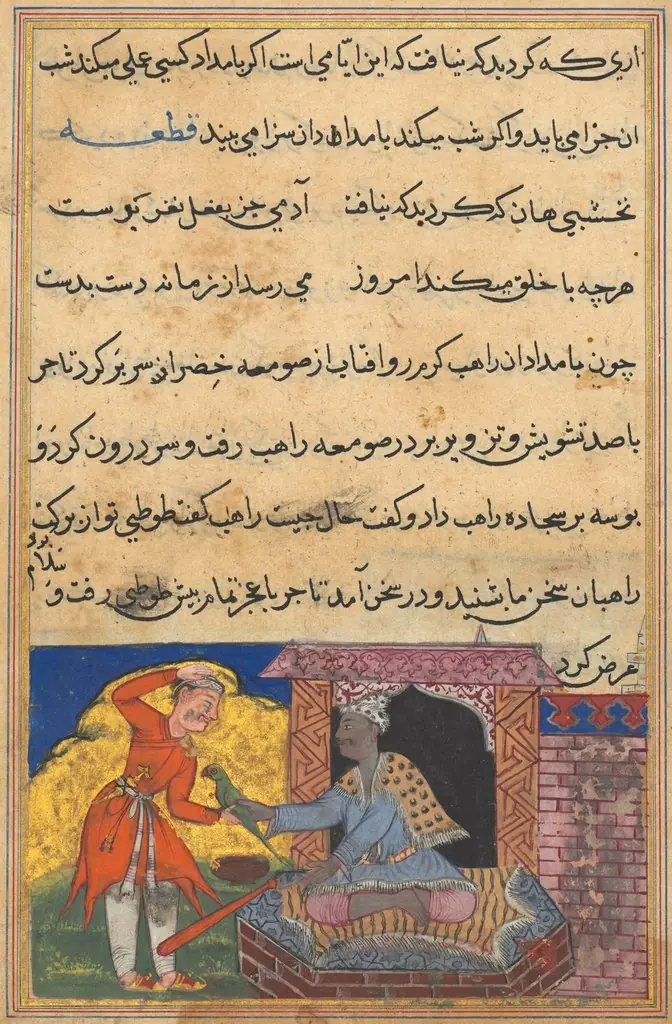 The monk returns the magic parrot to its rightful owner, the merchant, from a Tuti-nama (Tales of a Parrot): Tenth Night
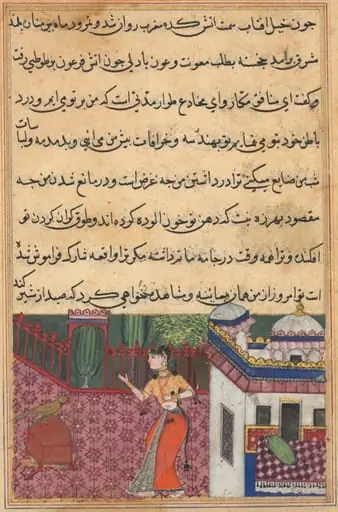 The parrot addresses Khujasta at the beginning of the thirty-third night, from a Tuti-nama (Tales of a Parrot)
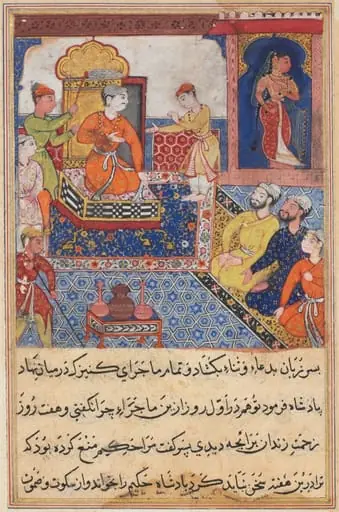 The young prince recounts his experiences to his father, the king, from a Tuti-nama (Tales of a Parrot): Eighth Night