Artwork
Shahr-Arai and her husband adopt her lover as a brother in the family, from a Tuti-nama (Tales of a Parrot): Fortieth Night
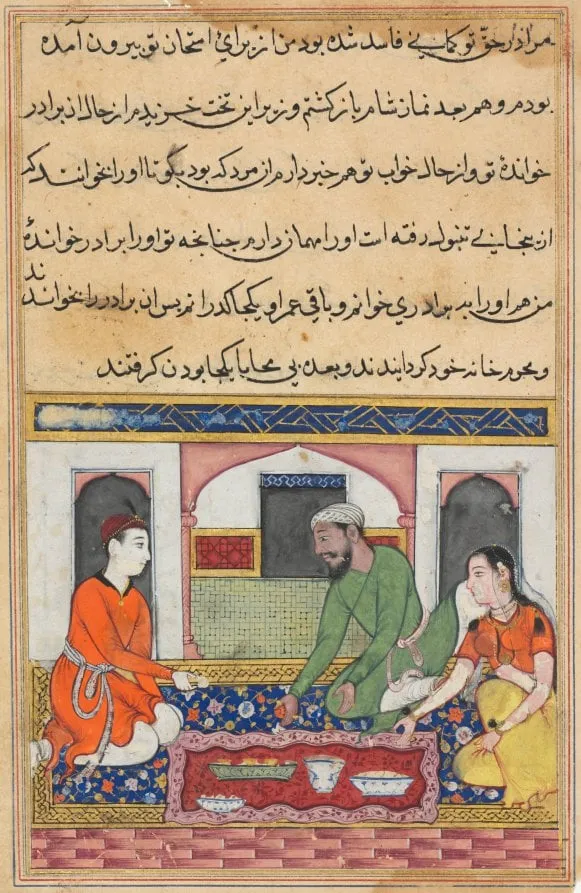
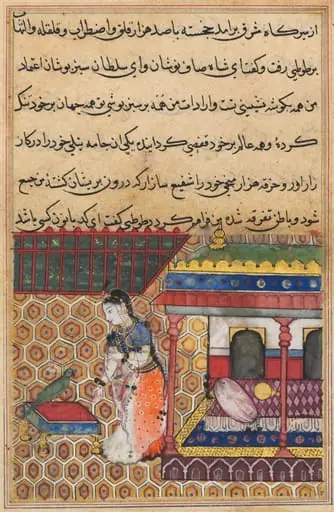
Shahr-Arai and her husband adopt her lover as a brother in the family, from a Tuti-nama (Tales of a Parrot): Fortieth Night is an unspecified painting by the Mughal Painting artist Unknown. It dates from 1560 and is held in the collection of the Cleveland Museum of Art. This Mughal painting depicts a scene from the *Tuti-nama* (Tales of a Parrot), illustrating a moment of clever deception.
About this work
The wife has tricked her husband into accepting her lover as a brother—without him ever realizing the truth.
You see a small painting of three people sitting on the floor in a richly decorated room. A woman and her husband offer food to a young man, who bows his head.
This scene comes from a story in the *Tuti-nama*, a book of parrot tales written for Emperor Akbar. The wife has tricked her husband into accepting her lover as a brother—without him ever realizing the truth. The bright colors and fine details show how Mughal artists told stories in pictures.
To see more paintings like this, look up Mughal India, court of Akbar (reigned 1556–1605).
Overview
This Mughal painting depicts a scene from the *Tuti-nama* (Tales of a Parrot), illustrating a moment of clever deception. Three figures are shown seated in an opulently decorated interior: Shahr-Arai, her husband, and her lover, who has been adopted as a 'brother' into the family.
Subject & Meaning
The painting captures the culmination of Shahr-Arai's ruse, where she successfully convinces her husband to welcome her lover as a sibling. The image conveys the acceptance and harmony within the unconventional household, with the husband remaining oblivious to the true nature of their relationship.
Technique & Style
Executed with bright colors and meticulous detail, the painting exemplifies the narrative prowess of Mughal art under Emperor Akbar's patronage. The intricate setting and the expressive postures of the characters underscore the storytelling ability of Mughal miniature painting.
History & Provenance
Created during the reign of Emperor Akbar (1556–1605), this work is part of an illustrated *Tuti-nama*, a collection of tales originally written for the emperor. The specific provenance of this painting is not detailed here, but it reflects the cultural and artistic flourishing of the Mughal court.
Context
The *Tuti-nama* was among the literary projects sponsored by Akbar, aiming to promote cultural harmony and intellectual curiosity. This painting, with its themes of cunning and domestic harmony, reflects the complex, often humorous narratives found within the collection.
Artist & collection

 Domestic Scene
 Giacomo and Cardinal Marco, investing Andrea, Abbot of San Zeno, with his Benefice
 The Nymph of Fontainebleau
 Portrait of a Woman
 Madonna and Child with Saints in the Enclosed Garden
 Venus and Minerva
 Family Group of Four on Sofa
 Wall painting from Room H of the Villa of P. Fannius Synistor at Boscoreale
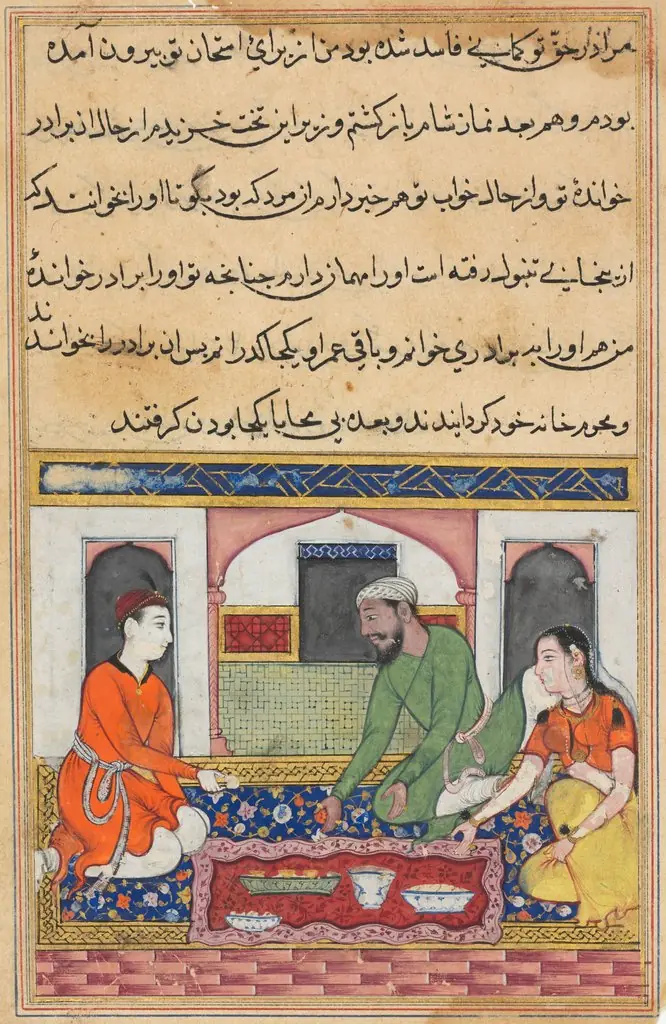 Shahr-Arai and her husband adopt her lover as a brother in the family, from a Tuti-nama (Tales of a Parrot): Fortieth Night
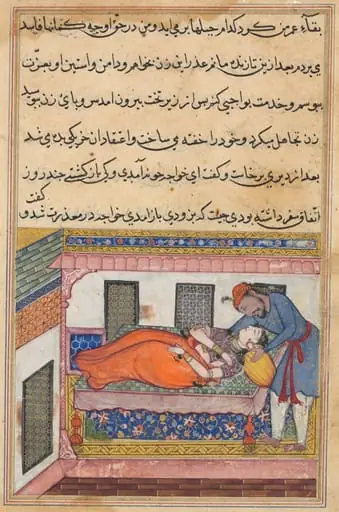 Shahr-Arai’s husband bends to kiss his wife who feigns sleep, from a Tuti-nama (Tales of a Parrot): Fortieth Night
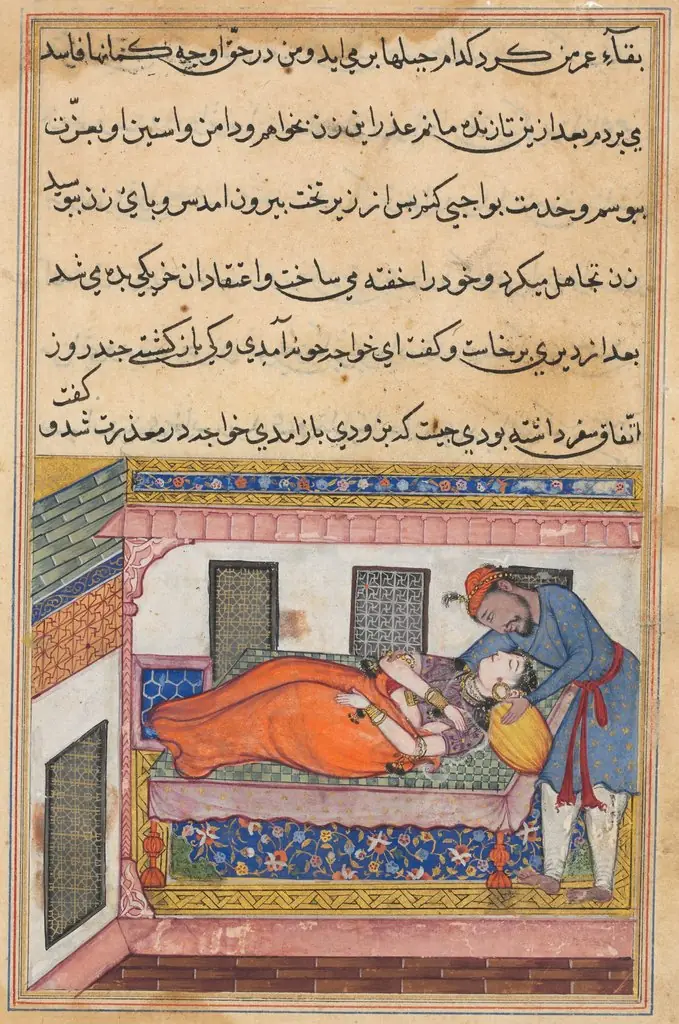 Shahr-Arai’s husband bends to kiss his wife who feigns sleep, from a Tuti-nama (Tales of a Parrot): Fortieth Night
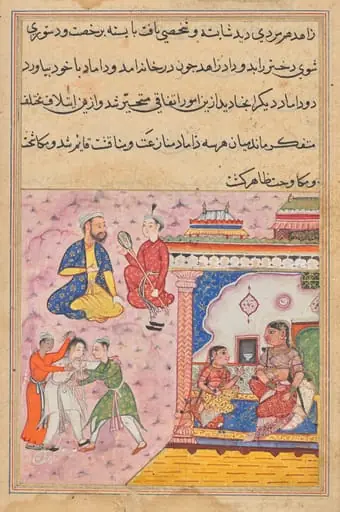 Three suitors fight amongst themselves for the hand of the devotee’s daughter, from a Tuti-nama (Tales of a Parrot): Twentieth Night
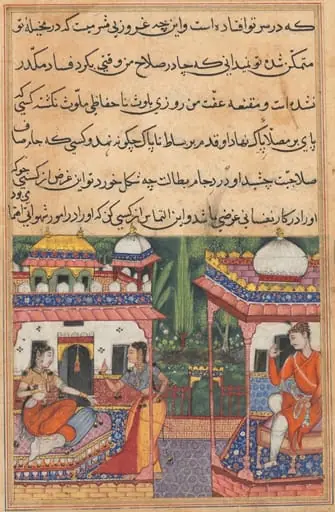 Kaiwan sends a message of love to Khurshid, wife of his brother Utarid who is away on a journey, from a Tuti-nama (Tales of a Parrot): Thirty-second Night
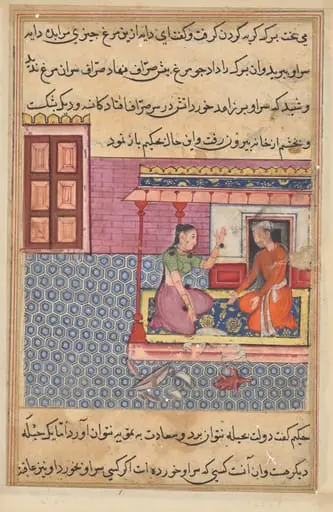 The pious man’s wife offers the seven-colored bird as food to her lover, but not finding its head, he breaks the pot and bowl in anger, from a Tuti-nama (Tales of a Parrot): Fifty-second Night
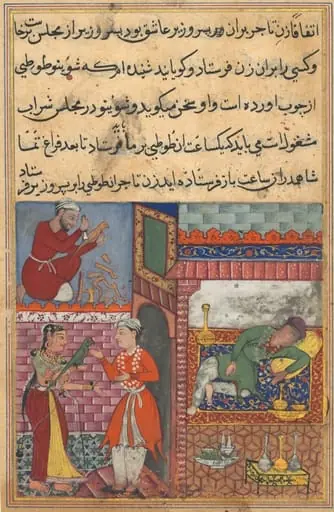 The vizier’s son receives the magic wooden parrot from the wife of the merchant, who is drunk, and has a replica made by a carpenter, from a Tuti-nama (Tales of a Parrot): Tenth Night
 The parrot addresses Khujasta at the beginning of the thirty-eighth night, from a Tuti-nama (Tales of a Parrot)