Artwork
The king of Bahilistan offers his daughter to the King of Kings, from a Tuti-nama (Tales of a Parrot): Seventh Night
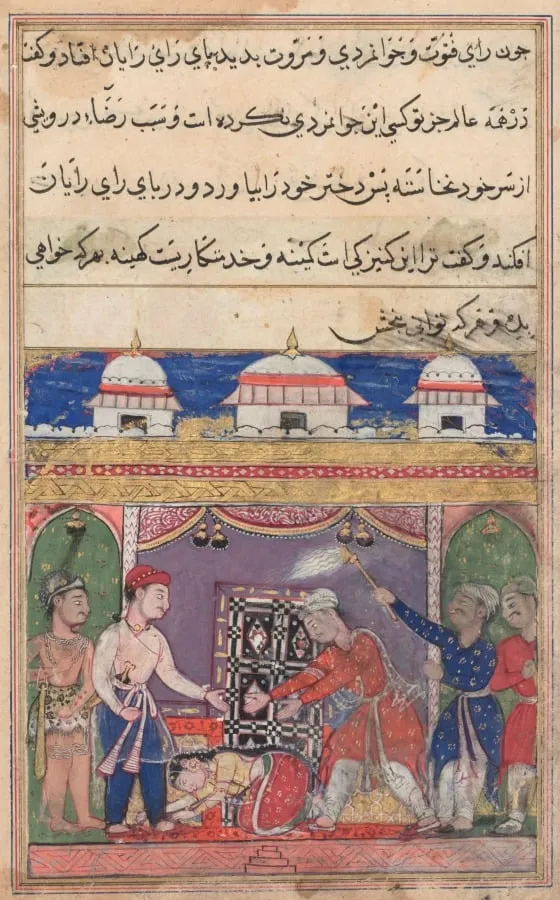
The king of Bahilistan offers his daughter to the King of Kings, from a Tuti-nama (Tales of a Parrot): Seventh Night is an unspecified painting by the Mughal Painting artist Unknown. It dates from 1560 and is held in the collection of the Cleveland Museum of Art. This painting illustrates a scene from the Tuti-nama, a collection of parrot tales, created for Emperor Akbar.
About this work
The artist mixed Indian and Central Asian styles, showing how cultures blended in Akbar’s court.
You see a king kneeling before another king, offering his daughter in a bright red dress. Servants and guards stand around them in rich robes and turbans. A fancy door with geometric patterns fills the background.
This painting comes from a book of parrot tales made for Emperor Akbar. The story is about cleverness and loyalty—one king even brought his own head as a gift. The artist mixed Indian and Central Asian styles, showing how cultures blended in Akbar’s court.
To see more art like this, look up court of akbar (reigned 1556–1605).
Overview
This painting illustrates a scene from the Tuti-nama, a collection of parrot tales, created for Emperor Akbar. It depicts a king offering his daughter to another monarch.
Subject & Meaning
The scene shows a king kneeling before the 'King of Kings', offering his daughter, who wears Indian attire and touches his feet. The narrative revolves around themes of cleverness and loyalty, as exemplified by the king's gesture.
Technique & Style
The artist blended Indian and Central Asian styles, evident in the characters' clothing and the geometric patterns on the background door. The composition features a tilted floor, allowing the viewer to see the tile pattern directly, a characteristic of local Indian artistic practice.
History & Provenance
The painting was part of a manuscript made for Emperor Akbar, who reigned from 1556 to 1605. Akbar's court was a cultural melting pot, reflected in the artwork's mixed stylistic influences.
Artist & collection

 Domestic Scene
 Giacomo and Cardinal Marco, investing Andrea, Abbot of San Zeno, with his Benefice
 The Nymph of Fontainebleau
 Portrait of a Woman
 Madonna and Child with Saints in the Enclosed Garden
 Venus and Minerva
 Family Group of Four on Sofa
 Wall painting from Room H of the Villa of P. Fannius Synistor at Boscoreale
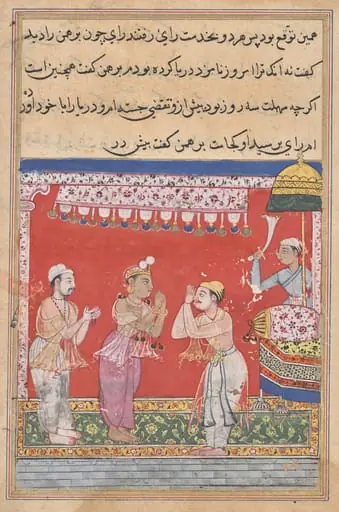 The king of the Ocean, having assumed human form, arrives at the court of the Raja, from a Tuti-nama (Tales of a Parrot): Eleventh Night
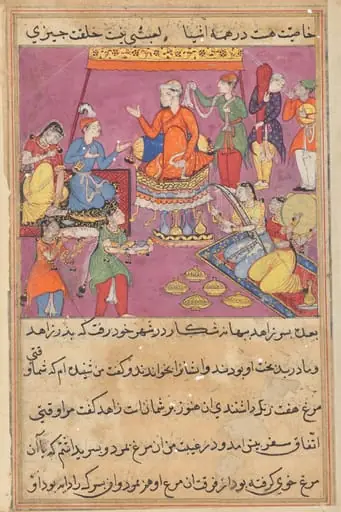 The king gives his daughter in marriage to the pious man’s son, from a Tuti-nama (Tales of a Parrot): Fifty-second Night
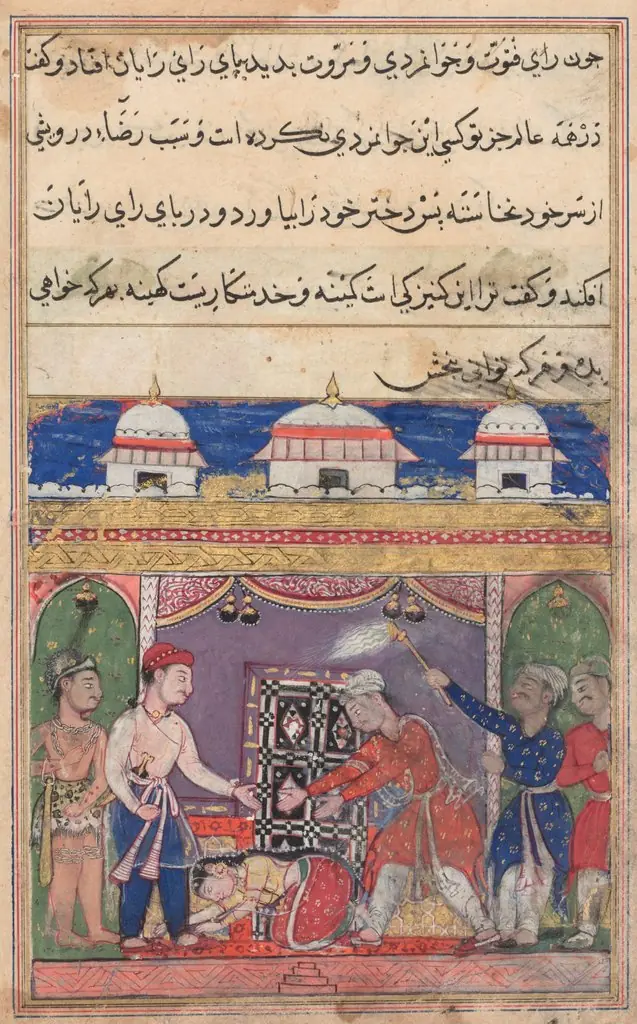 The king of Bahilistan offers his daughter to the King of Kings, from a Tuti-nama (Tales of a Parrot): Seventh Night
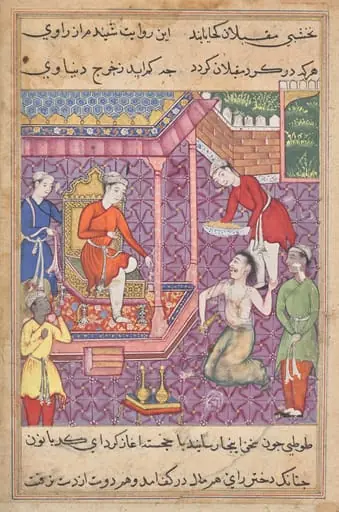 The magician disguised as a Brahman returns to claim his “daughter-in-law,” from a Tuti-nama (Tales of a Parrot): Thirty-fifth Night
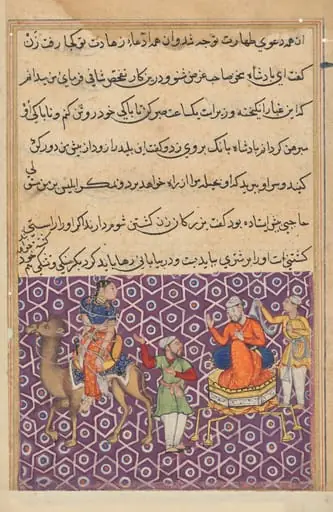 King Bahram, who has married Khassa’s daughter, has her tied to a camel to be abandoned in the desert as a result of false accusations made by Khulasa, from a Tuti-nama (Tales of a Parrot): Fifty-first Night
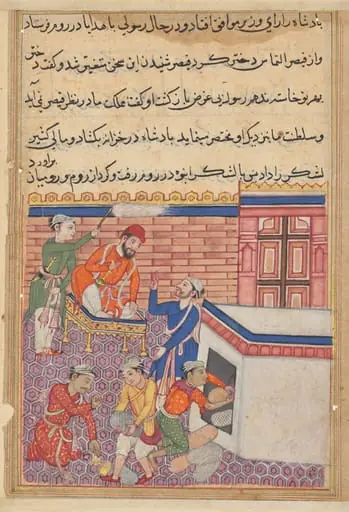 The king’s emissary being provided with gifts for his mission to Rum in order to seek the hand of the emperor’s daughter in marriage, from a Tuti-nama (Tales of a Parrot): Fiftieth Night
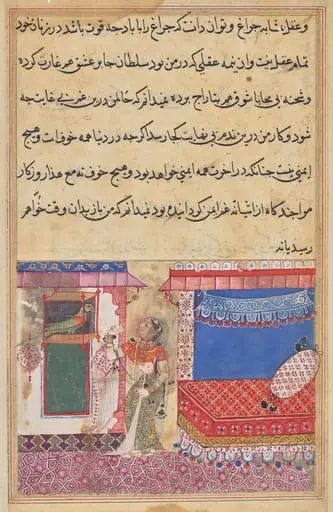 The Parrot Addresses Khujasta at the Beginning of the Eighteenth Night, from a Tuti-nama (Tales of a Parrot)
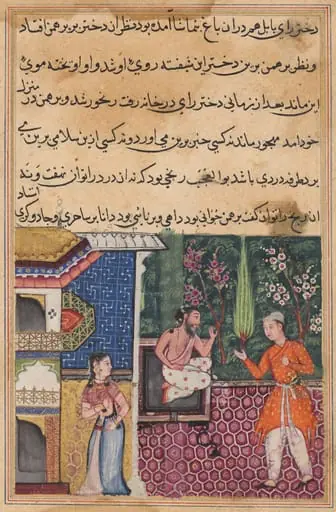 The Brahman gives an account of his falling in love with the king of Babylon’s daughter to his friend, the magician, from a Tuti-nama (Tales of a Parrot): Thirty-fifth Night
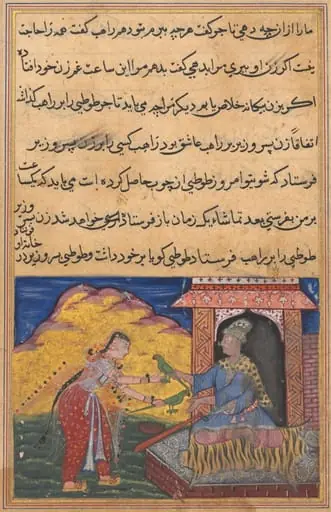 The wife of the son of the vizier brings the magic wooden parrot to her lover, the monk, who exchanges it for the replica, from a Tuti-nama (Tales of a Parrot): Tenth Night
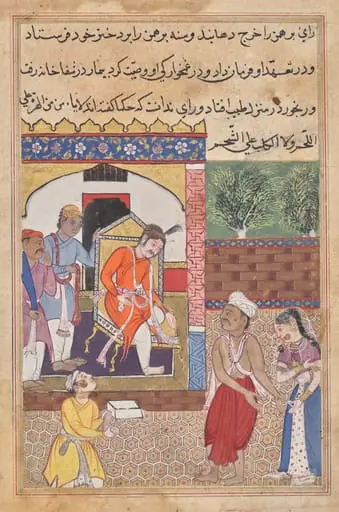 The magician, disguised as a Brahman, visits the king of Babylon, from a Tuti-nama (Tales of a Parrot): Thirty-fifth Night