Artwork
The Parrot Addresses Khujasta at the Beginning of the Tenth Night, from a Tuti-nama (Tales of a Parrot)
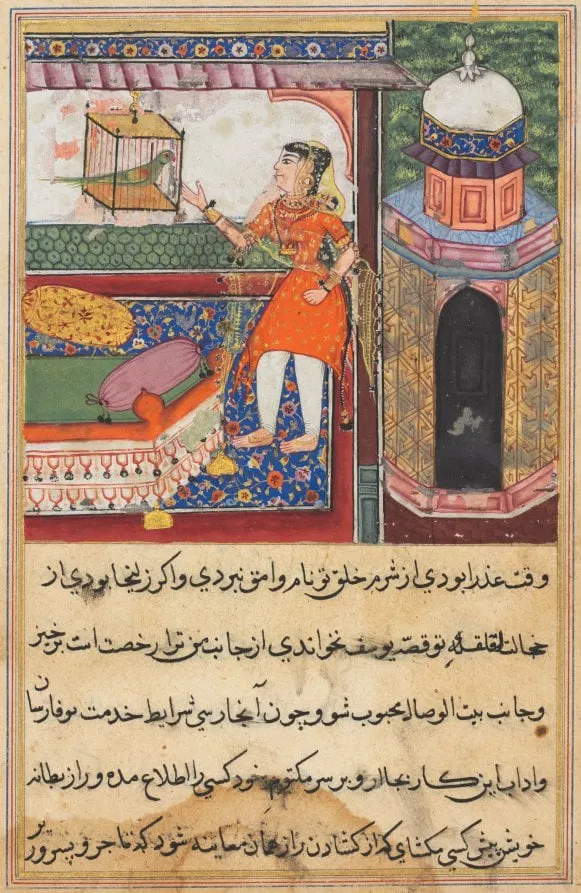
The Parrot Addresses Khujasta at the Beginning of the Tenth Night, from a Tuti-nama (Tales of a Parrot) is an unspecified painting by the Mughal Painting artist Iqbal. It dates from 1560 and is held in the collection of the Cleveland Museum of Art. This miniature illustrates a scene from the *Tuti‑nama*, a collection of nightly parrot stories.
About this work
You see a woman in a red dress sitting on a terrace, while a green parrot perches on a stand beside her, its beak open as if speaking.
You see a woman in a red dress sitting on a terrace, while a green parrot perches on a stand beside her, its beak open as if speaking.
This is one page from a book of parrot tales told night after night to delay a wife’s secret meeting. The parrot’s stories always carry a moral—here, the lesson is about trust and trickery. Tiny gold details and bright colors show how important the book was to the Mughal court.
To see more pages like this, look up the subject *mughal india, court of akbar (reigned 1556–1605)*.
Overview
This miniature illustrates a scene from the *Tuti‑nama*, a collection of nightly parrot stories. A woman in a red garment sits on a terrace while a green parrot, perched on a nearby stand, appears to speak to her. The illustration is executed in the vivid palette and fine gold detailing characteristic of Mughal court manuscripts.
Subject & Meaning
The narrative shows the wise parrot Tuti addressing Khujasta, a wife who is being kept occupied by nightly tales while she plans a secret meeting. The story within the frame warns against deceit and underscores the value of trust, reflecting the moralizing purpose of the *Tuti‑nama*.
Technique & Style
Rendered with delicate brushwork, the miniature combines bright mineral pigments with intricate gold leaf accents. The figures are delineated with fine lines, and the composition balances interior space with ornamental borders, exemplifying the refined aesthetic of late‑16th‑century Mughal painting.
History & Provenance
An inscription in the margin attributes the work to the painter Iqbal, a known artist active in the Mughal atelier during Emperor Akbar’s reign (1556–1605). The piece originates from a deluxe manuscript produced for the imperial court, indicating its high status among contemporary luxury books.
Context
The *Tuti‑nama* belongs to a broader tradition of illustrated moral literature circulated among the Mughal elite. Such manuscripts were used both for entertainment and instruction, reinforcing courtly values through allegorical storytelling and lavish visual presentation.
Artist & collection

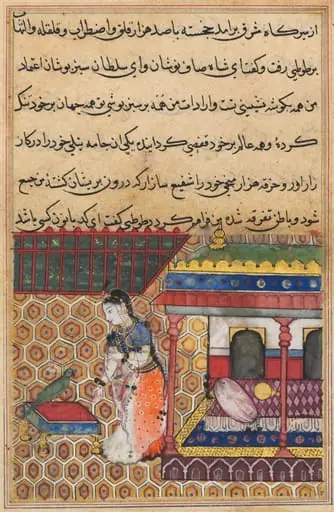 The parrot addresses Khujasta at the beginning of the thirty-eighth night, from a Tuti-nama (Tales of a Parrot)
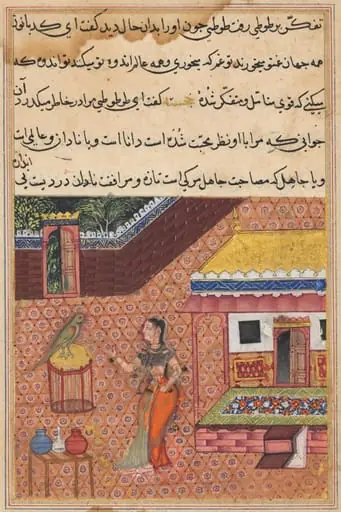 The parrot addresses Khujasta at the beginning of the thirty-fourth night, from a Tuti-nama (Tales of a Parrot)
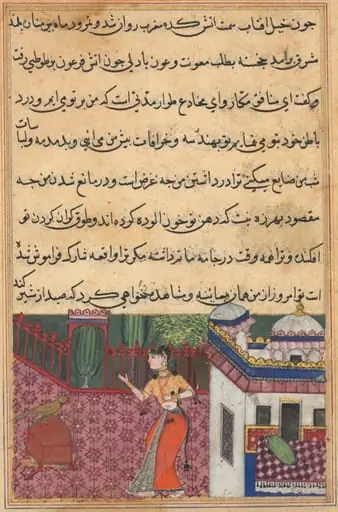 The parrot addresses Khujasta at the beginning of the thirty-third night, from a Tuti-nama (Tales of a Parrot)
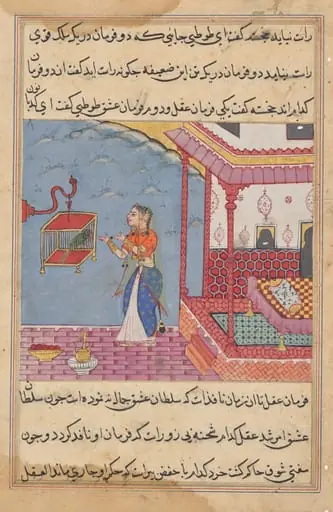 The Parrot Addresses Khujasta at the Beginning of the Twenty-Fourth Night, from a Tuti-nama (Tales of a Parrot)
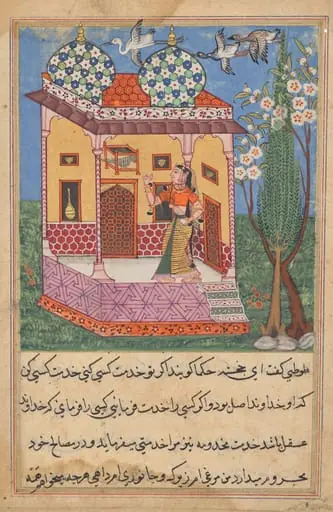 The Parrot Addresses Khujasta at the Beginning of the Twenty-sixth Night, from a Tuti-nama (Tales of a Parrot)
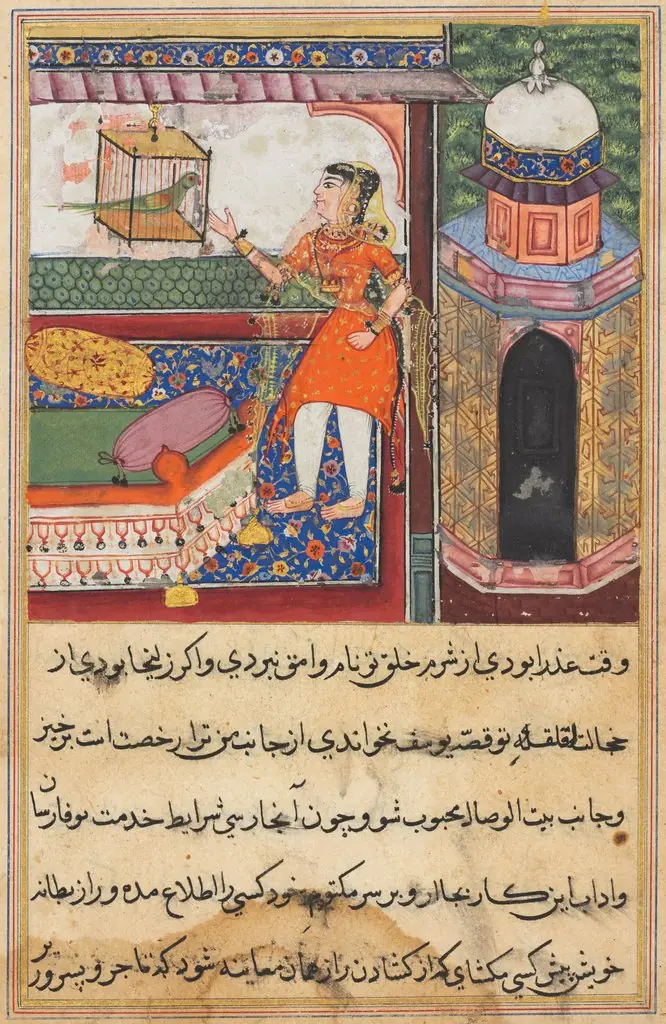 The Parrot Addresses Khujasta at the Beginning of the Tenth Night, from a Tuti-nama (Tales of a Parrot)
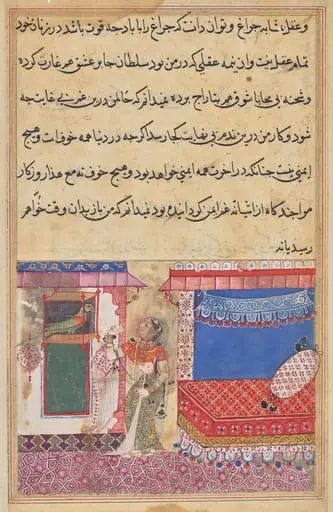 The Parrot Addresses Khujasta at the Beginning of the Eighteenth Night, from a Tuti-nama (Tales of a Parrot)
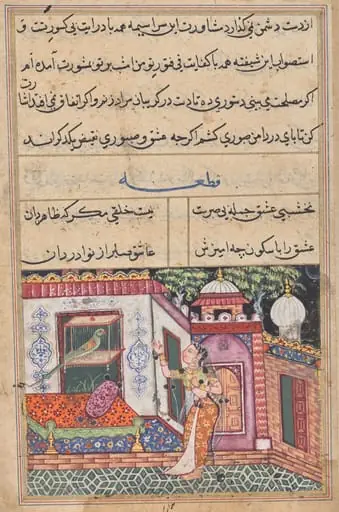 The Parrot Addresses Khujasta at the Beginning of the Eleventh Night, from a Tuti-nama (Tales of a Parrot)
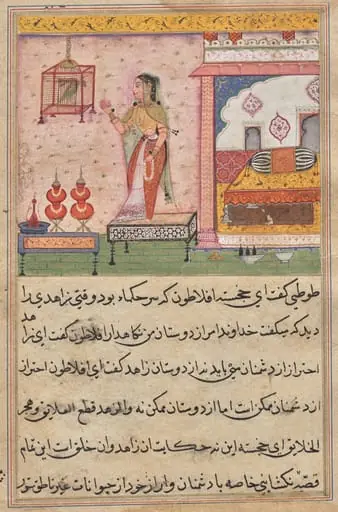 The Parrot Addresses Khujasta at the Beginning of the Twenty-third Night, from a Tuti-nama (Tales of a Parrot)
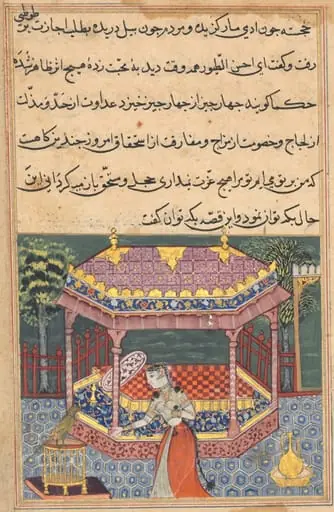 The parrot addresses Khujasta at the beginning of the thirty-seventh night, from a Tuti-nama (Tales of a Parrot)
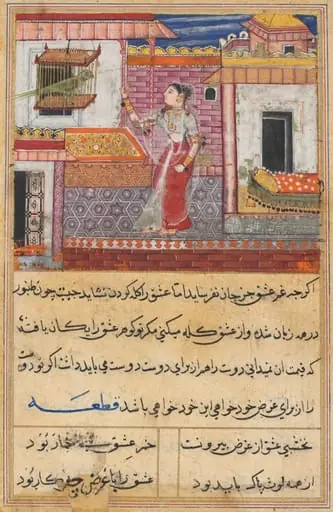 The Parrot Addresses Khujasta at the Beginning of the Thirteenth Night, from a Tuti-nama (Tales of a Parrot)
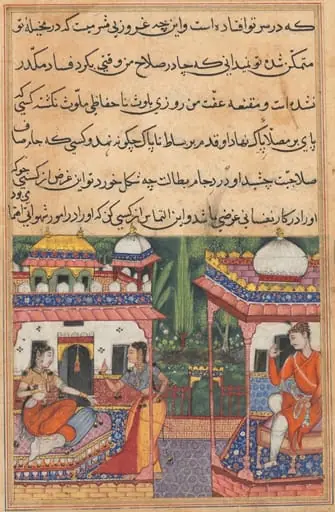 Kaiwan sends a message of love to Khurshid, wife of his brother Utarid who is away on a journey, from a Tuti-nama (Tales of a Parrot): Thirty-second Night
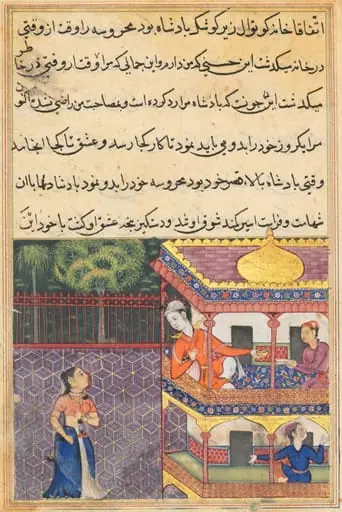 The king of Zabul sees Mahrusa from his palace balcony, from a Tuti-nama (Tales of a Parrot): Thirty-sixth Night
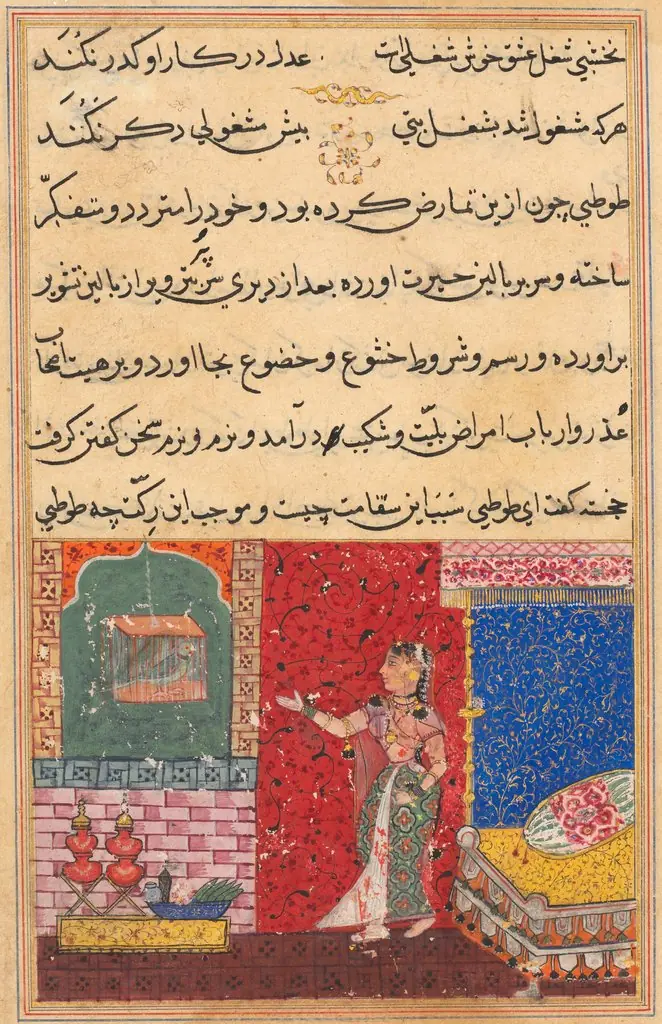 The Parrot Addresses Khujasta at the Beginning of the Fifteenth Night, from a Tuti-nama (Tales of a Parrot)
 The Parrot Addresses Khujasta at the Beginning of the Fifteenth Night, from a Tuti-nama (Tales of a Parrot)