Artwork
The Parrot Addresses Khujasta at the Beginning of the Twelfth Night, from a Tuti-nama (Tales of a Parrot)
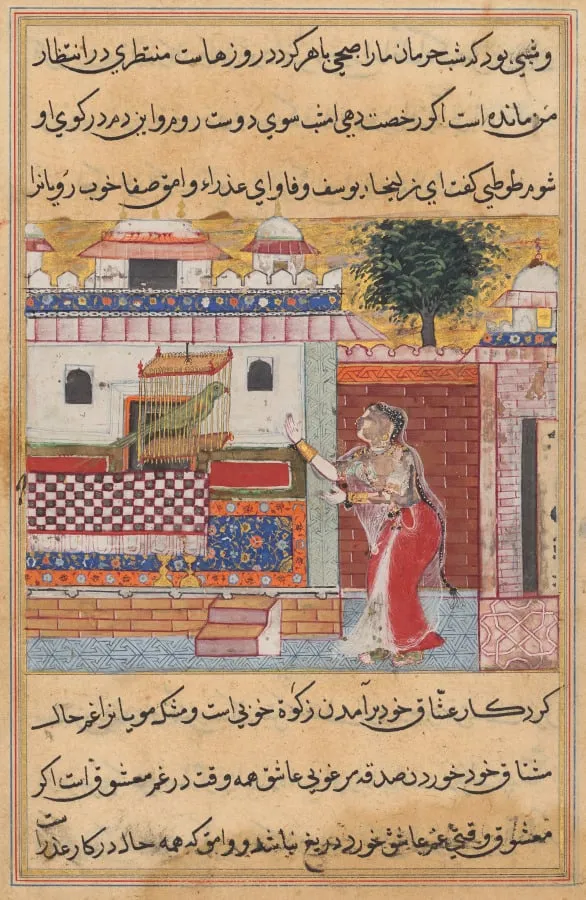
The Parrot Addresses Khujasta at the Beginning of the Twelfth Night, from a Tuti-nama (Tales of a Parrot) is an unspecified painting by the Mughal Painting artist Tara 1. It dates from 1560 and is held in the collection of the Cleveland Museum of Art.
About this work
The gold sky and flat, colorful shapes come from Persian book art, while the woman’s profile and delicate lines show Mughal style.
You see a woman in a blue robe sitting on a patterned carpet, listening to a bright green parrot perched on a stand beside her.
This painting is one frame from a 52-night story cycle. Each night the parrot delays the woman’s secret meeting by telling her a cliffhanger tale. By dawn, she’s still listening—and still safe at home. The gold sky and flat, colorful shapes come from Persian book art, while the woman’s profile and delicate lines show Mughal style.
To see more paintings like this, look up mughal india, court of akbar (reigned 1556–1605).
Overview
The painting illustrates a scene from a 52‑night narrative cycle in which a domesticated parrot repeatedly thwarts Khujasta’s clandestine rendezvous. Each evening the bird distracts her with an unfinished story, delaying her departure until sunrise, when the opportunity has passed.
Subject & Meaning
Khujasta, depicted in profile wearing a blue robe, sits attentively on a patterned carpet while a vivid green parrot perches nearby. The interaction suggests the bird’s role as a clever intermediary, using storytelling to keep the woman confined and safe, highlighting themes of desire, restraint, and the power of narrative.
Technique & Style
The composition combines Persian decorative elements—golden sky, geometric tile motifs, and flat color fields—with Mughal portraiture evident in the delicate line work and the figure’s profile. The carpet is rendered with an upward tilt, abandoning realistic perspective to emphasize its intricate arabesque design, while the checkered bedspread draws focus to the empty bed.
History & Provenance
Created within the Mughal artistic tradition of the late 16th to early 17th century, the work belongs to a larger series of paintings that visualized the “Tuti‑nama” (Tales of a Parrot). Such cycles were often produced for courtly audiences, reflecting the cultural exchange between Persian manuscript illustration and Indian court painting.
Context
The piece reflects the syncretic aesthetic of Akbar’s court, where Persian book art informed the visual language of Mughal painters. The narrative device of a talking parrot aligns with Persian literary motifs, while the Indian dress and setting root the scene in the subcontinental milieu.
Artist & collection

Artist
Meet Tara, the sharp-eyed painter who turned a collection of bawdy parrot tales into glowing miniatures.

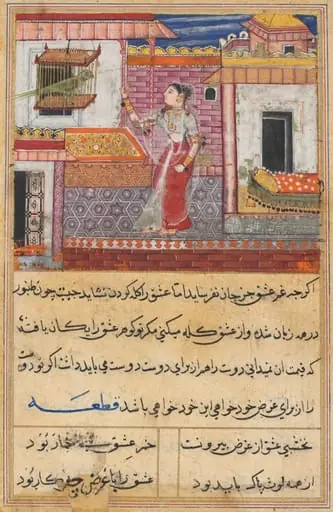
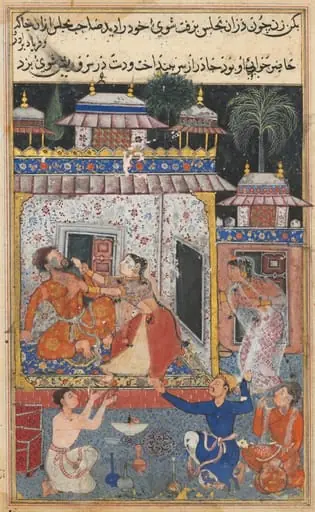
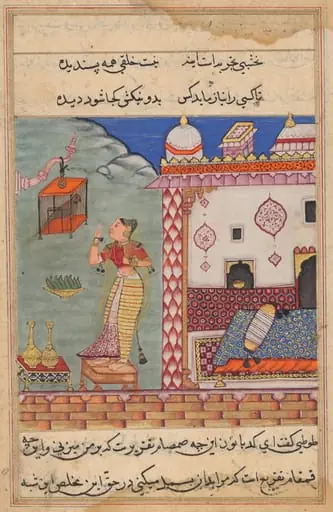 The Parrot Addresses Khujasta at the Beginning of the Twenty-seventh Night, form a Tuti-nama (Tales of a Parrot)
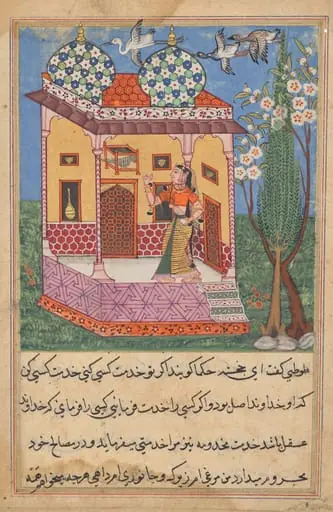 The Parrot Addresses Khujasta at the Beginning of the Twenty-sixth Night, from a Tuti-nama (Tales of a Parrot)
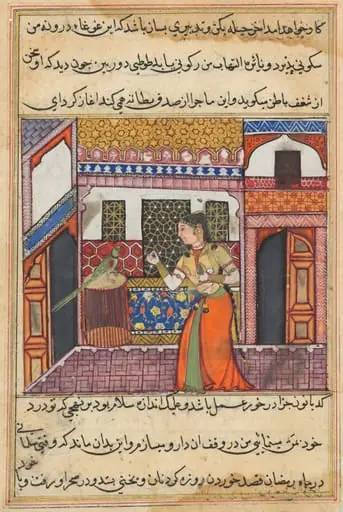 The parrot addresses Khujasta at the beginning of the forty-third night, from a Tuti-nama (Tales of a Parrot)
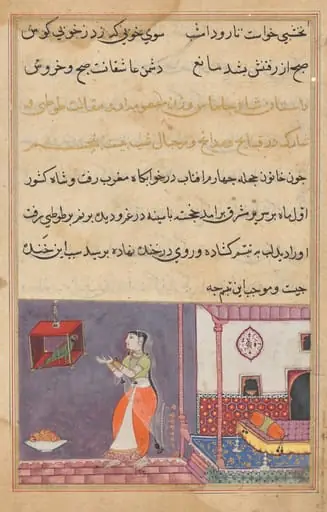 The Parrot Addresses Khujasta at the Beginning of the Twenty-fifth Night, from a Tuti-nama (Tales of a Parrot)
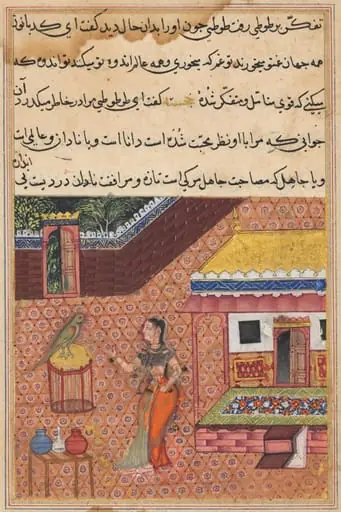 The parrot addresses Khujasta at the beginning of the thirty-fourth night, from a Tuti-nama (Tales of a Parrot)
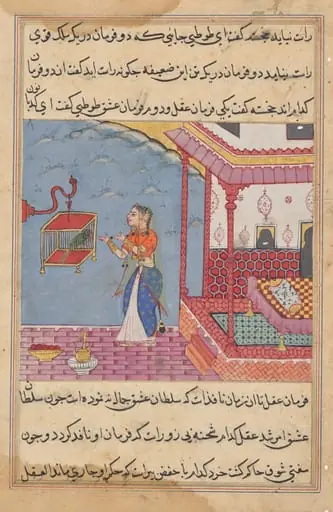 The Parrot Addresses Khujasta at the Beginning of the Twenty-Fourth Night, from a Tuti-nama (Tales of a Parrot)
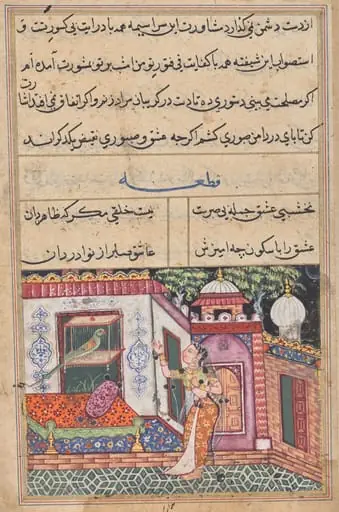 The Parrot Addresses Khujasta at the Beginning of the Eleventh Night, from a Tuti-nama (Tales of a Parrot)
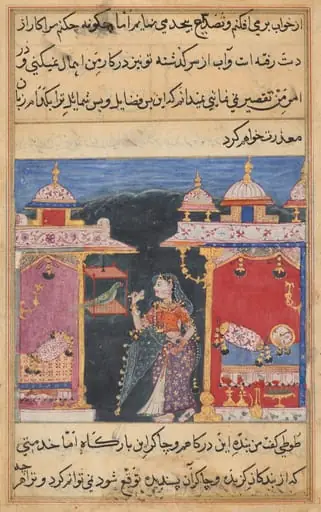 The Parrot Addresses Khujasta at the Beginning of the Seventh Night, from a Tuti-nama (Tales of a Parrot)
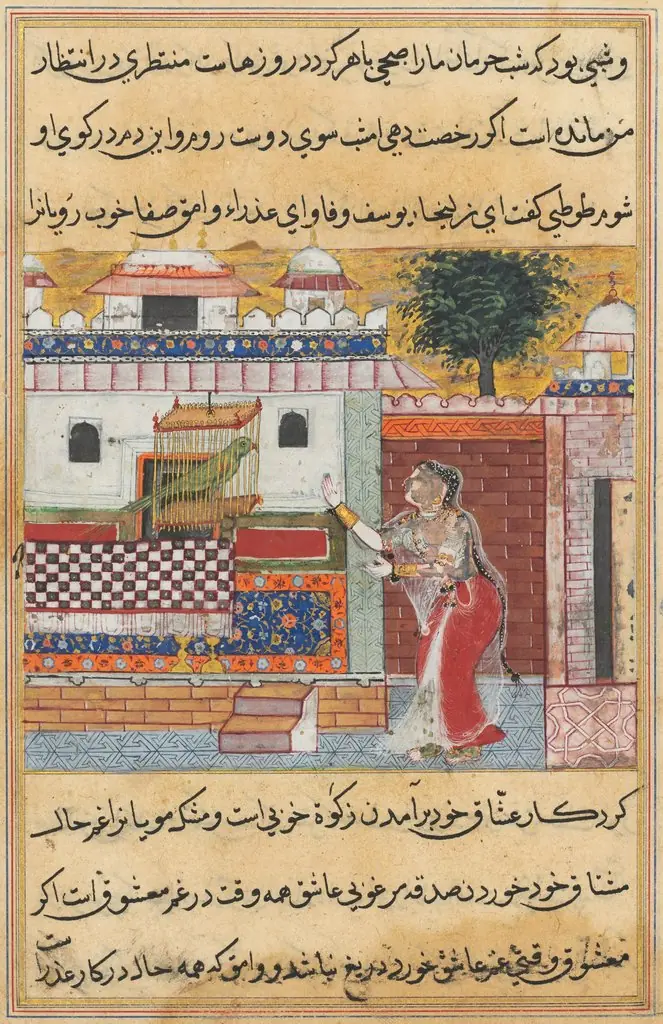 The Parrot Addresses Khujasta at the Beginning of the Twelfth Night, from a Tuti-nama (Tales of a Parrot)
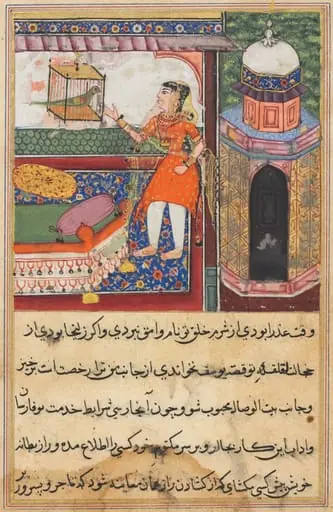 The Parrot Addresses Khujasta at the Beginning of the Tenth Night, from a Tuti-nama (Tales of a Parrot)
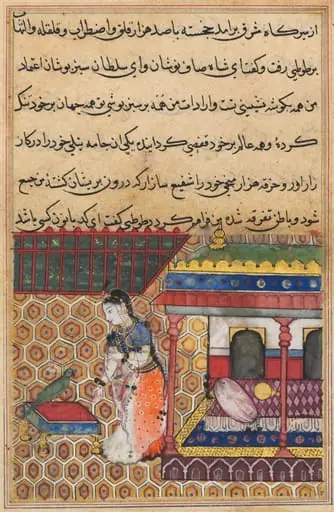 The parrot addresses Khujasta at the beginning of the thirty-eighth night, from a Tuti-nama (Tales of a Parrot)
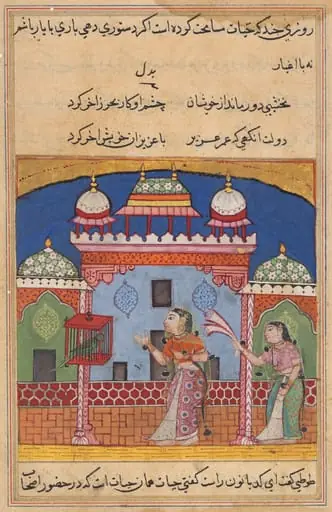 The Parrot Addresses Khujasta at the Beginning of the Twenty-second Night, from a Tuti-nama (Tales of a Parrot)