Artwork
The handmaiden again appeals for justice and the prince is led to the place of execution for the third time, from a Tuti-nama (Tales of a Parrot): Eighth Night
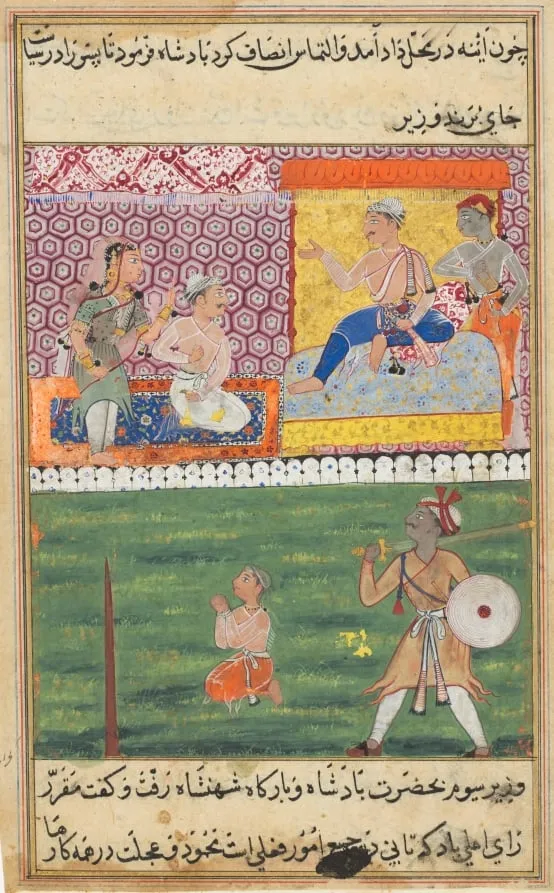
The handmaiden again appeals for justice and the prince is led to the place of execution for the third time, from a Tuti-nama (Tales of a Parrot): Eighth Night is an unspecified painting by the Patna School of Painting artist Gujarati. It dates from 1560 and is held in the collection of the Cleveland Museum of Art.
About this work
The prince’s vow of silence makes his fate hang on the words of others—a tense moment frozen in bright colors and fine details.
You see a crowded court scene: a prince kneels, hands tied, while a woman pleads with a king. Above them, another woman watches from a balcony. The prince stays silent, waiting for execution.
This painting is from a *Tuti-nama*, a collection of parrot-told stories meant to entertain and teach. The prince’s vow of silence makes his fate hang on the words of others—a tense moment frozen in bright colors and fine details.
To see more works like this, look up mughal india, court of akbar (reigned 1556–1605).
Overview
This painting, titled 'The handmaiden again appeals for justice and the prince is led to the place of execution for the third time,' is an illustration from the Tuti-nama, a collection of tales told by a parrot.
Subject & Meaning
The scene depicts a dramatic moment in a court: a prince, bound and silent, awaits execution while a handmaiden pleads his case to the king, and another woman observes from above.
Technique & Style
The composition is characterized by its crowded court scene, rendered in bright colors and fine details, capturing a tense moment in time.
Context
The painting is part of a manuscript tradition associated with the court of Akbar, who reigned in Mughal India from 1556 to 1605.
Artist & collection

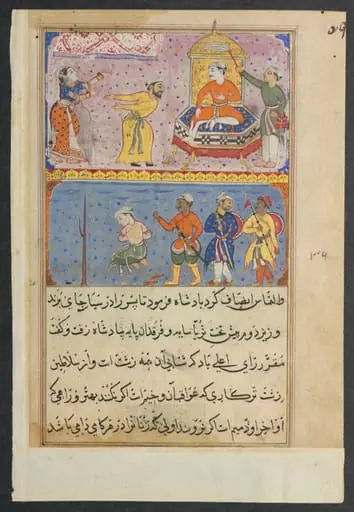 The prince, once reprieved, is returned to the palace of execution a second time on the plea of the king’s handmaiden, from a Tuti-nama (Tales of a Parrot): Eighth Night
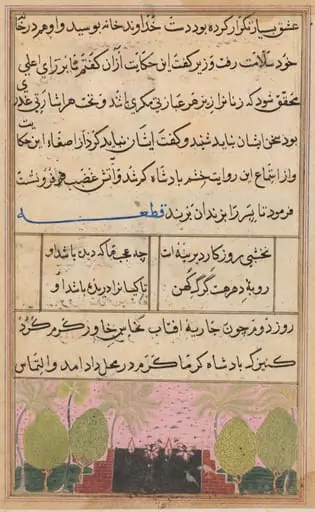 Landscape with a lotus pool, from a Tuti-nama (Tales of a Parrot), Eighth Night
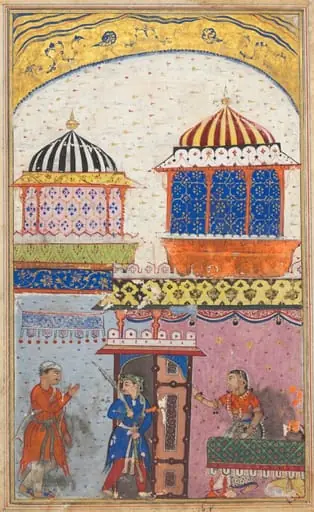 A woman asks her lover to leave her house, brandishing his sword and feigning rage in order to deceive her husband who has just arrived, from a Tuti-nama (Tales of a Parrot): Eighth Night
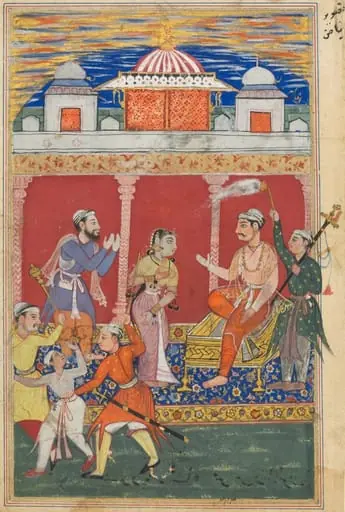 The prince’s ordeal continues, he is ordered away to be executed for the fifth time, from a Tuti-nama (Tales of a Parrot): Eighth Night
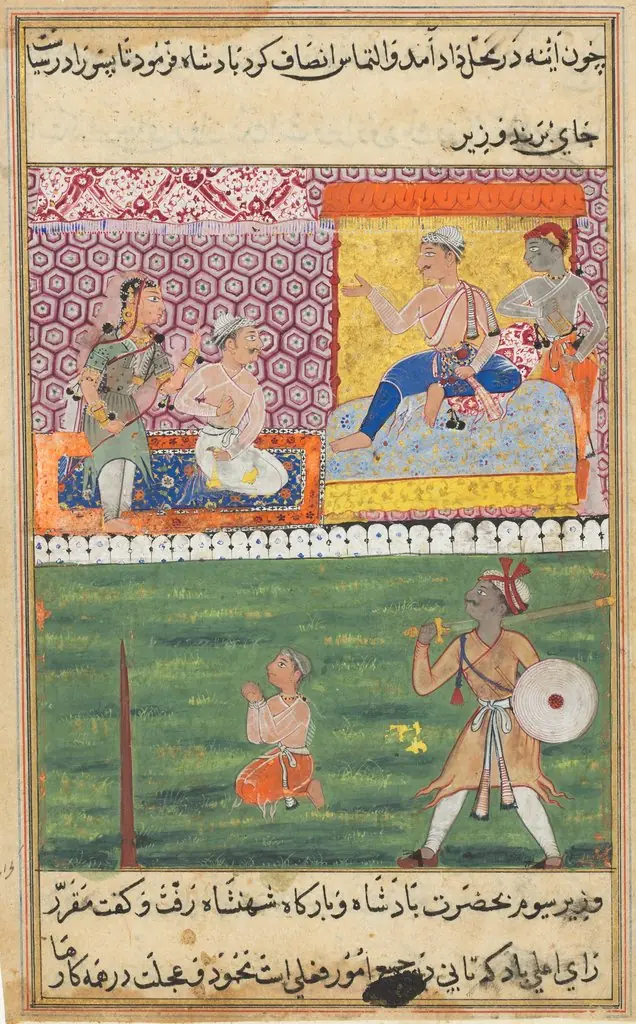 The handmaiden again appeals for justice and the prince is led to the place of execution for the third time, from a Tuti-nama (Tales of a Parrot): Eighth Night
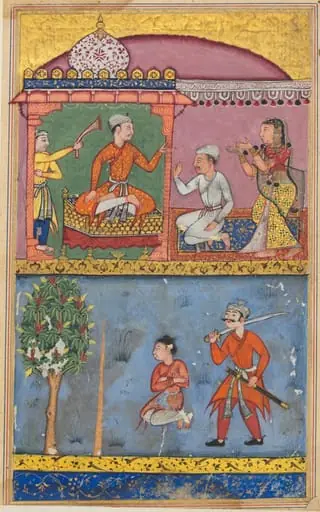 The handmaiden appeals for justice and the prince is taken to the execution site for the fourth time, from a Tuti-nama (Tales of a Parrot): Eighth Night
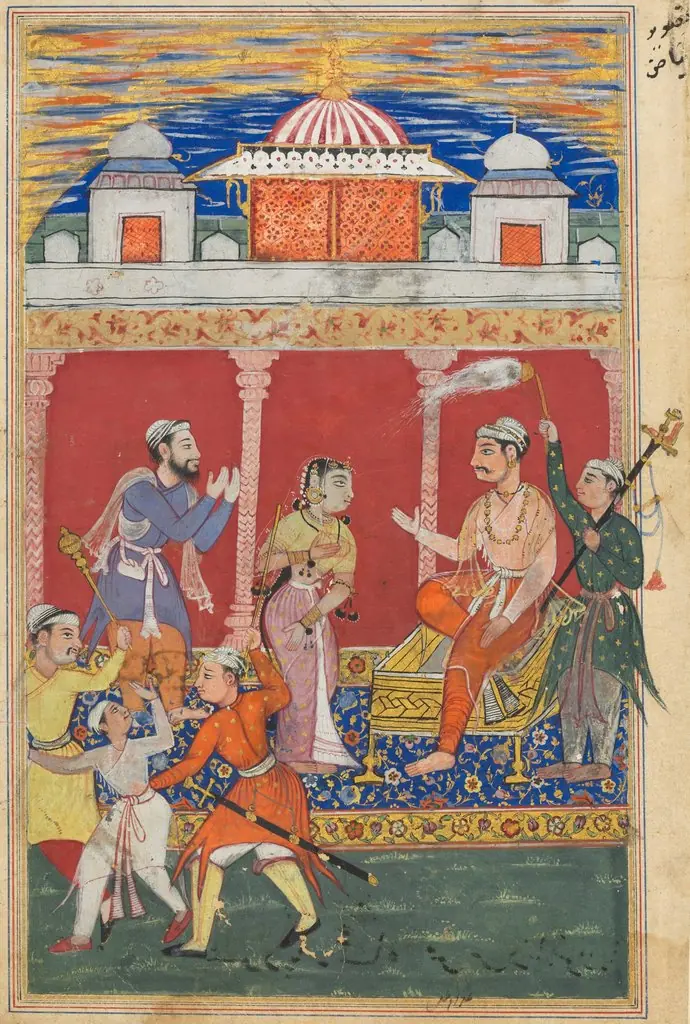 The prince’s ordeal continues, he is ordered away to be executed for the fifth time, from a Tuti-nama (Tales of a Parrot): Eighth Night
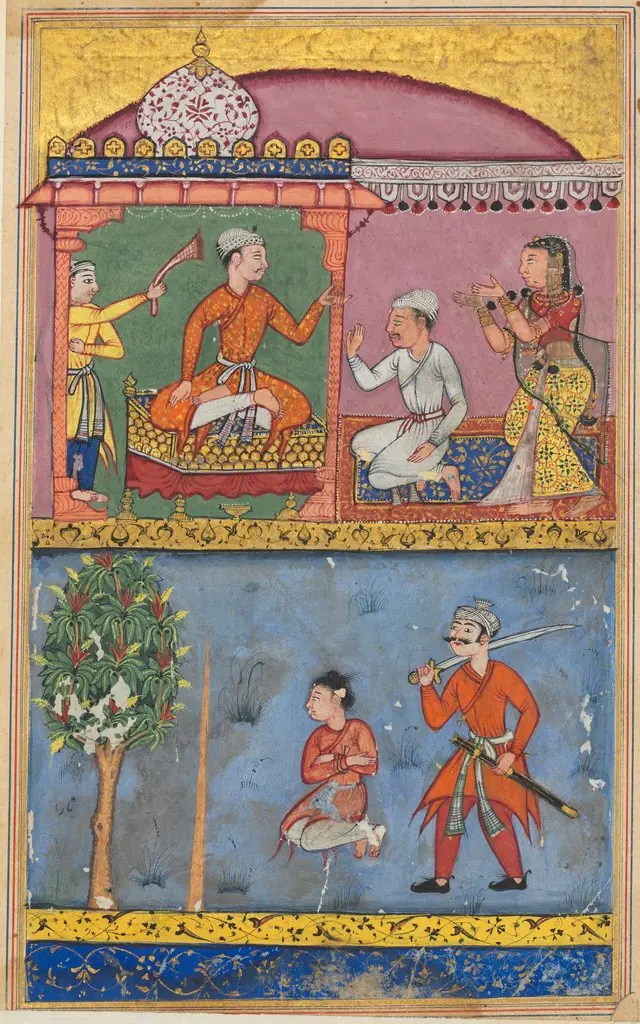 The handmaiden appeals for justice and the prince is taken to the execution site for the fourth time, from a Tuti-nama (Tales of a Parrot): Eighth Night
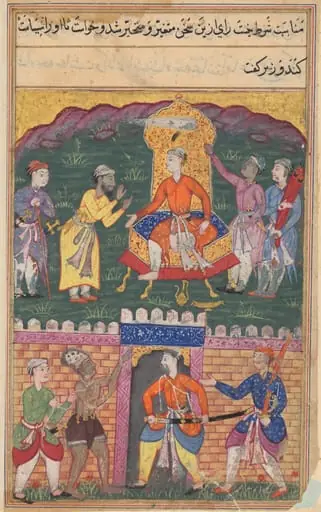 The vizier dissuades the king of Bahilistan from executing the dervish who asks for his daughter’s hand in marriage, from a Tuti-nama (Tales of a Parrot): Seventh Night
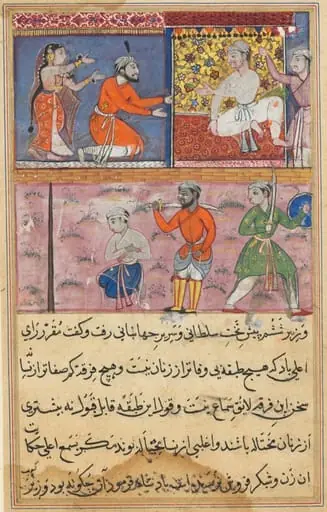 The prince sent back to the place of execution for the sixth time, from a Tuti-nama (Tales of a Parrot): Eighth Night
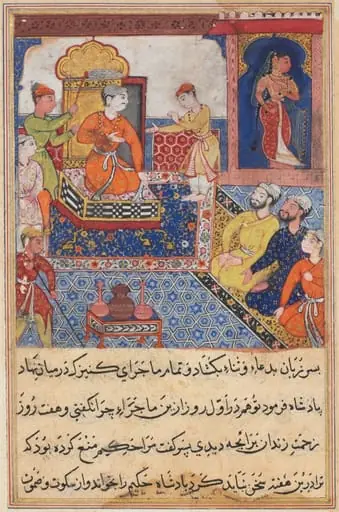 The young prince recounts his experiences to his father, the king, from a Tuti-nama (Tales of a Parrot): Eighth Night
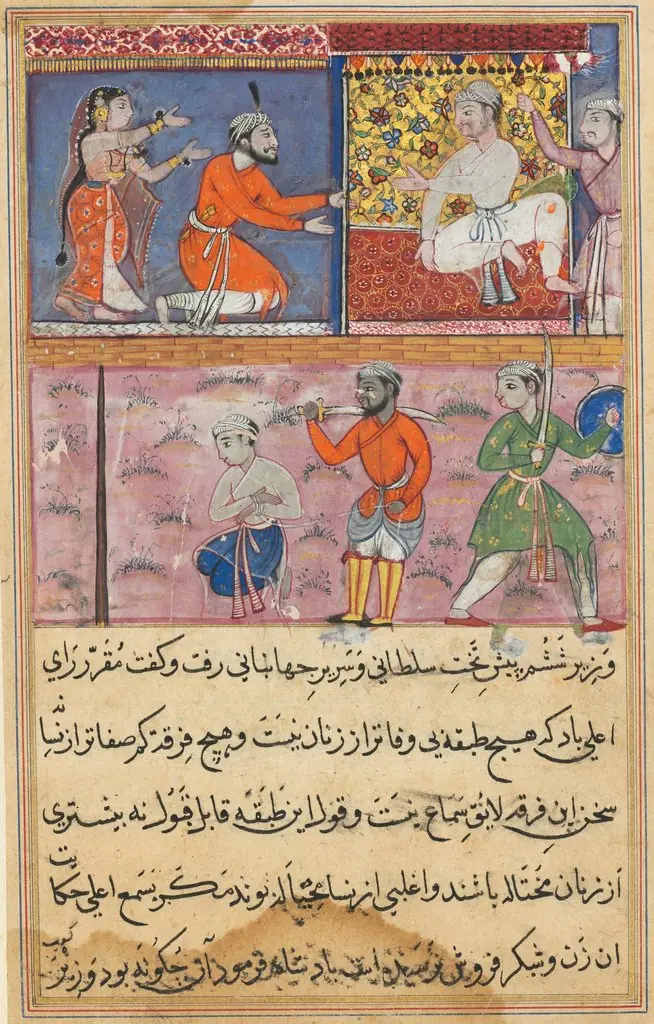 The prince sent back to the place of execution for the sixth time, from a Tuti-nama (Tales of a Parrot): Eighth Night
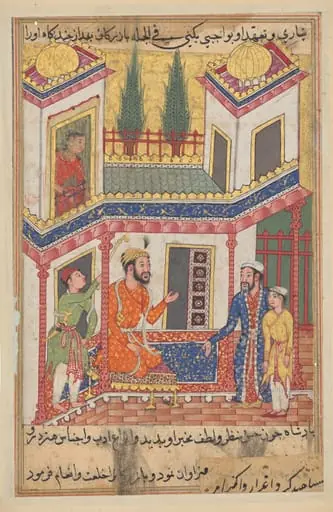 The merchant returns bringing a young slave who is really the son of the princess of Rum, now married to the king, from a Tuti-nama (Tales of a Parrot): Fiftieth Night