Artwork
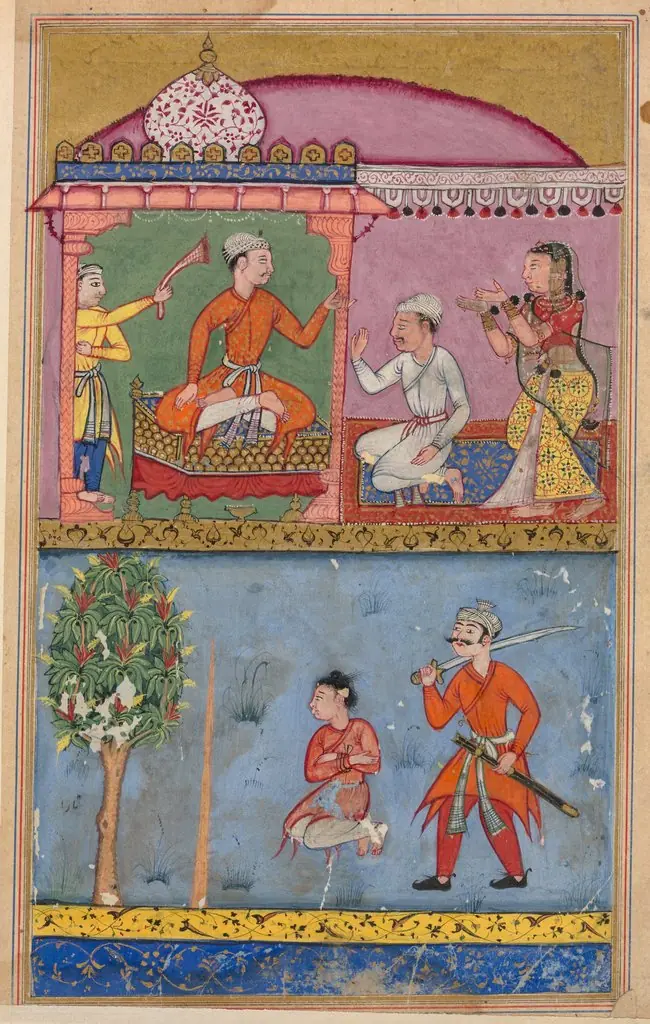
The handmaiden appeals for justice and the prince is taken to the execution site for the fourth time, from a Tuti-nama (Tales of a Parrot): Eighth Night
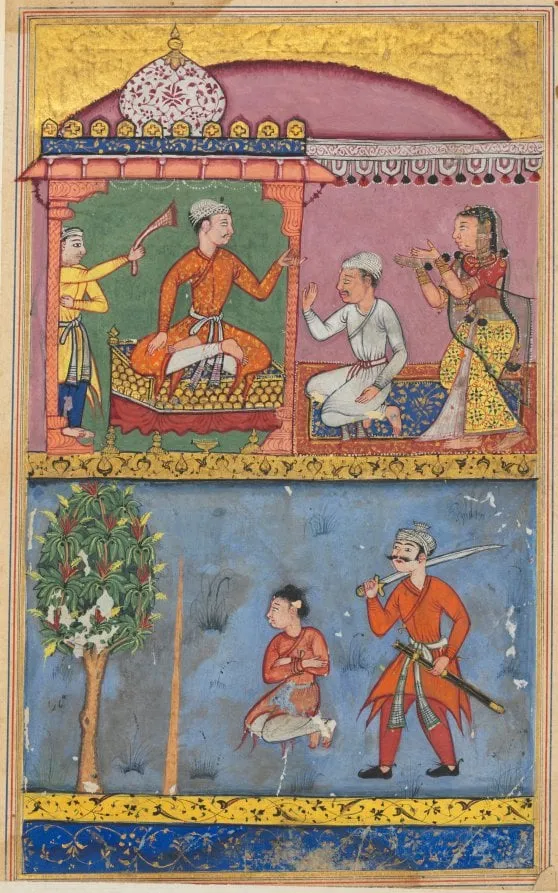
The handmaiden appeals for justice and the prince is taken to the execution site for the fourth time, from a Tuti-nama (Tales of a Parrot): Eighth Night is an unspecified painting by the Mughal Painting artist Tara 2. It dates from 1560 and is held in the collection of the Cleveland Museum of Art. This painting illustrates a scene from the Tuti-nama, a collection of tales about a parrot, specifically from the Eighth Night.
About this work
You see a king on a throne listening to a crying servant girl, while below him a prince kneels tied up, waiting to be killed.
You see a king on a throne listening to a crying servant girl, while below him a prince kneels tied up, waiting to be killed. The prince is innocent but has taken a vow of silence, so he can’t speak up.
The painting is from a book of parrot tales made for Emperor Akbar. The story pauses here—just before the vizier jumps in with another tale to buy time. It’s like a cliffhanger in a TV show.
To see more paintings like this, look up mughal india, court of akbar (reigned 1556–1605).
Overview
This painting illustrates a scene from the Tuti-nama, a collection of tales about a parrot, specifically from the Eighth Night. It depicts two simultaneous events: a king hearing an appeal and a prince awaiting execution.
Subject & Meaning
The scene shows a king on a throne listening to a distressed handmaiden, while a bound prince kneels below, awaiting execution. The prince is innocent but has taken a vow of silence, unable to defend himself against false accusations.
Context
The painting is part of a manuscript created for Emperor Akbar, a Mughal ruler who reigned from 1556 to 1605. The story is paused at a critical moment, anticipating the vizier's intervention with a tale to delay the execution.
History & Provenance
The work is associated with the court of Akbar, a period significant for its cultural and artistic developments in Mughal India.
Artist & collection
Artist
This artist painted delicate Mughal miniatures during the 1500s. Their work appears in the *Tuti-nama* (Tales of a Parrot), a manuscript full of tiny, jewel-toned scenes. One scene shows a handmaiden begging for justice…

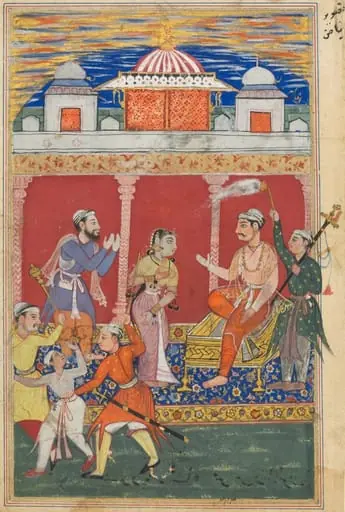 The prince’s ordeal continues, he is ordered away to be executed for the fifth time, from a Tuti-nama (Tales of a Parrot): Eighth Night
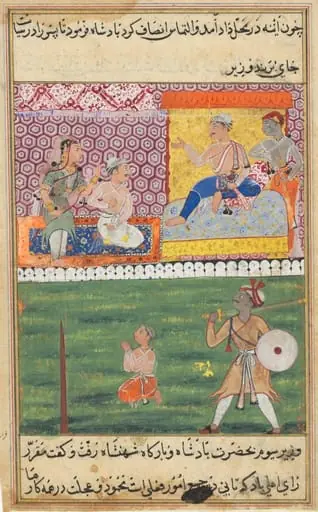 The handmaiden again appeals for justice and the prince is led to the place of execution for the third time, from a Tuti-nama (Tales of a Parrot): Eighth Night
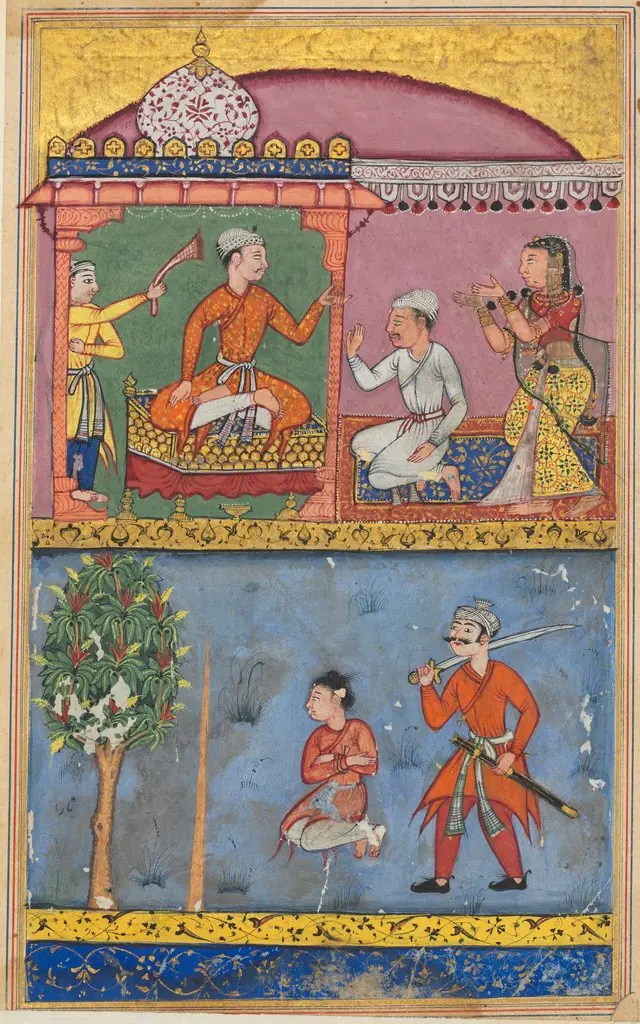 The handmaiden appeals for justice and the prince is taken to the execution site for the fourth time, from a Tuti-nama (Tales of a Parrot): Eighth Night
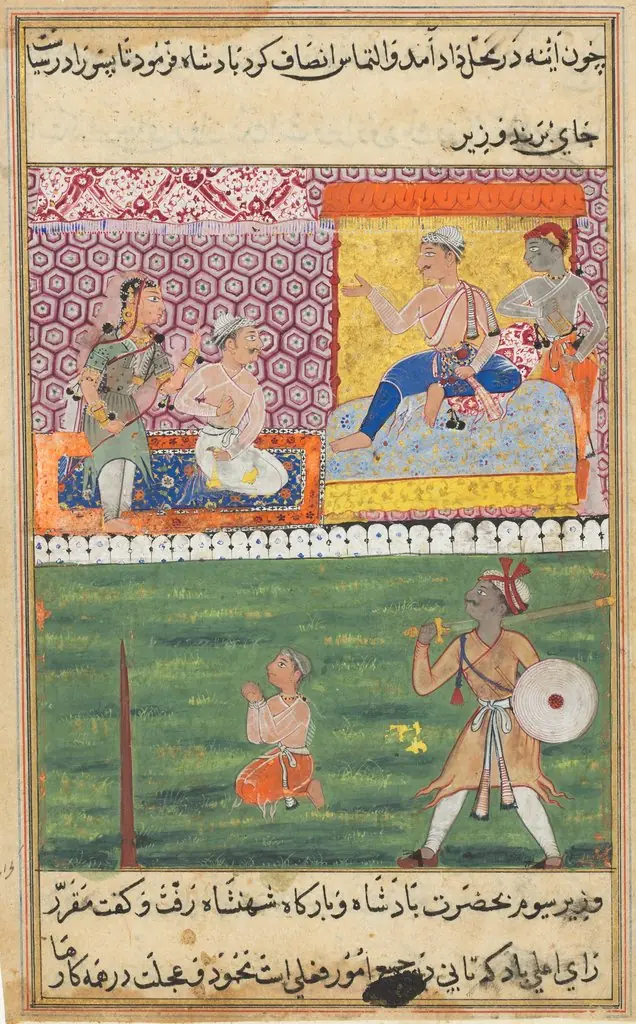 The handmaiden again appeals for justice and the prince is led to the place of execution for the third time, from a Tuti-nama (Tales of a Parrot): Eighth Night
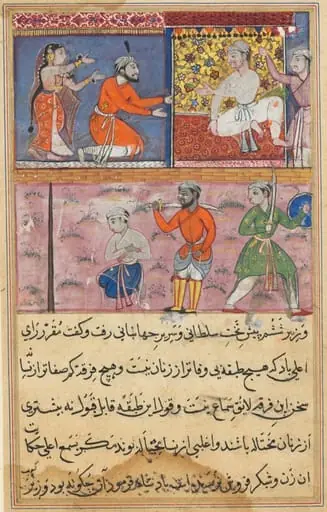 The prince sent back to the place of execution for the sixth time, from a Tuti-nama (Tales of a Parrot): Eighth Night
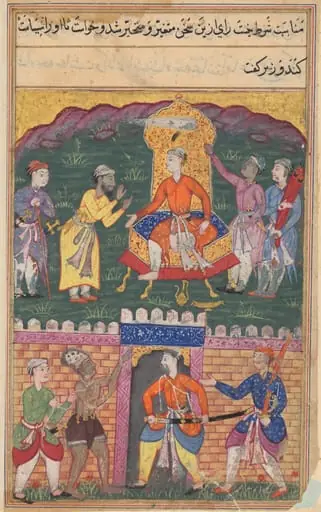 The vizier dissuades the king of Bahilistan from executing the dervish who asks for his daughter’s hand in marriage, from a Tuti-nama (Tales of a Parrot): Seventh Night
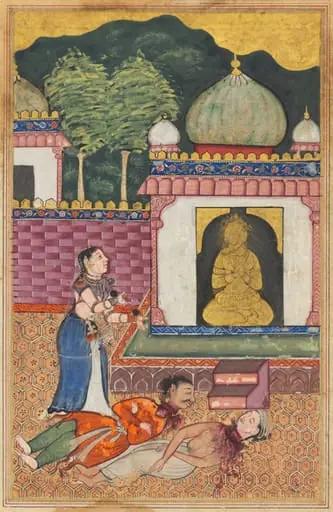 The princess discovers the dead bodies, with heads severed, of her husband and his Brahman friend, from a Tuti-nama (Tales of a Parrot): Thirty-fourth Night
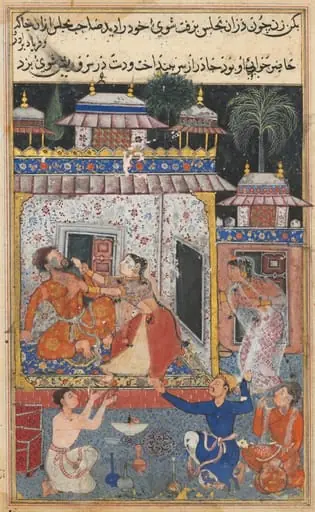 The deceitful wife assaults her erring husband, from a Tuti-nama (Tales of a Parrot): Eighth Night
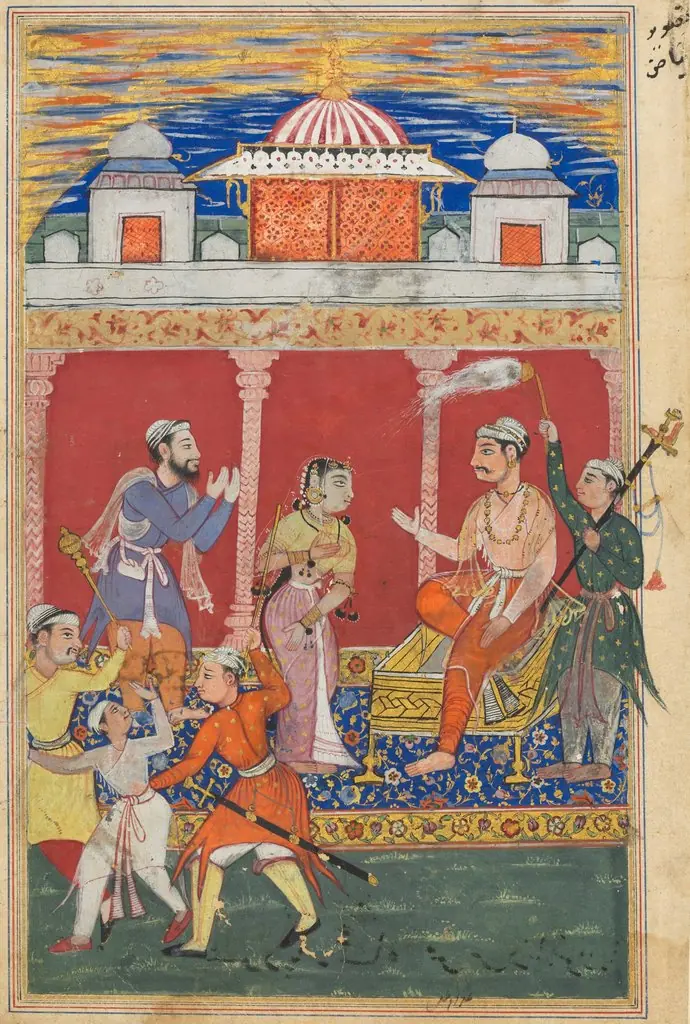 The prince’s ordeal continues, he is ordered away to be executed for the fifth time, from a Tuti-nama (Tales of a Parrot): Eighth Night
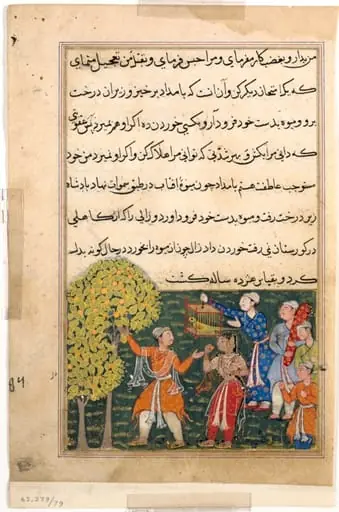 The king plucks fruit from the Tree of Life with his own hands and feeds it to a lady, from a Tuti-nama (Tales of a Parrot): Ninth Night
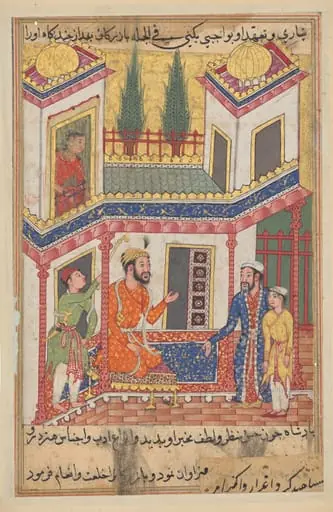 The merchant returns bringing a young slave who is really the son of the princess of Rum, now married to the king, from a Tuti-nama (Tales of a Parrot): Fiftieth Night
 Page from Tales of a Parrot (Tuti-nama): text page
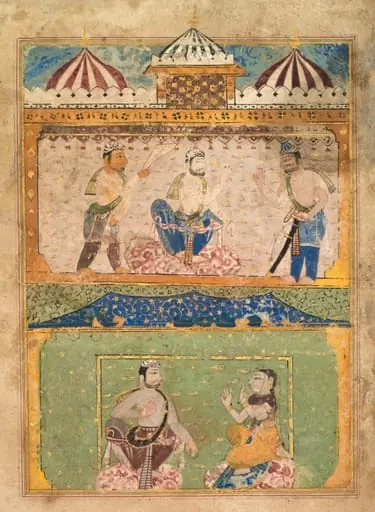 A traveler persuades Lorik to return home (top); Chanda objects (bottom), from a Chandayana (Story of Chanda)
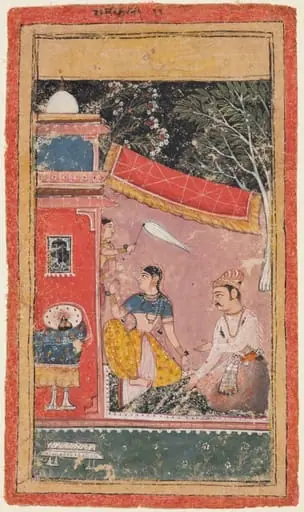 Lovers on a Terrace: Ramakali Ragini of Hindol, from a Bundi Ragamala
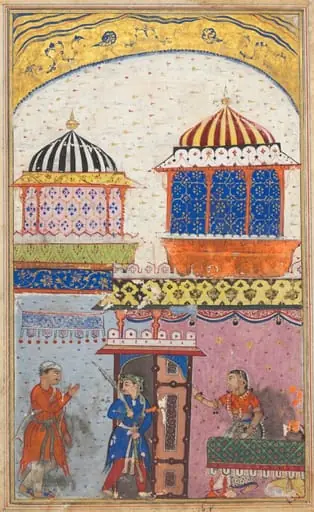 A woman asks her lover to leave her house, brandishing his sword and feigning rage in order to deceive her husband who has just arrived, from a Tuti-nama (Tales of a Parrot): Eighth Night
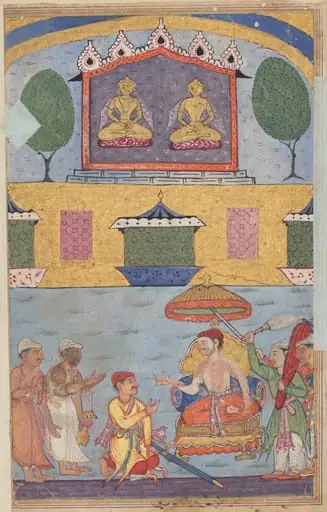 The goldsmith and the carpenter inform the king of a dream in which the golden images plan to desert the city for lack of worshippers, from a Tuti-nama (Tales of a Parrot): Third Night
 Untitled