Artwork
Tuti-Nama (Tales of a Parrot)
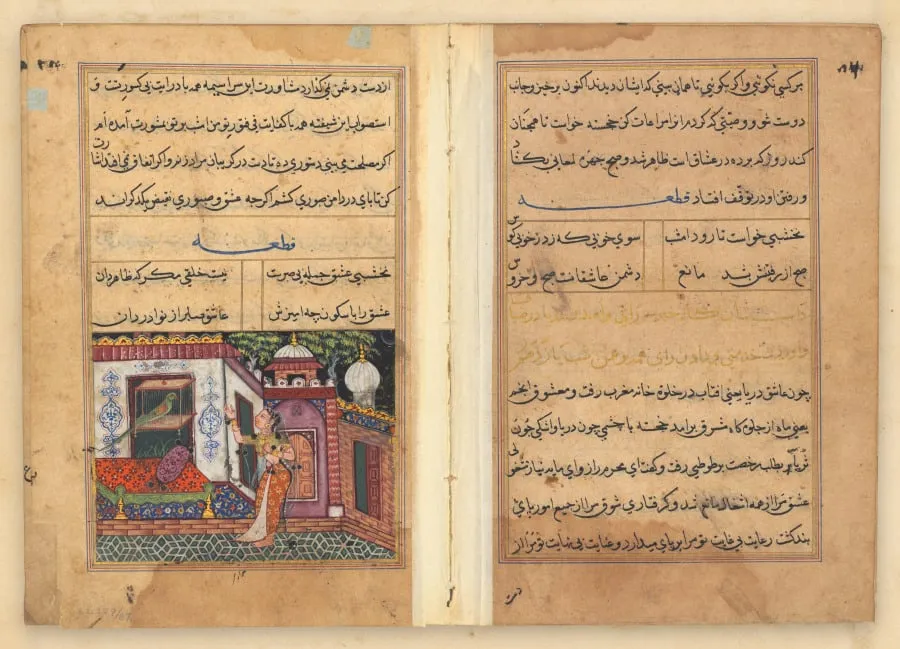
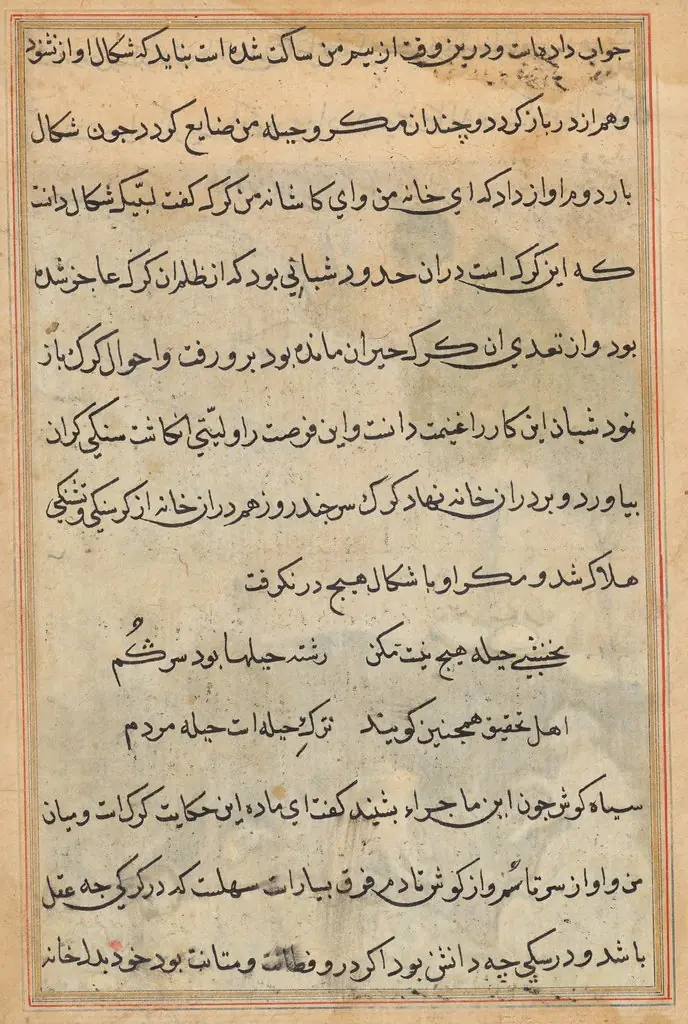
Tuti-Nama (Tales of a Parrot) is an unspecified painting by the Mughal Painting artist Unknown. It dates from 1560 and is held in the collection of the Cleveland Museum of Art. The Tuti-Nama, or Tales of a Parrot, is a manuscript of fifty-two moral stories composed in Persian during the early 1300s.
About this work
You see a bright, busy scene: a woman in a red dress leans toward a green parrot perched on a stand, while servants and animals fill the room behind her.
You see a bright, busy scene: a woman in a red dress leans toward a green parrot perched on a stand, while servants and animals fill the room behind her.
This painting comes from a book of stories told by a clever parrot to keep a woman from sneaking out. It was made for Emperor Akbar’s court, where artists mixed Persian and Indian styles for the first time. The colors are flat but bold, like a comic strip.
To see more work from this time, look up mughal india, court of akbar (reigned 1556–1605).
Overview
The Tuti-Nama, or Tales of a Parrot, is a manuscript of fifty-two moral stories composed in Persian during the early 1300s. Each tale is narrated by a talking parrot to dissuade a noblewoman from pursuing an illicit relationship. The Cleveland Museum of Art’s version was produced in the late 16th century under the patronage of Mughal Emperor Akbar, marking a pivotal moment in the development of imperial Mughal painting.
Subject & Meaning
The parrot’s stories serve as cautionary lessons, designed to delay the woman’s nocturnal escapades by engaging her attention with tales of loyalty, consequence, and wisdom. The narrative structure reflects a literary tradition where animal narrators convey ethical instruction. The scene depicts a moment of suspension—between temptation and restraint—where storytelling becomes a tool of moral intervention.
Technique & Style
The painting employs flat, saturated colors and clear outlines, creating a vivid, almost graphic quality. Figures are arranged in layered planes, with no attempt at illusionistic depth. Persian compositional elements merge with Indian decorative motifs, and the attention to textile patterns and architectural details reveals a synthesis of regional aesthetics under imperial patronage.
History & Provenance
Commissioned by Akbar’s court around 1560, this manuscript was part of a broader effort to establish a distinct Mughal visual language. Artists from Persia and India collaborated, blending traditions to produce works that reflected the emperor’s cosmopolitan vision. The Cleveland manuscript is one of the earliest surviving illustrated copies from this period, preserving the initial phase of Mughal artistic innovation.
Context
Akbar’s reign saw the consolidation of a multicultural court where Persian literary culture met Indian artistic practices. The Tuti-Nama was not merely entertainment but a vehicle for political and moral education, aligning with Akbar’s interest in syncretic philosophy. Its production signaled the emperor’s investment in manuscript culture as a medium of power and refinement.
Legacy
This manuscript laid foundational visual conventions for later Mughal painting, influencing portraiture, narrative composition, and color use in subsequent imperial works. Its hybrid style became a model for court artists across generations. Though the Tuti-Nama itself was not widely copied, its aesthetic principles endured in the broader evolution of South Asian miniature painting.
Artist & collection

 Domestic Scene
 Giacomo and Cardinal Marco, investing Andrea, Abbot of San Zeno, with his Benefice
 The Nymph of Fontainebleau
 Portrait of a Woman
 Madonna and Child with Saints in the Enclosed Garden
 Venus and Minerva
 Family Group of Four on Sofa
 Wall painting from Room H of the Villa of P. Fannius Synistor at Boscoreale
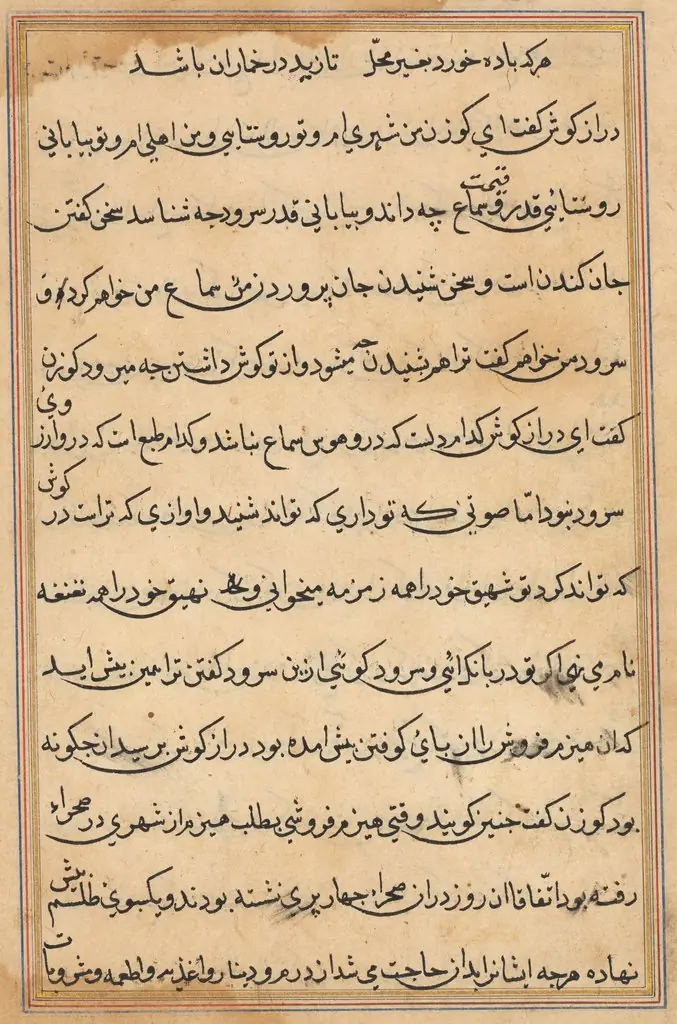 Page from Tales of a Parrot (Tuti-nama): text page
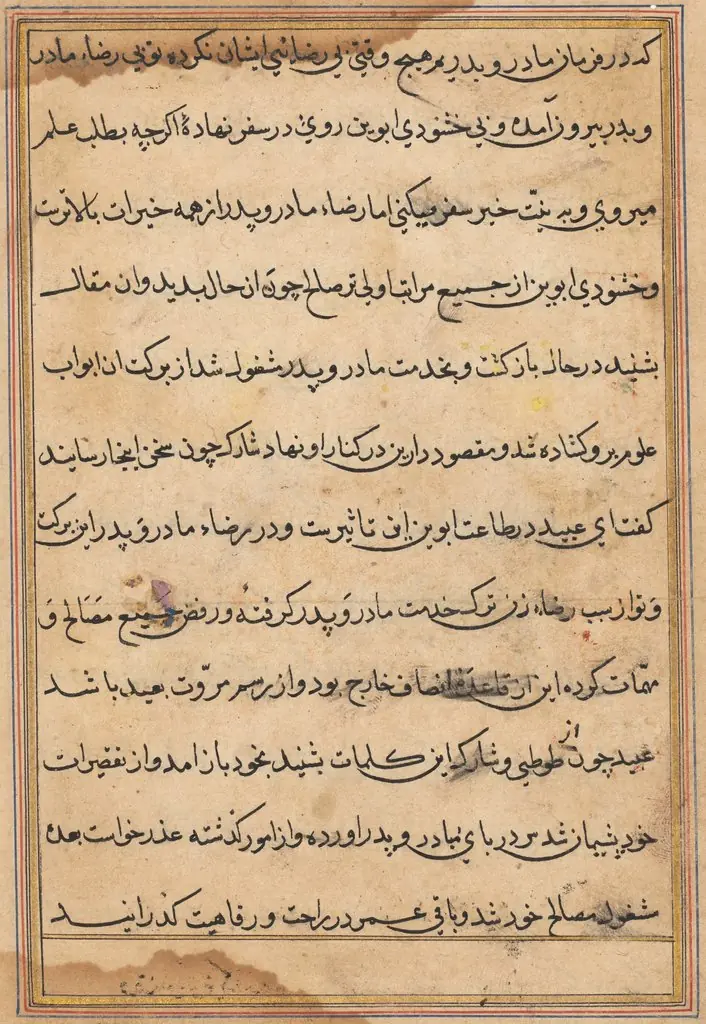 Page from Tales of a Parrot (Tuti-nama): text page
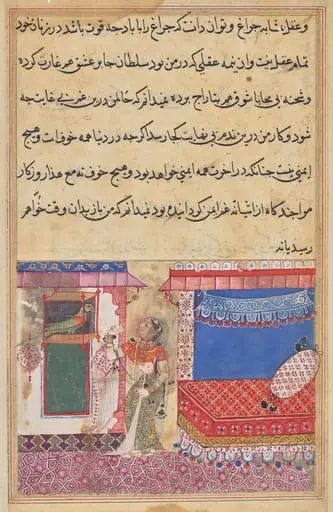 The Parrot Addresses Khujasta at the Beginning of the Eighteenth Night, from a Tuti-nama (Tales of a Parrot)
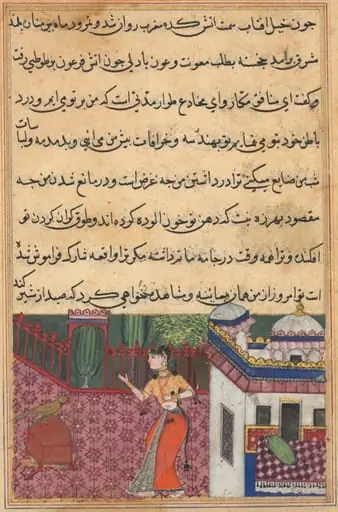 The parrot addresses Khujasta at the beginning of the thirty-third night, from a Tuti-nama (Tales of a Parrot)
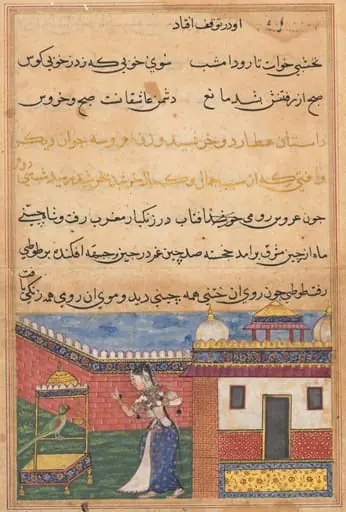 The parrot addresses Khujasta at the beginning of the thirty-second night, from a Tuti-nama (Tales of a Parrot)
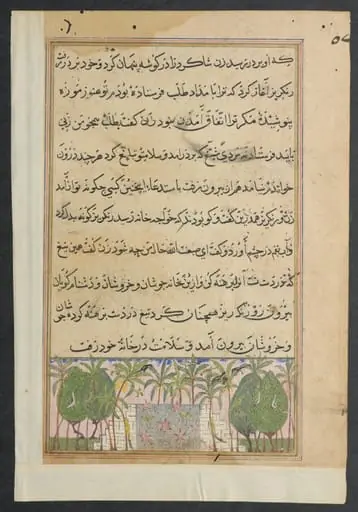 Landscape with a lotus pool, from a Tuti-nama (Tales of a Parrot): Eighth Night
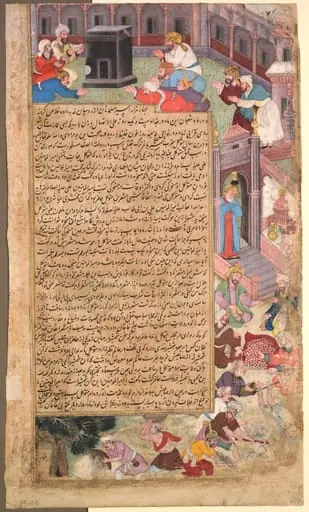 Page of disasters, from the Tarikh-i Alfi (History of a Thousand Years)
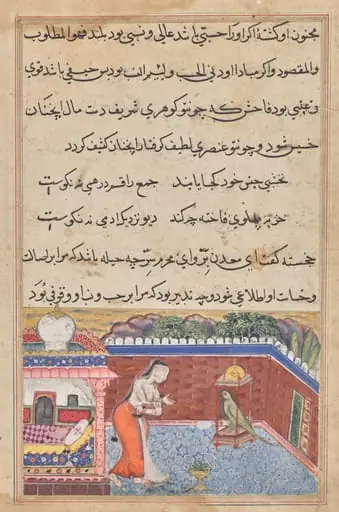 The parrot addresses Khujasta at the beginning of the thirty-first night, from a Tuti-nama (Tales of a Parrot)
 Page from Tales of a Parrot (Tuti-nama): text page
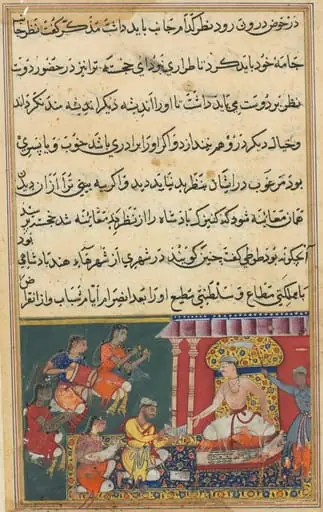 The astrologer predicts a calamity for the newly born prince in his thirteenth year, but one which he would be able to overcome, from a Tuti-nama (Tales of a Parrot): Eighth Night
 Page from Tales of a Parrot (Tuti-nama): text page
 Tuti-Nama (Tales of a Parrot)