Artwork
Untitled
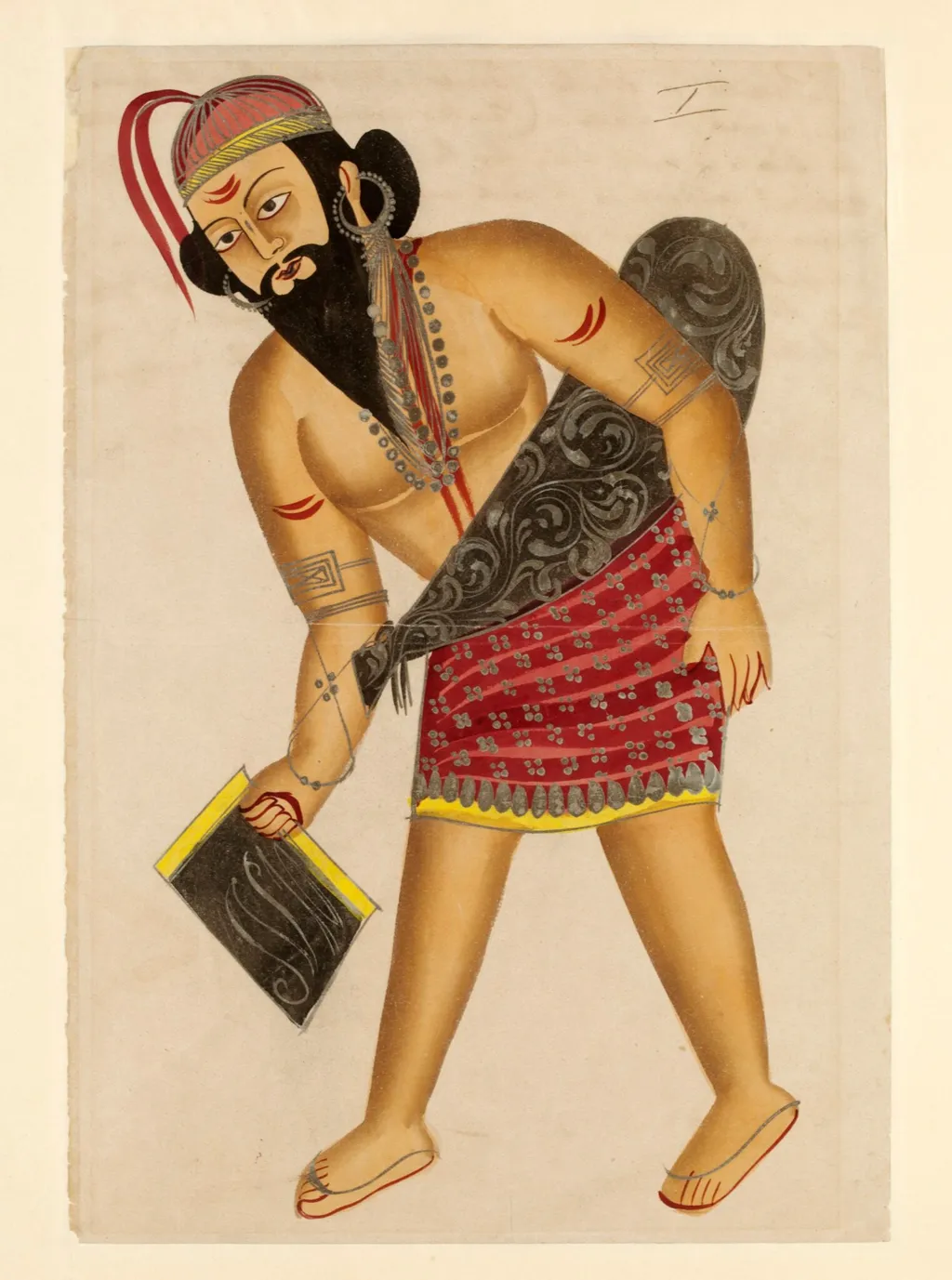
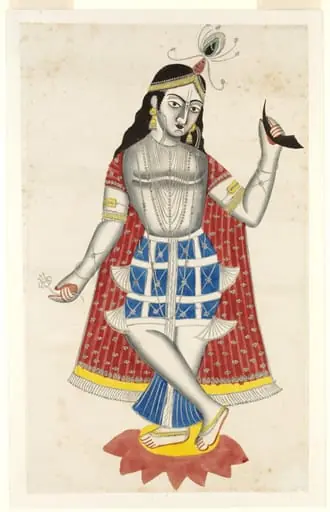
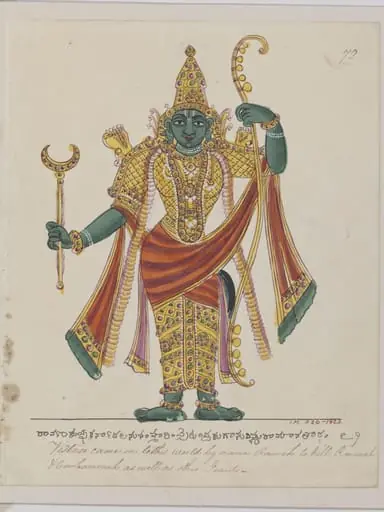
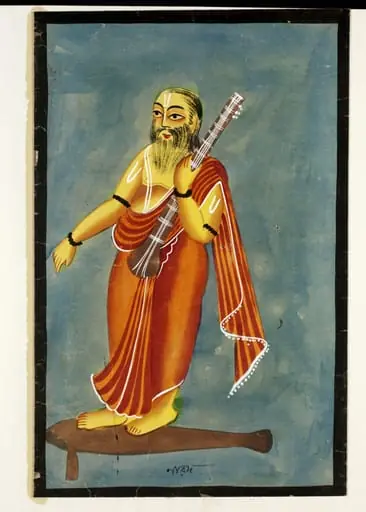
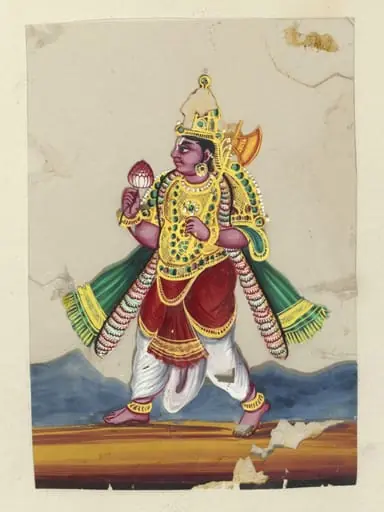
Untitled is a paint painting by the Romanticist artist Unknown. It dates from 1840 and is held in the collection of the Victoria and Albert Museum. Created in the early nineteenth century, this work presents a solitary figure rendered in opaque watercolour and tin alloy on paper.
About this work
Overview
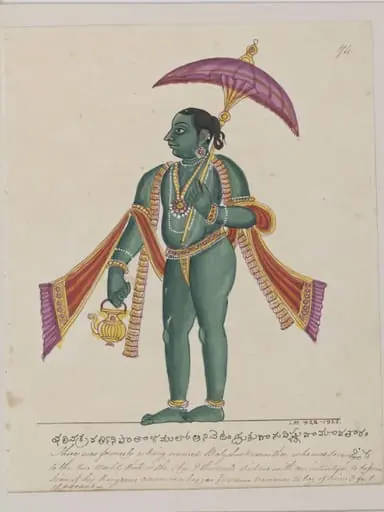
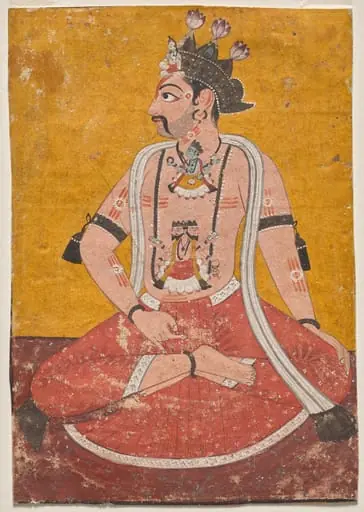
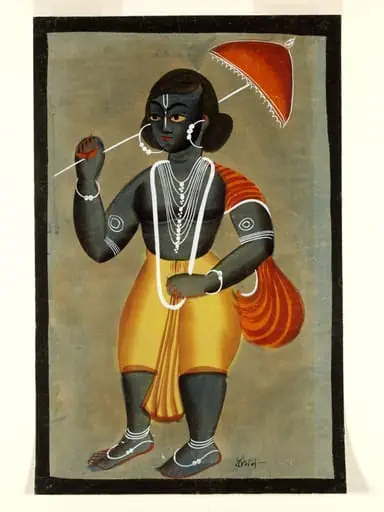
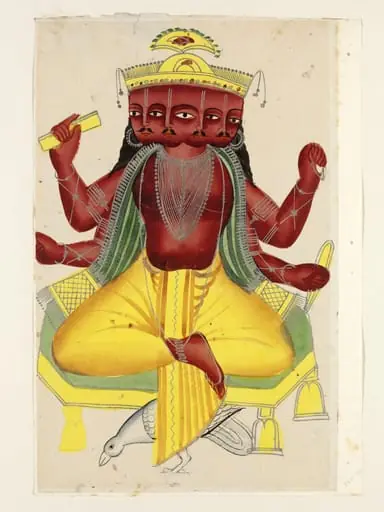
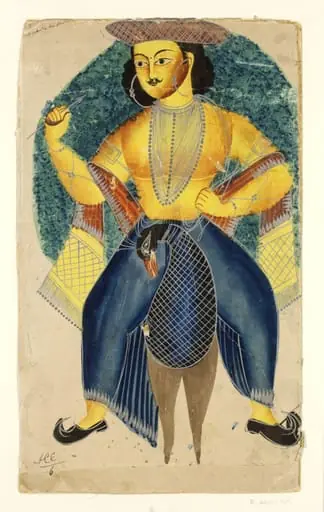
Created in the early nineteenth century, this work presents a solitary figure rendered in opaque watercolour and tin alloy on paper. The subject, a muscular water carrier, is shown in profile, bearing a patterned goatskin across his shoulder. The composition is dominated by bold outlines and vivid hues that isolate the figure against an unadorned backdrop, emphasizing its physical presence.
Subject & Meaning
The central figure is adorned with jewelry, a red headpiece, a patterned dhoti, and several amulets, while his skin bears Shaivite symbols. These attributes suggest a ritual role, possibly a priest, rather than a mere laborer. The presence of a small black object in his hand and the tattoo‑like markings on his arm add layers of personal or symbolic significance that invite further interpretation.
Technique & Style
The exaggerated musculature and dramatic posture reflect the tradition’s preference for narrative clarity over naturalistic detail.
The painting employs opaque watercolour combined with tin alloy, a medium characteristic of the Kalighat school. Its visual language relies on strong contour lines, flat areas of saturated colour, and simplified anatomical forms, producing a stylised yet forceful representation. The exaggerated musculature and dramatic posture reflect the tradition’s preference for narrative clarity over naturalistic detail.
History & Provenance
While traditionally dated to 1840, some scholars argue for a later creation in the 1870s, linking the image to the Tarakeshwar murder scandal that involved a temple priest in Calcutta. The work’s provenance remains unclear, but its association with the Kalighat genre situates it within a vibrant commercial art market that catered to urban patrons of the period.
Context
Kalighat paintings emerged from the bustling shrine precincts along the Hooghly River, where itinerant artists produced affordable prints for a diverse audience. This piece exemplifies the movement’s blend of folk motifs and contemporary social commentary, reflecting both religious iconography and the everyday lives of city dwellers in nineteenth‑century Bengal.
Artist & collection

 Domestic Scene
 Giacomo and Cardinal Marco, investing Andrea, Abbot of San Zeno, with his Benefice
 The Nymph of Fontainebleau
 Portrait of a Woman
 Madonna and Child with Saints in the Enclosed Garden
 Venus and Minerva
 Family Group of Four on Sofa
 Wall painting from Room H of the Villa of P. Fannius Synistor at Boscoreale