Artwork
東海道五十三次之内 池鯉鮒 首夏馬市|Chiryu, Shuka Uma Ichi
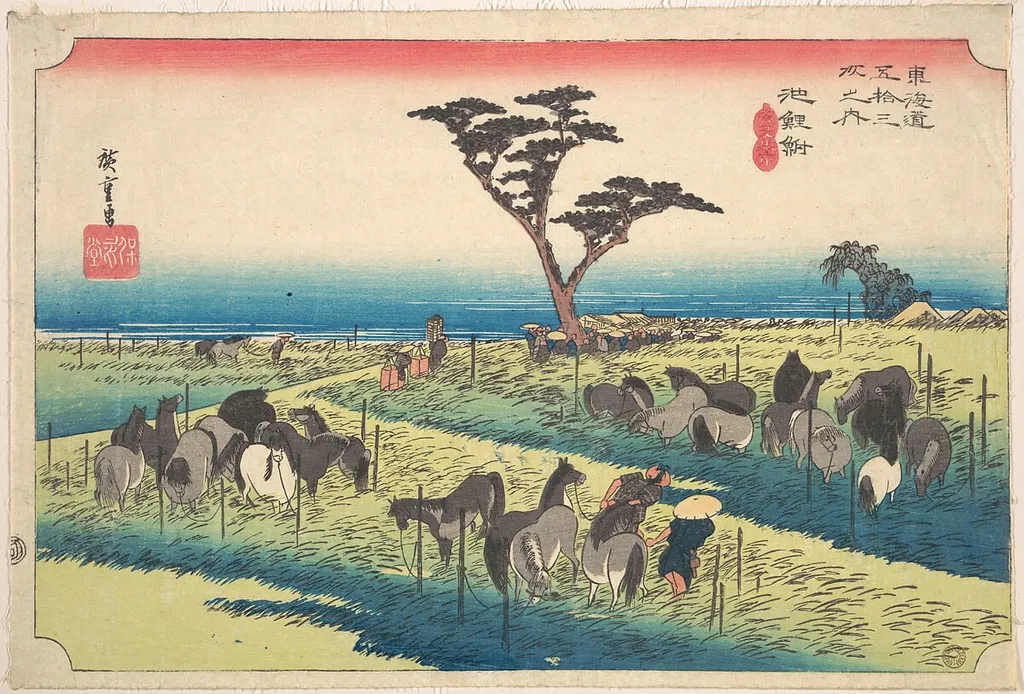
東海道五十三次之内 池鯉鮒 首夏馬市|Chiryu, Shuka Uma Ichi is an ink print by the Romanticist artist Utagawa Hiroshige. It dates from 1834 and is held in the collection of the Metropolitan Museum of Art.
About this work
Overview
Created around 1834 by Utagawa Hiroshige, this woodblock print is part of the series *The Fifty-three Stations of the Tōkaidō*. It depicts Chiryū, a roadside post station along the major travel route connecting Edo and Kyoto. Unlike many ukiyo-e works focused on urban life, Hiroshige turned his attention to quiet rural moments, capturing the daily rhythms of travelers and locals along the road.
Subject & Meaning
The scene portrays a summer horse market at Chiryū, where livestock is gathered in a grassy field enclosed by a low stick fence.
The scene portrays a summer horse market at Chiryū, where livestock is gathered in a grassy field enclosed by a low stick fence. Two riders converse near the foreground, while others move at a distance, suggesting commerce without spectacle. The calm atmosphere and restrained activity reflect the quiet functionality of the station, emphasizing the practical role of such stops in Edo-period travel rather than festive spectacle.
Technique & Style
Hiroshige employed fine woodblock carving and subtle color gradations to render the landscape with quiet precision. The sky is washed in soft blue with a warm horizon, while the horses are rendered in muted earth tones. The composition uses horizontal lines and open space to evoke stillness, and the lone twisted tree anchors the scene without dominating it—hallmarks of Hiroshige’s atmospheric, landscape-driven approach.
History & Provenance
The print was produced during Hiroshige’s most active period in the early 1830s, when the *Tōkaidō* series gained widespread popularity. It was likely printed in Edo for a broad audience of travelers and collectors. Original impressions survive in major museum collections, including the Museum of Fine Arts, Boston, and the British Museum, attesting to its early circulation and enduring preservation.
Context
The Tōkaidō was the most important road in Edo-period Japan, used by daimyō, merchants, and pilgrims. Post stations like Chiryū provided rest, food, and services—including horse trading. Hiroshige’s focus on such utilitarian scenes reflected a broader shift in ukiyo-e toward landscape and everyday life, aligning with growing public interest in travel and regional identity during a time of relative peace.
Legacy
Hiroshige’s *Tōkaidō* series redefined Japanese printmaking by prioritizing mood and natural detail over dramatic narrative. This print, like others in the series, influenced later Western artists such as Van Gogh and Monet, who admired its compositional restraint and sensitivity to light. Its quiet realism helped establish landscape as a legitimate subject in Japanese art beyond decorative or theatrical themes.
Artist & collection
Artist
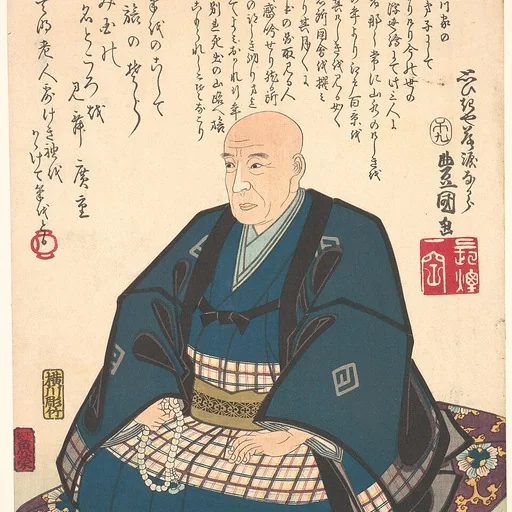
Utagawa Hiroshige (歌川 広重) or Andō Hiroshige (安藤 広重), born Andō Tokutarō (安藤 徳太郎; 1797 – 12 October 1858), was a Japanese ukiyo-e artist, considered the last great master of that tradition.