Artwork
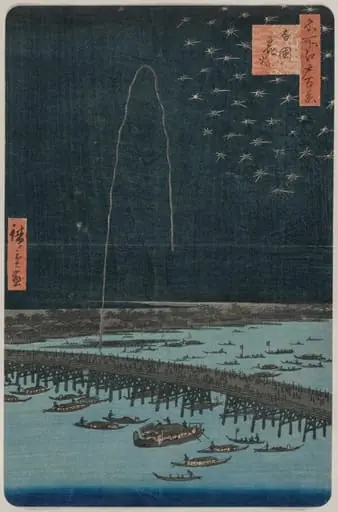
名所江戶百景 両国花火|Fireworks at Ryōgoku Bridge, from the series One Hundred Famous Views of Edo
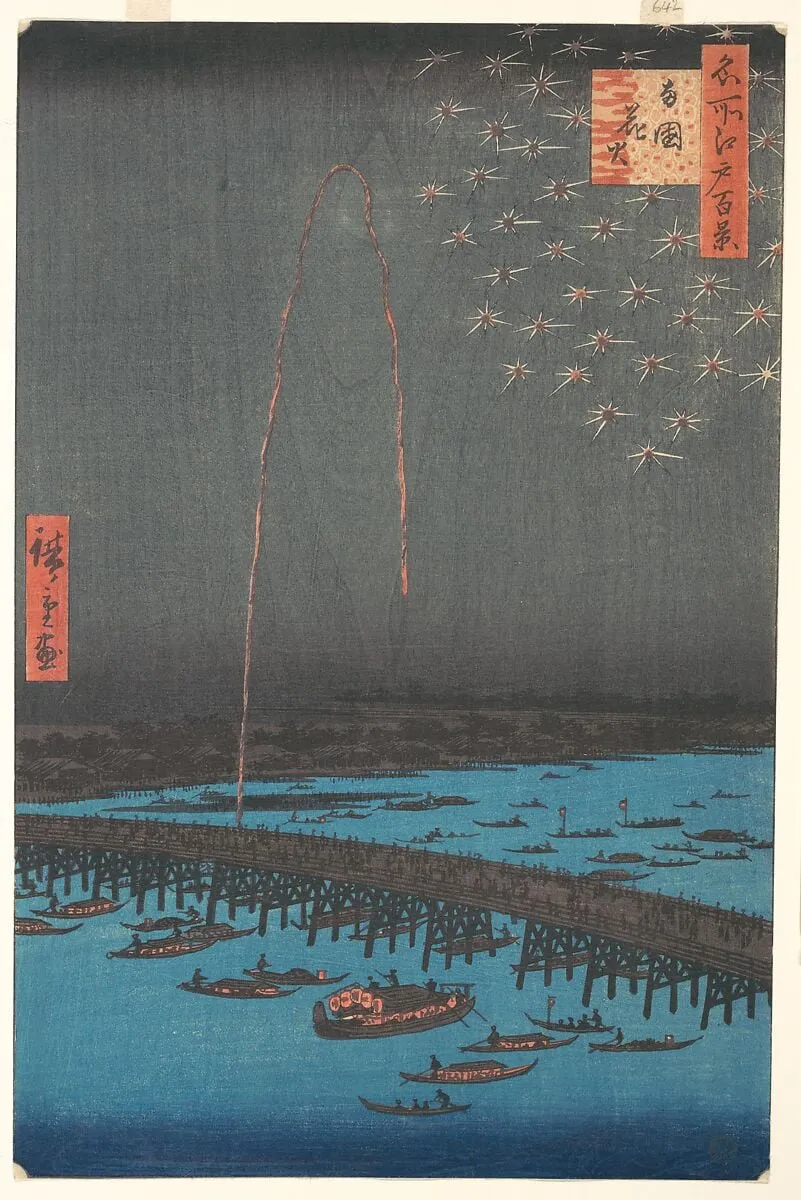
名所江戶百景 両国花火|Fireworks at Ryōgoku Bridge, from the series One Hundred Famous Views of Edo is an ink print by the Impressionist artist Utagawa Hiroshige. It dates from 1858 and is held in the collection of the Metropolitan Museum of Art.
About this work
Overview
Created in 1858, this woodblock print by Utagawa Hiroshige is part of his late series One Hundred Famous Views of Edo, which shifted focus from traditional ukiyo-e subjects like actors and courtesans to everyday urban and natural landscapes. Rendered in ink and color on paper, the vertical composition captures a nocturnal scene along the Sumida River, emphasizing atmosphere and seasonal celebration over narrative drama.
Subject & Meaning
The scene centers on the annual fireworks display at Ryōgoku Bridge, a popular summer event in Edo. Spectators gather in boats and along the riverbank, awaiting the burst of light overhead. The suspended firework, glowing red against the dark sky, serves as both visual anchor and symbolic moment of fleeting beauty, reflecting the Edo-period appreciation for transient natural phenomena.
Technique & Style
The firework’s radiance is suggested through layered pigment, not bright hues, enhancing the quiet tension before the explosion.
Hiroshige employs subtle gradations of color and delicate line work to convey nightfall: the river reflects lantern light in cool blues, while the sky is rendered in deep indigo with faint star punctuations. The firework’s radiance is suggested through layered pigment, not bright hues, enhancing the quiet tension before the explosion. The composition’s verticality and cropped perspective are characteristic of his mature style.
History & Provenance
Produced during the final years of the Edo period, the print was issued as part of a commercially successful series that helped define late ukiyo-e aesthetics. Hiroshige, born Andō Tokutarō in 1797, was among the last major practitioners of the tradition before Western influence and modernization transformed Japanese art. The print entered The Metropolitan Museum of Art’s collection as part of its broader acquisition of Edo-period prints.
Context
Fireworks displays along the Sumida River were public spectacles tied to religious festivals and summer cooling rituals. The Ryōgoku area, known for its bridges and entertainment districts, attracted crowds from all social classes. Hiroshige’s depiction aligns with a broader trend in his work: documenting ordinary urban life with poetic restraint, rather than idealized or theatrical scenes.
Legacy
This print exemplifies Hiroshige’s influence on later Western artists, particularly Impressionists and Post-Impressionists, who admired his use of light, asymmetry, and everyday subject matter. Though ukiyo-e declined in Japan by the late 19th century, prints like this one preserved a vivid record of Edo’s cultural rhythms, ensuring the series’ enduring presence in global art collections.
Artist & collection
Artist
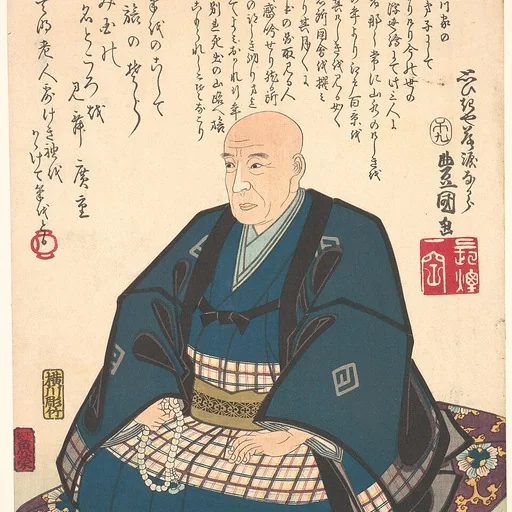
Utagawa Hiroshige (歌川 広重) or Andō Hiroshige (安藤 広重), born Andō Tokutarō (安藤 徳太郎; 1797 – 12 October 1858), was a Japanese ukiyo-e artist, considered the last great master of that tradition.

 Fireworks at Ryōgoku, from the series One Hundred Views of Famous Places in Edo
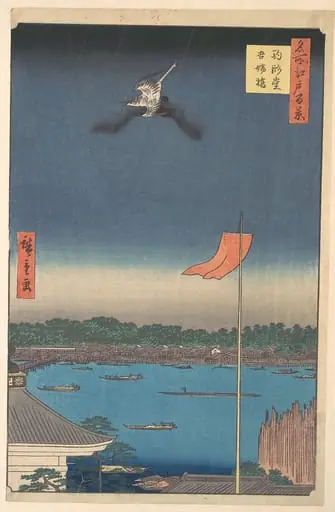 歌川広重画 「名所江戸百景 駒形堂吾嬬橋」|“Azuma Bridge from Komagatadō Temple,” from the series One Hundred Famous Views of Edo (Meisho Edo hyakkei, Komagatadō Azumabashi)
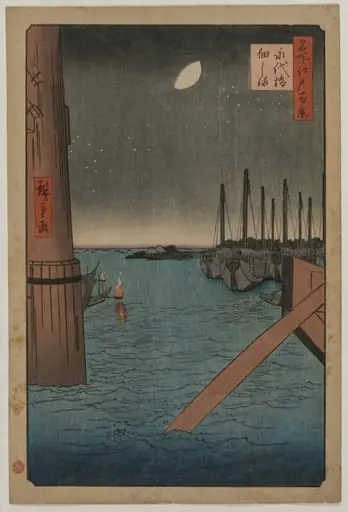 Tsukudajima from Eitai Bridge, from the series One Hundred Views of Famous Places in Edo
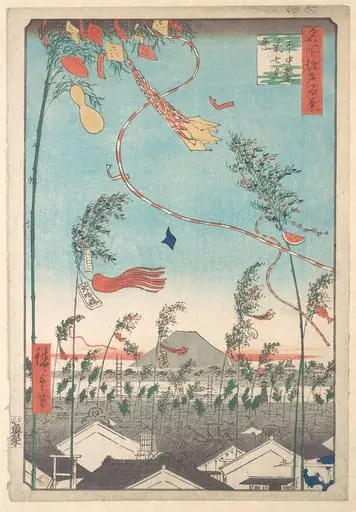 名所江戸百景 市中繁栄七夕祭|The Tanabata Festival, from the series One Hundred Famous Views of Edo
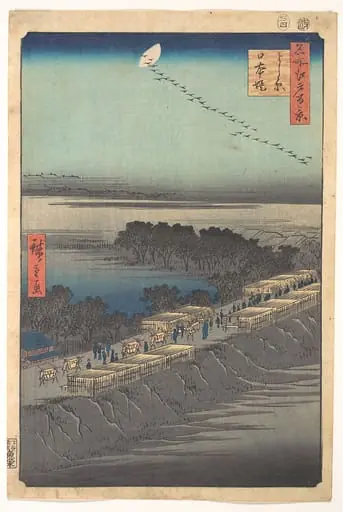 「名所江戸百景 よし原 日本堤」|“Nihon Embankment at Yoshiwara,” from the series One Hundred Famous Views of Edo (Meisho Edo hyakkei, Yoshiwara, Nihonzutsumi)
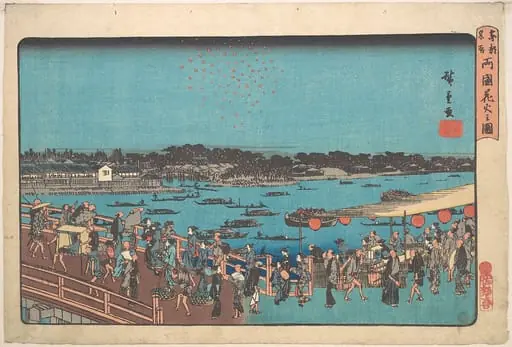 東都名所 両国花火の図|Ryogoku Hanabi no Zu
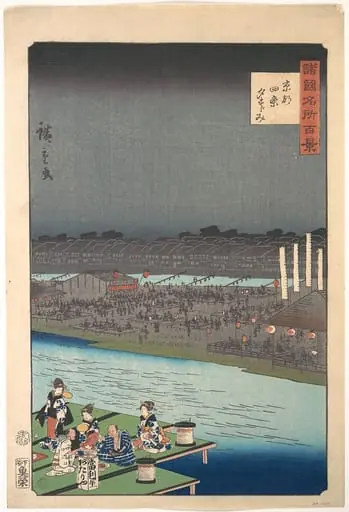 二代歌川広重画 「諸国名所百景 京都四条夕すずみ」|Enjoying the Evening Cool at Shijō in Kyoto, from the series One Hundred Famous Views in the Various Provinces (Shokoku meisho hyakkei)
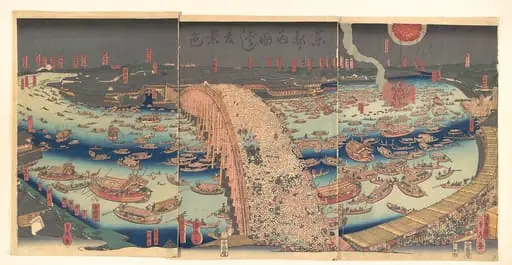 Tōtō Ryōgokubashi natsu keshiki|Panoramic View of Ryōgoku Bridge in the Summer
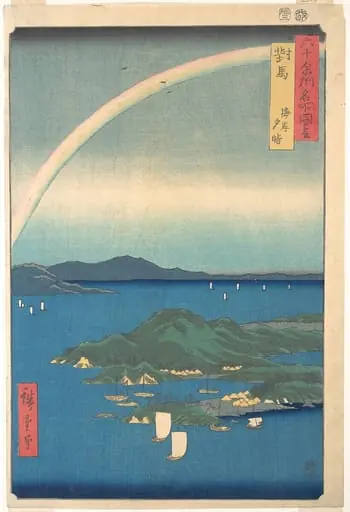 六十余州名所図会 対馬 海岸 夕晴|Evening Glow, Tsushima Province, from the series Views of Famous Places in the Sixty-Odd Provinces
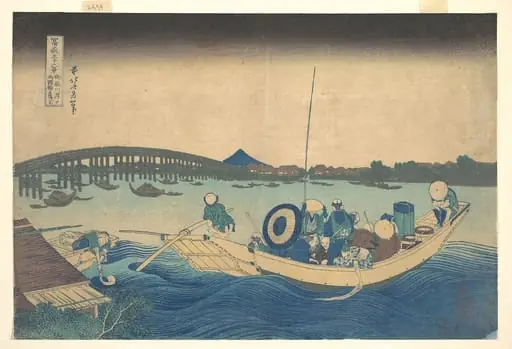 冨嶽三十六景 御厩川岸より両国橋夕陽見|Viewing the Sunset over Ryōgoku Bridge from the Onmayagashi Embankment (Onmayagashi yori Ryōgokubashi sekiyō o miru), from the series Thirty-six Views of Mount Fuji (Fugaku sanjūrokkei)
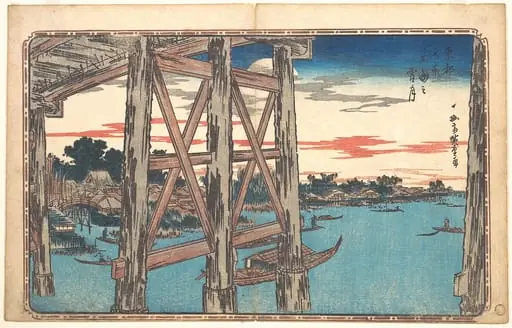 Ryogoku no yoizuki|東都名所 両国之宵月|Twilight Moon at Ryōgoku Bridge