Artwork
Fukagawa Hachiman Keidai (Niken Jyaya)|江戸高名会亭尽 深川八幡境内 二軒茶屋|Tea-house inside Hachiman Shrine
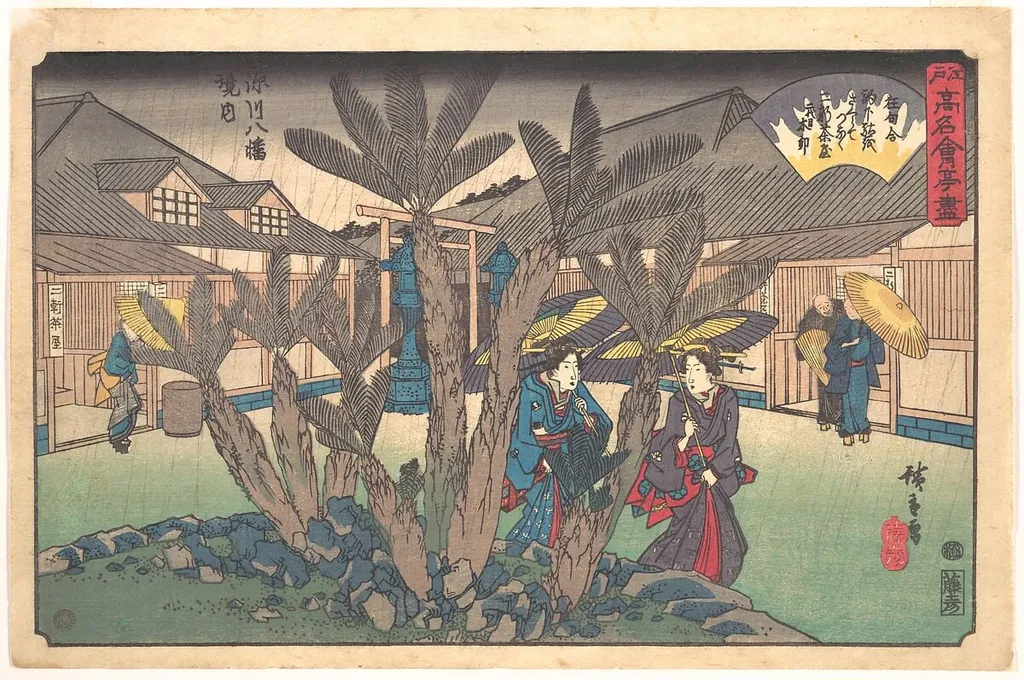
Fukagawa Hachiman Keidai (Niken Jyaya)|江戸高名会亭尽 深川八幡境内 二軒茶屋|Tea-house inside Hachiman Shrine is an ink print by the Romanticist artist Utagawa Hiroshige. It dates from 1838 and is held in the collection of the Metropolitan Museum of Art.
About this work
Overview
Fukagawa Hachiman Keidai (Niken Jyaya) is a woodblock print created by Utagawa Hiroshige around 1838. It depicts a rainy scene at a tea house within the grounds of Hachiman Shrine in Fukagawa.
Subject & Meaning
The print shows two women in traditional clothing standing under a palm tree with umbrellas, in front of a tiled-roof building. The scene captures a moment of daily life in Edo's surroundings, emphasizing the atmosphere of the location.
Technique & Style
The image is rendered in muted colors with bold lines and flat colors, creating a sense of depth and texture. The rain is conveyed through movement and energy, characteristic of Hiroshige's atmospheric landscapes.
Context
This work is part of Hiroshige's broader exploration of Edo's surroundings, focusing on place and daily life rather than urban entertainment.
Artist & collection
Artist
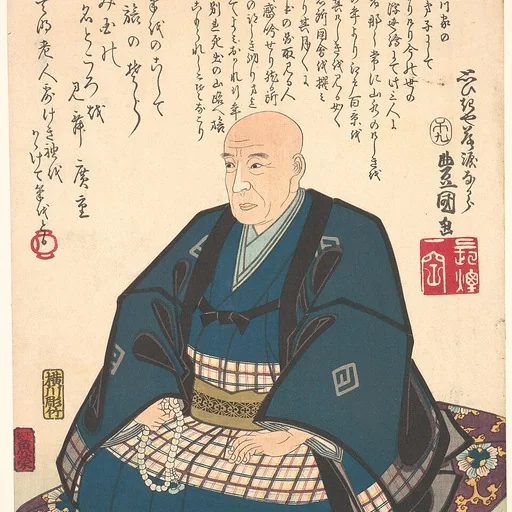
Utagawa Hiroshige (歌川 広重) or Andō Hiroshige (安藤 広重), born Andō Tokutarō (安藤 徳太郎; 1797 – 12 October 1858), was a Japanese ukiyo-e artist, considered the last great master of that tradition.

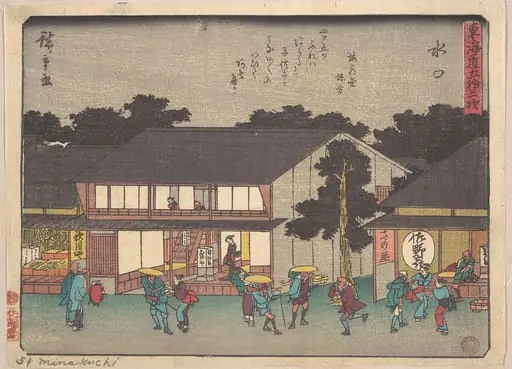 東海道五十三次 水口|Mizukuchi
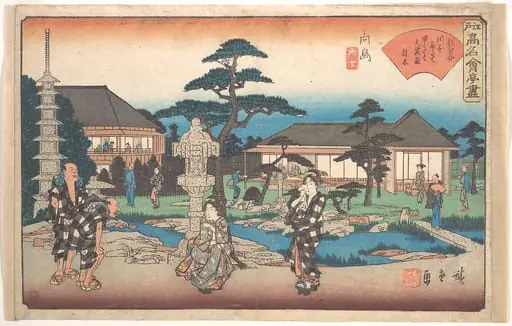 Mukōjima (Daikokuya)|江戸高名会亭尽 向島 大七|The Daikokuya at Mukojima
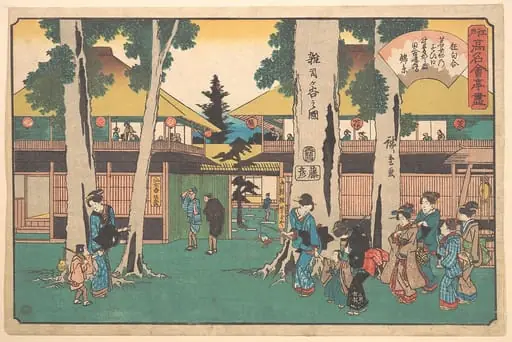 江戸高名会亭尽 雑司ヶ谷の図 茗荷屋|Zoshigaya no Zu (Myoga-ya)
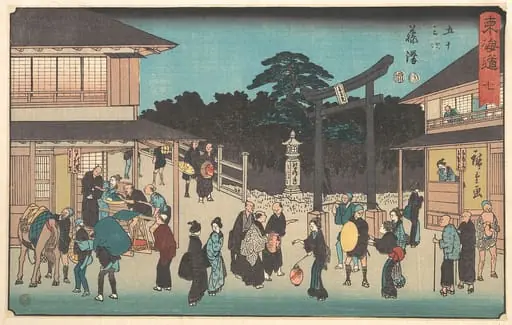 東海道五十三次 藤澤|Fujisawa
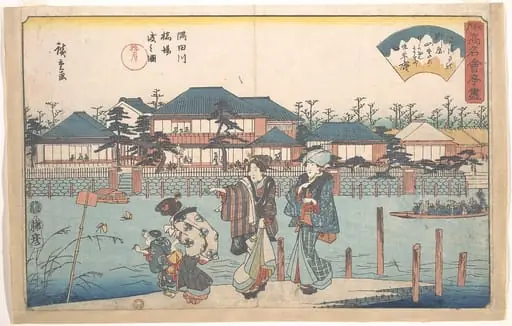 江戸高名会亭尽 隅田川橋場渡之図 柳屋|Sumidagawa Hashiba Watashi Zu (Yanagiya)
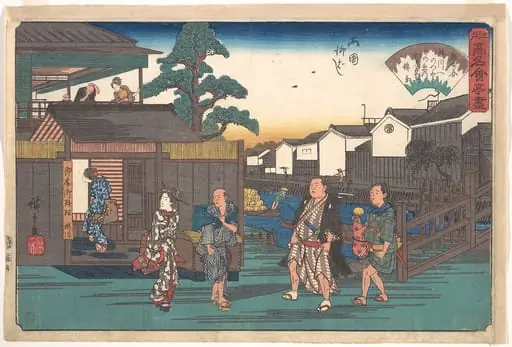 Ryogoku Yanagibashi (Umegawa)|江戸高名会亭尽 柳ばし|The Umegawa at Ryogoku Yanagibashi
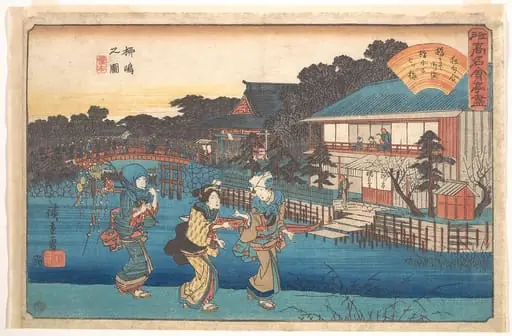 江戸高名会亭尽 柳島の図 橋本|Yanagishima no Zu
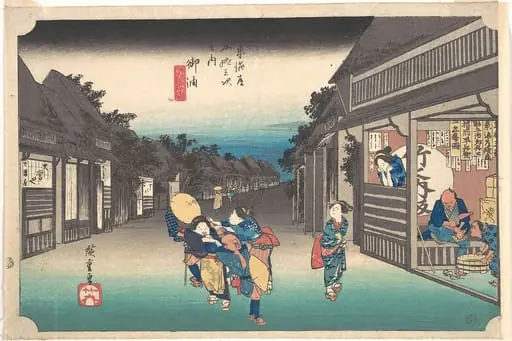 東海道五十三次之内 御油 旅人留女|Goyu, Tabibito Ryujo
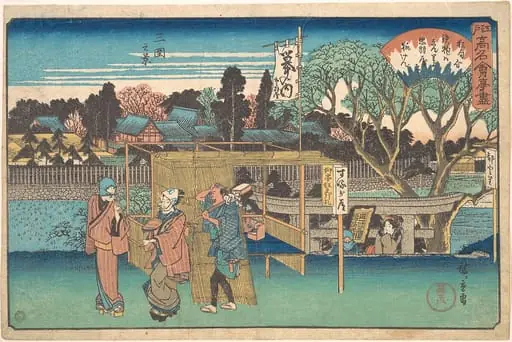 江戸高名会亭尽 三囲之景 出羽屋|Mimeguri no Kei (Toyoha-ya)
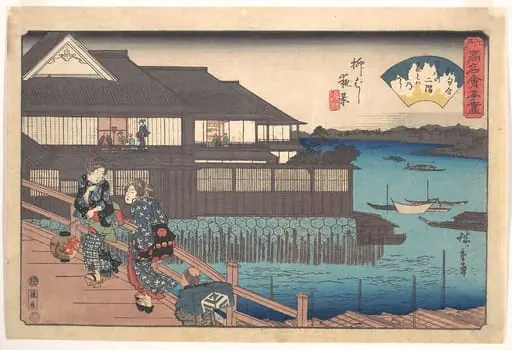 江戸高名会亭尽 柳ばし夜景 万八|The Manpachi at Evening in Yanagibashi