Artwork
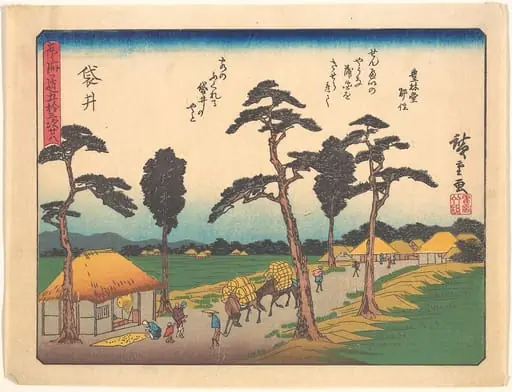
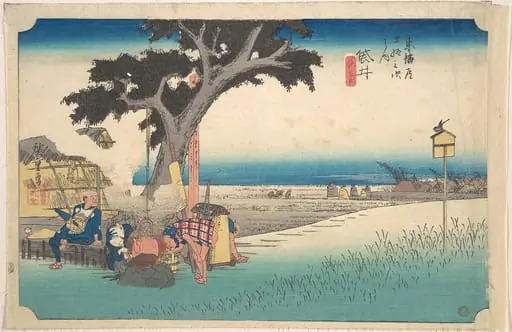
東海道五十三次 袋井|Fukuroi
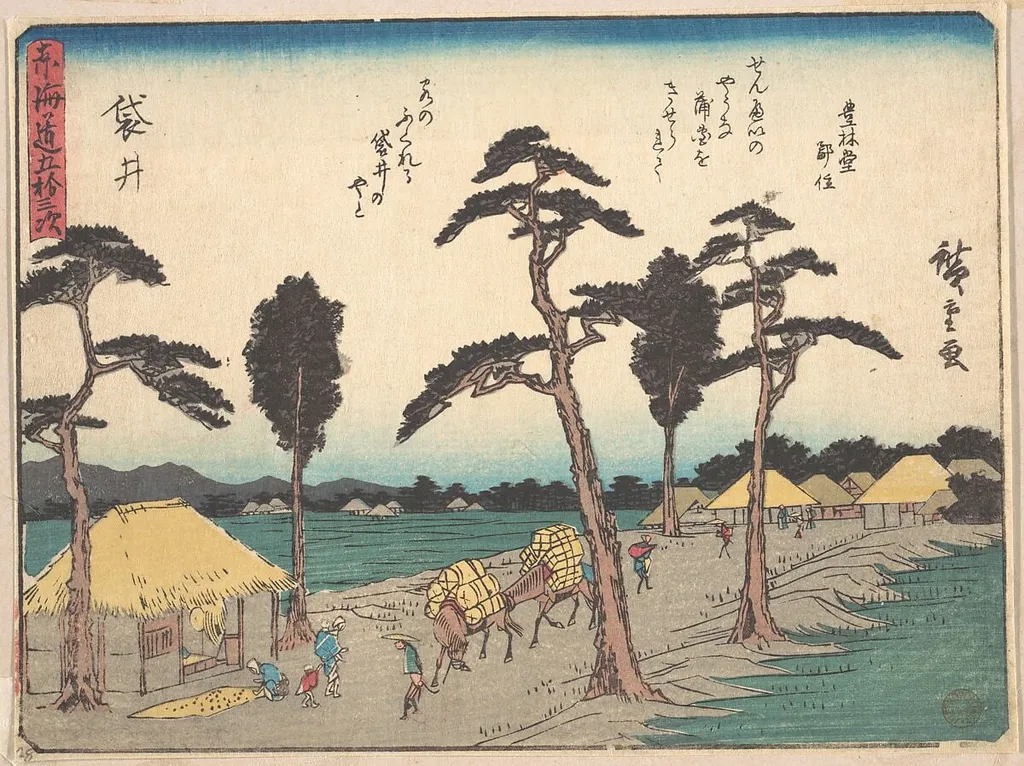
東海道五十三次 袋井|Fukuroi is an ink print by the Romanticist artist Utagawa Hiroshige. It dates from 1838 and is held in the collection of the Metropolitan Museum of Art.
About this work
Overview
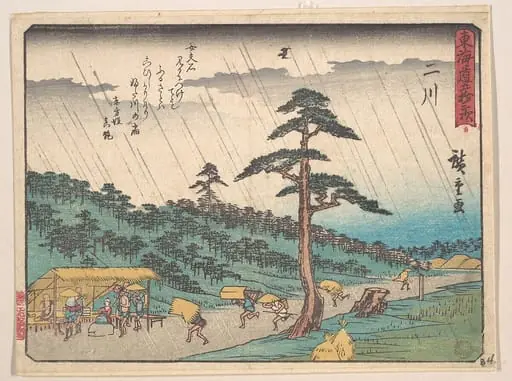
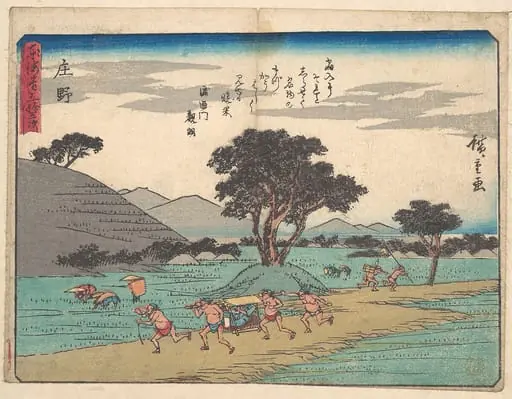
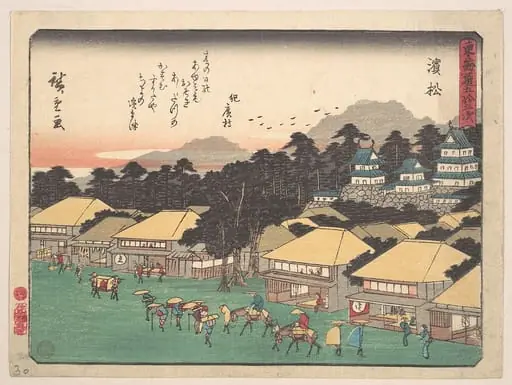
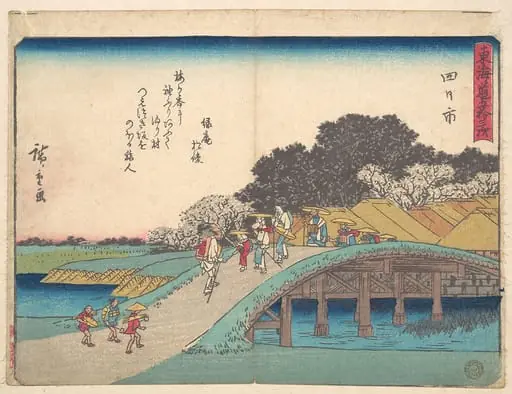
Created around 1838 by Utagawa Hiroshige, this woodblock print is one of fifty-three scenes in the series *The Fifty-three Stations of the Tōkaidō*.
Created around 1838 by Utagawa Hiroshige, this woodblock print is one of fifty-three scenes in the series *The Fifty-three Stations of the Tōkaidō*. It depicts a quiet stretch of the coastal road connecting Edo and Kyoto, emphasizing natural quietude over urban bustle. Rendered in ink and color on paper, the work reflects Hiroshige’s shift toward landscape as a primary subject, distinguishing his approach within the ukiyo-e tradition.
Subject & Meaning
The scene captures a modest riverside village at Fukuroi, where thatched-roof huts cluster near the water’s edge. A dirt path winds past tall, upright pines, carrying a pair of oxen hauling a laden cart and a few travelers. The scale of figures and animals is deliberately reduced, suggesting the vastness of nature and the modest place of human movement within it. The calm water and open sky evoke stillness, reinforcing the theme of transit as a contemplative experience.
Technique & Style
Hiroshige employed flat areas of color and simplified forms to convey depth without perspective. The trees are rendered with strong, vertical lines, their structure emphasized over detail. Shadows are suggested through sparse cross-hatching, particularly near the base of the pines and under the cart. The palette is restrained, with soft blues and earth tones, enhancing the tranquil mood. The composition balances horizontal bands of land, water, and sky with vertical elements to guide the eye.
History & Provenance
The print was produced during the peak of Hiroshige’s career, shortly after the first edition of the *Tōkaidō* series was published by Hoeidō. It was widely distributed as a popular print among travelers and urban residents fascinated by distant places. Surviving impressions are held in major collections, including the Museum of Fine Arts, Boston, and the British Museum, attesting to its enduring circulation and preservation.
Context
During the Edo period, the Tōkaidō was the most traveled road in Japan, used by samurai, merchants, and pilgrims. While earlier ukiyo-e focused on courtesans and actors, Hiroshige’s series redirected attention to the rhythms of travel and seasonal change. This print reflects a growing public interest in landscape and regional identity, supported by improved printing technology and rising literacy among the merchant class.
Legacy
Hiroshige’s *Tōkaidō* series redefined Japanese printmaking by elevating landscape to a central theme. Its influence extended beyond Japan, inspiring Western artists such as Monet and Van Gogh. The quiet, observational tone of *Fukuroi* exemplifies a shift toward poetic realism in ukiyo-e, setting a precedent for later generations of printmakers who sought to capture the subtleties of everyday travel and nature.
Artist & collection
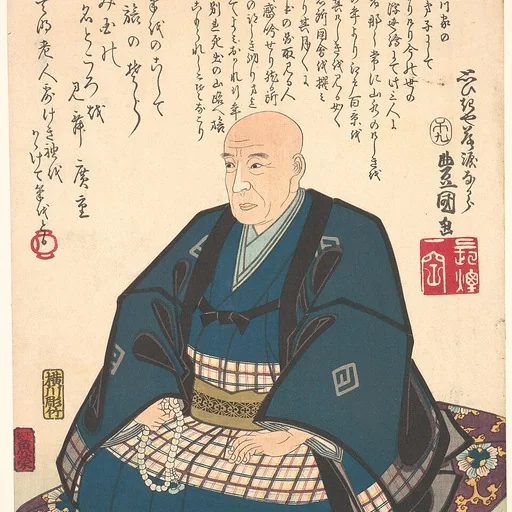
Artist
Utagawa Hiroshige (歌川 広重) or Andō Hiroshige (安藤 広重), born Andō Tokutarō (安藤 徳太郎; 1797 – 12 October 1858), was a Japanese ukiyo-e artist, considered the last great master of that tradition.