Artwork
東海道五十三次 庄野|Shōno, from the series The Fifty-three Stations of the Tōkaidō Road
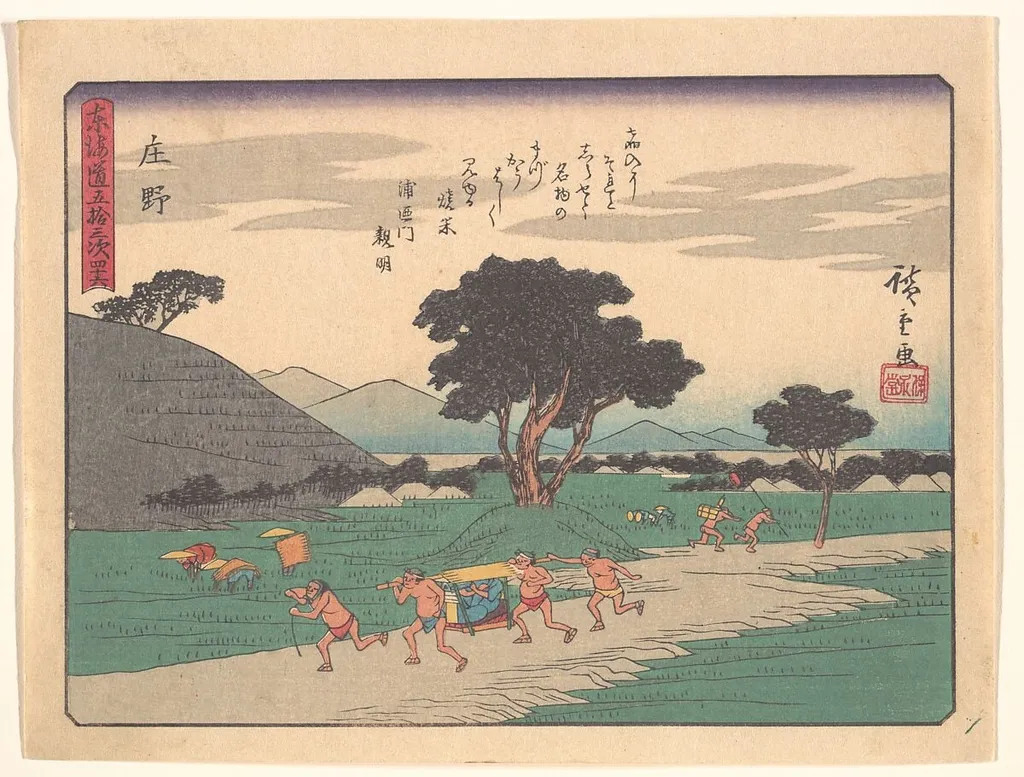
東海道五十三次 庄野|Shōno, from the series The Fifty-three Stations of the Tōkaidō Road is an ink print by Utagawa Hiroshige. It is held in the collection of the Metropolitan Museum of Art.
About this work
If you're interested in learning more about the artist behind this piece, look up Utagawa Hiroshige.
This woodblock print shows a group of men carrying bundles of straw on a road. They wear loincloths and are barefoot. The scene is set in a rural landscape with trees, hills, and a cloudy sky.
The men are running along the road, which is lined with trees and fields. In the background, there are hills and mountains. The sky is cloudy, with a few birds flying overhead.
The print is a beautiful example of Japanese art from the early 20th century. It showcases the artist's skill in capturing everyday life in a serene and peaceful setting. If you're interested in learning more about the artist behind this piece, look up Utagawa Hiroshige.
Overview
Utagawa Hiroshige’s woodblock print titled *Shōno* belongs to his series *The Fifty‑three Stations of the Tōkaidō Road*. Executed with ink and color on paper, the image presents a horizontal landscape that records a moment along the historic route linking Edo and Kyoto.
Subject & Meaning
The composition depicts a group of laborers, barefoot and clad in simple loincloths, hauling bundles of straw along a tree‑lined road. Their hurried movement against a backdrop of rolling hills, distant mountains and a cloud‑filled sky conveys the everyday toil of travelers and workers on the Tōkaidō.
Technique & Style
Hiroshige employs the ukiyo‑e woodblock method, layering multiple color blocks to achieve subtle tonal variations. The print’s muted palette and delicate line work render atmospheric weather and the texture of foliage, while the horizontal format emphasizes the expansive rural setting.
History & Provenance
Produced in the early 20th century, the print is part of Hiroshige’s larger effort to document each of the fifty‑three post stations along the Tōkaidō. It has remained within the public domain of Japanese print collections, appearing in numerous exhibition catalogues of Edo‑period landscape art.
Context
Unlike many contemporaries who favored scenes of urban pleasure districts, Hiroshige focused on travel and nature, capturing the shifting moods of the Japanese countryside. *Shōno* illustrates his interest in ordinary moments, reflecting broader Edo‑period concerns with movement, commerce, and the seasonal character of the landscape.
Artist & collection
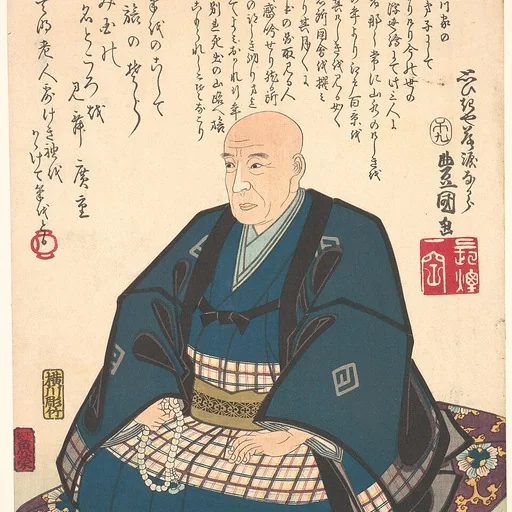
Artist
Utagawa Hiroshige (歌川 広重) or Andō Hiroshige (安藤 広重), born Andō Tokutarō (安藤 徳太郎; 1797 – 12 October 1858), was a Japanese ukiyo-e artist, considered the last great master of that tradition.

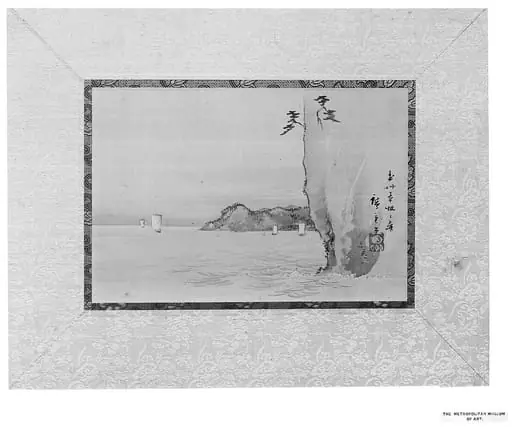
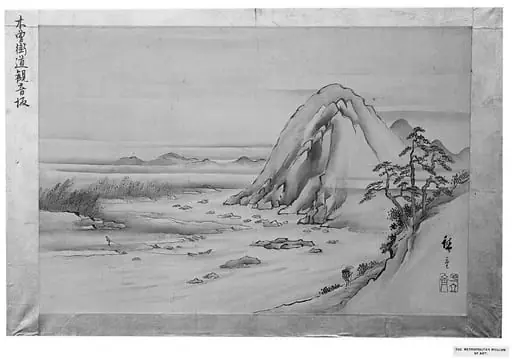
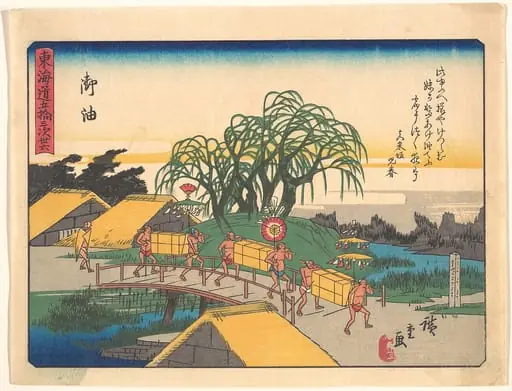 東海道五十三次 御油|Goyu, from the series The Fifty-three Stations of the Tōkaidō Road
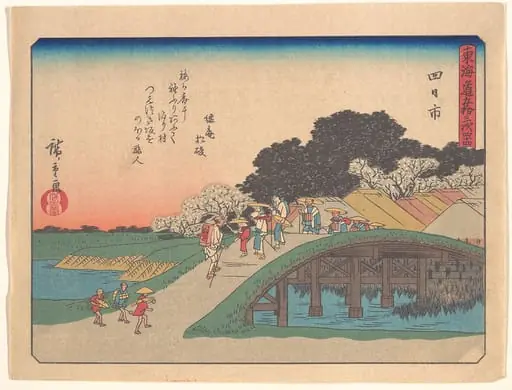 東海道五十三次 四日市|Yokkaichi, from the series The Fifty-three Stations of the Tōkaidō Road
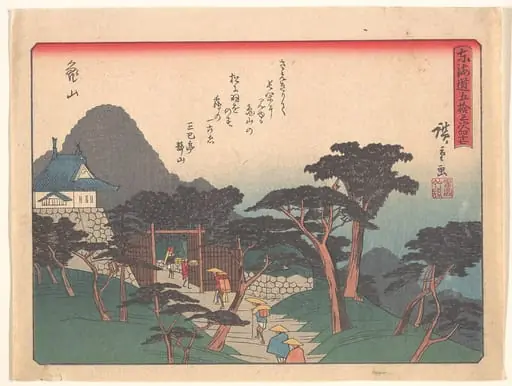 東海道五十三次 亀山|Kameyama, from the series The Fifty-three Stations of the Tōkaidō Road
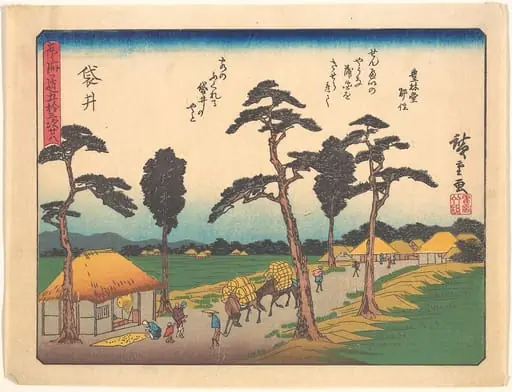 東海道五十三次 袋井|Fukuroi, from the series The Fifty-three Stations of the Tōkaidō Road
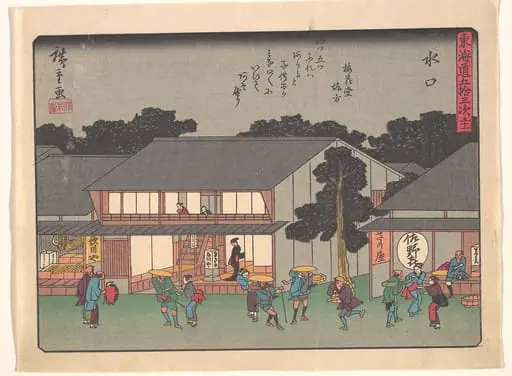 東海道五十三次 水口|Mizukuchi, from the series The Fifty-three Stations of the Tōkaidō Road
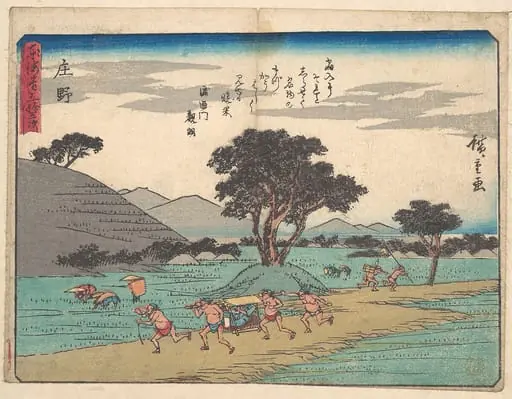 東海道五十三次 庄野|Shono
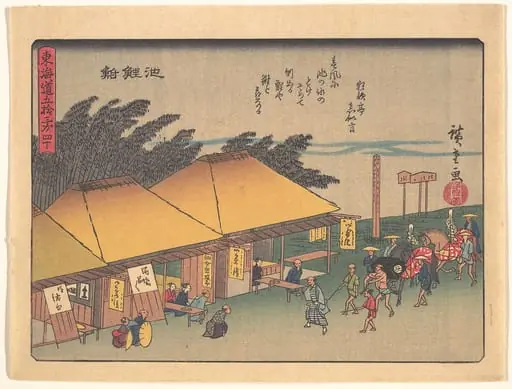 東海道五十三次 池鯉鮒|Chiryūshuku, from the series The Fifty-three Stations of the Tōkaidō Road
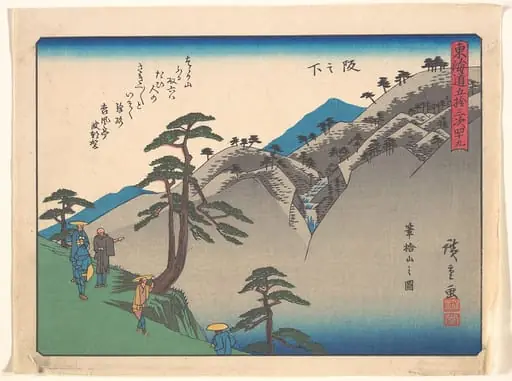 東海道五十三次 阪之下|Sakanoshita, from the series The Fifty-three Stations of the Tōkaidō Road
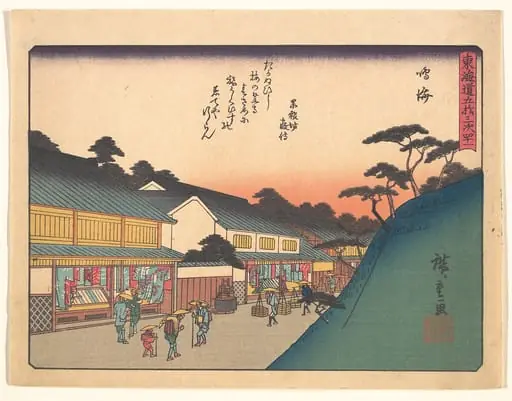 東海道五十三次 鳴海|Narumi, from the series The Fifty-three Stations of the Tōkaidō Road