Artwork
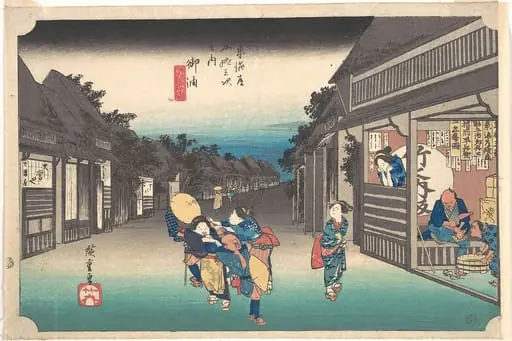
東海道五十三次之内 御油 旅人留女|Goyu, Tabibito Ryujo
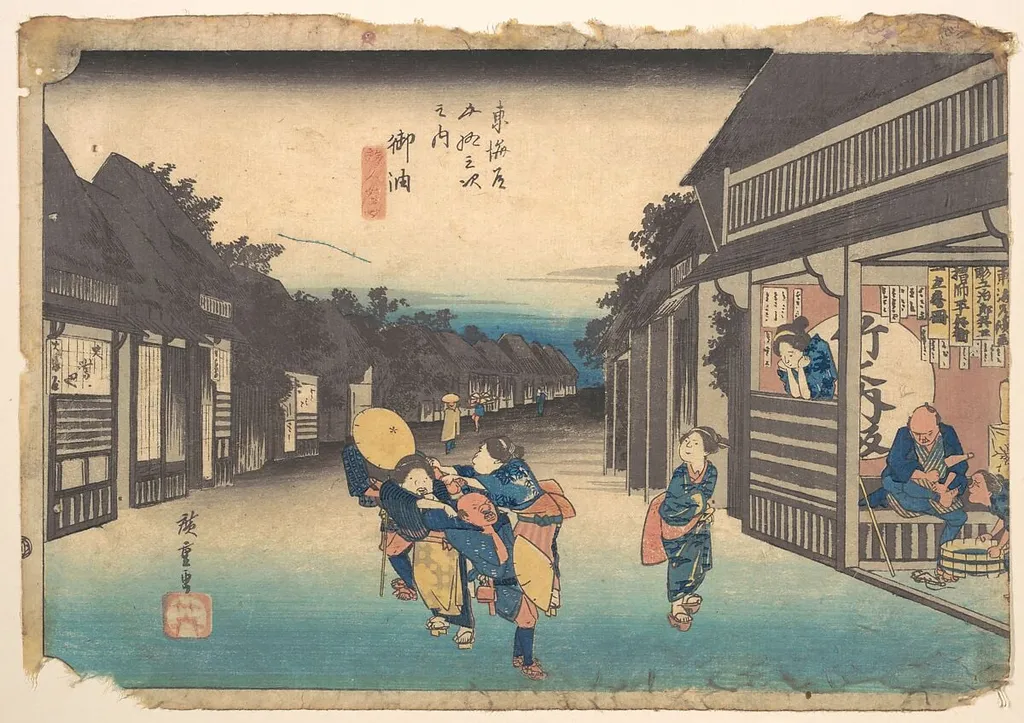
東海道五十三次之内 御油 旅人留女|Goyu, Tabibito Ryujo is an ink print by the Romanticist artist Utagawa Hiroshige. It dates from 1834 and is held in the collection of the Metropolitan Museum of Art.
About this work
Overview
Created around 1834 by Utagawa Hiroshige, this woodblock print is one of the images in his celebrated series *The Fifty‑three Stations of the Tōkaidō*. It portrays the post town of Goyu, a stop along the historic coastal road that linked Edo with Kyoto, and exemplifies Hiroshige’s focus on travel scenes rather than the urban entertainments typical of earlier ukiyo‑e.
Subject & Meaning
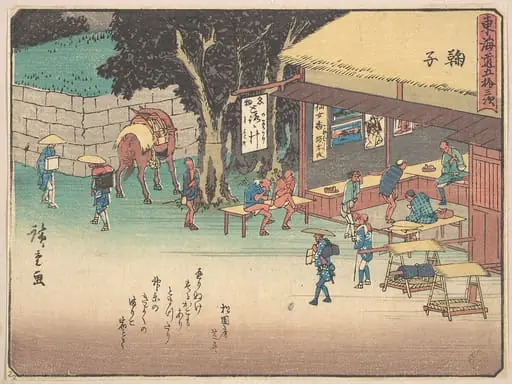
The composition centers on a modest street lined with thatched‑roofed wooden structures. A woman holding a parasol stands beside a child, while a traveler departs, suggesting the theme of families seeing off a loved one. Inside a doorway, a man plays a stringed instrument, adding a note of everyday domestic activity to the scene.
Technique & Style
Executed with ink and color on paper, the print employs Hiroshige’s characteristic soft palette and delicate line work. The muted sky and distant, faintly rendered mountains create atmospheric depth, while the flat areas of color define the architecture and figures, reflecting the ukiyo‑e tradition of combining stylized design with a sense of place.
History & Provenance
Part of the *Fifty‑three Stations* series, the print was produced for the commercial market of Edo‑period Japan, where travelers collected images of the route’s stations. Original impressions were printed in the mid‑1830s and later circulated among collectors, eventually entering museum collections and scholarly publications on Japanese printmaking.
Artist & collection
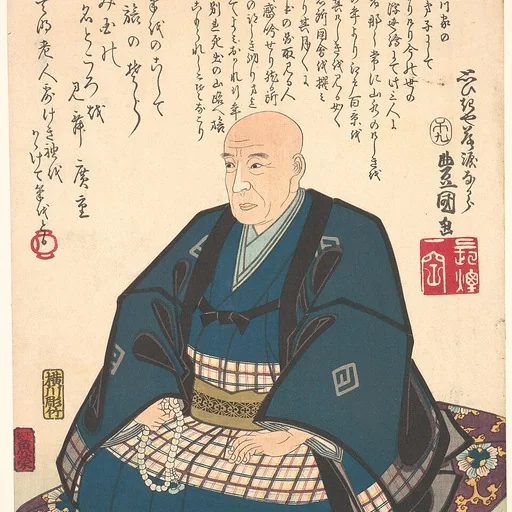
Artist
Utagawa Hiroshige (歌川 広重) or Andō Hiroshige (安藤 広重), born Andō Tokutarō (安藤 徳太郎; 1797 – 12 October 1858), was a Japanese ukiyo-e artist, considered the last great master of that tradition.