Artwork
Tōtō Takanawa Kaigen|Foreigners Riding Along the Coast at Takanawa in the Eastern Capital
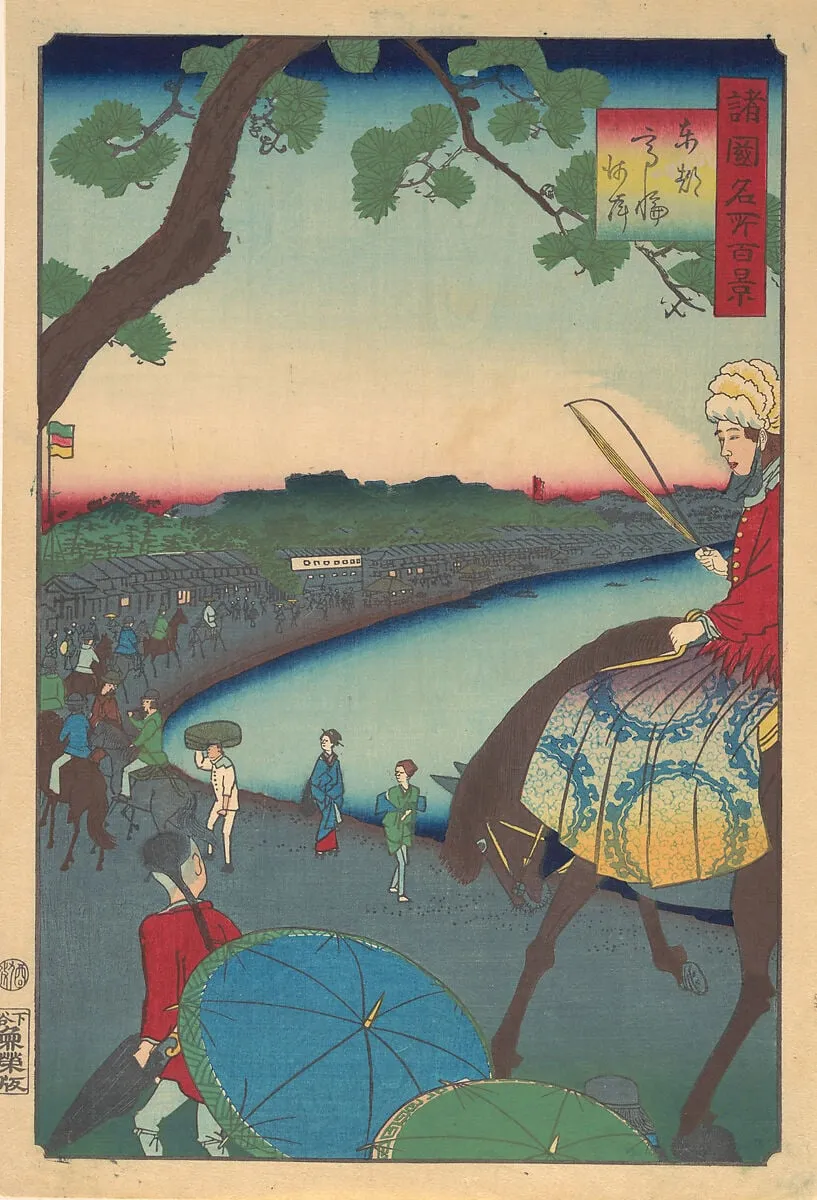
Tōtō Takanawa Kaigen|Foreigners Riding Along the Coast at Takanawa in the Eastern Capital is an ink print by the Impressionist artist Utagawa Hiroshige II. It dates from 9 and is held in the collection of the Metropolitan Museum of Art.
About this work
Overview
This woodblock print by Utagawa Hiroshige II depicts a coastal scene in Takanawa, near Edo (modern Tokyo), showing foreign riders along a path.
This woodblock print by Utagawa Hiroshige II depicts a coastal scene in Takanawa, near Edo (modern Tokyo), showing foreign riders along a path. Created in the late Edo period, it belongs to a series documenting contemporary life and foreign presence in Japan during a time of limited international contact. The print is part of The Metropolitan Museum of Art’s collection, preserved as an example of ukiyo-e’s engagement with cultural change.
Subject & Meaning
The scene captures Western travelers on horseback, identifiable by their red jackets and tall hats, moving past Japanese architecture and a large tree. Figures on foot observe them, suggesting curiosity or quiet surveillance. The depiction reflects Japan’s cautious encounter with foreign visitors during the 1850s, when the country was opening to limited foreign trade after centuries of isolation. The riders’ presence is notable but not dominant, framed within a familiar landscape.
Technique & Style
Executed in traditional ukiyo-e woodblock printing, the image employs layered ink and color on paper, with precise linework defining figures and structures. Bright reds and blues contrast with subdued earth tones, creating visual rhythm. The composition balances foreground activity with a distant horizon of water and soft sky, using perspective and scale to suggest depth. Details like the whip and horse harnesses are rendered with careful attention, typical of Hiroshige II’s narrative clarity.
History & Provenance
Produced around 1858–1860, the print is part of Hiroshige II’s series documenting Edo’s changing scenery during the Bakumatsu era. It was likely distributed as a commercial print, popular among urban residents interested in foreign affairs. The work entered The Metropolitan Museum of Art’s collection through established acquisition channels in the 20th century, preserved as a record of cross-cultural observation in late Edo visual culture.
Context
This print emerged as Japan transitioned from isolation to limited foreign engagement following the 1853 arrival of Commodore Perry’s fleet. Takanawa, a coastal area near Edo, was one of the few places where foreigners were permitted to travel under supervision. The scene reflects public fascination and unease toward outsiders, captured not as spectacle but as a quiet, everyday occurrence within a familiar landscape.
Legacy
Hiroshige II’s work contributed to the documentation of Japan’s early modern encounters with the West through accessible visual media. While less celebrated than his predecessor’s landscapes, this print remains significant for its unembellished portrayal of cultural contact. It informs modern understanding of how ordinary Japanese citizens perceived foreign presence during a pivotal historical shift.
Artist & collection

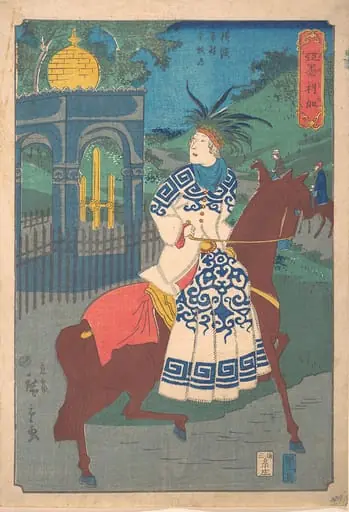 二代歌川広重画 『亜墨利加 横浜本村本牧道』|American Woman Riding Side-Saddle on the Road at Honmoku, Motomura, Yokohama (America Yokohama Motomura Honmoku michi)
 Untitled
 Untitled
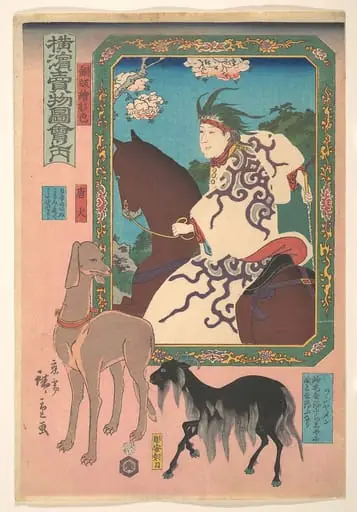 横浜賣物図会の内 唐犬|Copper Plate Engraving of a Woman Riding a Horse, a Goat and a Dog
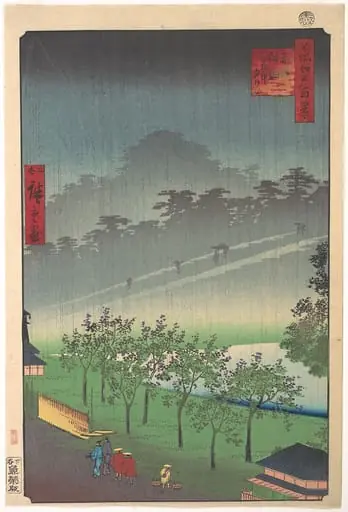 Untitled
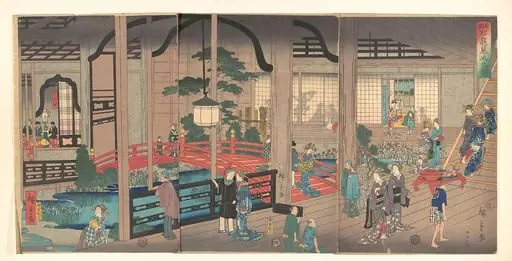 Yokohama Gankirō no zu|View of the Interior of the Gankirō Tea House in Yokohama
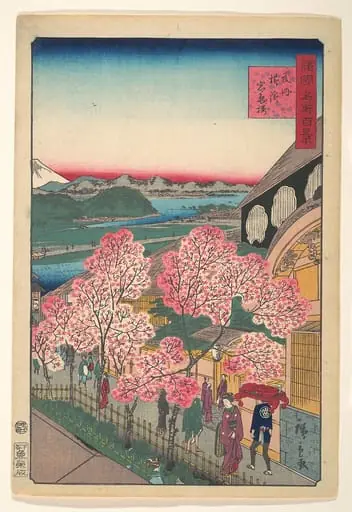 Bushu Yokohama Gankirō|諸国名所百景 武州横浜岩亀楼|Entrance to the Gankirō Tea House in the Miyozaki District, Yokohama, Bushu
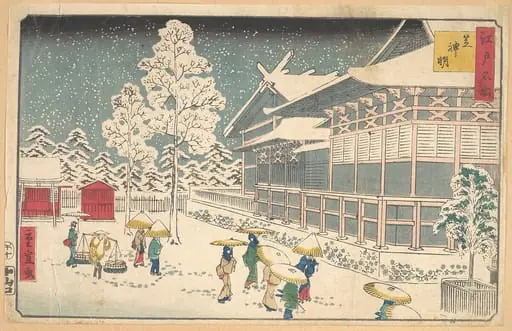 江戸名所 芝神明|Famous Places of Edo: Shiba Shinmei
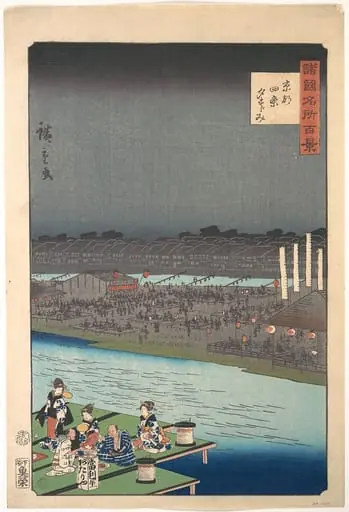 二代歌川広重画 「諸国名所百景 京都四条夕すずみ」|Enjoying the Evening Cool at Shijō in Kyoto, from the series One Hundred Famous Views in the Various Provinces (Shokoku meisho hyakkei)
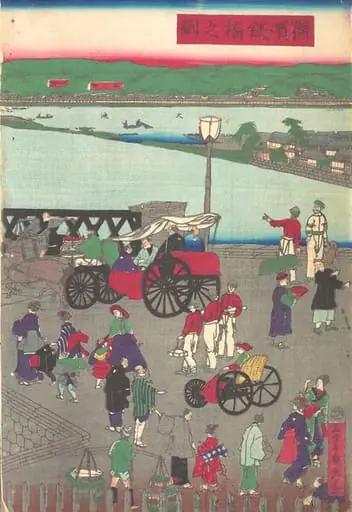 Untitled
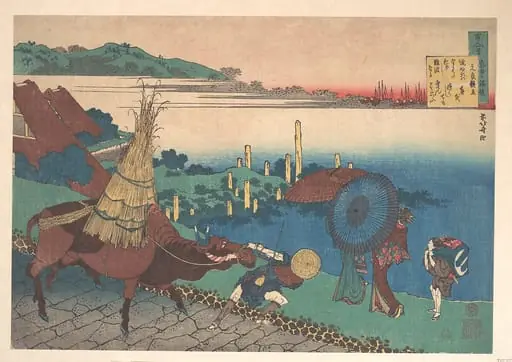 百人一首 乳母かえ説 元良親王|Poem by Motoyoshi Shinnō, from the series One Hundred Poems Explained by the Nurse (Hyakunin isshu uba ga etoki)
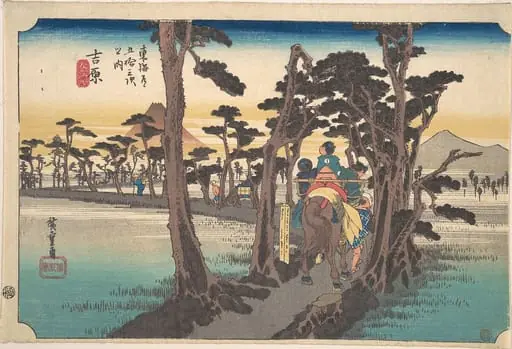 東海道五十三次之内 吉原 左富士|Yoshiwara, Hidari Fuji
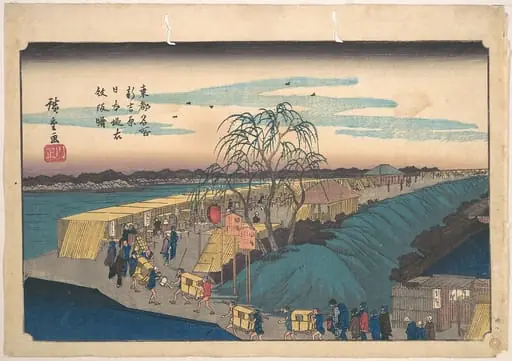 東都名所 新吉原日本堤衣紋坂曙|Shin Yoshiwara Nihon Tsutsumi Emonzaka Akatsuki
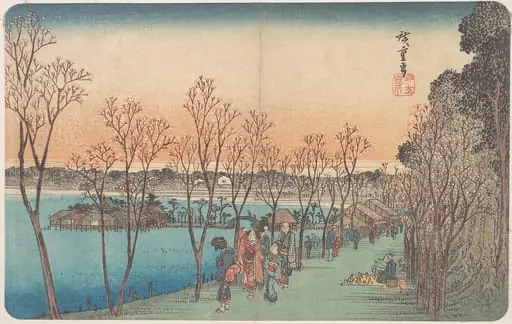 江戸名所 上野不忍の池|Ueno, Shinobazu no Ike
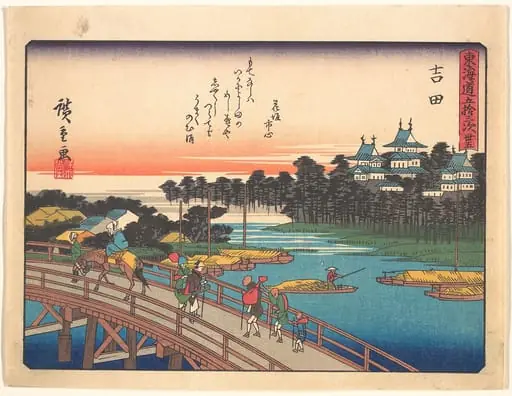 東海道五十三次 吉田|Yoshida, from the series The Fifty-three Stations of the Tōkaidō Road
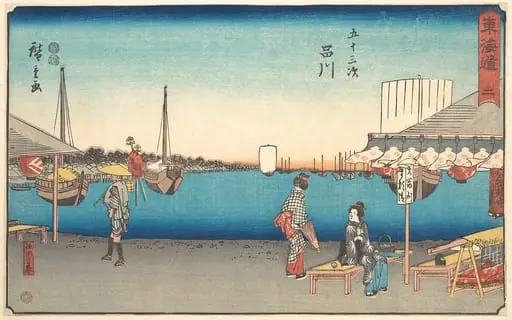 東海道五十三次 品川 鮫州の茶や|Shinagawa
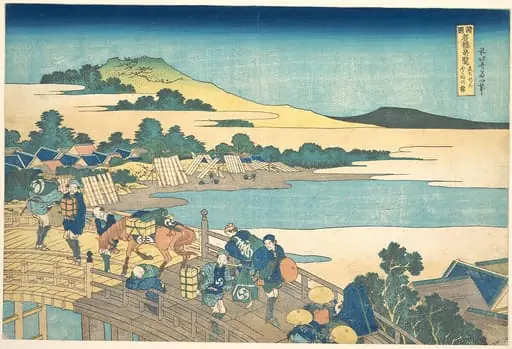 諸國名橋奇覧 ゑちぜんふくゐの橋|Fukui Bridge in Echizen Province (Echizen Fukui no hashi), from the series Remarkable Views of Bridges in Various Provinces (Shokoku meikyō kiran)