Artwork
Untitled
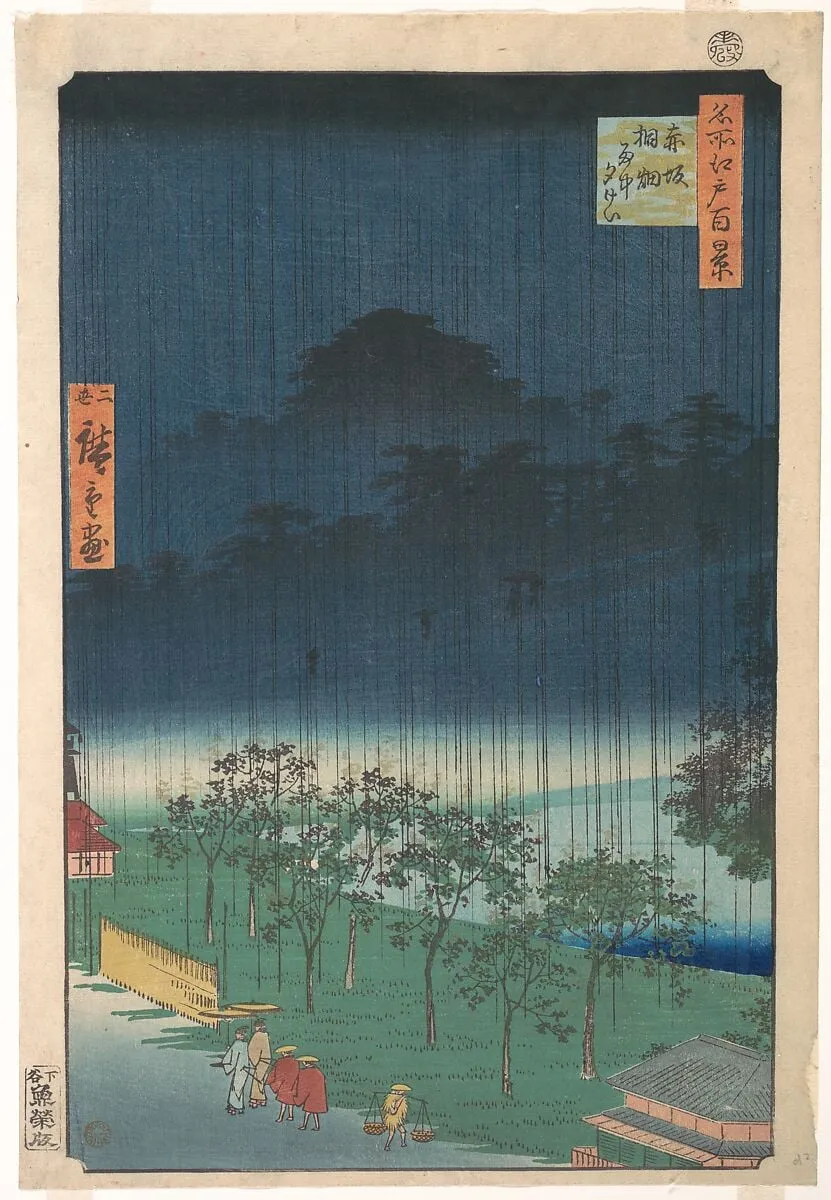
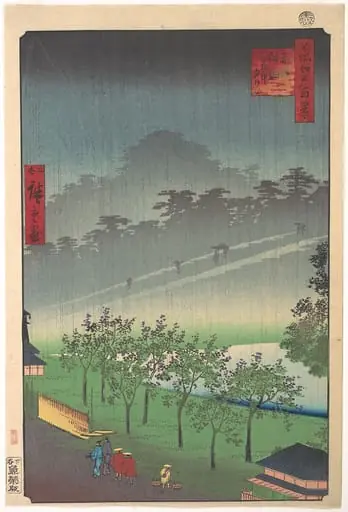
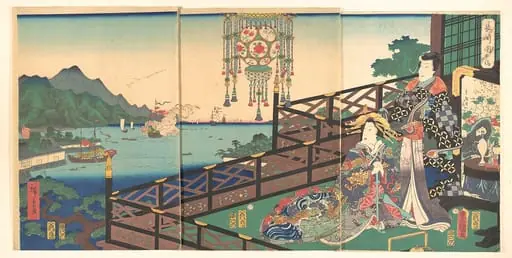
Untitled is an ink print by the Impressionist artist Utagawa Hiroshige II. It dates from 1859 and is held in the collection of the Metropolitan Museum of Art.
About this work
Overview
This woodblock print, dated 1859, is attributed to Utagawa Hiroshige II and belongs to the tradition of ukiyo-e. Executed in ink and color on paper, it depicts a quiet rural scene at twilight. The work is part of the collection at The Metropolitan Museum of Art, where it is preserved as an example of mid-19th-century Japanese printmaking.
Subject & Meaning
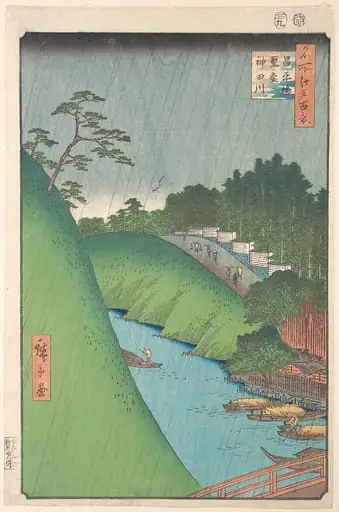
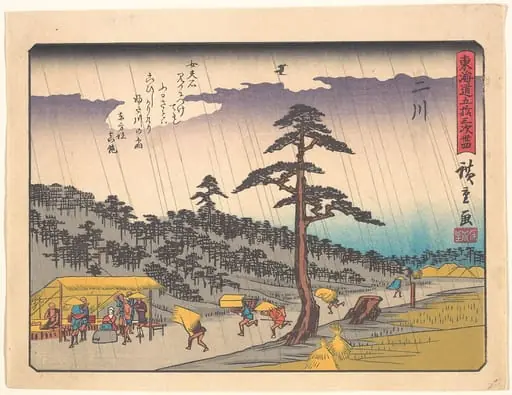
The scene portrays a modest village at dusk, with low buildings clustered to the right and sparse trees framing the foreground. Three figures walk beneath umbrellas, while another carries baskets, suggesting daily movement after rain or during a cool evening. The quiet activity evokes a sense of routine and harmony with the natural environment, typical of Hiroshige’s focus on ordinary life.
Technique & Style
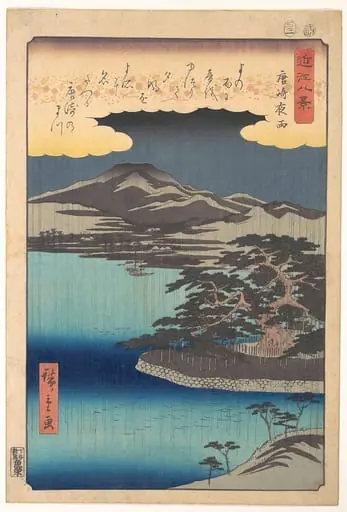
The print employs layered woodblock carving to achieve subtle gradations of blue, green, and brown. The dark sky contrasts with muted earth tones, enhancing depth and atmospheric mood. Soft edges and minimal detail in the architecture and figures reflect the influence of earlier landscape traditions, emphasizing tone over precision to convey tranquility.
History & Provenance
Created in 1859, the print likely originated as part of a private commission or small series, though its exact publication history is undocumented. It entered The Metropolitan Museum of Art’s collection through established acquisition channels for Japanese prints in the early 20th century, where it remains today as a representative work of Hiroshige II’s output.
Context
During the late Edo period, woodblock prints like this one were widely circulated among urban and rural populations. Landscape themes gained popularity as travel became more accessible, and artists like Hiroshige II responded with intimate, seasonal scenes. This print reflects a shift from grand vistas to quieter, localized moments in the countryside.
Legacy
Though less renowned than his predecessor Utagawa Hiroshige, the second Hiroshige contributed to the evolution of landscape prints by emphasizing mood and domestic settings. This work exemplifies the quiet, observational style that influenced later Western artists and helped shape global perceptions of Japanese aesthetics in the 19th century.
Artist & collection

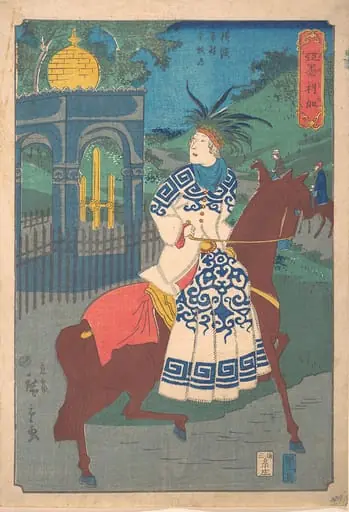 二代歌川広重画 『亜墨利加 横浜本村本牧道』|American Woman Riding Side-Saddle on the Road at Honmoku, Motomura, Yokohama (America Yokohama Motomura Honmoku michi)
 Untitled
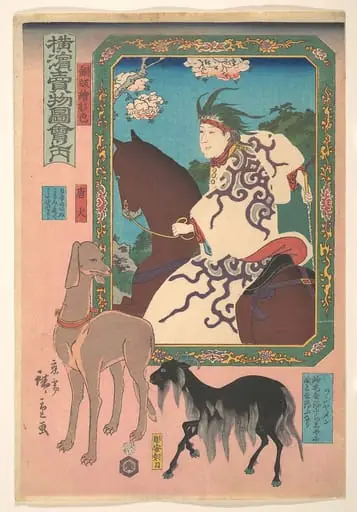 横浜賣物図会の内 唐犬|Copper Plate Engraving of a Woman Riding a Horse, a Goat and a Dog
 Untitled
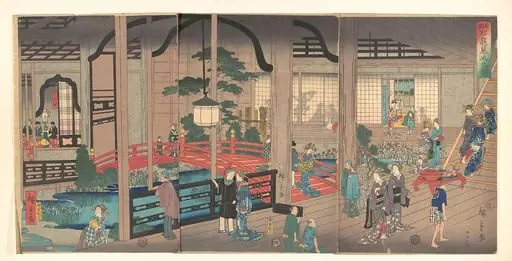 Yokohama Gankirō no zu|View of the Interior of the Gankirō Tea House in Yokohama
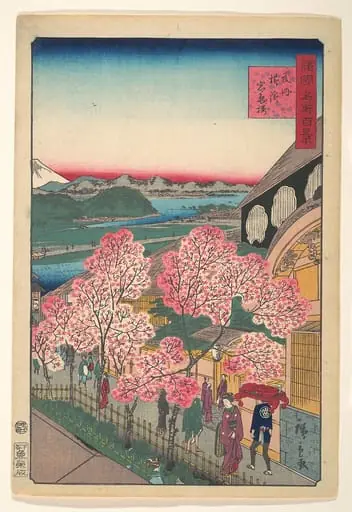 Bushu Yokohama Gankirō|諸国名所百景 武州横浜岩亀楼|Entrance to the Gankirō Tea House in the Miyozaki District, Yokohama, Bushu
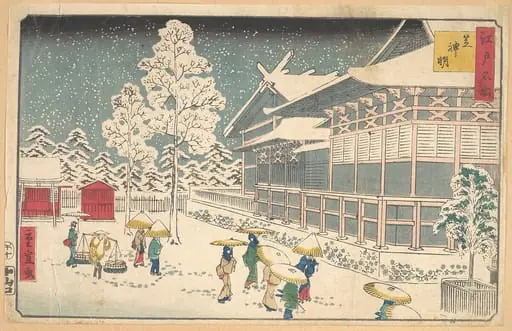 江戸名所 芝神明|Famous Places of Edo: Shiba Shinmei
 Untitled
 名所江戸百景 昌平橋 聖堂 神田川|Shohei Bridge, Seido Temple and Kanda River
 Karasaki ya'u|近江八景 唐崎夜雨|Pine Tree at Karasaki
 東海道五十三次 二川|Futakawa, from the series The Fifty-three Stations of the Tōkaidō Road
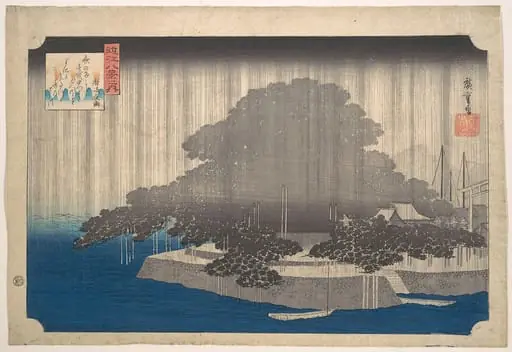 近江八景之内 唐崎夜雨|Evening Rain on the Karasaki Pine
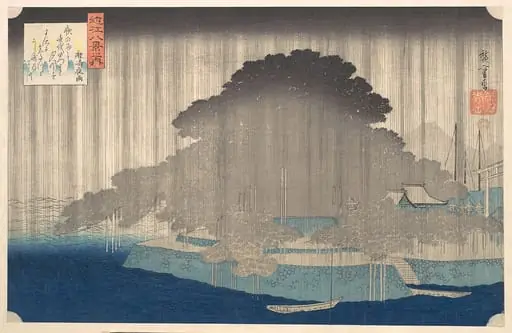 歌川広重画 「近江八景之内 唐崎夜雨」|Night Rain at Karasaki, from the series Eight Views of Ōmi (Ōmi hakkei no uchi)
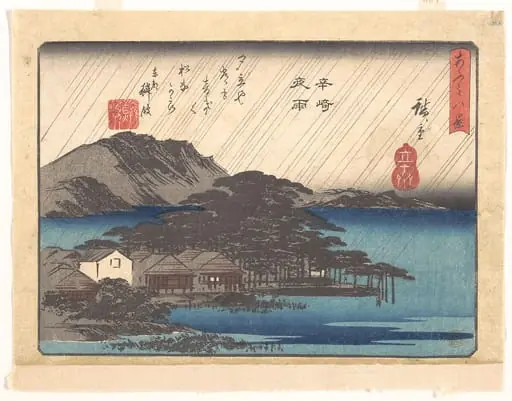 歌川広重画 「あふみ八景 辛崎夜雨」|Evening Rain at Karasaki, from the series Eight Views of Ōmi (Ōmi hakkei)
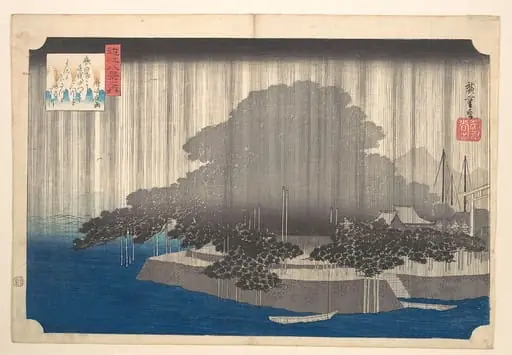 近江八景之内 唐崎夜雨|Evening Rain at Karasaki-Pine Tree
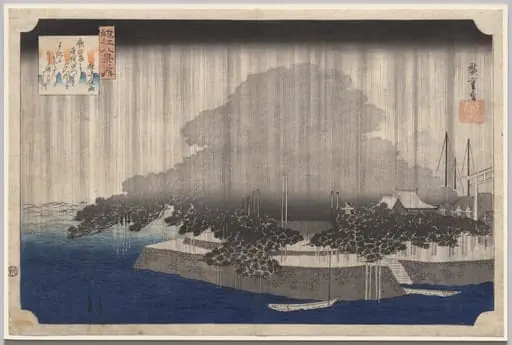 Night Rain at Karasaki, from Eight Views of Ōmi
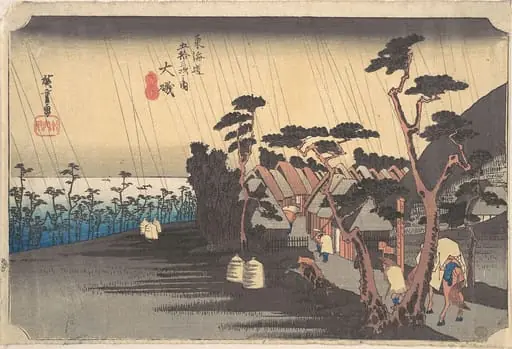 東海道五十三次之内 大磯 虎ケ雨|Tiger Rain at Ōiso Station
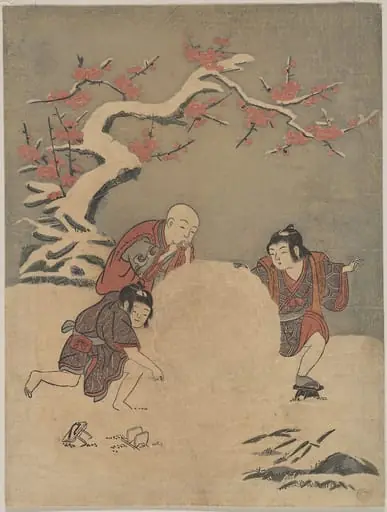 Untitled
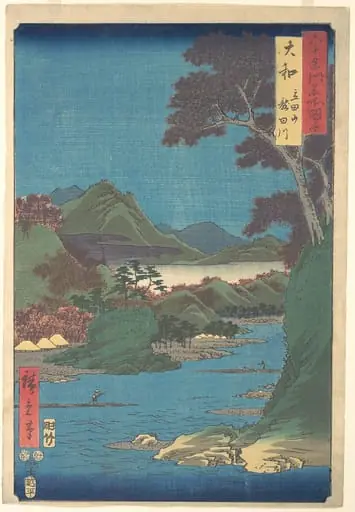 六十余州名所図会 大和 立田山 龍田川|Yamato, Tatsutayama, Tatsutagawa