Artwork
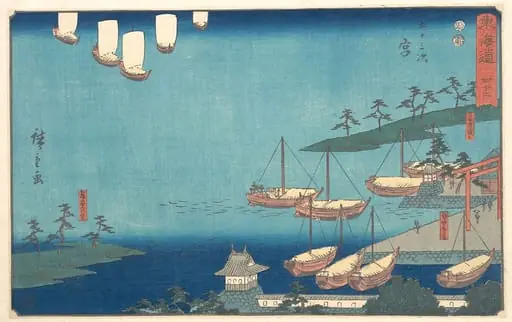
東海道五十三次 宮|Miya
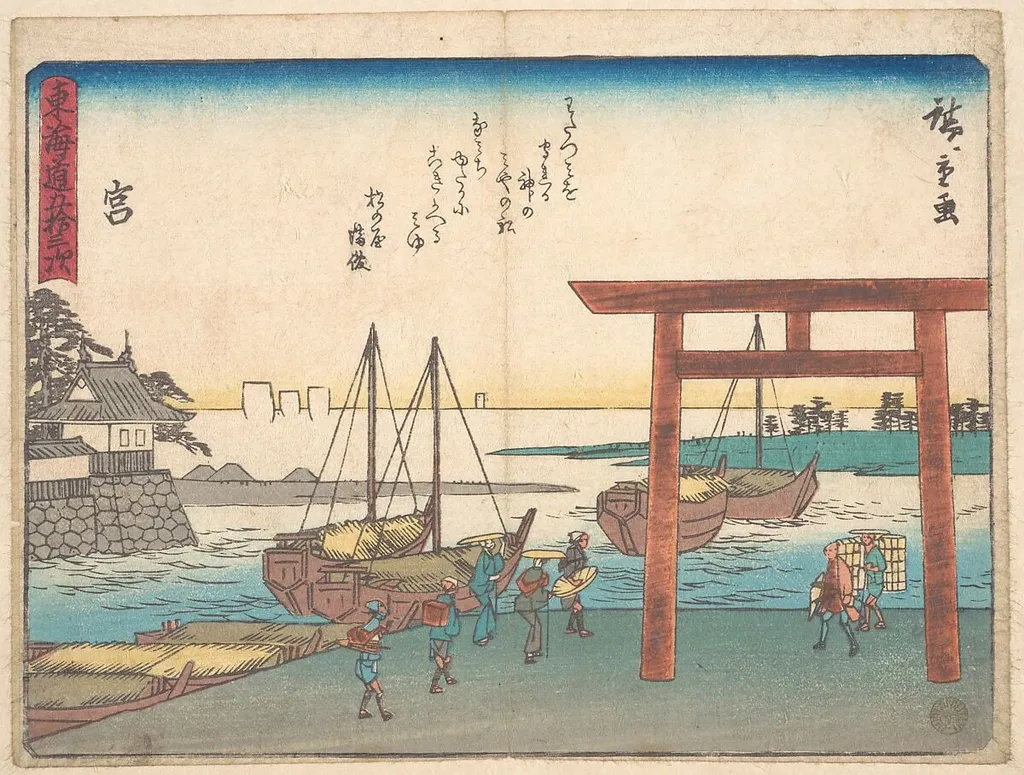
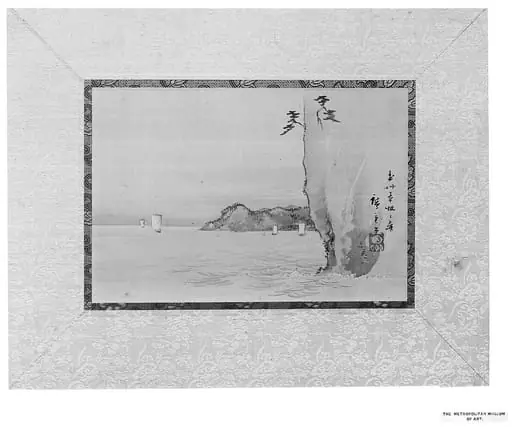
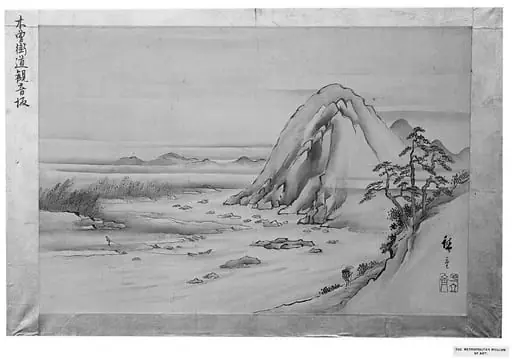
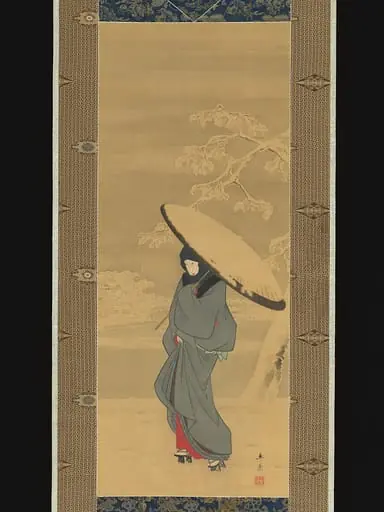
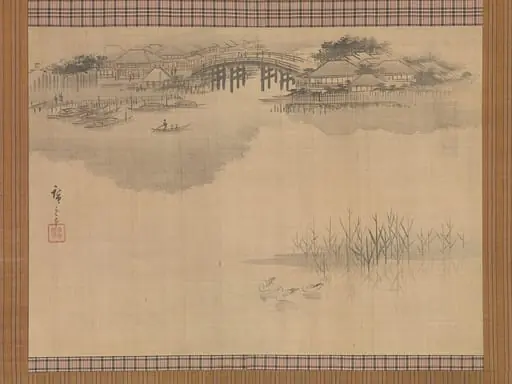
東海道五十三次 宮|Miya is an ink print by the Romanticist artist Utagawa Hiroshige. It dates from 1838 and is held in the collection of the Metropolitan Museum of Art.
About this work
Overview
It captures a quiet moment along the coastal road linking Edo and Kyoto, rendered in ink and color on paper using the woodblock technique.
Created around 1838 by Utagawa Hiroshige, *Miya* is one of fifty-four prints in the series *The Fifty-three Stations of the Tōkaidō*. It captures a quiet moment along the coastal road linking Edo and Kyoto, rendered in ink and color on paper using the woodblock technique. Unlike many ukiyo-e works focused on theater or pleasure quarters, Hiroshige emphasized landscape and daily life, establishing a new direction in Japanese printmaking. The print is now part of The Metropolitan Museum of Art’s collection.
Subject & Meaning
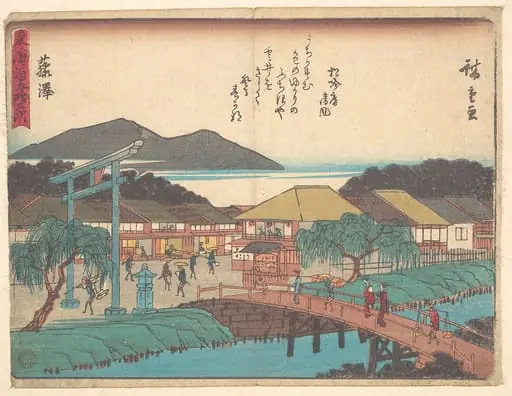
The scene centers on a red torii gate standing near a dock, suggesting proximity to a shrine. Boats are being loaded and unloaded by figures in plain clothing, indicating commercial activity. The gate’s placement, rather than the shrine itself, implies spiritual presence without direct representation. The quiet labor and natural backdrop convey a sense of routine pilgrimage and the integration of sacred and mundane life along the Tōkaidō.
Technique & Style
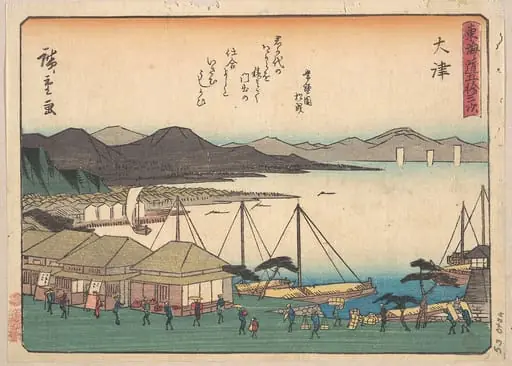
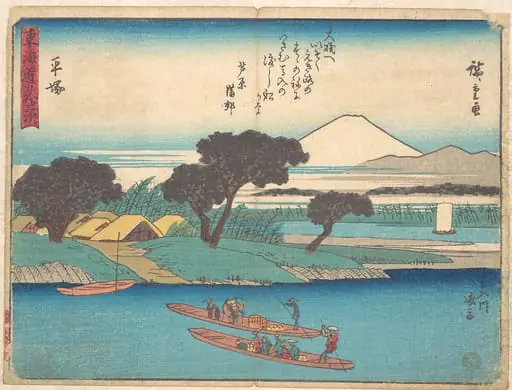
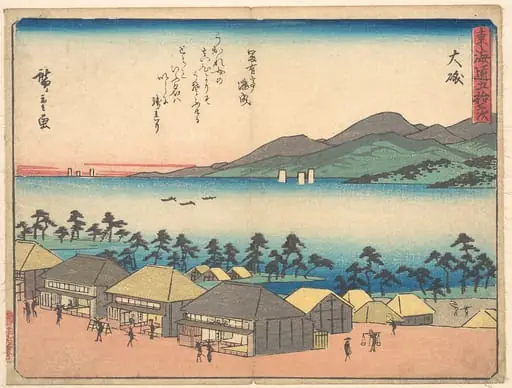
Hiroshige employed fine woodblock carving to achieve subtle gradations of color and delicate linework. The horizontal composition guides the eye from the foreground gate to the distant hills, using atmospheric perspective to suggest depth. Soft washes of color, particularly in the sky and water, enhance the mood of stillness. His use of muted tones and careful spatial arrangement distinguishes his style from the bolder, more theatrical prints of his contemporaries.
History & Provenance
The print was produced during Hiroshige’s most prolific period, when the *Tōkaidō* series gained widespread popularity across Japan. It was likely printed in multiple editions for public sale. The Metropolitan Museum of Art acquired it as part of its broader collection of Japanese prints, preserving it as an example of mid-19th-century commercial art. Its survival in good condition reflects its enduring cultural value and careful stewardship.
Context
The Tōkaidō was the most traveled road in Edo-period Japan, used by merchants, pilgrims, and samurai. Stations like Miya served as rest stops, often marked by shrines or checkpoints. Hiroshige’s series responded to growing public interest in travel and regional identity. By focusing on ordinary moments rather than grand events, he offered a grounded, intimate view of a nation in motion.
Legacy
Hiroshige’s *Tōkaidō* series influenced later generations of artists, both in Japan and abroad, particularly in the development of landscape printmaking. His emphasis on seasonal change, weather, and quiet human activity became hallmarks of Japanese visual culture. While his works were once mass-produced, they are now studied for their compositional precision and emotional restraint, shaping modern perceptions of Edo-period aesthetics.
Artist & collection
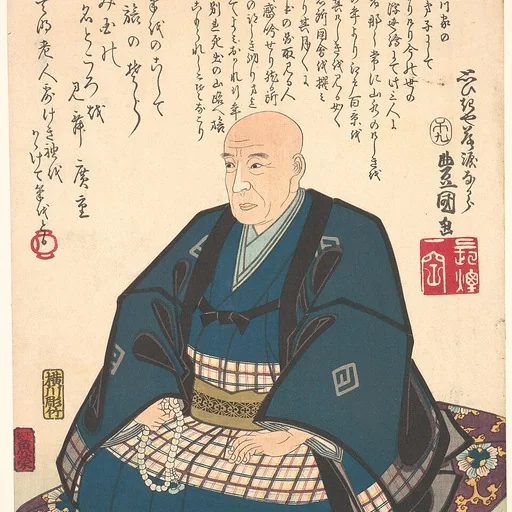
Artist
Utagawa Hiroshige (歌川 広重) or Andō Hiroshige (安藤 広重), born Andō Tokutarō (安藤 徳太郎; 1797 – 12 October 1858), was a Japanese ukiyo-e artist, considered the last great master of that tradition.