Artwork
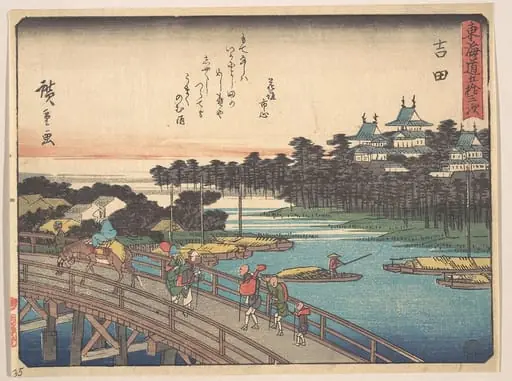
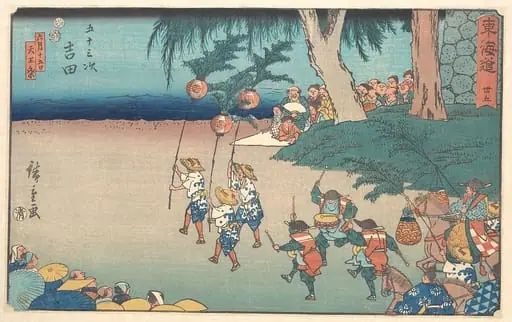
東海道五十三次之内 吉田 豊川橋|Yoshida, Toyokawa Hashi
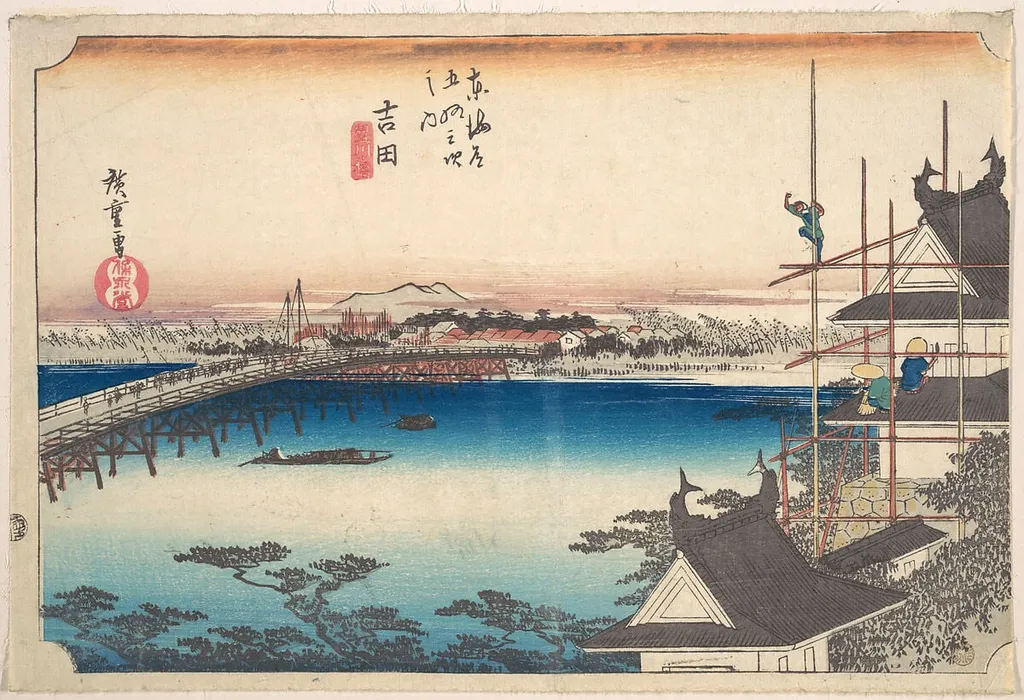
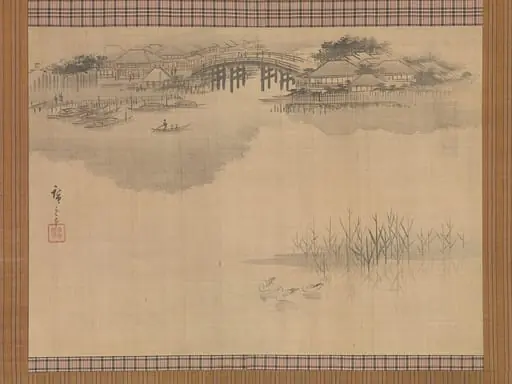
東海道五十三次之内 吉田 豊川橋|Yoshida, Toyokawa Hashi is an ink print by the Romanticist artist Utagawa Hiroshige. It dates from 1834 and is held in the collection of the Metropolitan Museum of Art.
About this work
Overview
Yoshida, Toyokawa Hashi is a woodblock print created by Utagawa Hiroshige around 1834, as part of The Fifty-three Stations of the Tōkaidō series. The horizontal-format print captures a serene scene of Toyokawa Bridge in Yoshida, juxtaposing a wooden bridge, a village, and a distant mountain range.
Subject & Meaning
The print focuses on Toyokawa Bridge, a post station along the Tokaido road, shifting the traditional ukiyo-e subject matter from figures to landscape. The composition invites contemplation, with the bridge framing the viewer's gaze towards the distant mountains, evoking a sense of tranquility.
Technique & Style
Executed in ink and color on paper, the print exemplifies Hiroshige's characteristic landscape style within the series. The use of color and light creates depth, with the bridge's wooden structure and surrounding foliage adding texture, guiding the viewer's eye through the layered composition.
History & Provenance
Created circa 1834, Yoshida, Toyokawa Hashi is now part of The Metropolitan Museum of Art's collection, representing a key work in Hiroshige's Tōkaidō series.
Artist & collection
Artist
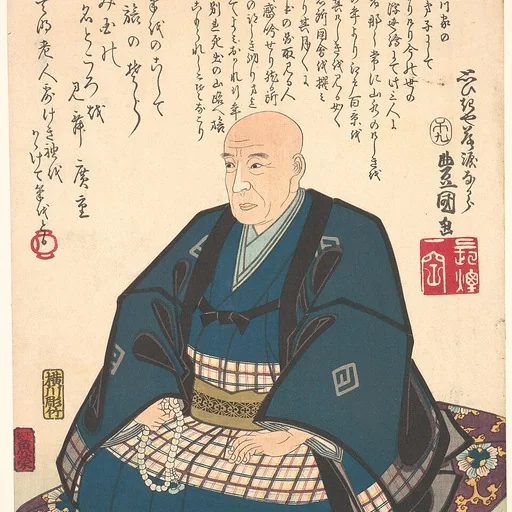
Utagawa Hiroshige (歌川 広重) or Andō Hiroshige (安藤 広重), born Andō Tokutarō (安藤 徳太郎; 1797 – 12 October 1858), was a Japanese ukiyo-e artist, considered the last great master of that tradition.