Artwork
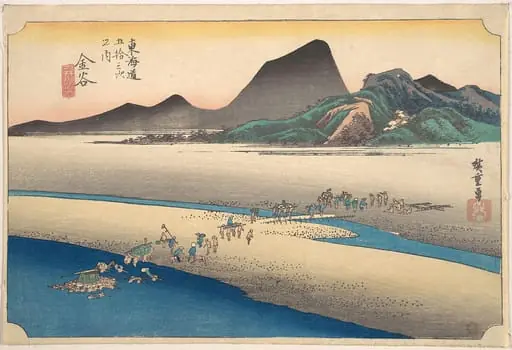
東海道五十三次之内 嶋田 大井川駿岸|Shimada, Oigawa Shun Gan
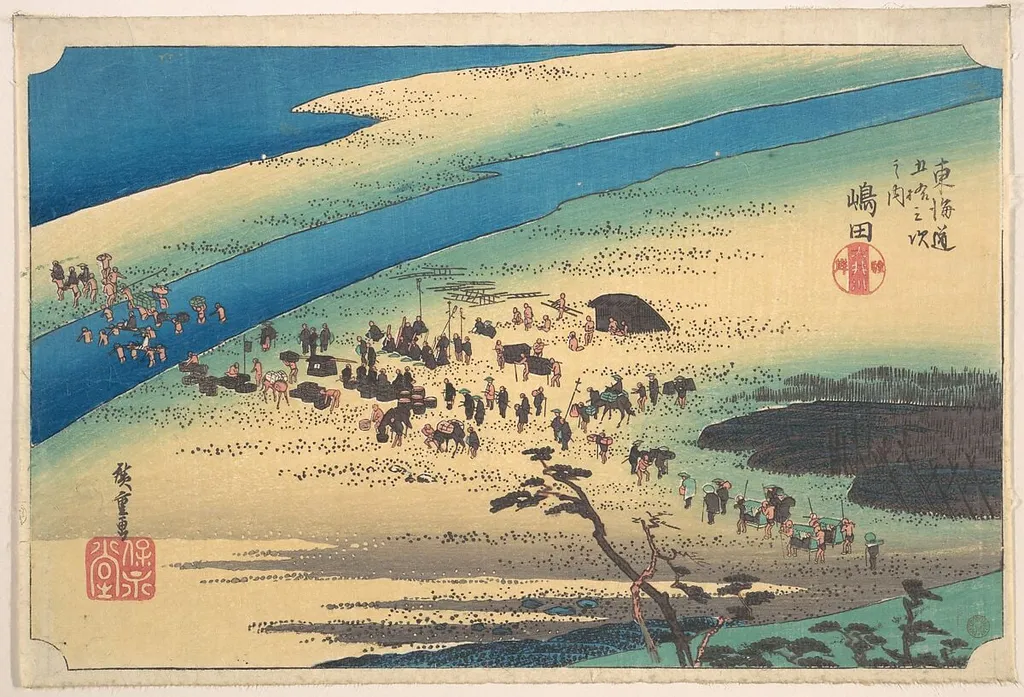
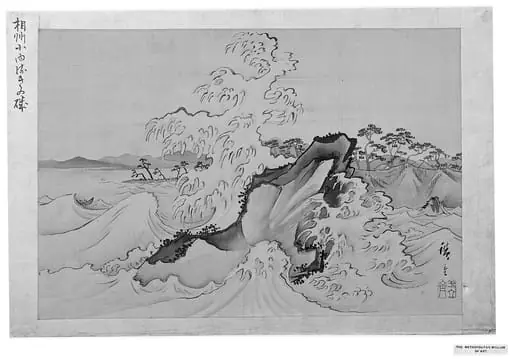
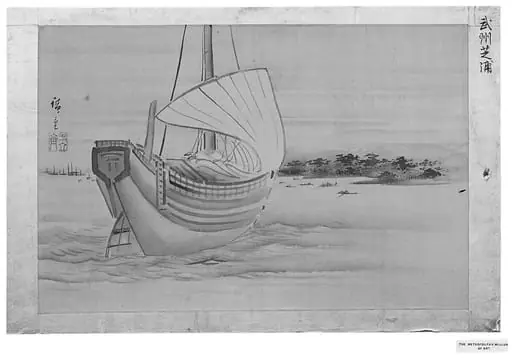
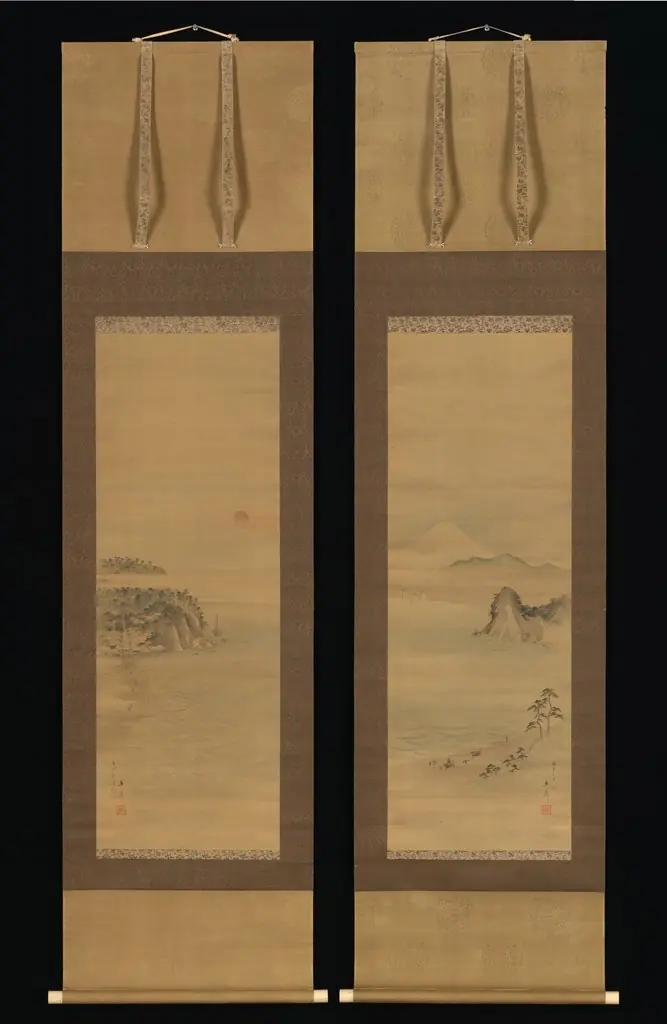
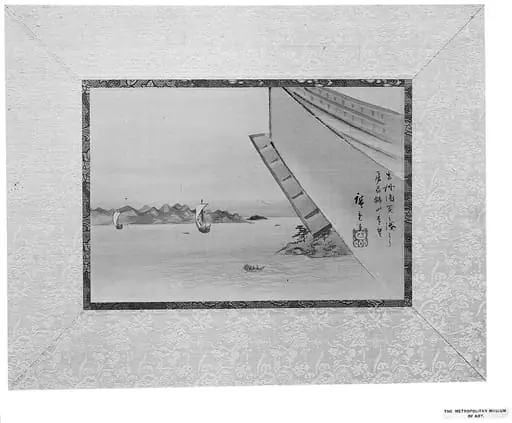
東海道五十三次之内 嶋田 大井川駿岸|Shimada, Oigawa Shun Gan is an ink print by the Romanticist artist Utagawa Hiroshige. It dates from 1834 and is held in the collection of the Metropolitan Museum of Art.
About this work
Overview
This print captures a moment at the Oigawa River near Shimada, emphasizing the rhythm of movement and the quiet presence of nature along the route.
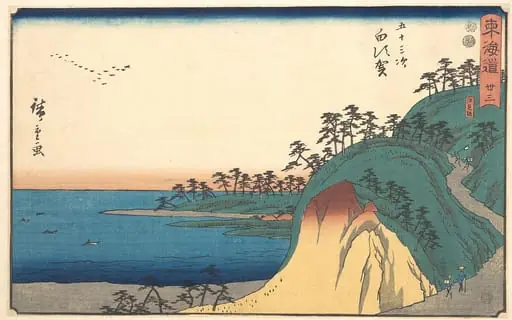
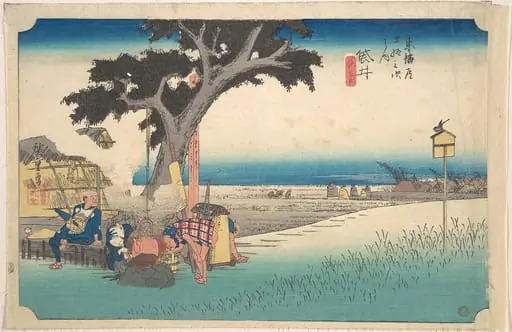
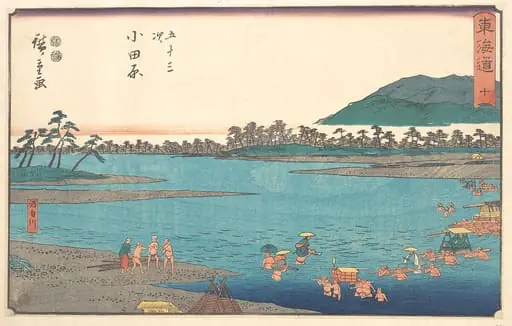
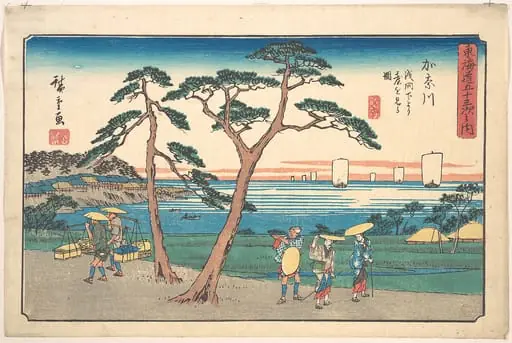
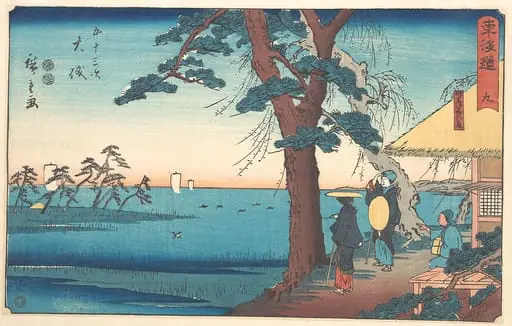
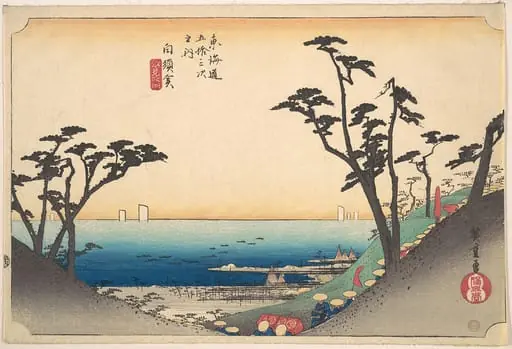
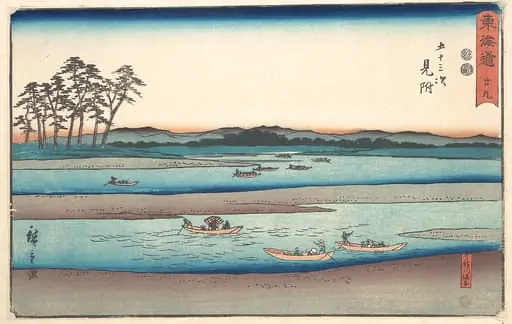
Created around 1834 by Utagawa Hiroshige, this woodblock print is part of the series *The Fifty-three Stations of the Tōkaidō*, which documents the journey along Japan’s main coastal road. Unlike many ukiyo-e artists who focused on urban life, Hiroshige turned his attention to landscapes and travel. This print captures a moment at the Oigawa River near Shimada, emphasizing the rhythm of movement and the quiet presence of nature along the route.
Subject & Meaning
The scene portrays a bustling riverside crossing, where travelers, packhorses, and porters navigate the sandy bank. The Oigawa River, a natural barrier, becomes a focal point of transit and transition. The composition suggests the everyday reality of pilgrimage and commerce along the Tōkaidō, revealing how people interacted with the land. The small, densely arranged figures convey the scale of travel without romanticizing it, grounding the image in lived experience.
Technique & Style
Hiroshige employed bold, flat areas of color and simplified forms to suggest motion and atmosphere. The soft blue sky and muted greens of the hills frame the scene without overwhelming it. Lines are economical, yet precise—boats tilt slightly, animals stride forward, and figures move in varied postures. The print’s balance between detail and abstraction reflects Hiroshige’s mastery of layering ink and color to evoke mood rather than literal realism.
History & Provenance
Produced during Hiroshige’s early career, this print was part of a commercially successful series commissioned by the publisher Hoeidō. It was widely distributed as a travel souvenir, reflecting the growing popularity of domestic tourism in Edo-period Japan. Original impressions were printed in limited runs, and surviving examples are now held in major museum collections, including the British Museum and the Museum of Fine Arts, Boston.
Context
The Tōkaidō was the most important travel route in Japan, connecting Edo with Kyoto. Stations like Shimada served as rest points, and river crossings were critical junctures. Hiroshige’s series responded to public interest in travel and regional identity, documenting not just landmarks but the textures of daily movement. His focus on weather, season, and topography distinguished his work from contemporaries who emphasized entertainment or theater.
Legacy
Hiroshige’s *Tōkaidō* series influenced later artists in Japan and abroad, including Impressionists who admired his compositional clarity and atmospheric effects. The print’s quiet observation of ordinary travel helped redefine landscape as a subject worthy of serious artistic attention. Today, it remains a key reference for understanding how Japanese printmakers transformed everyday experience into enduring visual narratives.
Artist & collection
Artist
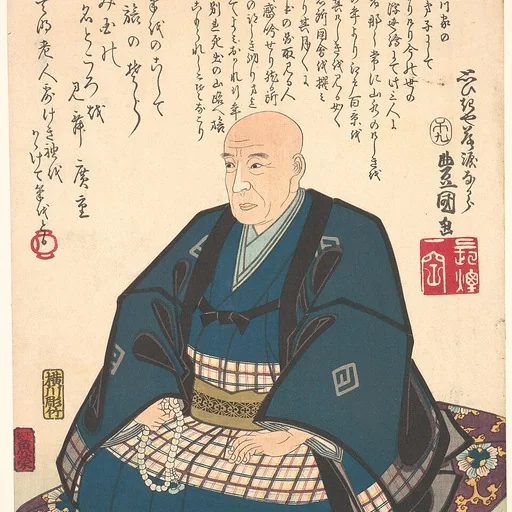
Utagawa Hiroshige (歌川 広重) or Andō Hiroshige (安藤 広重), born Andō Tokutarō (安藤 徳太郎; 1797 – 12 October 1858), was a Japanese ukiyo-e artist, considered the last great master of that tradition.