Artwork
Nakamura Utaemon as Inanoya Hanbei
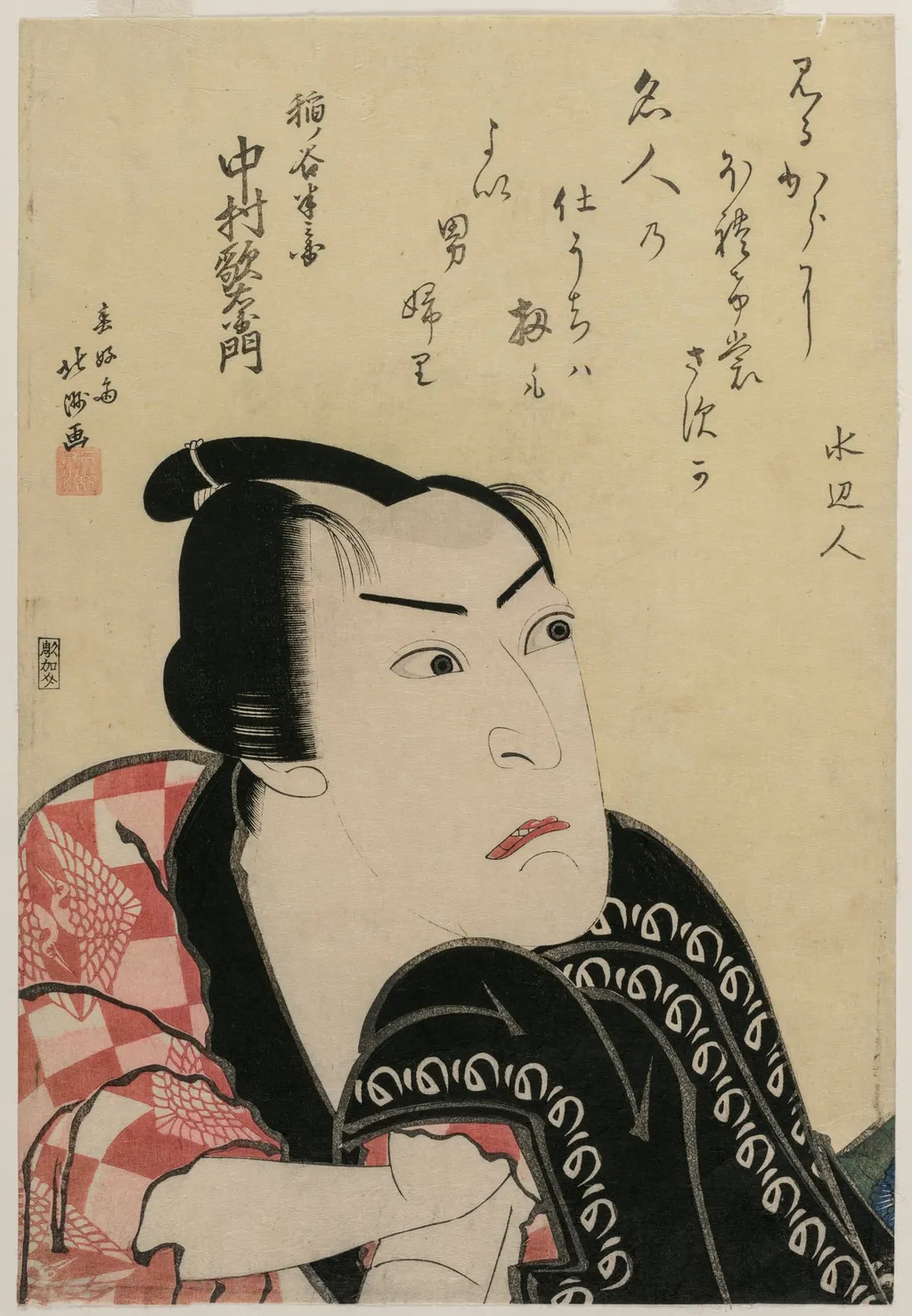
Nakamura Utaemon as Inanoya Hanbei is a print by the Romanticist artist Shunkōsai Hokushū. It dates from 1822 and is held in the collection of the Cleveland Museum of Art.
About this work
Overview
The Cleveland Museum of Art holds this example, one of many actor portraits produced during a time when popular performers were widely celebrated in print form.
This ukiyo-e print depicts the kabuki actor Nakamura Utaemon in the role of Inanoya Hanbei, created around 1822 by Shunkōsai Hokushū. Rendered in the standard woodblock technique of the Edo period, the portrait emphasizes theatrical presence over naturalism. The Cleveland Museum of Art holds this example, one of many actor portraits produced during a time when popular performers were widely celebrated in print form.
Subject & Meaning
The figure represents a character from kabuki theater, likely drawn from a historical or moral drama. Inanoya Hanbei, as portrayed, conveys authority and quiet confidence through posture and expression. The actor’s slight smile and direct gaze suggest a moment of introspection or command, aligning with the role’s dramatic function. The costume signals status and role, not personal identity, reflecting kabuki’s stylized conventions.
Technique & Style
Hokushū employed bold outlines and flat areas of color typical of early 19th-century actor prints. The robes feature intricate patterns rendered in red and black, contrasting against the unadorned background. Facial features are simplified yet expressive, with large eyes and minimal detail to enhance legibility from a distance. The absence of shading or perspective reinforces the print’s decorative and symbolic intent.
History & Provenance
Produced during the late Edo period, the print was likely distributed as a commercial souvenir for theatergoers. It entered the Cleveland Museum of Art’s collection through documented acquisitions of Japanese prints in the 20th century. While its exact early ownership is unrecorded, its preservation reflects broader Western interest in ukiyo-e during the late 1800s and early 1900s.
Context
Actor portraits like this were mass-produced for public consumption, functioning as both advertising and fan memorabilia. The kabuki theater was a central cultural institution, and actors like Nakamura Utaemon were celebrities. Hokushū’s work belongs to a tradition that elevated performance into portable art, blending realism with stylization to meet audience expectations of drama and beauty.
Legacy
This print exemplifies the enduring appeal of ukiyo-e’s actor portraiture, influencing later artists and collectors. Its preservation in a major Western museum underscores its role in cross-cultural artistic exchange. While no longer part of popular culture, it remains a key reference for understanding Edo-period performance, printmaking, and the social life of urban Japan.
Artist & collection

Artist
Shunkōsai Hokushū spent his life in Osaka, where the city’s lively theater scene shaped his work.

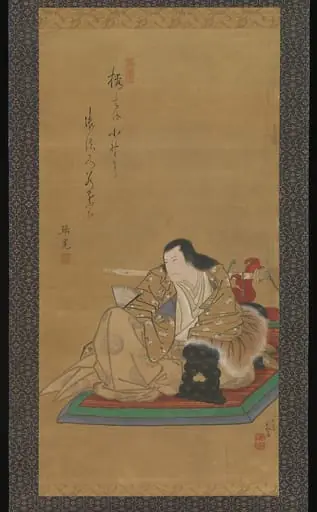 初代嵐橘三郎 (二代目嵐吉三郎) の惟高親王|The Actor Arashi Kitsusaburō I (Kichisaburō II) as Prince Koretaka
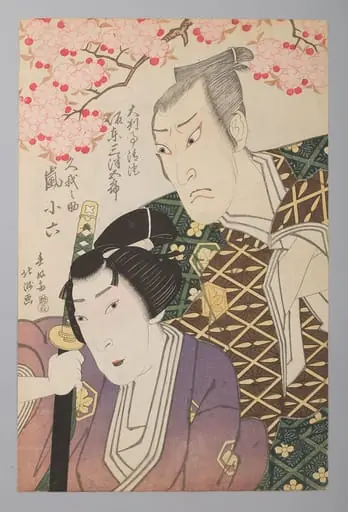 「大判事清澄 坂東三津五郎」(三代)・「久我之助 嵐小六」(四代)|Bandō Mitsugorō III as Daihanji Kiyozumi and Arashi Koroku IV as Koganosuke
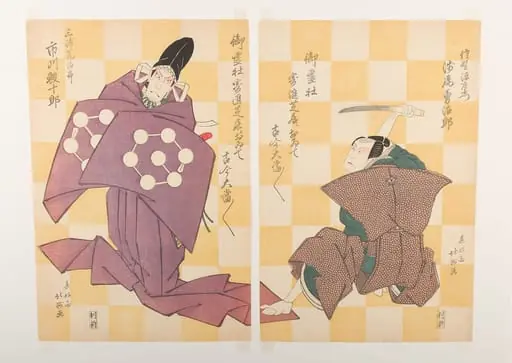 春好斎北洲画 初代浅尾勇次郎・初代市川鰕十郎 『傾城佐野の船橋』|Kabuki Actors Asao Yūjirō as Sano Genzaemon and Ichikawa Ebijūrō I as Miura Arajirō, in the play Keisei Sano no Funabashi
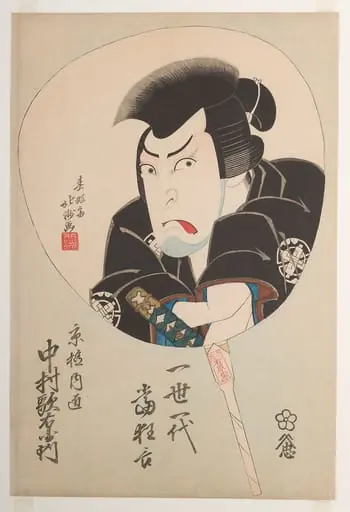 春好斎北洲画 三代目中村歌右衛門 『一世一代当狂言』|Kabuki Actor Nakamura Utaemon III as the Sword Master Kyōgoku Takumi, from the series Issei ichidai atari Kyōgen (Hits of a Lifetime of Kyōgen)
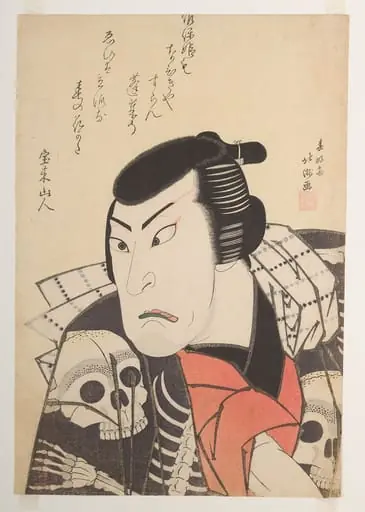 春好斎北洲画 初代市川鰕十郎 「紅紫大坂潤」|Kabuki Actor Ichikawa Ebijūrō I as Tōken (China Dog) Jūbei, in the play Benimurasaki ai de someage (Red and Purple, Rich Dyes of Osaka)
 Untitled
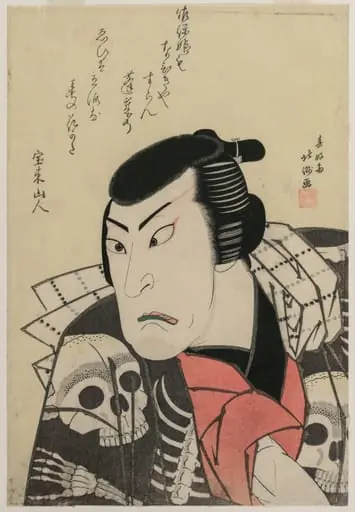 Actor Ichikawa Ebijūrō I as Tōken (China Dog) Jūbei, in the play Red and Purple, Rich Dyes of Osaka (Benimurasaki ai de someage)
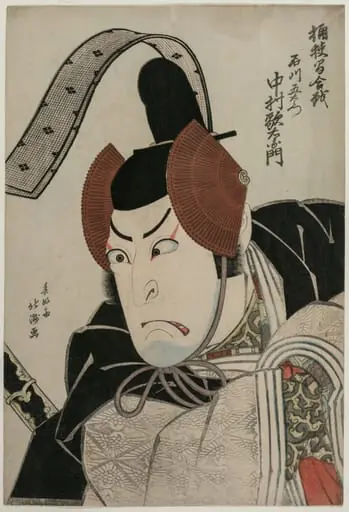 Actor Nakamura Utaemon III (Shikan) as Ishikawa Goemon at the Battle of Okehazama (Okehazama Gassen)
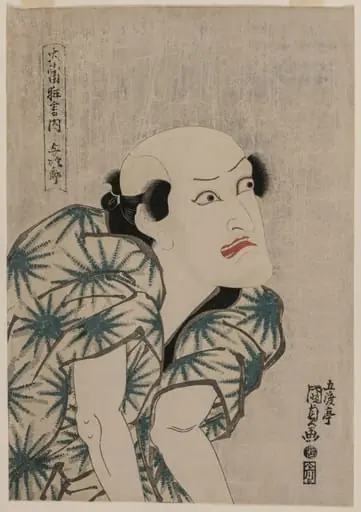 Nakamura Utaemon III as the Monkey Trainer Yojiro (from the series Famous Kabuki Plays)
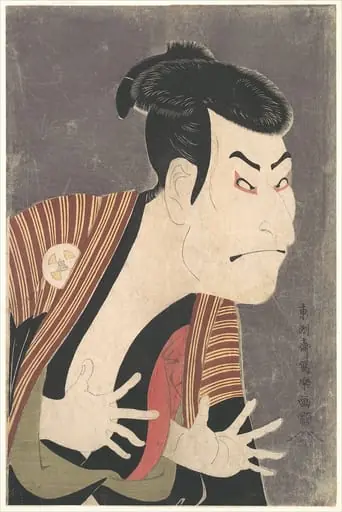 東洲斎写楽画 三代目大谷鬼次の奴江戸兵衛|Kabuki Actor Ōtani Oniji III as Yakko Edobei
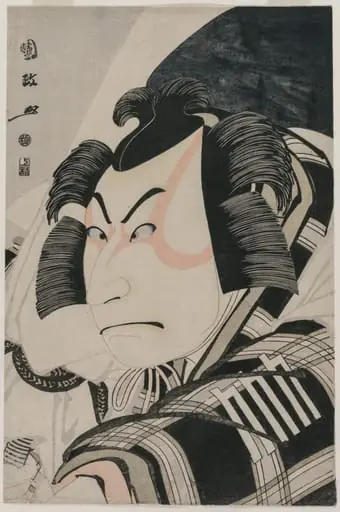 Nakamura Nakazo II as Matsuomaru in the Carriage-Stopping Scene
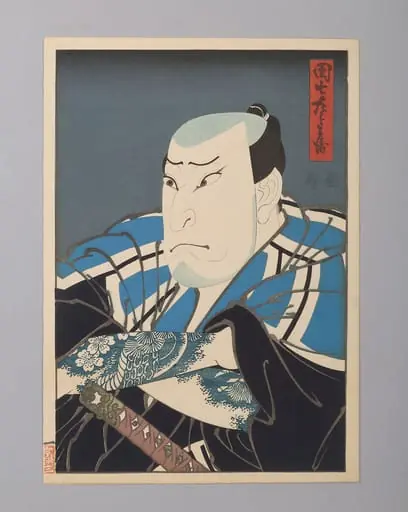 「団七九郎兵衛」|Nakamura Utaemon IV as Danshichi Kurobei
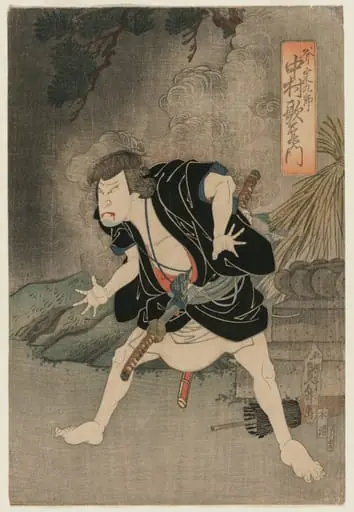 Nakamura Utaemon IV as Ono Sadakuro in Act Five of Kanadehon Chushingura, Naka Theater
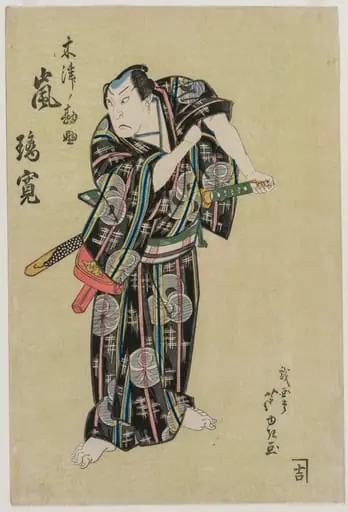 Arashi Rikan II as Kizu Kansuke
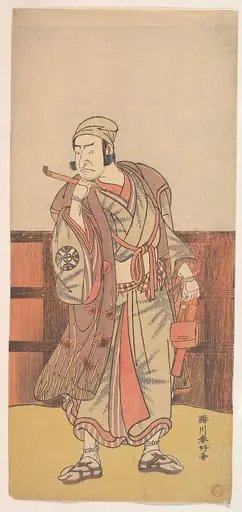 勝川春好画 初代中村仲蔵|Kabuki Actor Nakamura Nakazō I