Artwork
Nakamura Utaemon III as the Monkey Trainer Yojiro (from the series Famous Kabuki Plays)
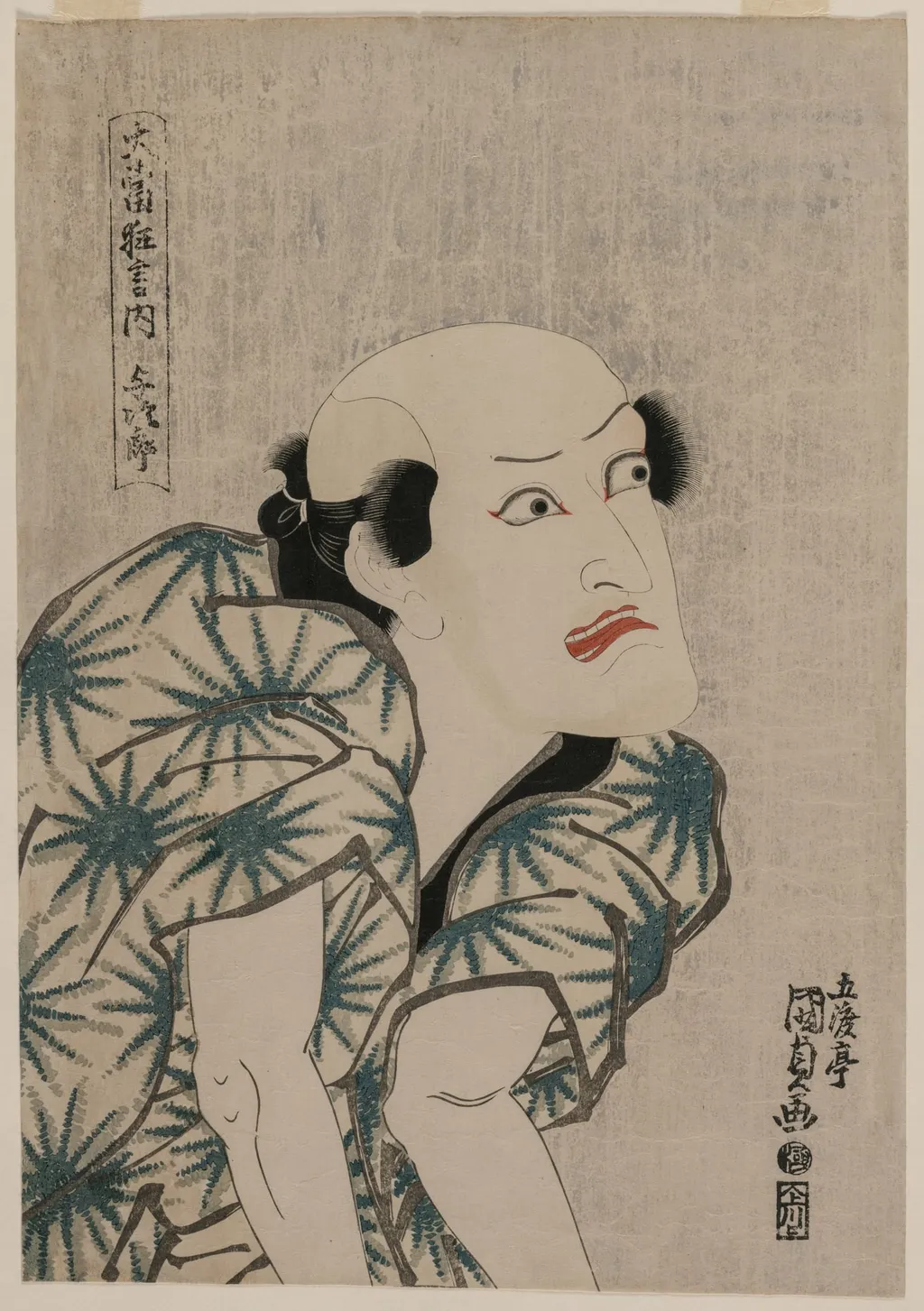
Nakamura Utaemon III as the Monkey Trainer Yojiro (from the series Famous Kabuki Plays) is a print by the Romanticist artist Utagawa Kunisada. It dates from 1814 and is held in the collection of the Cleveland Museum of Art. This woodblock print depicts Nakamura Utaemon III in the role of Yojiro, a monkey trainer from a popular Kabuki drama.
About this work
Overview
This woodblock print depicts Nakamura Utaemon III in the role of Yojiro, a monkey trainer from a popular Kabuki drama. Created around 1814 by Utagawa Kunisada, it belongs to a series illustrating renowned theatrical performances. The print is part of the collection at The Cleveland Museum of Art, representing the ukiyo-e tradition of capturing stage actors in dramatic, stylized poses.
Subject & Meaning
The role blends comedy and pathos, typical of the aragoto style, where exaggerated gestures underscore emotional depth beneath theatrical spectacle.
Yojiro, a character known for his eccentric charm and physical agility, is portrayed mid-performance, suggesting a moment of interaction with his trained monkeys. The actor’s poised stance and focused gaze convey controlled energy, reflecting the precision demanded in Kabuki. The role blends comedy and pathos, typical of the aragoto style, where exaggerated gestures underscore emotional depth beneath theatrical spectacle.
Technique & Style
Kunisada employed fine linework and layered color blocks typical of early 19th-century ukiyo-e. The kimono’s starburst pattern, rendered in white and blue, contrasts with the muted background, drawing attention to the figure’s form. Hair and fabric folds are delicately defined, while the flat, unmodeled space behind the actor emphasizes the theatricality of the scene over naturalistic setting.
History & Provenance
Produced during the peak of actor print popularity, this image was likely sold as a souvenir to Kabuki patrons. It entered the Cleveland Museum of Art’s collection through documented acquisitions in the 20th century, preserving its original state. The print’s survival reflects its cultural significance as both art and ephemeral theater memorabilia from the Edo period.
Context
In early 1800s Edo, actor portraits were mass-produced and widely collected, functioning as both advertising and fan culture. Kunisada, a leading designer of such prints, specialized in capturing the likenesses and personas of top performers. This work aligns with a broader trend of visualizing Kabuki’s star actors, reinforcing their celebrity status beyond the stage.
Legacy
The print endures as a representative example of actor portraiture in ukiyo-e, illustrating how theater and print culture intersected in Edo society. While the specific performance it depicts is no longer staged, the image preserves the visual language of Kabuki’s golden age, offering insight into the aesthetics and social dynamics of its audience.
Artist & collection

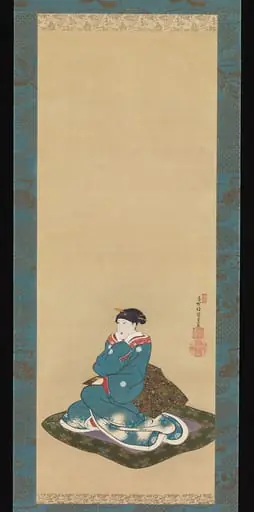 二代目岩井粂三郎の肖像|Portrait of Iwai Kumesaburō II
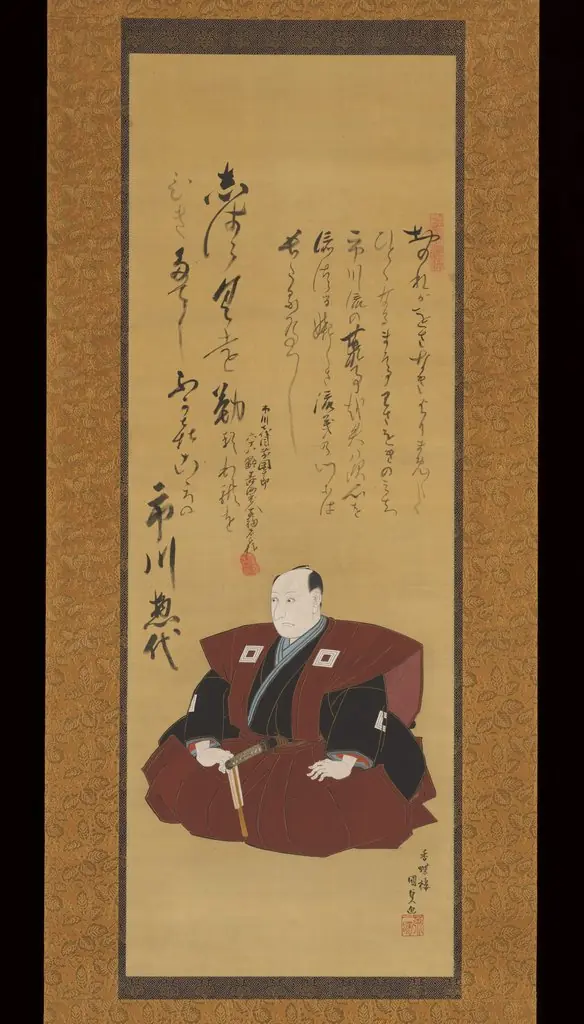 Memorial Portrait of the Actor Ichikawa Ōmezō I
 Untitled
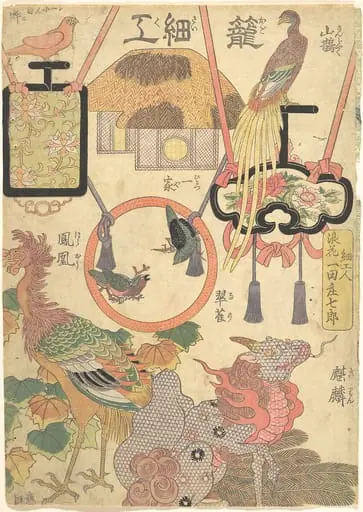 「籠細工 浪花細工人一田庄七郎」|Basketry Work: By the Craftsman Ichida Shōshichirō of Naniwa (Kagosaiku Naniwa saikujin Ichida Shōshichirō)
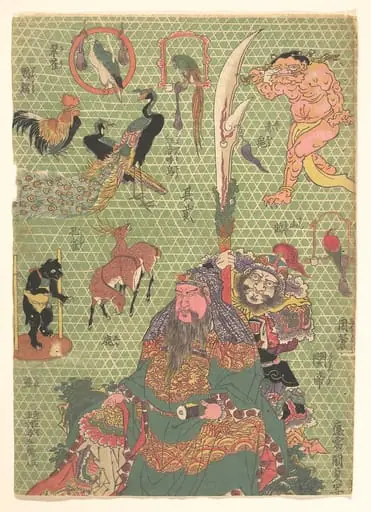 歌川国貞画 「籠細工 浪花細工人 一田庄七郎」|Basketry Work: By the Craftsman Ichida Shōshichirō of Naniwa (Kagozaiku Naniwa saikunin Ichida Shōshichirō)
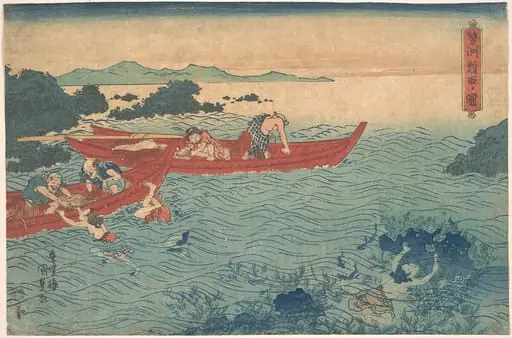 Untitled
 Untitled
 Futami-ga-ura akebono-no kuni|Futami-ga-ura Rocks at Ise, Land of Dawn
 Nakamura Utaemon as Inanoya Hanbei
 Actor Nakamura Utaemon III (Shikan) as Ishikawa Goemon at the Battle of Okehazama (Okehazama Gassen)
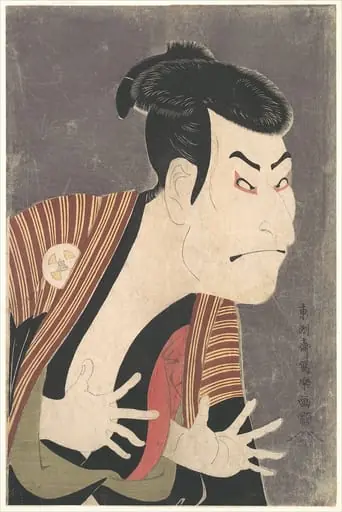 東洲斎写楽画 三代目大谷鬼次の奴江戸兵衛|Kabuki Actor Ōtani Oniji III as Yakko Edobei
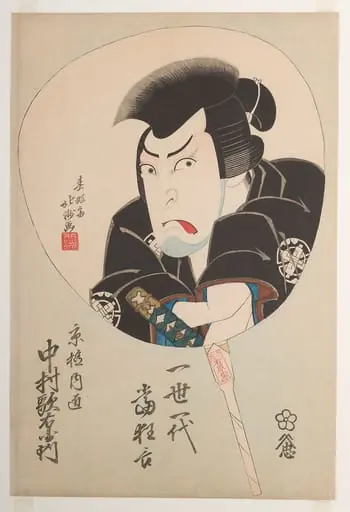 春好斎北洲画 三代目中村歌右衛門 『一世一代当狂言』|Kabuki Actor Nakamura Utaemon III as the Sword Master Kyōgoku Takumi, from the series Issei ichidai atari Kyōgen (Hits of a Lifetime of Kyōgen)
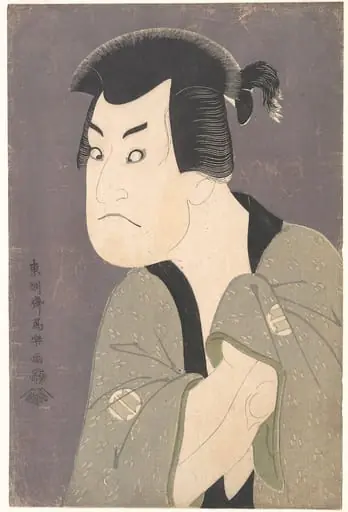 東洲斎写楽画 三世坂田半五郎の藤川水右衛門 『花菖蒲文禄曽我』|Sakata Hangorō III as Fujikawa Mizuemon in the Play "Hana Ayame Bunroku Soga"
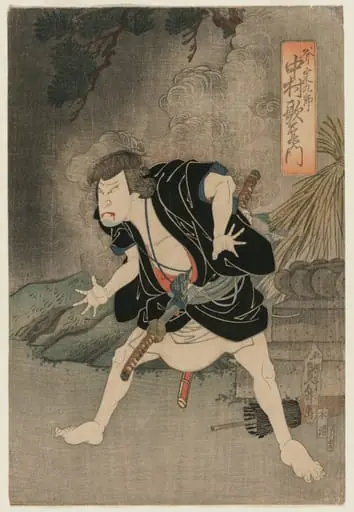 Nakamura Utaemon IV as Ono Sadakuro in Act Five of Kanadehon Chushingura, Naka Theater
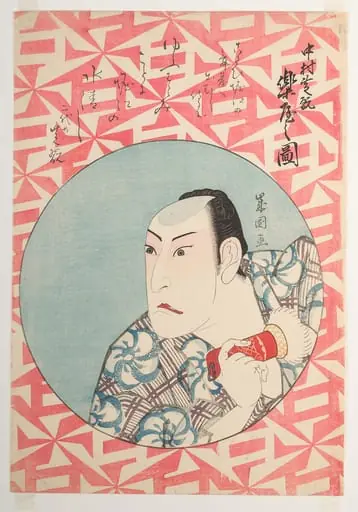 壽陽堂歳国画 『中村芝翫 楽屋之図』|Kabuki Actor Nakamura Shikan Backstage (Nakamura Shikan rakuya no zu)
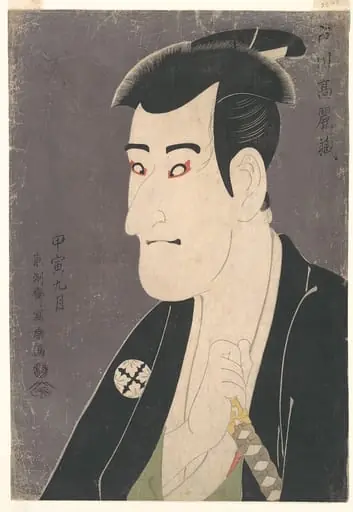 三代目市川高麗蔵の志賀大七|Kabuki Actor Ichikawa Komazō III as Shiga Daishichi in the Play A Medley of Tales of Revenge (Katakiuchi noriaibanashi)
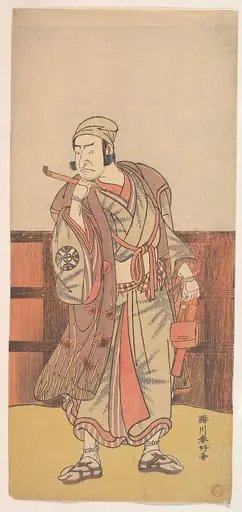 勝川春好画 初代中村仲蔵|Kabuki Actor Nakamura Nakazō I