Artwork
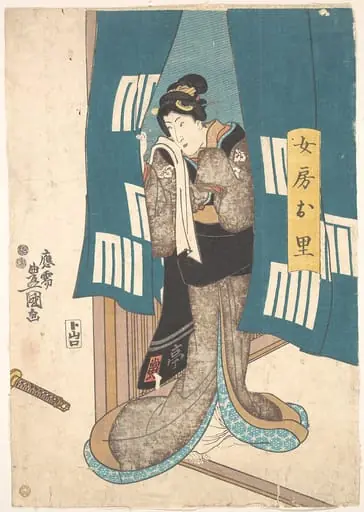
岩井紫若(二代目)の道具屋娘おかめ|Iwai Shijaku II as Okame, the Daughter of a Furniture Store
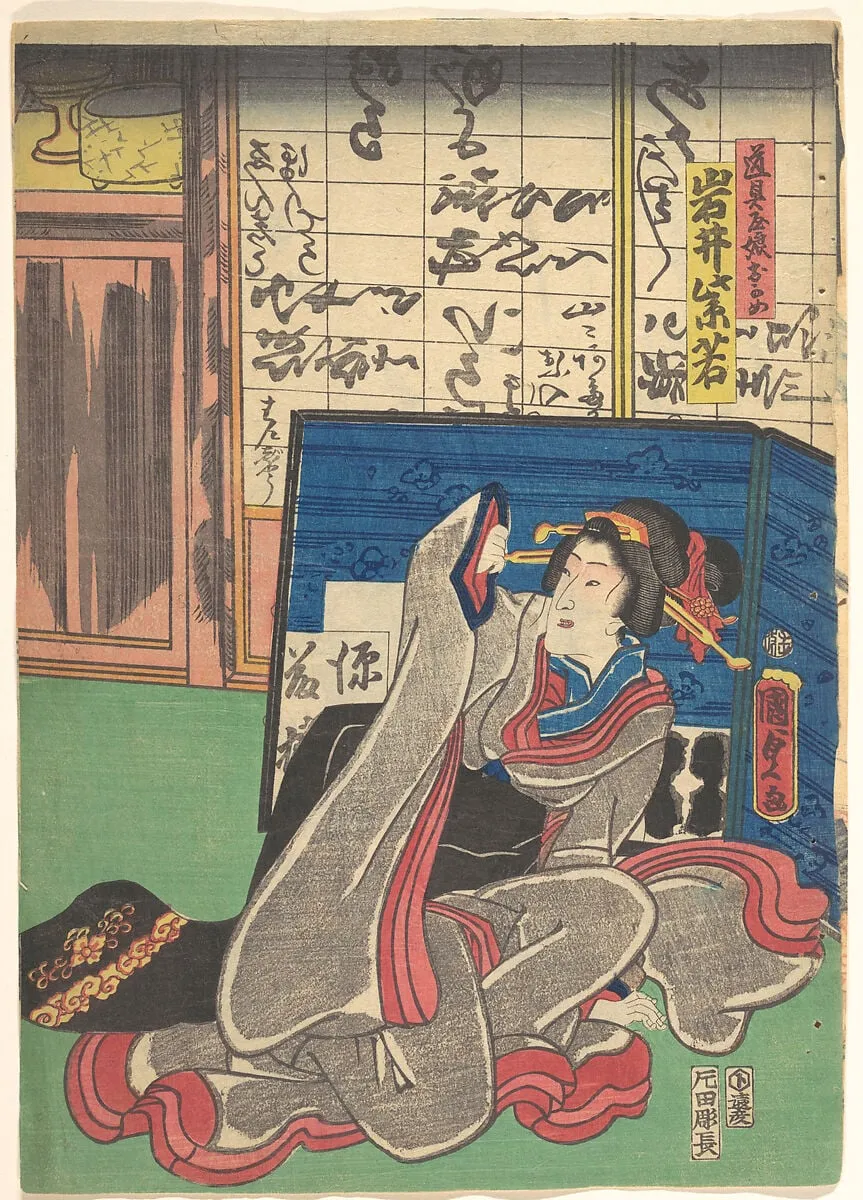
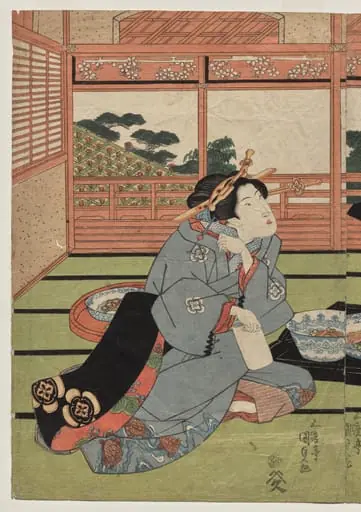
岩井紫若(二代目)の道具屋娘おかめ|Iwai Shijaku II as Okame, the Daughter of a Furniture Store is an ink print by the Impressionist artist Utagawa Kunisada II. It dates from 1864 and is held in the collection of the Metropolitan Museum of Art.
About this work
Overview
The work is part of the collection at The Metropolitan Museum of Art, where it represents a moment of quiet introspection within a theatrical context.
This print is the right panel of a triptych created in 1864 by Utagawa Kunisada II, depicting the kabuki actor Iwai Shijaku II in the role of Okame, a shopkeeper’s daughter. Executed in ink and color on paper, it belongs to the ukiyo-e tradition of woodblock printing. The work is part of the collection at The Metropolitan Museum of Art, where it represents a moment of quiet introspection within a theatrical context.
Subject & Meaning
Okame, portrayed as a humble daughter of a hardware merchant, is shown pausing to examine a red shoe, a gesture suggesting domestic contemplation. The role draws from kabuki’s stock characters, where such figures often embody innocence or subtle wit. The scene avoids dramatic action, instead emphasizing stillness and personal ritual, aligning with the actor’s skill in conveying nuanced emotion through minimal movement.
Technique & Style
Kunisada II employed fine linework and layered color to define the figure’s gray kimono with red trim and the black hairpiece tied with a crimson ribbon. The background features a muted blue wall and a window inscribed with Japanese characters, while a pink cabinet anchors the left side. The composition balances simplicity with detail, using flat planes and soft gradients typical of mid-19th-century ukiyo-e, enhancing the scene’s quiet intimacy.
History & Provenance
Created in 1864 during the late Edo period, this print was part of a theatrical triptych promoting a specific kabuki performance. Like many such prints, it was produced for mass distribution among theatergoers. The Metropolitan Museum of Art acquired it as part of its broader collection of Japanese prints, preserving it as a record of both popular entertainment and printmaking craftsmanship of the era.
Context
In 1860s Japan, woodblock prints served as affordable visual media linking theater and daily life. Actors like Iwai Shijaku II were celebrities, and their portrayals were widely circulated. This print reflects the era’s fascination with kabuki’s character types, blending realism with stylized performance. Domestic interiors in such prints often mirrored contemporary urban living, grounding theatrical fantasy in recognizable settings.
Legacy
Though not among Kunisada II’s most widely reproduced works, this print exemplifies the quiet dignity he brought to genre scenes within kabuki portraiture. It contributes to the historical record of how ukiyo-e artists captured fleeting moments of ordinary life within the framework of performance. Its preservation allows ongoing study of gender, role, and material culture in Edo-period visual arts.
Artist & collection

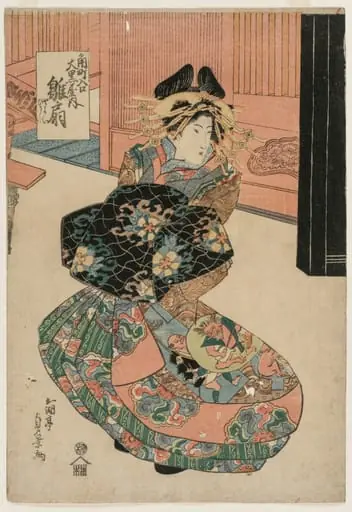 The Courtesan Hinaogi of the Daikokuya at the Entrance of Kadomachi
 Untitled
 Seated Woman Washing Clothes in a Wooden Tub
 A Tale of Valor at Iga Pass
 A View of the Large New Room at Sakurai
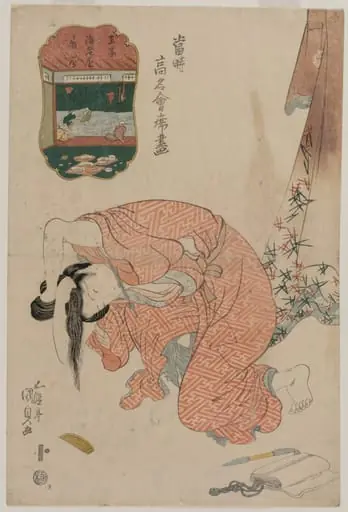 Woman Tying Her Hair (from the series Famous Restaurants of the Present Day)
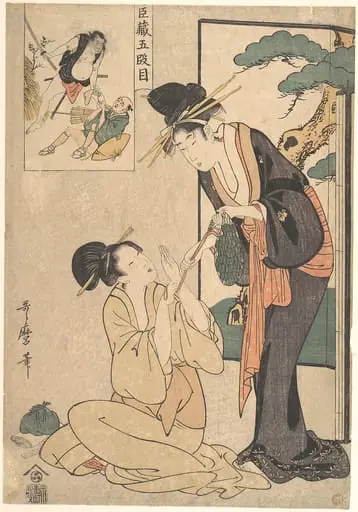 忠臣蔵五段目|A Woman Snatching a Bag of Sweetmeats from Her MotHer
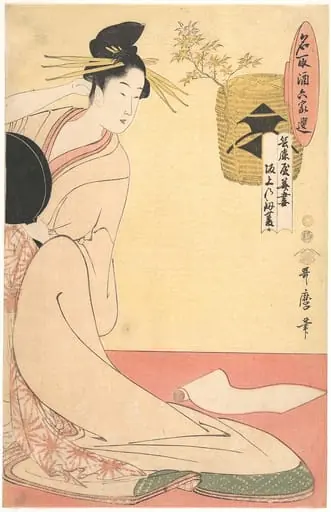 喜多川歌麿画 「名取酒六家選 兵庫屋華妻 坂上の剣菱」|"Hanazuma of Hyōgoya, Kenbishi of Sakagami” from the series The Peers of Saké Likened to Select Denizens of Six Houses (Natori zake rokkasen: Hyōgoya Hanazuma, Sakagami no Kenbishi)
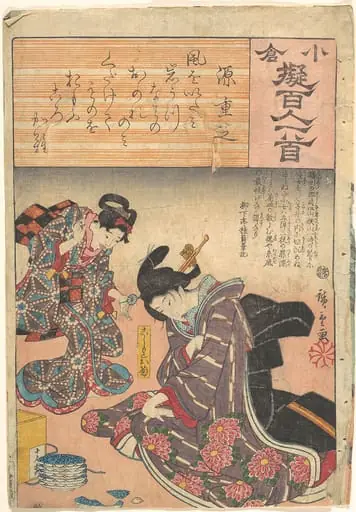 Untitled
 東洲斎写楽画 三代目坂東彦三郎の帯屋長右衛門と四代目岩井半四郎の信濃 屋お半 『二本松陸奥生長』|Bandō Hikosaburō III in the Role of Obiya Chōemon and Iwai Hanshiro IV in the Role of Shinanoya Ohan, from the Play “Nihonmatsu Michinoku sodachi”
 Untitled
 Untitled