Artwork
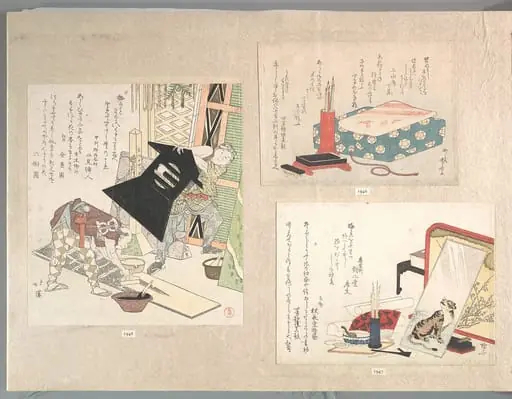
文具一式|Writing Set and Poem Card Box (Shikishi-bako), from Spring Rain Surimono Album (Harusame surimono-jō), vol. 1
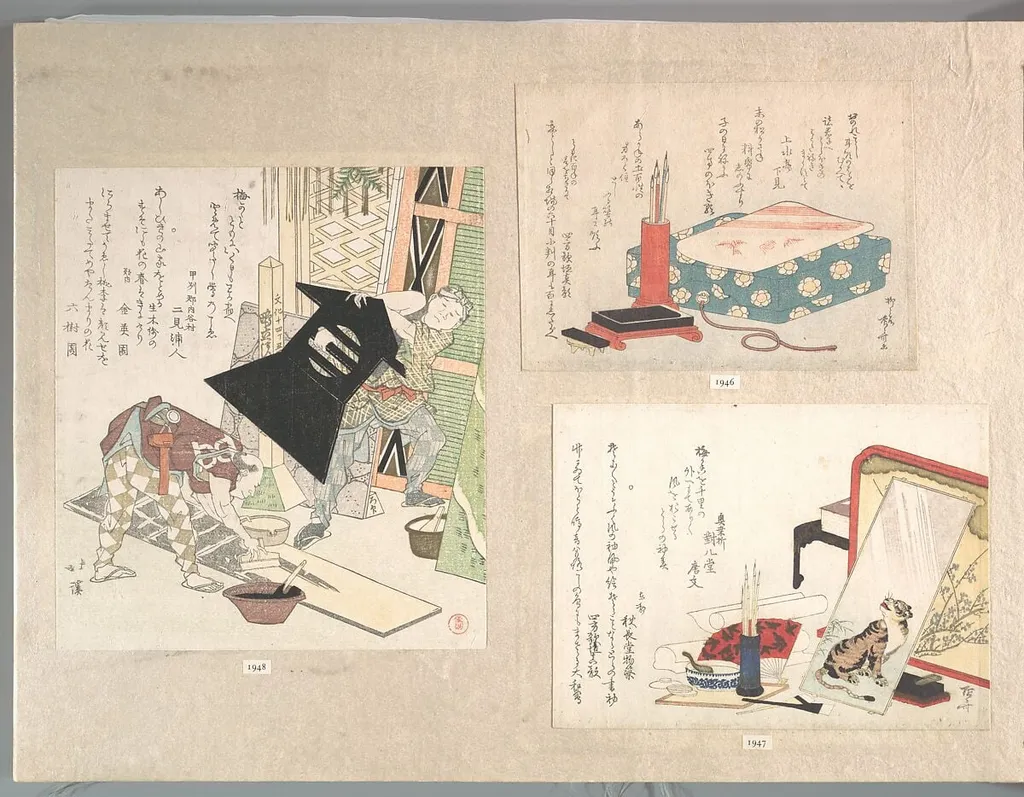
文具一式|Writing Set and Poem Card Box (Shikishi-bako), from Spring Rain Surimono Album (Harusame surimono-jō), vol. 1 is an ink print by the Romanticist artist Ryūryūkyo Shinsai. It dates from 1808 and is held in the collection of the Metropolitan Museum of Art.
About this work
The prints are labeled with Japanese text and dates like "1946," but those are likely modern notes—this is actually from around 1805.
This image shows three small woodblock prints glued into an album. The left print depicts a samurai-style figure holding a fan, standing over a table with bowls and a cat. The middle print shows a red writing box with brushes and a poem card. The right print has a cat curled beside a table with brushes and a small mirror.
The prints are labeled with Japanese text and dates like "1946," but those are likely modern notes—this is actually from around 1805. The artist used bold outlines and flat colors, with fine details in the fabrics and objects.
Look up cross-hatching to see how artists build shading with lines.
Overview
This album page contains three privately printed woodblock designs from a series issued around 1808, attributed to Ryūryūkyo Shinsai. Each panel is mounted within a bound volume, part of a small-circulation surimono collection meant for literary and artistic connoisseurs. The prints are rendered in ink and color on paper, combining poetic imagery with refined craftsmanship. Though later annotations appear, the original date of creation aligns with the early Edo period’s surimono tradition.
Subject & Meaning
The three panels evoke a scholar’s quiet ritual: a figure in samurai attire holds a fan beside writing implements and a cat, suggesting contemplation amid daily life. The central panel displays a lacquered writing box with brushes and a poem card, symbolizing literary practice. The right panel, with a curled cat and mirror, implies introspection and the passage of time. Together, they frame the aesthetic of refined solitude valued in Edo-period literati culture.
Technique & Style
The prints employ bold outlines and flat areas of color typical of surimono, with meticulous attention to texture in fabrics and objects. Fine lines suggest the weave of garments and the sheen of lacquer, while subtle cross-hatching adds depth without shading. The compositions are tightly framed, emphasizing object and gesture over background. These techniques reflect the precision expected in privately commissioned prints, where craftsmanship rivaled painting in nuance.
History & Provenance
Created as part of the Spring Rain Surimono Album, this page was produced for a limited audience of poets and collectors. The album was not commercially distributed but circulated among elite circles. The Metropolitan Museum of Art acquired it as part of a larger collection of Edo-period prints. Later inscriptions on the mounts, including the date '1946,' are modern additions and do not reflect the original production context.
Context
Surimono were luxury prints commissioned by poetry societies to commemorate seasonal events or literary gatherings. Unlike mass-produced ukiyo-e, they prioritized artistic experimentation and poetic allusion. This set reflects the fusion of visual art and waka poetry, where everyday objects—brushes, mirrors, cats—became metaphors for transience and elegance. The genre flourished in Osaka and Edo during the late 18th and early 19th centuries.
Legacy
Though surimono were never intended for broad dissemination, their influence endures in the appreciation of intimate, handcrafted printmaking. This album page exemplifies how Edo-period artists elevated domestic and literary motifs into refined visual poetry. Today, such works are studied for their technical subtlety and cultural specificity, offering insight into the private aesthetic worlds of Japan’s literate elite.
Artist & collection

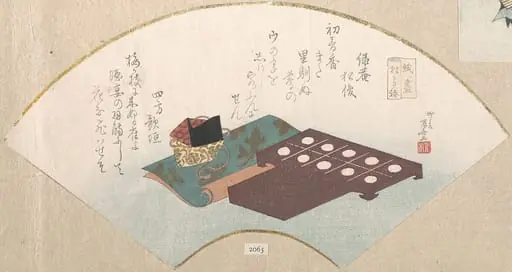 Untitled
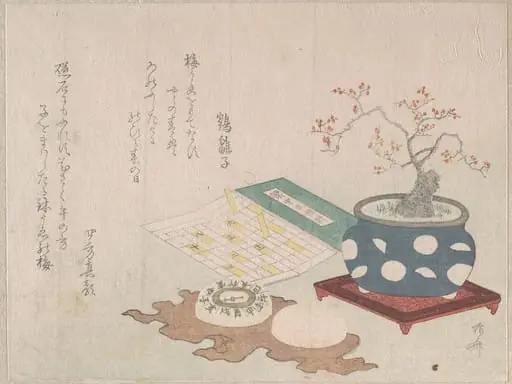 鉢梅、懐中日時計、羅針盤|Bonsai Plum, Compass, and Pocket Sundial with Design of Calendar, from Spring Rain Surimono Album (Harusame surimono-jō, vol. 3)
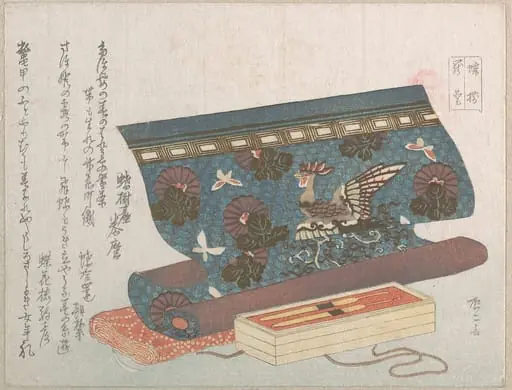 『蝶揃・寵愛』帯と簪|Roll of Cloth for an Obi and Tortoise-shell Hair Ornaments (“Presents for One’s Beloved”), from the Butterfly Series, from Spring Rain Surimono Album (Harusame surimono-jō, vol. 3)
 衝立、虎図、文具一式|Desk Screen, Writing Set, Painting of Tiger, and Mounting Paraphernalia, from Spring Rain Surimono Album (Harusame surimono-jō, vol. 1)
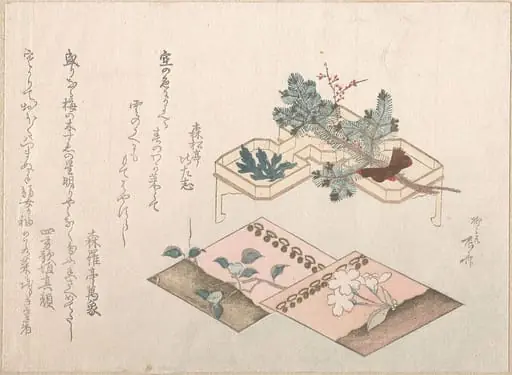 『春雨集』 摺物帖柳々居辰斎画 若松|Spring Rain Collection (Harusame shū), vol. 2: Pine Shoots and Accoutrements for New Year’s Celebrations
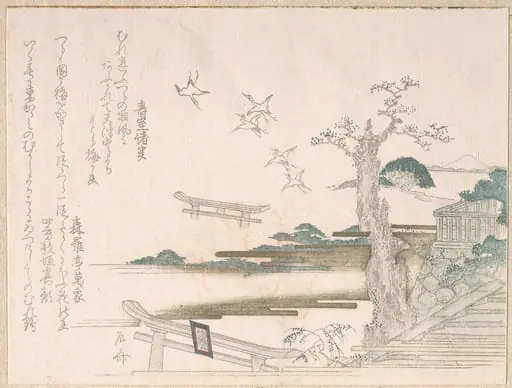 『春雨集』 摺物帖柳々居辰斎画 鎌倉の鶴岡八幡宮に鶴|Spring Rain Collection (Harusame shū), vol. 2: Cranes at Tsurugaoka Hachimangō Shrine in Kamakura
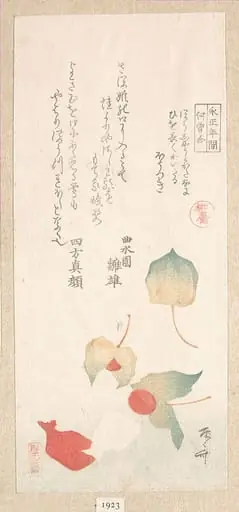 Untitled
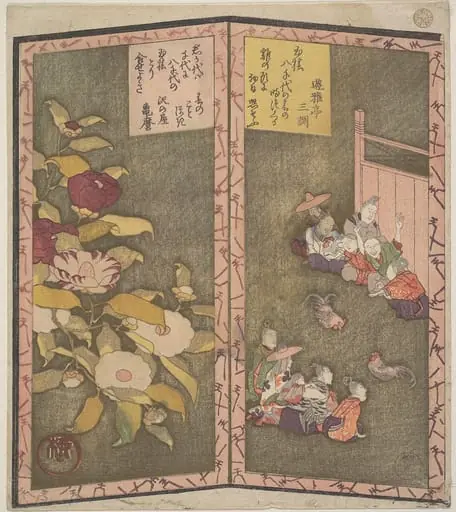 Untitled
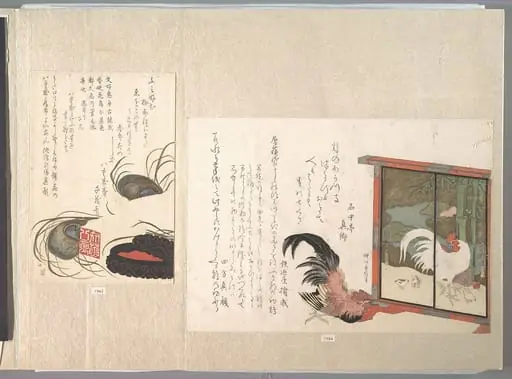 印鑑と朱に孔雀羽根|Seal-stone and Seal-ink with Peacock Feathers, from Spring Rain Surimono Album (Harusame surimono-jō), vol. 1
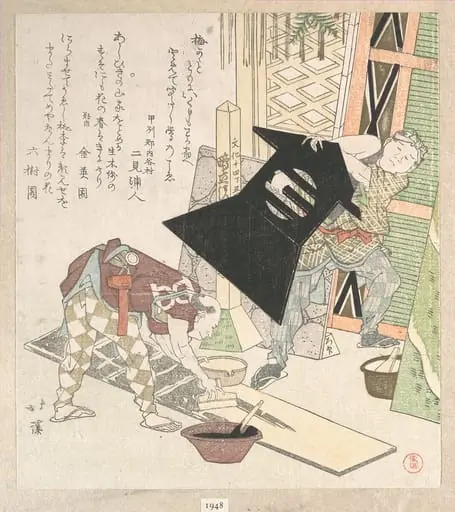 元日仕度|Preparations for the New Year, from Spring Rain Surimono Album (Harusame surimono-jō, vol. 1)
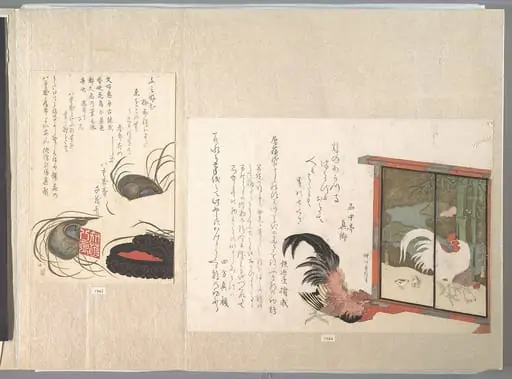 鶏図衝立を見る鶏|Cock Eyeing a Free-standing Screen Painted with Cock, Hen, and Chicks, from Spring Rain Surimono Album (Harusame surimono-jō), vol. 1
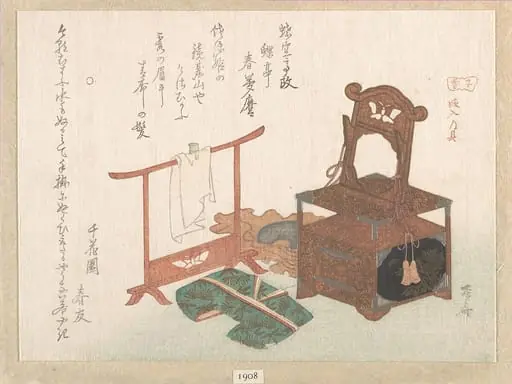 柳々居辰斎画 子春 嫁入の具『春雨集』 摺物帖|Accoutrements for a Bride, from the Spring Rain Collection (Harusame shū), vol. 1
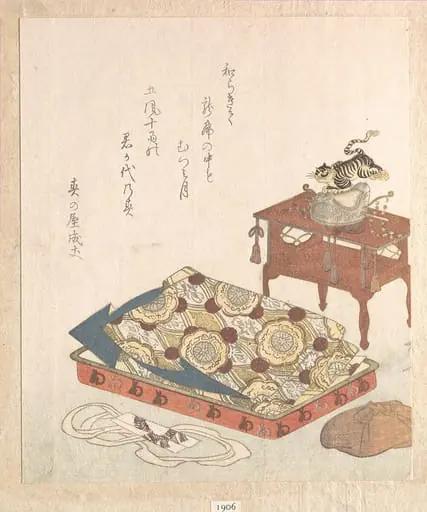 舞楽衣装『春雨集』 摺物帖|Costume for Bugaku Court DanceFrom the Spring Rain Collection (Harusame shū), vol. 1
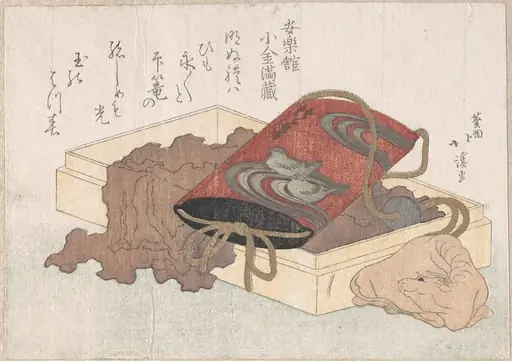 印籠と牛根付『春雨集』 摺物帖|Lacquer Inrō with Waterbirds and Ox-shaped Netsuke in a BoxFrom the Spring Rain Collection (Harusame shū), vol. 3
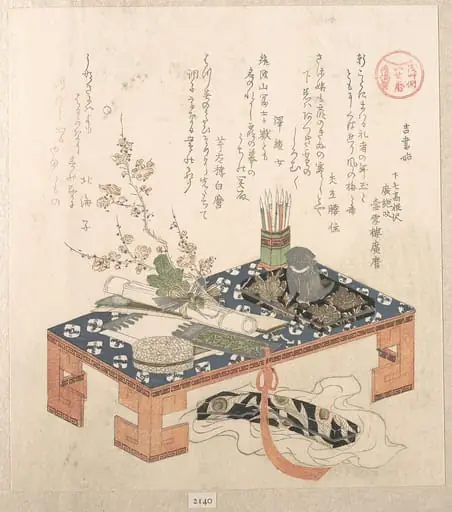 『浅草側いせ暦』 文房具と梅熨斗『春雨集』 摺物帖 |“Desk with Writing Set and Plum Flowers,” from the series Ise Calendars for the Asakusa Group (Asakusa-gawa Ise goyomi)From the Spring Rain Collection (Harusame shū), vol. 2